
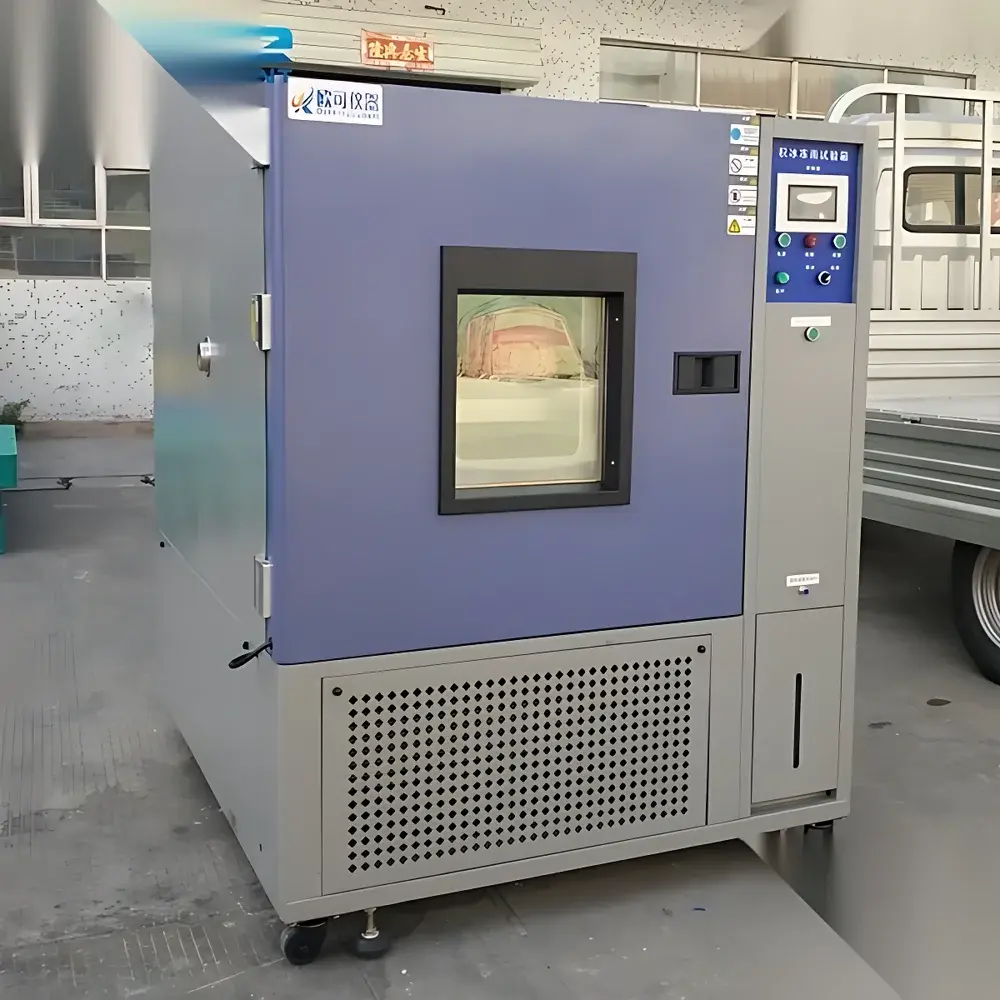
English Product Name
| Brand | Other Brands |
|---|---|
| Origin | Imported |
| Manufacturer Type | General Distributor |
| Price | USD 14,000 (approx.) |
| Internal Dimensions (mm) | 500×600×500 / 600×700×600 / 800×900×700 / 1000×1000×1000 |
| External Dimensions (mm) | 1000×1750×1100 / 1100×1900×1100 / 1300×1900×1300 / 1500×2000×1600 |
| Temperature Range | −10 °C to 80 °C or −20 °C to 80 °C (customizable) |
| Temperature Uniformity | ±2.0 °C |
| Temperature Fluctuation | ±0.5 °C |
| Rainfall Intensity | 25 mm/h |
| Nozzle Orifice Diameter | φ0.4 mm |
| Simulated Droplet Diameter | 1.0–1.5 mm |
| Ice Accumulation Thickness Options | 6 mm, 13 mm, 37 mm, 75 mm |
| Ice Density Range | 0.2–0.9 g/cm³ |
| Water Temperature Control | 0–5 °C |
| Inner Chamber Material | SUS304 Stainless Steel |
| Outer Chamber Material | Galvanized Steel with Powder Coating or Optional SUS304 |
| Heating System | Helical Ni-Cr Alloy Heater with Ceramic Insulation Mounts |
| Humidification System | Embedded Ni-Cr Alloy Electric Humidifier |
| Refrigeration System | Hermetic Compressor (French or Tecumseh) |
| Controller | 5.7″ TFT Color LCD Touchscreen (Bilingual English/Chinese Interface) |
| Cable Port | Ø50 mm × 1 |
| Standard Accessories | Adjustable Test Sample Rack |
| Power Supply | AC 220 V ±5%, 50 Hz ±0.5 Hz, Single-Phase Three-Wire |
| Operating Ambient | 5–35 °C, RH ≤85% non-condensing |
Overview
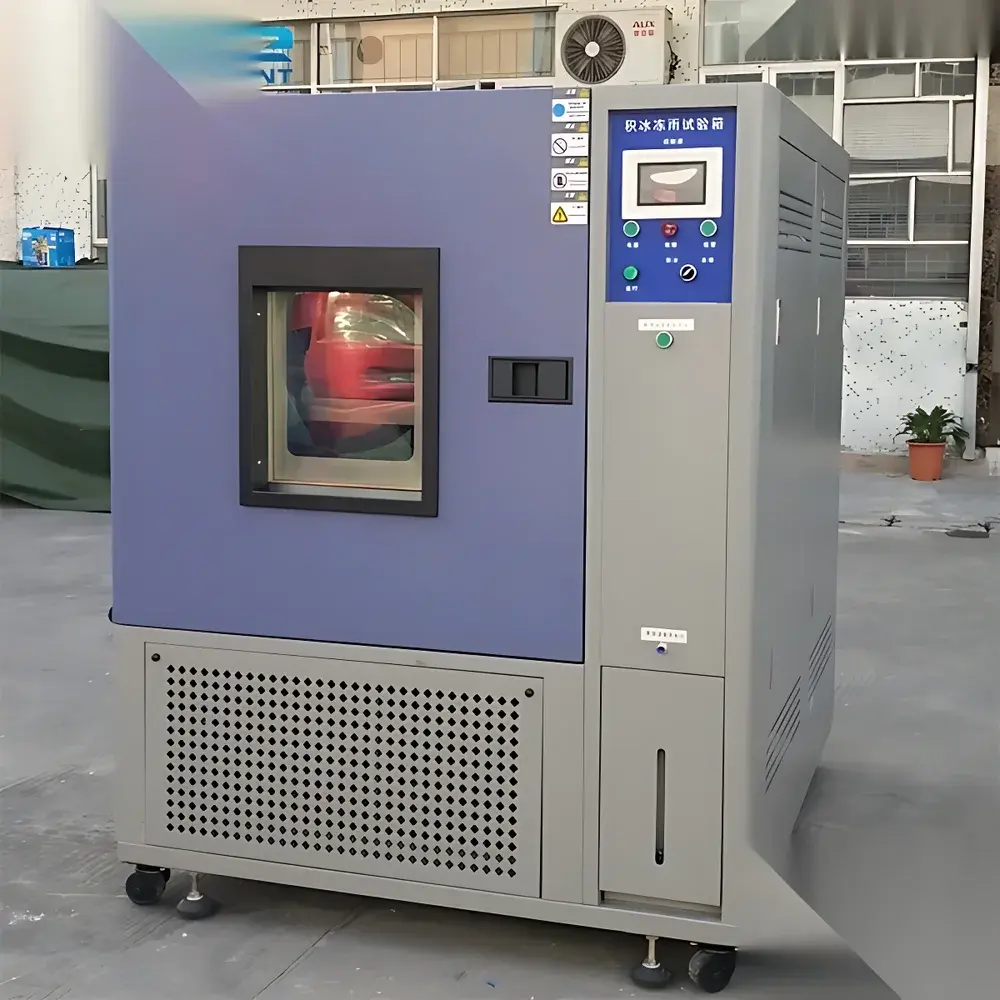
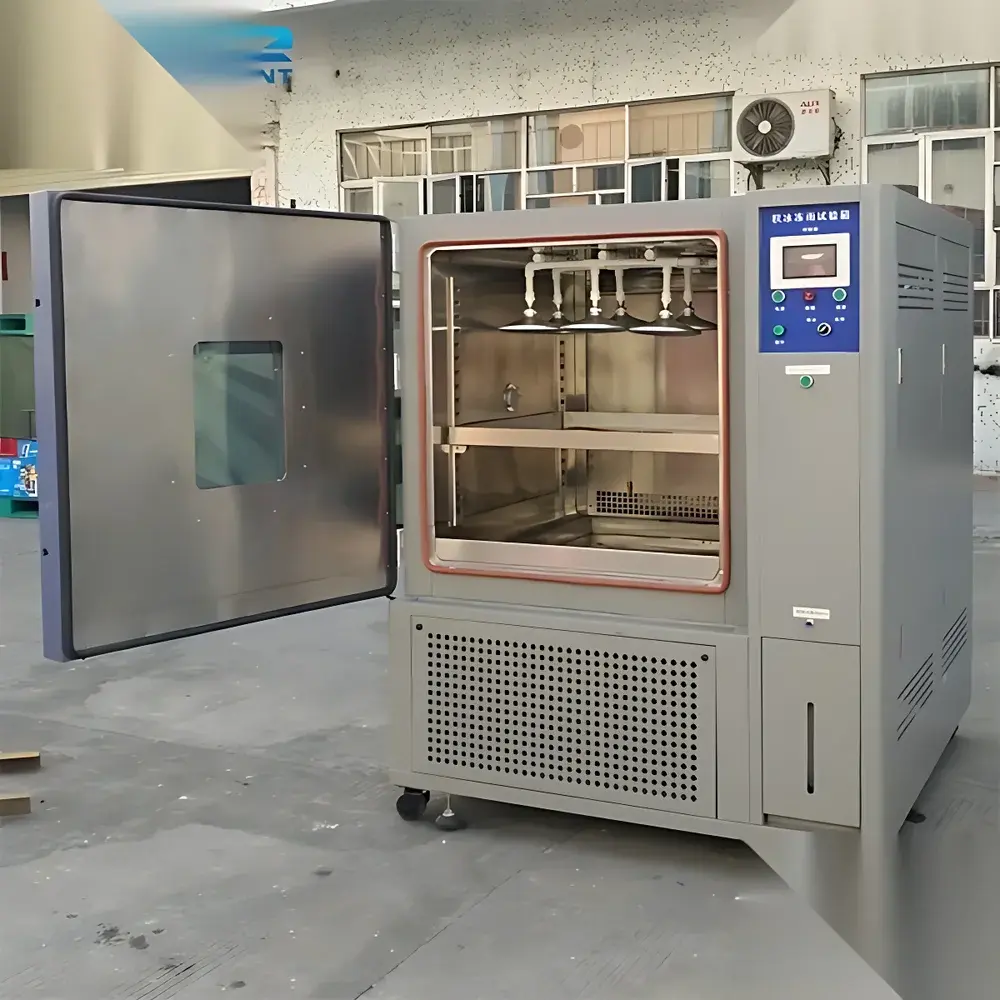
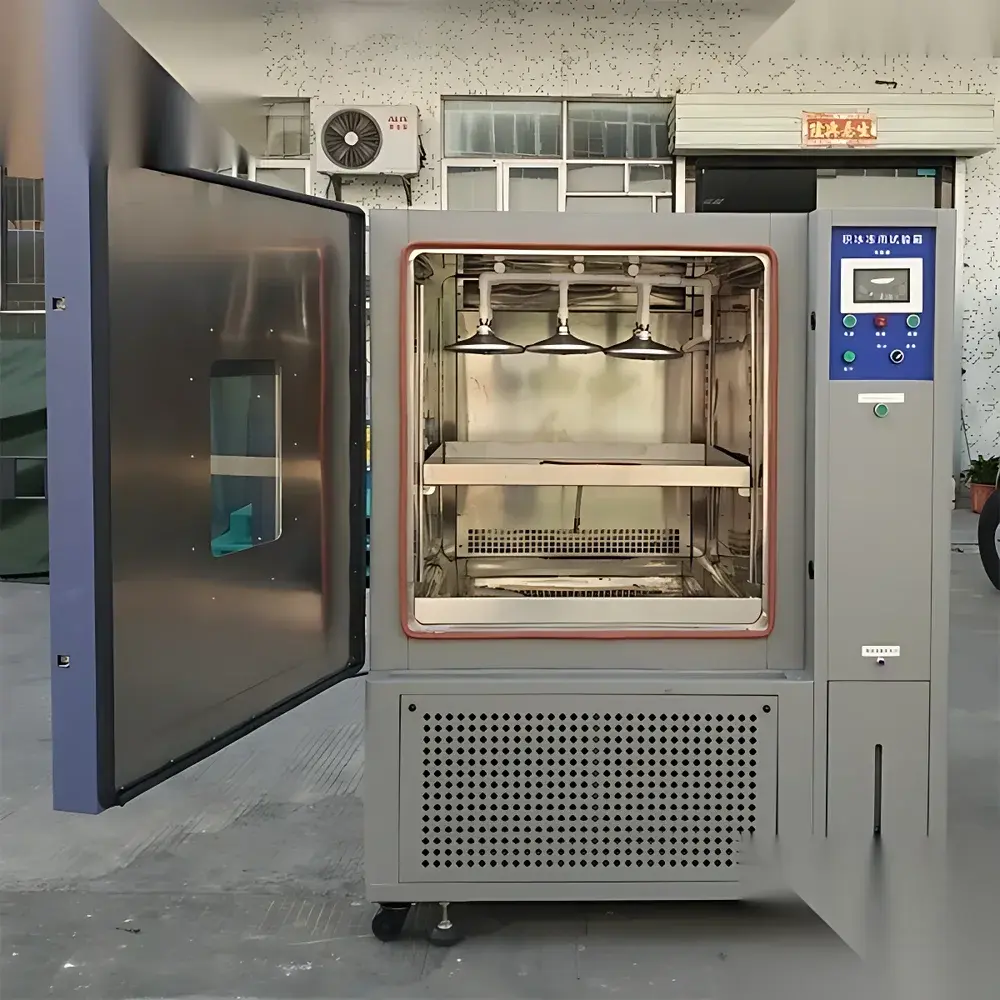
The OK-JBDY Series Icing and Freezing Rain Environmental Test Chamber is a purpose-built climatic simulation system engineered to replicate the physical conditions associated with atmospheric icing and freezing rain exposure—critical for evaluating the operational integrity, functional resilience, and de-icing efficacy of defense, aerospace, marine, and energy infrastructure equipment. Based on the measurement principle of controlled-phase transition dynamics, the chamber precisely regulates supercooled liquid water delivery, surface temperature gradients, and thermal-hydraulic boundary conditions to induce reproducible ice accretion morphologies—including glaze ice, rime ice, and mixed-phase deposits—on test specimens. It complies with GJB 150.22A–2009 (Military Standard for Environmental Testing of Equipment, Part 22: Icing and Freezing Rain Testing), and its design aligns with broader international frameworks such as MIL-STD-810H Method 521.4 and IEC 60068-2-30 for cold/wet environmental stress validation.
Key Features
- Multi-tiered temperature control architecture enabling stable operation from −20 °C to +80 °C, with uniformity maintained within ±2.0 °C across the full working volume and short-term fluctuation limited to ±0.5 °C.
- Precisely calibrated rain generation system delivering 25 mm/h rainfall intensity using nozzles with 0.4 mm orifices, producing droplets sized 1.0–1.5 mm in diameter—consistent with natural freezing drizzle and light rain spectra defined in ISO 14617-12 and FAA AC 20-136B.
- Configurable ice thickness simulation (6 mm, 13 mm, 37 mm, or 75 mm) supported by adjustable water temperature (0–5 °C) and programmable ice density range (0.2–0.9 g/cm³), enabling differentiation between low-density rime and high-density glaze ice formation.
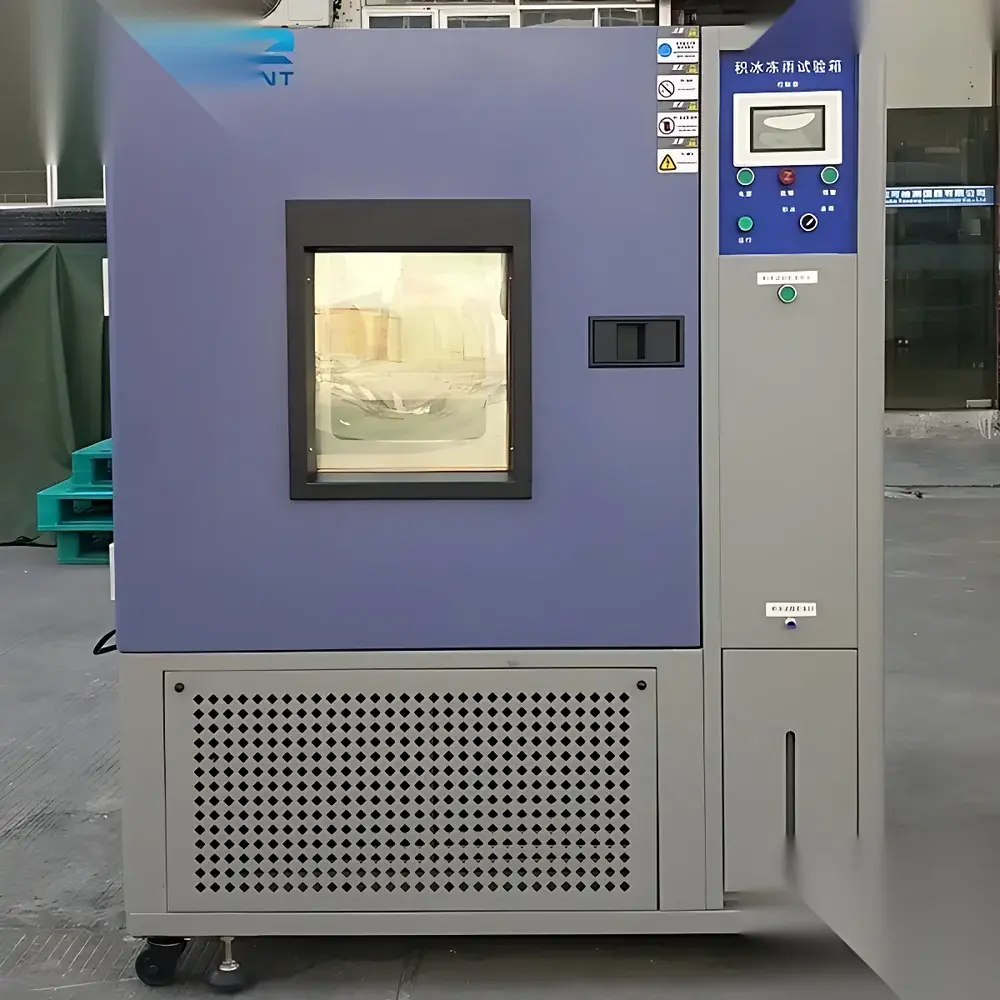
- Robust chamber construction: inner walls fabricated from electropolished SUS304 stainless steel for corrosion resistance and traceability; outer enclosure options include powder-coated galvanized steel or full SUS304 for maritime-grade durability.
- Integrated dual-mode climate control: hermetic refrigeration (Tecumseh or French-made compressors), ceramic-insulated Ni-Cr alloy heating elements, and embedded electric humidifiers ensure rapid thermal response and long-term stability under cyclic load conditions.
- Intuitive 5.7″ TFT touchscreen controller with bilingual (English/Chinese) interface supports multi-segment programming, real-time data logging, alarm history, and USB export—designed for integration into GLP/GMP-compliant lab workflows.
Sample Compatibility & Compliance
The OK-JBDY chamber accommodates a broad spectrum of test articles—from airborne avionics housings and wind turbine blade sections to naval radar domes and unmanned aerial vehicle (UAV) sensor arrays. Its modular internal dimensions (500–1000 mm per axis) support both component-level qualification and subassembly testing. The system meets GJB 150.22A–2009 requirements for test profile fidelity, including ramp rate control, dwell accuracy, and precipitation repeatability. Optional calibration certificates traceable to NIM (China National Institute of Metrology) or third-party ISO/IEC 17025-accredited labs are available upon request. While not pre-certified to ASTM D3571 or IEC 61400-22, the chamber’s physical parameters satisfy the environmental input conditions specified in those standards for icing endurance evaluation.
Software & Data Management
The embedded controller firmware records time-stamped temperature, humidity, and operational status data at user-defined intervals (1–60 seconds). Exported CSV files are compatible with MATLAB, Python Pandas, and commercial statistical analysis platforms. Audit trail functionality includes operator login tracking, parameter change logs, and event-triggered alerts—all compliant with FDA 21 CFR Part 11 principles when paired with optional electronic signature modules. Remote monitoring via Ethernet (Modbus TCP/IP) allows integration into centralized facility SCADA systems or LIMS environments. Firmware updates are delivered via secure USB key to maintain version control and cybersecurity integrity.
Applications
- Qualification testing of aircraft anti-ice/de-ice systems (e.g., electrothermal wing boots, pneumatic leading-edge boots, fluid-based weeping wings).
- Evaluation of optical sensor performance degradation under ice-laden surfaces (e.g., infrared domes, LiDAR windows, EO/IR turrets).
- Validation of marine electronics enclosures subjected to sea-spray-induced icing in polar operations.
- Functional verification of power transmission line hardware (insulators, spacers, dampers) under simulated winter storm conditions.
- Research into ice adhesion strength, shedding dynamics, and thermal-mechanical interfacial failure modes using synchronized load-cell or strain-gauge instrumentation.
FAQ
What standards does this chamber directly support?
It is explicitly designed to meet GJB 150.22A–2009. Its physical parameters also align with the environmental input definitions in MIL-STD-810H Method 521.4, RTCA DO-160G Section 21, and IEC 60068-2-30.
Can the chamber simulate mixed-phase icing (e.g., supercooled large droplets)?
While optimized for freezing rain and drizzle spectra (1.0–1.5 mm droplets), SLAP (Supercooled Large Droplet) simulation requires nozzle redesign and higher flow-rate pumps—not standard but available as an engineering option.
Is remote diagnostics or predictive maintenance supported?
Yes—the controller logs compressor discharge temperature, current draw, and heater duty cycle. These metrics can be exported for trend analysis and early fault detection.
What is the typical lead time for custom configurations (e.g., −40 °C capability or larger volume)?
Standard models ship within 8–10 weeks. Sub-zero extensions (−40 °C) or chambers exceeding 1 m³ require 14–18 weeks due to refrigeration system re-engineering and extended validation cycles.
Does the system include validation documentation for IQ/OQ protocols?
Factory acceptance test (FAT) reports and installation qualification (IQ) templates are provided. Operational qualification (OQ) execution requires on-site sensor mapping and profile verification—support services available globally.



