
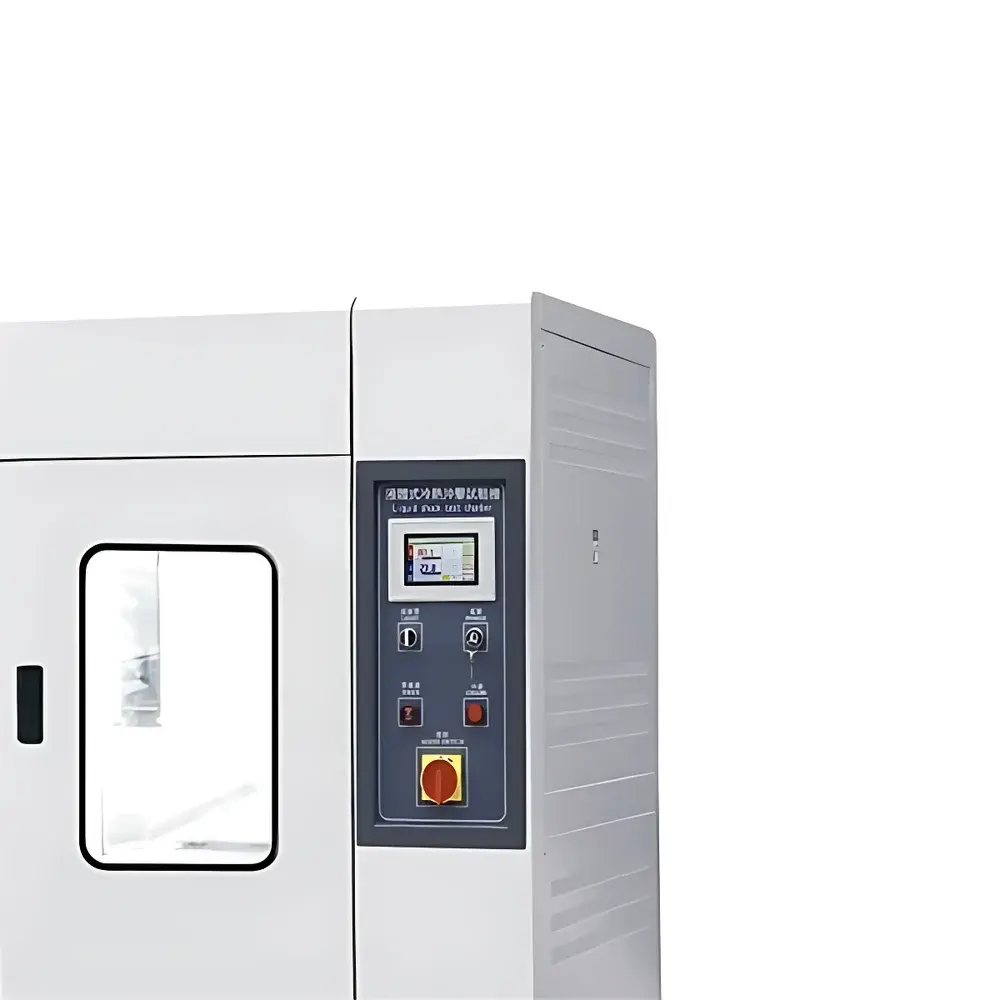
English Product Name
| Brand | OK |
|---|---|
| Model | OK-YT-49 / OK-YT-80 / OK-YT-150 / OK-YT-225 |
| Temperature Range (Hot Zone) | RT to +200 °C |
| Temperature Range (Cold Zone) | RT to −70 °C |
| Test Zone Temperature Range | Hot Shock: +60 °C to +150 °C |
| Cold Shock | 0 °C to −45 °C / −55 °C / −65 °C (configurable) |
| Temperature Uniformity | ±2.0 °C |
| Temperature Control Accuracy | ±0.5 °C |
| Recovery Time | <5 min |
| Preheat Time (RT → 150 °C) | ~30 min |
| Precool Time (RT → −70 °C) | ~85 min |
| Internal Dimensions (W×H×D, cm) | 40×35×30 to 70×60×60 |
| External Dimensions (W×H×D, cm) | 145×180×140 to 190×170×270 |
| Construction | Interior – Mirror-finish SUS#304 stainless steel |
| Insulation | High-density fire-retardant PU foam |
| Refrigeration System | Hermetic or semi-hermetic compressors |
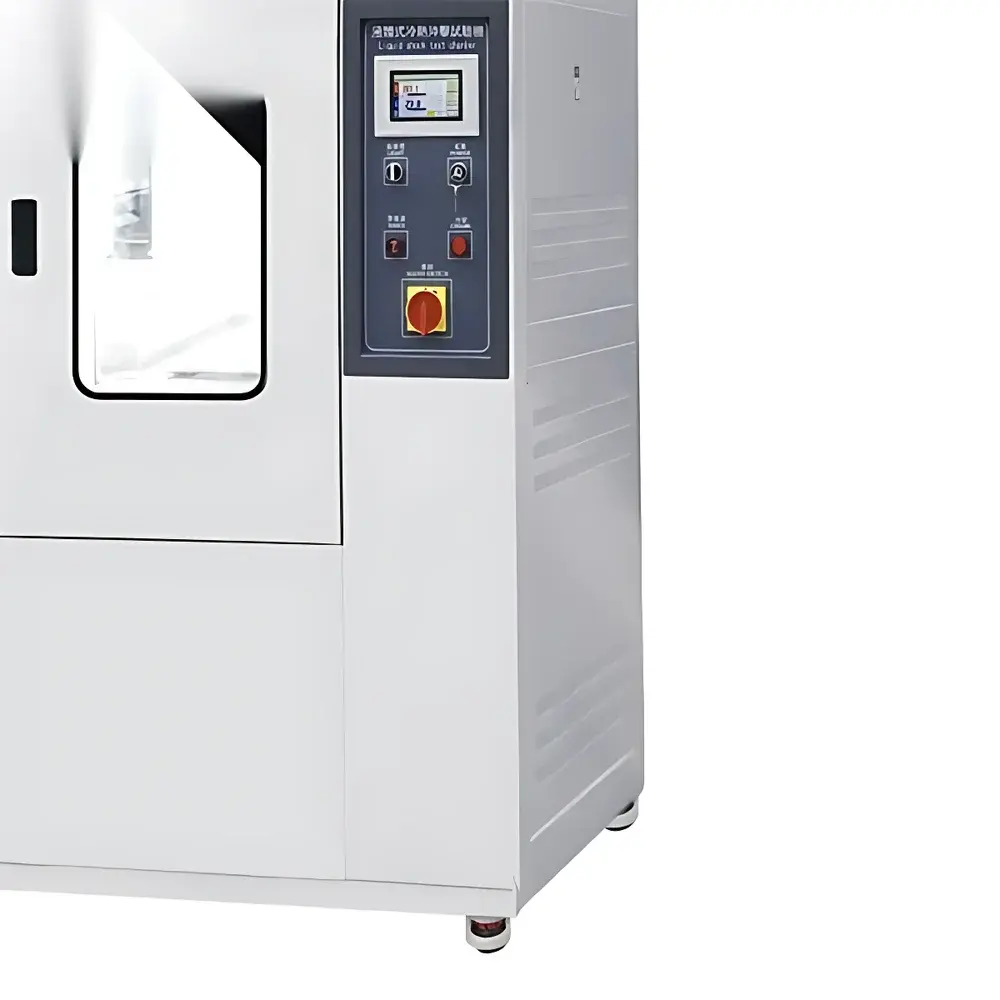
| Interface | LAN-enabled microprocessor controller with color LCD touchscreen |
| Compliance | GB/T 2423.1, GB/T 2423.2, GB/T 2423.22, GJB 150.5, GJB 360.7, GJB 367.2 |
Overview
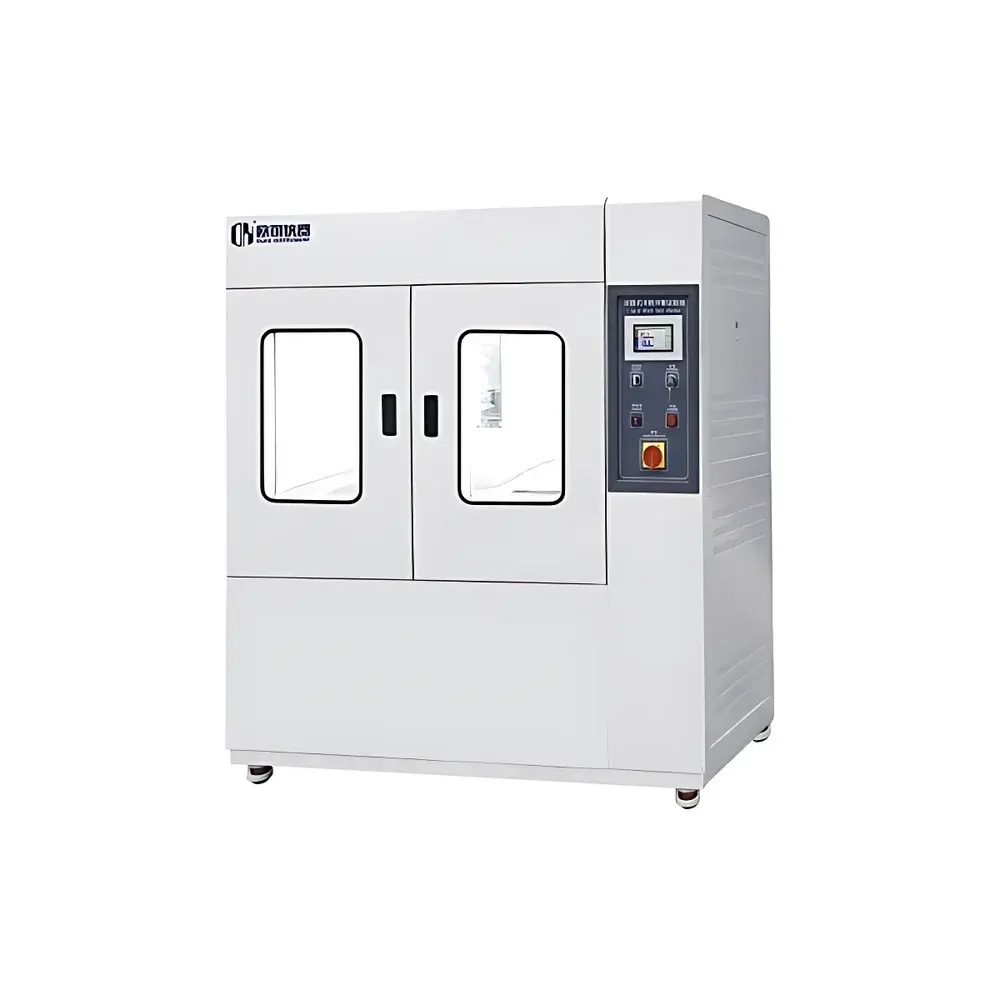
The OK-YT Series Liquid-Bath Thermal Shock Test Chamber is an engineered environmental test system designed for rapid, high-fidelity thermal cycling between extreme temperature extremes. Unlike air-based thermal shock chambers, this system employs dual liquid-immersion reservoirs—separately maintained at high and low setpoints—to deliver accelerated, highly reproducible thermal transients via mechanical transfer of test specimens using a pneumatically actuated lift basket. This architecture eliminates airflow-induced thermal gradients and ensures uniform, contact-based heat exchange—critical for evaluating material integrity under real-world thermal stress conditions encountered in aerospace, defense, medical device manufacturing, and advanced electronics development. The chamber operates on the principle of controlled thermal inertia: pre-conditioned hot and cold reservoirs store thermal energy, enabling sub-5-minute recovery times and precise dwell-to-transition control. It supports both single-cycle and programmable multi-cycle profiles, making it suitable for qualification testing per MIL-STD-810, JEDEC JESD22-A104, and IEC 60068-2-14 standards.
Key Features
- Large-format color LCD touchscreen interface with intuitive graphical programming—supports up to 999 segments, 99 cycles, and user-defined ramp/soak profiles
- Dual-zone thermal storage architecture: independent hot zone (RT to +200 °C) and cold zone (RT to −70 °C), each equipped with high-efficiency plate-type heat exchangers
- Hermetic or semi-hermetic refrigeration system utilizing environmentally compliant refrigerants (R404A for primary stage, R23 for ultra-low secondary stage)
- Liquid-bath immersion design ensures superior temperature uniformity (±2.0 °C) and stability (±0.5 °C control accuracy) across the full test volume
- LAN-enabled Ethernet interface supporting remote monitoring, data logging, and integration into centralized lab management systems (e.g., LabVantage, Thermo Fisher SampleManager)
- Programmable pre-conditioning: automatic pre-cooling/pre-heating prior to scheduled test initiation, minimizing downtime and improving throughput
- Configurable defrost logic—scheduled or event-triggered—with manual override capability and cycle-count tracking
- Structural integrity: interior chamber fabricated from electropolished SUS#304 mirror-finish stainless steel; exterior housing in corrosion-resistant SUS#304 or industrial-grade powder-coated steel
Sample Compatibility & Compliance
The OK-YT chamber accommodates rigid and semi-rigid specimens—including metallic housings, PCB assemblies, ceramic substrates, polymer enclosures, and hermetically sealed medical components—up to 150 L internal volume (OK-YT-225 model). Its static test configuration (specimen remains stationary while thermal zones are alternated via pneumatic door switching) minimizes mechanical vibration and positional uncertainty during transition. The system meets requirements for thermal shock validation under multiple international and military standards: GB/T 2423.22 (temperature change), GJB 150.5 (military equipment thermal shock), GJB 360.7 (electronic component qualification), and GJB 367.2 (communications equipment environmental testing). While not inherently FDA 21 CFR Part 11-compliant, audit-ready data export (CSV, PDF, XML) and optional electronic signature modules support GLP/GMP-aligned workflows in regulated R&D environments.
Software & Data Management
The embedded controller firmware provides real-time graphing of chamber temperatures, cycle progress, and alarm status. All operational parameters—including setpoints, dwell times, transition rates, and fault logs—are timestamped and stored internally for ≥30 days. Via the standard Ethernet port, users can access live telemetry and historical datasets through a secure HTTP/HTTPS web interface or integrate with third-party SCADA platforms using Modbus TCP or OPC UA protocols. Optional software packages extend functionality: automated report generation (with company logo, test ID, operator name), statistical process control (SPC) charting of thermal deviation trends, and CSV export compatible with MATLAB, Python (pandas), or JMP for post-test failure mode analysis. Audit trails record all parameter changes, user logins, and calibration events—fully traceable for ISO/IEC 17025 laboratory accreditation.
Applications
This chamber is routinely deployed in reliability engineering labs to assess solder joint fatigue, coating delamination, seal integrity loss, and intermetallic growth in microelectronic packaging. In aerospace, it validates avionics enclosure performance across −65 °C to +150 °C excursions simulating stratospheric cruise and re-entry heating. Medical device manufacturers use it to verify sterilization-resistant housing durability and sensor drift under repeated thermal cycling. Automotive Tier 1 suppliers apply it to battery module thermal interface materials (TIMs), ADAS camera housings, and power electronics encapsulants. Academic researchers leverage its precision for studying phase-change behavior in shape-memory alloys and thermal expansion coefficient mismatch in multi-material composites.
FAQ
What distinguishes liquid-bath thermal shock from air-based systems?
Liquid immersion enables faster heat transfer coefficients, tighter temperature uniformity, and reduced thermal lag—particularly critical for dense or low-conductivity samples where convective air systems exhibit significant gradient errors.
Can the OK-YT series perform ramp-and-soak profiles within a single cycle?
Yes—the controller supports multi-segment programs with independent ramp rates, dwell durations, and temperature targets, allowing simulation of non-linear thermal histories such as those defined in JEDEC JESD22-A106.
Is external water cooling required for the refrigeration system?
No—integrated air-cooled condensers are standard; optional water-cooled condenser kits are available for high-ambient-temperature facilities or continuous-duty operation.
How is calibration traceability maintained?
Each unit ships with NIST-traceable temperature sensor certificates (per ISO/IEC 17025-accredited lab); field calibration intervals are configurable in the controller and logged with metadata.
Are custom port configurations supported?
Yes—standard 50 mm diameter feedthroughs can be upgraded to multiple ports (up to four), including thermocouple, fiber-optic, or vacuum-rated variants, subject to structural reinforcement assessment.



