
English Product Name
| Brand | OK Instruments |
|---|---|
| Origin | Imported |
| Manufacturer Type | Authorized Distributor |
| Load Capacity | 100 kg (customizable) |
| Speed Range | 100–300 rpm (continuously adjustable) |
| Speed Accuracy | ±3 rpm |
| Amplitude | 25.4 mm (1 inch) ±15% |
| Table Dimensions | 1200 × 1000 mm (customizable) |
| Timer Range | 0–99.99 hours |
| Power Consumption | 1.5 kW |
| Supply Voltage | 220 V, 50 Hz |
| Net Weight | ~250 kg |
| Drive Type | DC motor with synchronous silent belt transmission |
| Mounting | Heavy-duty channel steel base with vibration-damping rubber pads |
| Vibration Mode | Rotary (eccentric mass-driven, “galloping” motion) |
Overview
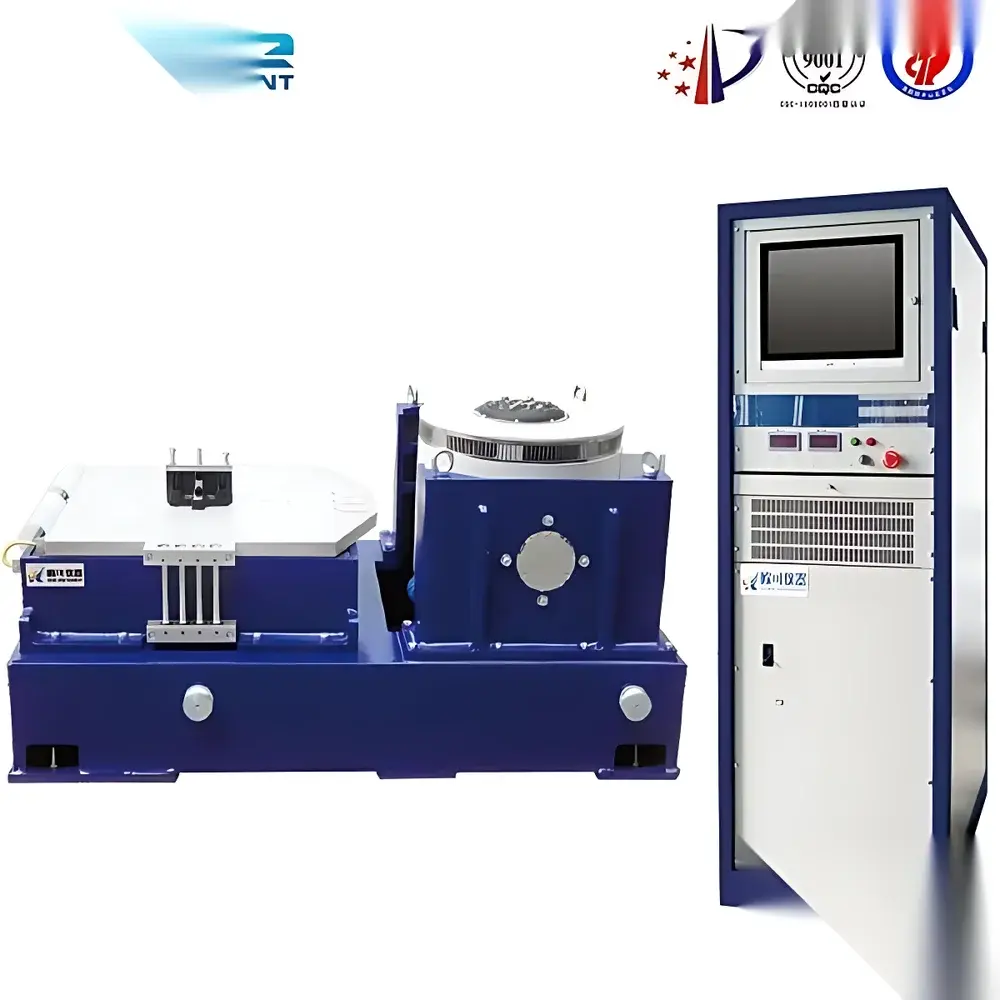
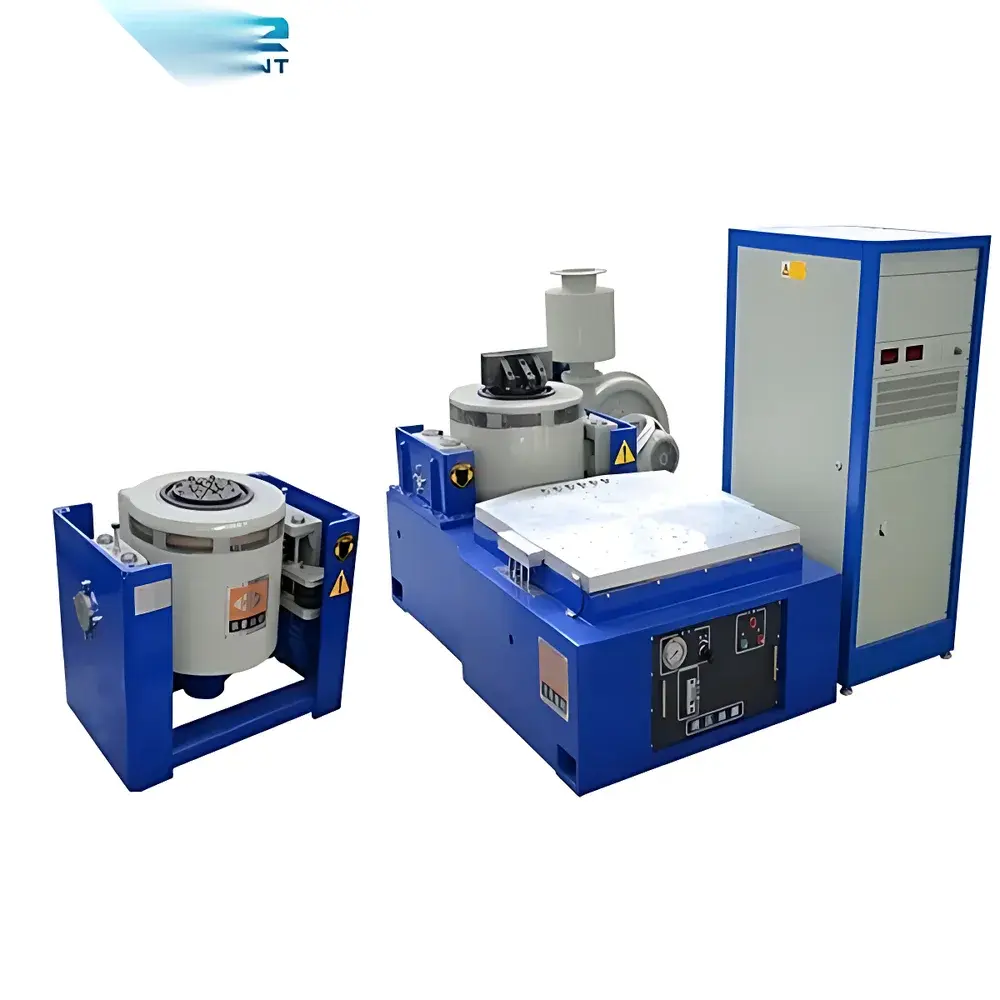
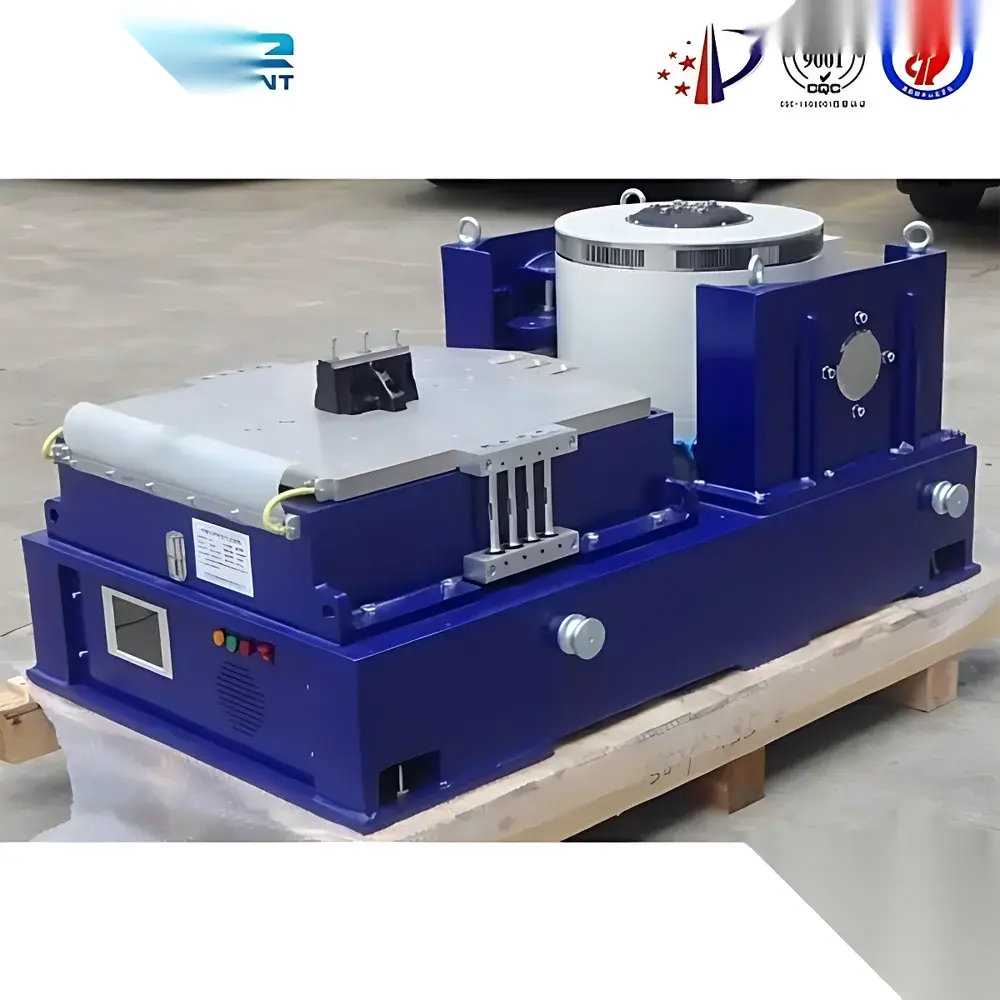
The OK-ES-2 Electromechanical Rotary Vibration Shaker System is a precision-engineered test platform designed for controlled, repeatable sinusoidal and sweep-mode mechanical vibration exposure. Unlike electrodynamic shakers that rely on voice-coil actuators, this system employs an eccentric-mass rotary drive mechanism—commonly referred to in industry as “galloping” or “rotary sweep” vibration—to generate low-frequency, high-displacement oscillatory motion. It operates on the principle of unbalanced rotational inertia, where a precisely weighted eccentric shaft rotates at variable speeds to induce vertical and horizontal harmonic excitation across the test table. This architecture delivers stable, deterministic motion profiles ideal for durability screening, packaging integrity validation, and pre-compliance environmental stress testing in non-regulated R&D and QA environments. The system is optimized for frequencies between 1.7 Hz and 5 Hz (100–300 rpm), making it particularly suited for simulating transport-related shocks and resonant excitations common in road, rail, and warehouse handling scenarios. Its robust mechanical design eliminates the need for floor anchoring, enabling rapid deployment in standard laboratory or production-floor settings.
Key Features
- DC motor-driven speed control ensures smooth acceleration/deceleration and consistent torque delivery across the full 100–300 rpm range, supporting high-inertia loads up to 100 kg without speed droop.
- Synchronous silent belt transmission minimizes acoustic noise emission (<65 dB(A) at 1 m), facilitating operation in shared lab spaces without dedicated acoustic enclosures.
- Linear guide-based sample clamping system enables rapid, tool-free fixture installation and secure retention under dynamic loading—critical for repeatable test setup and operator safety.
- Heavy-duty channel steel base integrated with high-durometer elastomeric damping pads isolates structural vibration transmission and maintains table stability during extended-duration tests.
- Digital LED frequency display provides real-time, calibrated rpm readout with ±3 rpm accuracy, traceable to internal encoder feedback—no external tachometer required.
- Programmable digital timer supports test durations from 0.01 hours to 99.99 hours in 0.01-hour increments, with auto-shutdown and non-volatile memory retention.
Sample Compatibility & Compliance
The OK-ES-2 accommodates a broad range of sample geometries and mounting configurations via its 1200 × 1000 mm aluminum honeycomb test table (custom dimensions available upon request). Standard fixtures include T-slots (M6), threaded inserts, and universal clamp rails compatible with ISO 2041 and ASTM D999 mounting standards. While not certified for IEC 60068-2-6 or MIL-STD-810H qualification-level testing, the system meets functional requirements for internal reliability screening per IPC-J-STD-002, JEDEC JESD22-B103, and GB/T 4857.7 (Chinese national standard for transport packaging vibration testing). It supports GLP-aligned documentation when paired with external data loggers; however, it does not incorporate FDA 21 CFR Part 11-compliant audit trails or electronic signature capability.
Software & Data Management
The OK-ES-2 operates as a stand-alone electromechanical instrument with no embedded microprocessor or PC interface. All operational parameters—including speed setpoint, duration, and runtime status—are configured via front-panel push-button controls and displayed on a dual-digit LED frequency indicator and four-digit hour/minute timer. For traceable data acquisition, users may integrate third-party sensors (e.g., accelerometers, displacement transducers) with USB or Ethernet-enabled DAQ systems (e.g., National Instruments CompactDAQ, Dewesoft X) to record time-synchronized waveforms. Calibration certificates for speed and timer functions are provided with each unit, aligned to ISO/IEC 17025-accredited reference standards.
Applications
- Transport simulation for packaged electronics, medical devices, and consumer goods per ASTM D4728 and ISTA 3A protocols.
- Structural fatigue screening of automotive interior components, HVAC housings, and battery module assemblies.
- Resonance detection and mode-shape preliminary analysis during early-stage mechanical design verification.
- Quality assurance testing of solder joint integrity, connector retention, and adhesive bond strength in printed circuit board assemblies.
- Educational demonstrations of forced harmonic vibration, damping behavior, and critical speed phenomena in mechanical engineering laboratories.
FAQ
Is the OK-ES-2 suitable for high-frequency vibration testing (e.g., above 100 Hz)?
No. This system is mechanically limited to 5 Hz (300 rpm) maximum output frequency and is not intended for high-frequency random or sine dwell testing. For frequencies >10 Hz, electrodynamic shakers are recommended.
Can the amplitude be adjusted independently of rotational speed?
No. Amplitude is fixed at 25.4 mm peak-to-peak (±15% tolerance) and is determined by the eccentric mass geometry. Variable amplitude requires interchangeable cam sets or hydraulic/electrodynamic actuation.
Does the system include vibration spectrum analysis capability?
No. The OK-ES-2 generates only broadband rotary excitation. Spectral analysis requires external instrumentation such as FFT analyzers or modular DAQ hardware.
What maintenance is required for long-term operational stability?
Biannual inspection of belt tension, bearing lubrication (grease type: NLGI #2 lithium complex), and eccentric shaft runout is recommended. No scheduled calibration is required beyond annual verification of speed and timer accuracy.



