
English Product Name
| Brand | OK |
|---|---|
| Temperature Range | -20°C to 150°C / -40°C to 150°C / -60°C to 150°C |
| Temperature Uniformity | ≤ ±2°C |
| Temperature Stability | ±0.5°C |
| Temperature Deviation | ≤ ±2°C |
| Ramp Rate | 0.7–1.0°C/min |
| Sinusoidal Force Capacity | 2.94 kN (300 kgf) |
| Frequency Range | 5–500 Hz |
| Maximum Acceleration | 100 g (980 m/s²) |
| Maximum Velocity | 1.1 m/s |
| Maximum Displacement | 25 mm p-p |
| Payload Capacity | 120 kg |
| Table Diameter | 150 mm |
| Vibration Axis | Vertical (Z-axis) |
| Test Duration Range | 0–9999 h |
| Power Supply | AC 380 V, 50 Hz |
| Internal Chamber Dimensions (OK-ZTH-225) | 500 × 600 × 750 mm (D×W×H) |
| Internal Chamber Dimensions (OK-ZTH-500) | 700 × 800 × 900 mm |
| Internal Chamber Dimensions (OK-ZTH-800) | 800 × 1000 × 1000 mm |
Overview
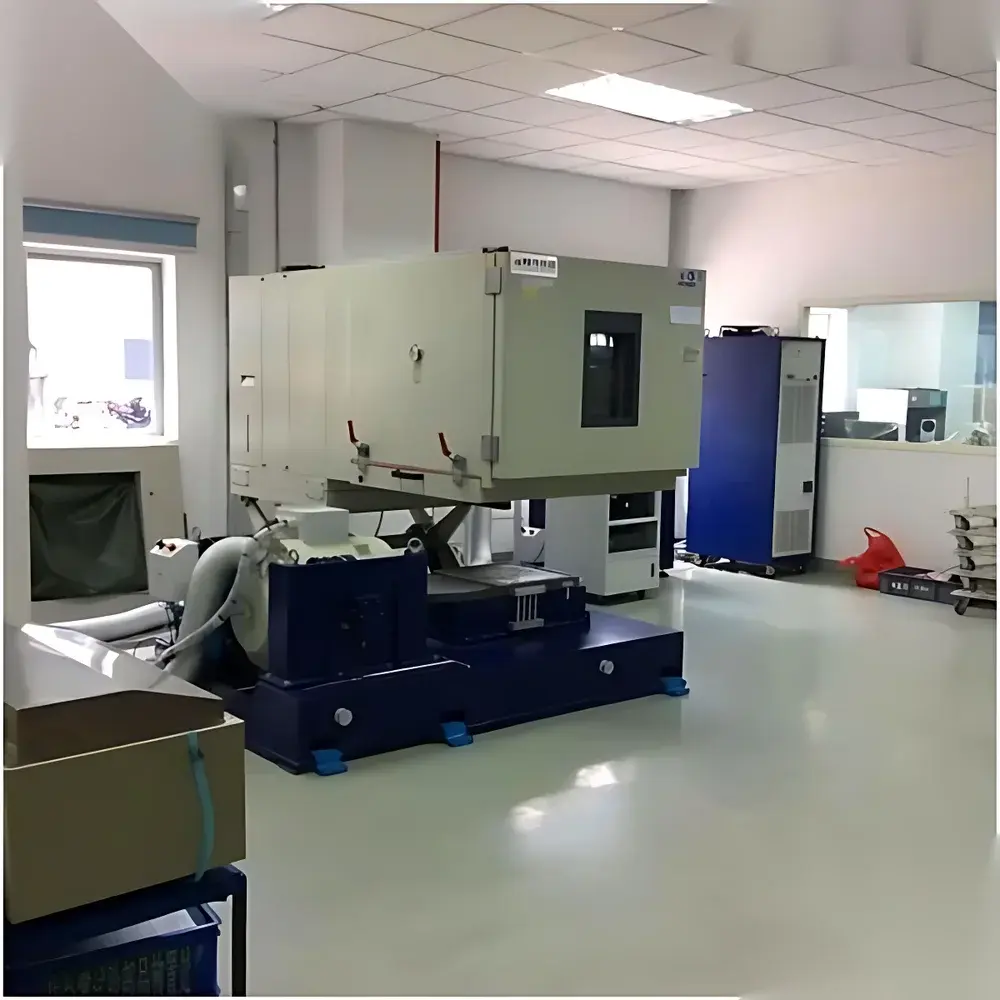
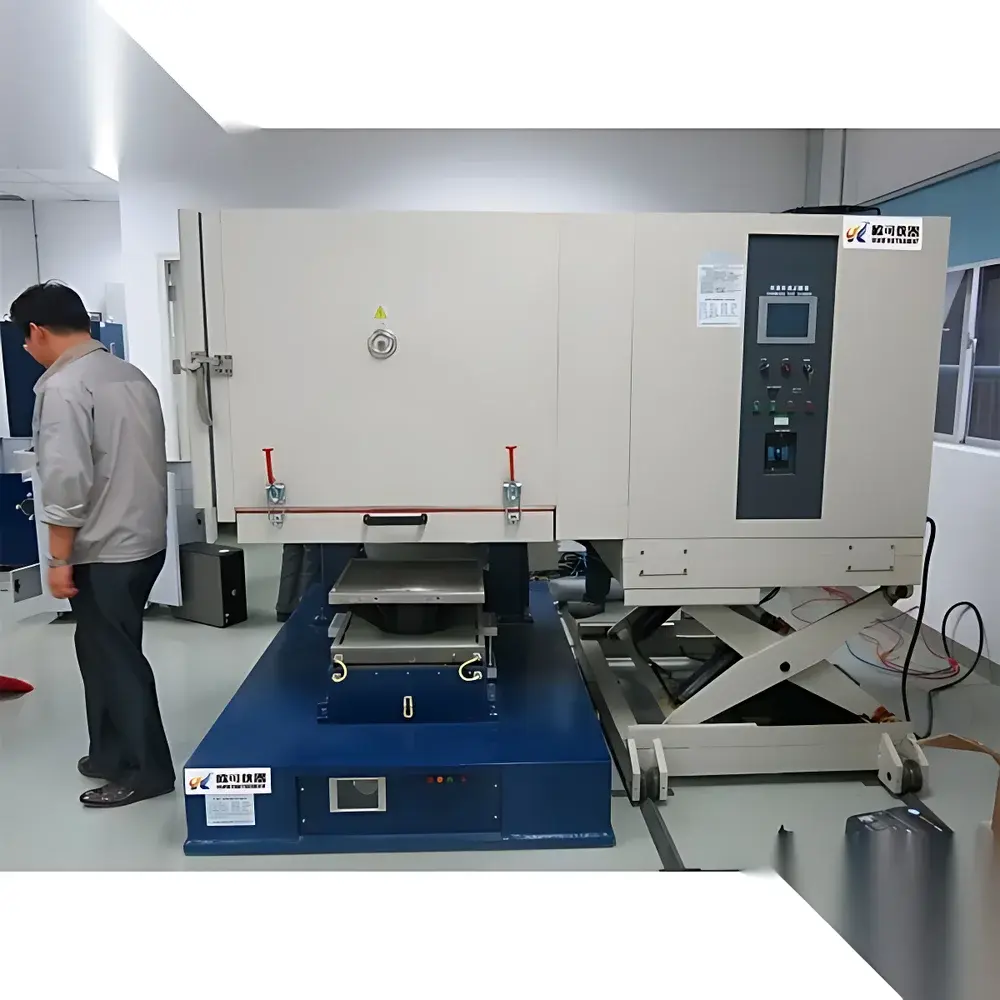
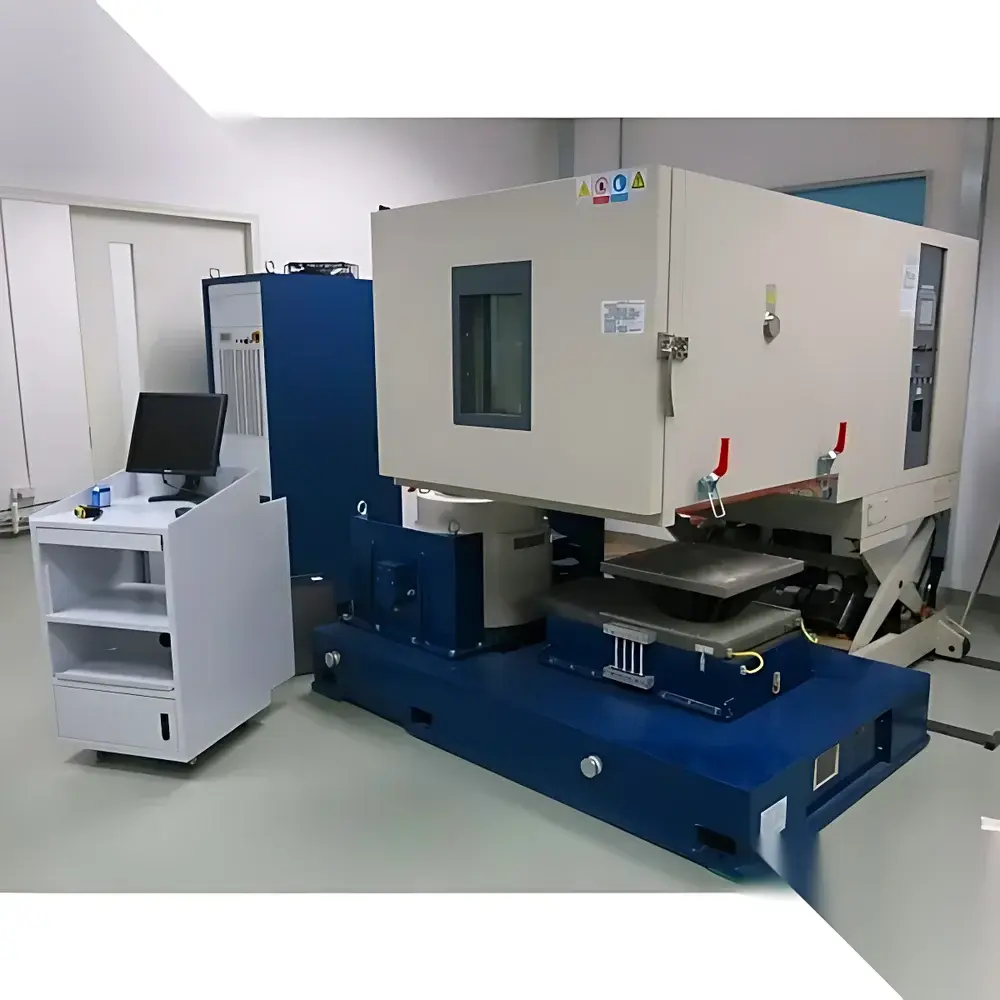
The OK-ZTH Series Combined Temperature, Humidity, and Vibration Environmental Test System is an integrated reliability validation platform engineered for concurrent simulation of thermal stress, humidity exposure, and mechanical vibration—enabling rigorous assessment of product integrity under real-world operational and storage conditions. Designed in accordance with IEC 60068-2, MIL-STD-810H, and ISO 16750-4 test methodologies, this system implements a triaxial coupling architecture where temperature control (via dual-stage cascade refrigeration), humidity regulation (via surface-condensation dehumidification), and electrodynamic vibration excitation operate synchronously within a single chamber environment. Unlike sequential or loosely coupled test approaches, the OK-ZTH achieves true temporal correlation between thermal transients and dynamic loading—critical for identifying latent failure modes such as solder joint fatigue, interconnect delamination, or sealant creep under combined stress states. Its modular thermal management subsystems (independent high- and low-temperature circuits) ensure stable setpoint tracking during rapid ramping, while the vertical-axis shaker assembly delivers calibrated acceleration profiles across the full 5–500 Hz bandwidth with minimal harmonic distortion.
Key Features
- Triple-stress synchronization: Simultaneous control of temperature (−60°C to +150°C), relative humidity (10–98% RH), and broadband vibration (5–500 Hz) within a single test volume.
- Dual-stage cascade refrigeration system using hermetically sealed French Tecumseh compressors, enabling stable operation at −60°C without liquid nitrogen assist.
- Electrodynamic shaker with 2.94 kN force capacity, integrated with digital signal processor (DSP)-based controller featuring real-time feedback compensation and closed-loop acceleration monitoring.
- High-precision temperature regulation via PID+SSR algorithm, PT100 platinum resistance sensors (±0.1°C resolution), and independent heating/cooling circuits to minimize thermal cross-talk during dynamic profiles.
- Robust safety architecture including over-temperature cutoff, refrigerant high-pressure shutdown, phase-loss detection, vibration over-acceleration lockout, and chamber door interlock verification.
- Modular chamber configurations (OK-ZTH-225/500/800) with stainless-steel interior, reinforced structural frame, and optional humidity capability (add-on steam generator or desiccant wheel).
Sample Compatibility & Compliance
The OK-ZTH accommodates test specimens up to 120 kg mass on its 150 mm diameter rigid aluminum table, supporting both free-field mounting and fixture-integrated testing per ASTM D4728 and IPC-9701 standards. Chamber internal dimensions are optimized for aerospace avionics enclosures, automotive ECUs, military-grade connectors, and PCB assemblies requiring full-system-level qualification. The system meets essential regulatory requirements for environmental stress screening (ESS) and HALT/HASS protocols, and supports audit-ready documentation aligned with ISO/IEC 17025 laboratory accreditation criteria. All thermal and vibrational performance data are traceable to NIST-calibrated reference instruments, and firmware logs maintain immutable timestamps for GLP/GMP-compliant test records.
Software & Data Management
Control and data acquisition are managed through a dedicated Windows-based platform featuring dual-channel charge amplifier integration, real-time FFT spectrum analysis, and programmable test sequencing (sine sweep, random PSD, classical shock, and mixed-mode profiles). The software includes built-in compliance templates for MIL-STD-810H Method 514.7, RTCA DO-160G Section 8, and IEC 60068-2-64. All test parameters—including temperature setpoints, vibration spectra, dwell times, and alarm thresholds—are stored in encrypted XML configuration files. Audit trails record operator login events, parameter modifications, and emergency stop activations in accordance with FDA 21 CFR Part 11 requirements. Export options include CSV, MATLAB .mat, and universal UFF58 formats for post-test modal analysis and FEA correlation.
Applications
This system is routinely deployed in R&D validation labs and production QA facilities for: accelerated life testing of battery management systems under thermal-vibrational cycling; qualification of satellite payload electronics subjected to launch vibration + orbital thermal vacuum transitions; durability evaluation of electric vehicle powertrain controllers exposed to road-induced shake and under-hood temperature extremes; and reliability screening of medical imaging subsystems requiring simultaneous EMI immunity and environmental robustness. It further supports failure analysis workflows by replicating field-observed stress combinations—such as condensation-induced corrosion during cold-soak followed by high-g shock events—that cannot be isolated using single-stress chambers.
FAQ
Does the OK-ZTH support humidity control?
Yes—humidity functionality is available as a factory-installed option using either steam injection or desiccant-based dehumidification, extending the system to full combined temperature-humidity-vibration (THV) testing per IEC 60068-2-30 and JEDEC JESD22-A101.
Can vibration profiles be synchronized with non-linear temperature ramps?
Yes—the DSP controller enables time-synchronized triggering of vibration segments (e.g., resonance dwell at specific temperatures) with sub-second precision, ensuring accurate replication of thermally induced modal shifts.
What calibration documentation is provided?
Each unit ships with a NIST-traceable calibration certificate covering temperature uniformity, acceleration amplitude linearity, and frequency response flatness—valid for 12 months under standard operating conditions.
Is remote monitoring supported?
The system includes Ethernet connectivity and OPC UA server support for integration into enterprise MES/QMS platforms, enabling real-time status dashboards and automated report generation without local workstation dependency.



