
English Product Name
| Brand | Other Brands |
|---|---|
| Origin | Imported |
| Manufacturer Type | General Distributor |
| Model | LXJ-Capacity |
| Maximum Load | 35–200 kg |
| Number of Test Stations | 4–64 |
| Acceleration Range | 30–200,000 m/s² |
| Specimen Height Limit | 200–300 mm |
| Test Axes | X, Y, Z (independently configurable) |
| Mounting Radius (from rotation center) | 200–1000 mm |
| Startup Time | ≤3–5 min |
| Continuous Operation Duration | 30–60 min |
| Power Supply | AC 380 V, 1.5–6.5 kVA |
| Dimensions (L×W×H) | 924×910×1242 mm to 1953×470×993 mm |
| Slip Ring Configuration | 15-channel, 500 V / 5 A |
| Weight | 1000–2300 kg |
| Compliance Standards | GJB 150, GJB 360, GJB 548, GB/T 2423, MIL-STD-202F, MIL-STD-810F, MIL-STD-883C, IEC 60068-2-27 |
Overview
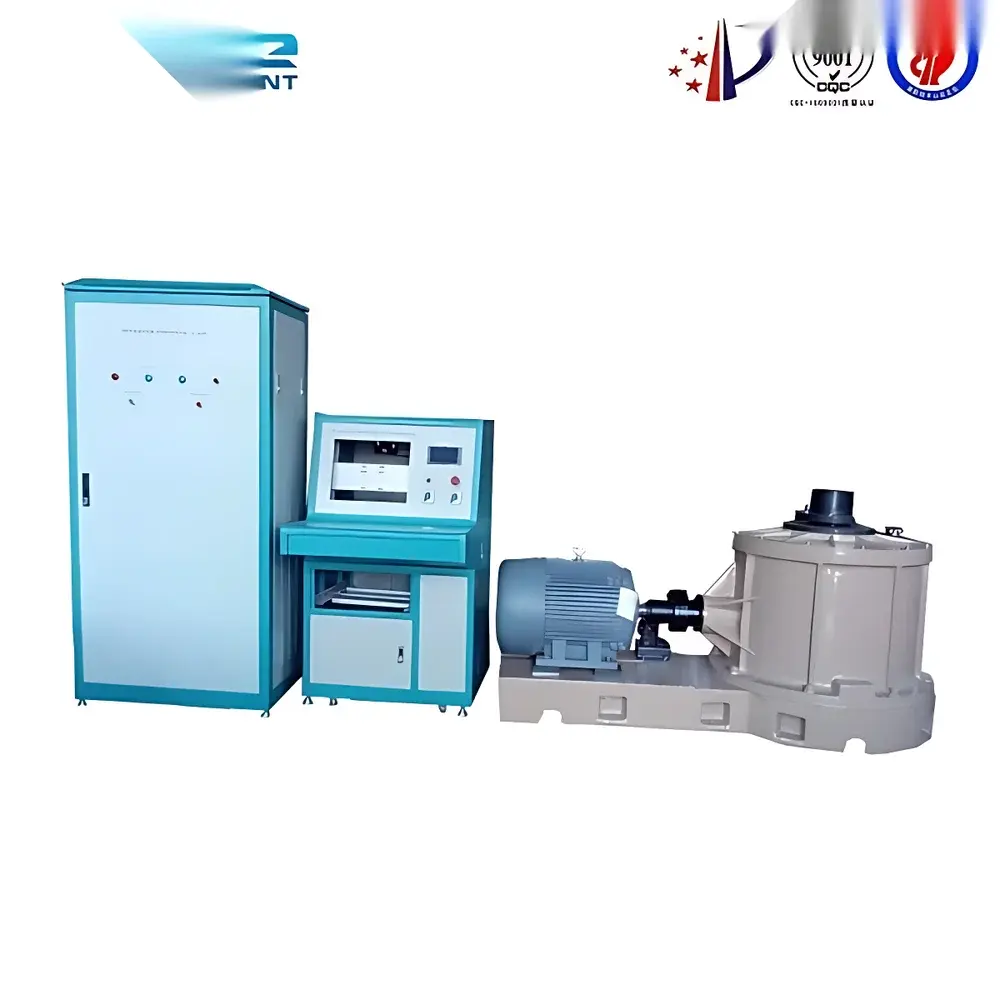
The LXJ-Series Centrifugal Steady-State Acceleration Testing Machine is a precision-engineered dynamic overloading test system designed to subject electronic components, microelectromechanical systems (MEMS), avionics modules, and small-scale electro-mechanical assemblies to controlled, high-magnitude centrifugal acceleration fields. Unlike transient shock or vibration testing, this machine generates sustained, steady-state inertial loading via rotational motion—simulating gravitational and non-gravitational acceleration environments encountered during launch, re-entry, high-G maneuvering, or centrifuge-based qualification. The core principle relies on Newtonian centripetal force generation: F = m·ω²·r, where angular velocity (ω) and radial distance (r) are precisely regulated to achieve target acceleration profiles (a = ω²·r) in units of m/s² (equivalent to multiples of standard gravity, g, where 1 g ≈ 9.80665 m/s²). This enables deterministic, repeatable structural integrity assessment under static-equivalent inertial stress without mechanical impact or oscillatory excitation.
Key Features
- Real-time industrial PC-based control architecture with closed-loop feedback for acceleration setpoint accuracy within ±1.5% of full scale
- Multi-stage acceleration ramping capability: programmable stepwise or continuous acceleration profiles across up to six discrete stages per test sequence
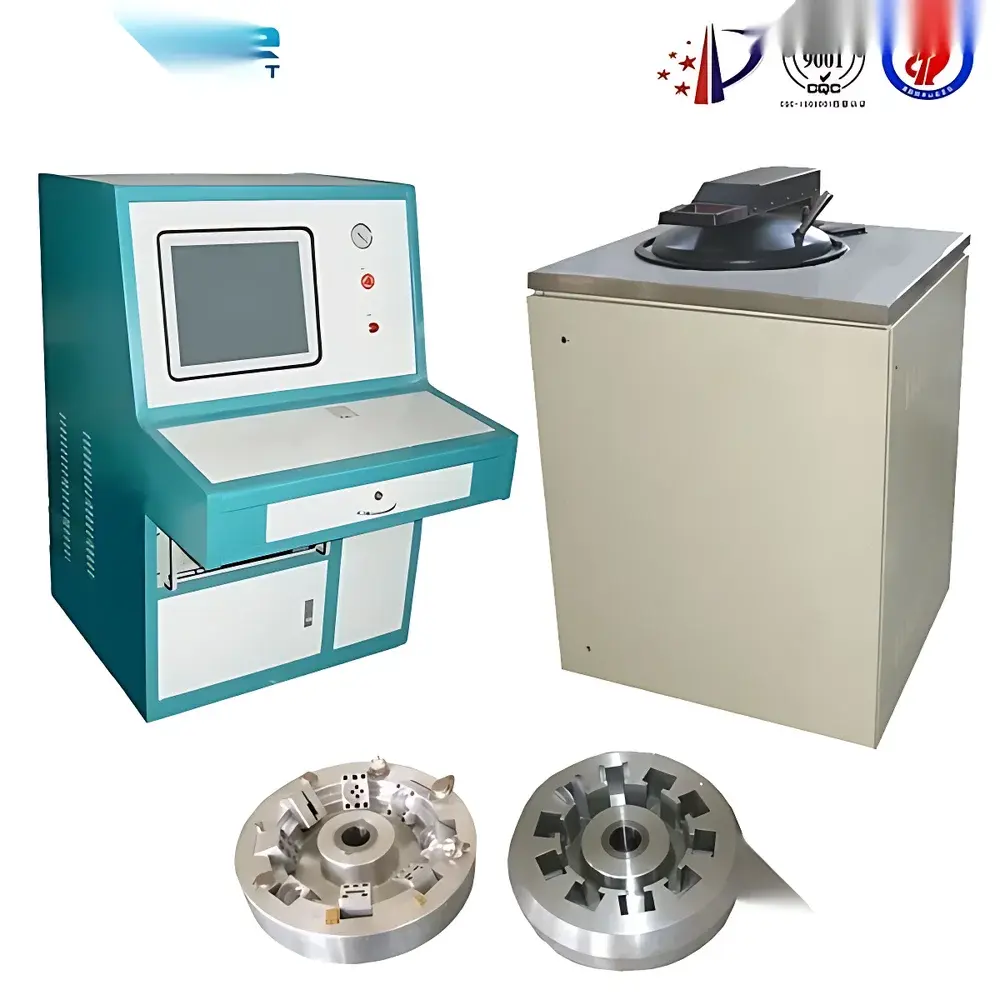
- Triaxial test configuration support: independent mounting fixtures allow sequential or isolated X-, Y-, and Z-axis acceleration exposure per specimen, aligned to the device’s functional orientation
- Integrated safety interlock system featuring open-circuit detection, overspeed cutoff (<105% nominal RPM), and real-time acceleration limit monitoring with automatic emergency shutdown
- Modular slip-ring assembly: 15-channel, 500 V / 5 A rated rotary electrical interface enabling uninterrupted power, signal, and sensor data transmission during rotation
- Dual-mode operation: selectable manual override for setup and calibration, and fully automated execution with preloaded test protocols and pass/fail logic
- On-screen real-time visualization of acceleration trace, tolerance band envelope, elapsed time, and cumulative runtime—exportable as CSV or PDF
Sample Compatibility & Compliance
The LXJ platform accommodates specimens ranging from surface-mount resistors and ceramic capacitors to compact PCB subassemblies and miniature inertial sensors. Specimen height is constrained to 200–300 mm; maximum radial mounting radius ranges from 200 mm to 1000 mm depending on model variant, directly influencing achievable acceleration at fixed rotational speed. All configurations comply with military and international environmental test standards governing acceleration endurance, including MIL-STD-810F Method 513.6 (Acceleration), MIL-STD-883C Method 2001 (Centrifugal Acceleration), GJB 150.15A (Steady-State Acceleration), and IEC 60068-2-27 (Shock). Test reports generated by the system include timestamped metadata, operator ID, environmental chamber status (if integrated), and digital signature logs—supporting GLP/GMP audit readiness and traceability requirements under ISO/IEC 17025.
Software & Data Management
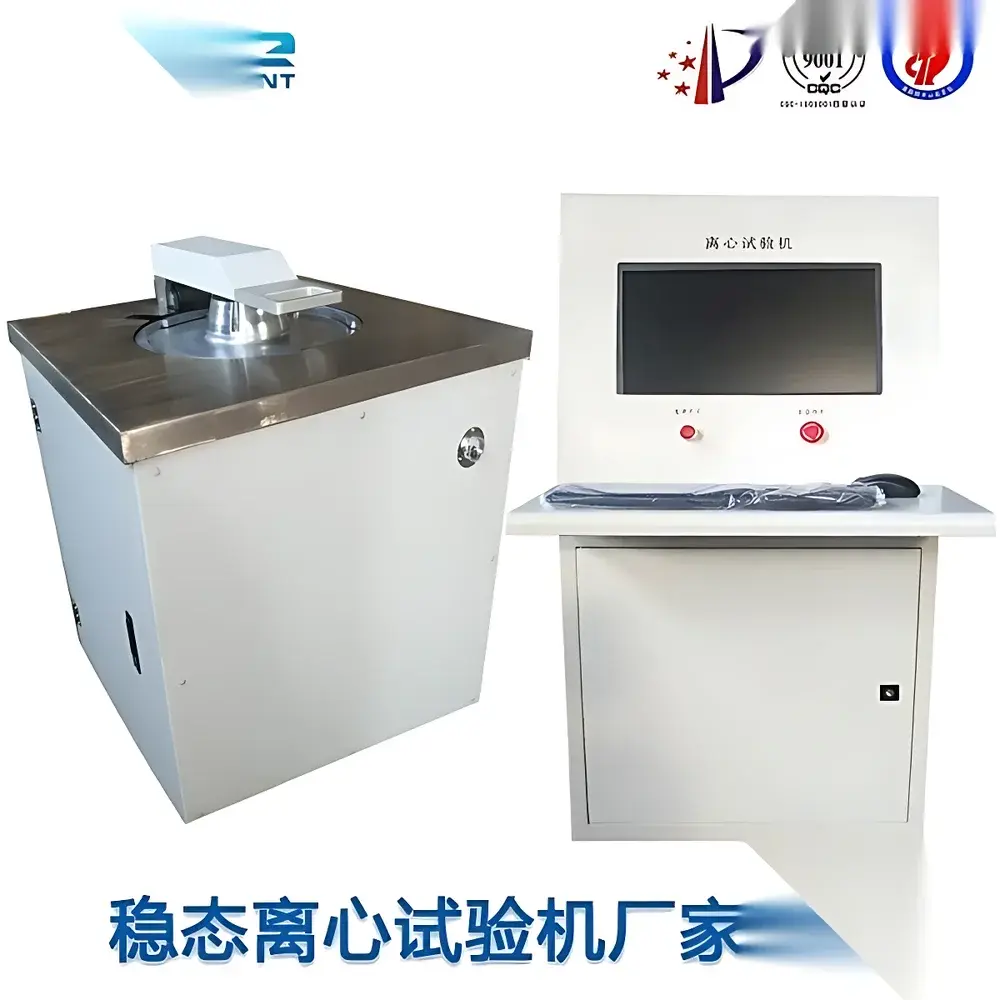
The embedded control software provides a Windows-based GUI with intuitive parameter definition, profile sequencing, and live diagnostics. Each test run automatically archives raw acceleration data (sampled at ≥1 kHz), thermal telemetry (optional IR sensor integration), and system health metrics (motor current, bearing temperature, power consumption). Export formats include IEEE-compliant .tdms, CSV, and XML. Audit trails record all user actions—including parameter edits, abort triggers, and calibration events—with immutable timestamps. Optional FDA 21 CFR Part 11 compliance package adds electronic signatures, role-based access control, and encrypted database logging for regulated industries.
Applications
This system is routinely deployed in aerospace component qualification labs, semiconductor reliability centers, and defense electronics manufacturing facilities. Typical use cases include: validating solder joint integrity in high-density BGA packages under 50,000 m/s² loads; assessing MEMS gyroscope bias stability after 200,000 m/s² exposure; verifying structural retention of conformal coatings on hybrid microcircuits; qualifying miniature battery housings for drone propulsion systems; and screening piezoelectric actuators for satellite reaction wheels. Its ability to sustain acceleration for up to 60 minutes enables creep and fatigue analysis not feasible with impulse-based methods.
FAQ
What acceleration magnitudes can the LXJ-Series achieve—and how is accuracy maintained across the range?
Acceleration output spans 30–200,000 m/s², calibrated using traceable NIST-certified laser Doppler vibrometry and high-frequency strain gauge arrays. Accuracy is maintained via dual-loop PID control combining encoder-based RPM feedback and real-time radius compensation algorithms.
Is the system compatible with existing environmental chambers or vacuum enclosures?
Yes—mechanical interfaces and cable routing paths are standardized per ISO 10360-5; optional vacuum-rated slip rings and feedthroughs are available for integration into low-pressure test environments.
How does the machine handle unbalanced loads during high-G operation?
Dynamic balancing is performed prior to each test sequence using integrated accelerometers and motor current harmonics analysis; imbalance correction is applied via adjustable counterweights or active magnetic bearing compensation (on premium configurations).
Can test data be integrated into enterprise quality management systems (QMS)?
Native RESTful API and OPC UA server support enable bidirectional communication with Siemens Opcenter, ETQ Reliance, and MasterControl QMS platforms—facilitating automated report ingestion and nonconformance workflow initiation.



