
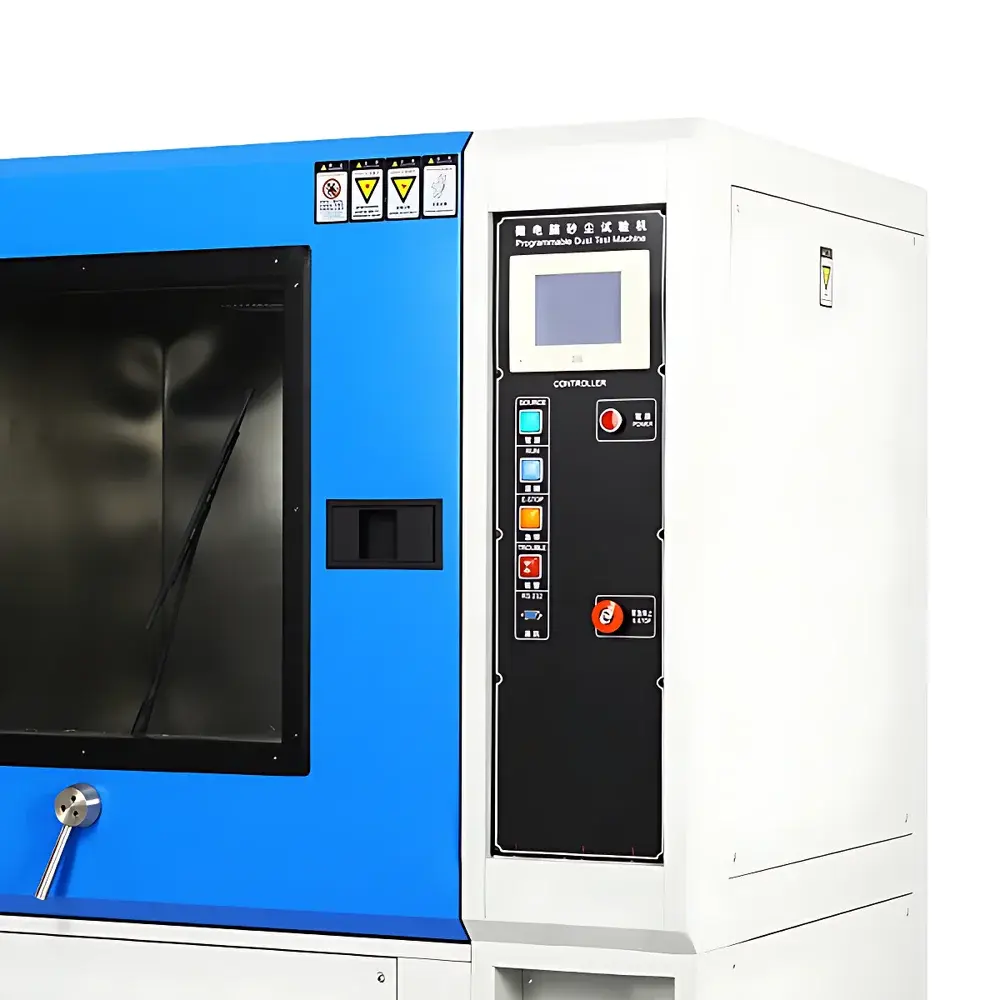
English Product Name
| Brand | OK Instruments |
|---|---|
| Origin | Guangdong, China |
| Manufacturer Type | Direct Manufacturer |
| Model | OK-HC-1000 |
| Sand Composition | 97–99% SiO₂ (silicon dioxide) |
| Sand Blowing Concentration | 1.1 g/m³ ±0.25 g/m³ to 2.2 g/m³ ±0.5 g/m³ |
| Sand Blowing Velocity | 0–29 m/s |
| Dust Blowing Concentration | 0.1–10.6 g/m³ ±7 g/m³ |
| Dust Blowing Velocity | 8.9 m/s ±1.2 m/s |
Overview
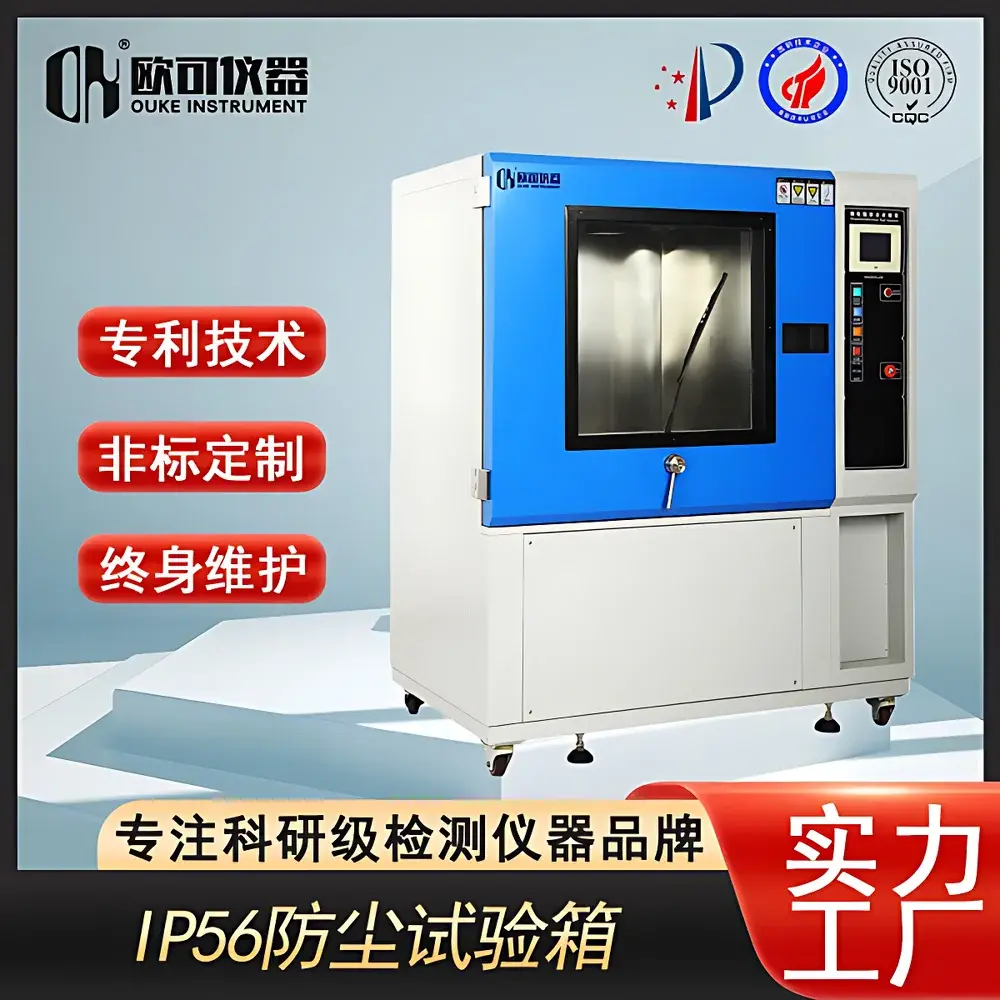
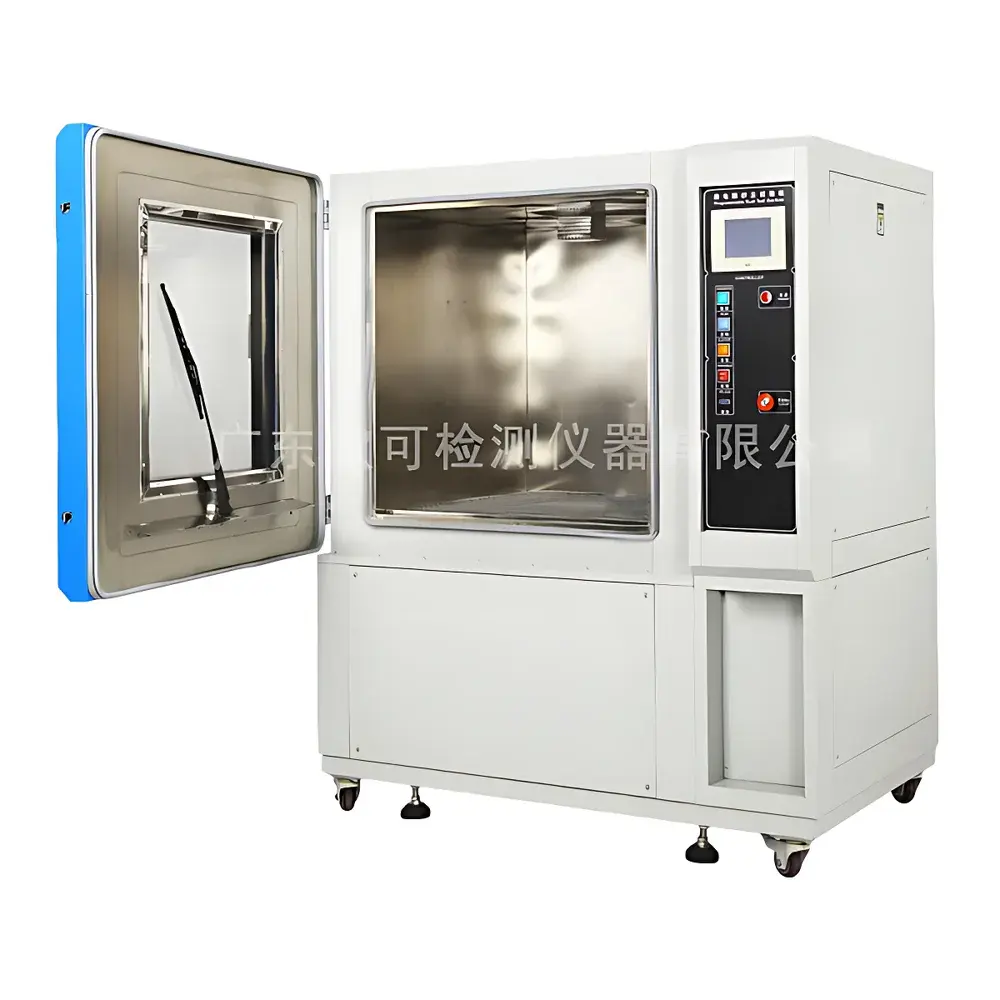
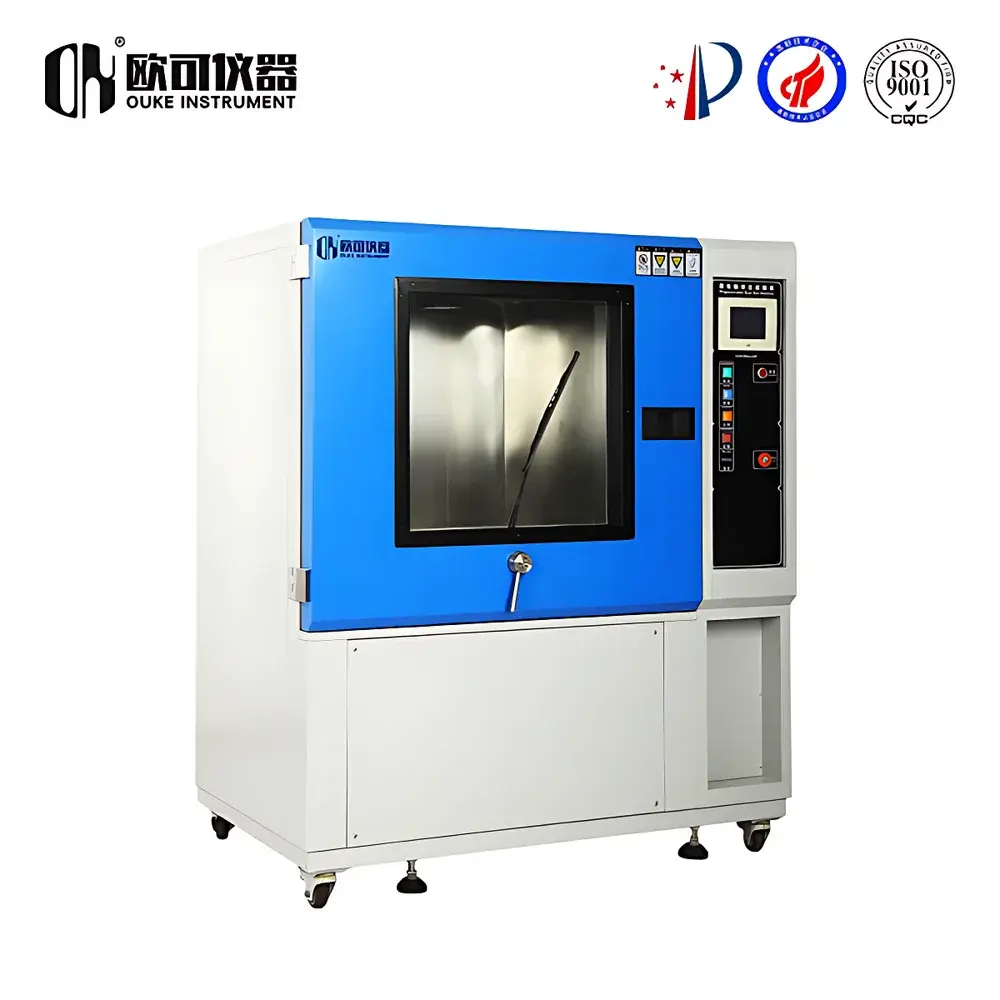
The OK OK-HC-1000 Walk-In Sand and Dust Test Chamber is an engineered environmental simulation system designed for large-scale, real-world particulate exposure testing under controlled aerodynamic and compositional conditions. Unlike conventional benchtop sand/dust chambers, this walk-in chamber functions as a fully accessible test volume—typically ranging from 30 to over 100 m³—capable of accommodating full-size vehicles, energy storage systems, telecom base stations, military shelters, and industrial equipment. Its operation is grounded in ISO 20623:2021, IEC 60529 (IP5X/IP6X), MIL-STD-810H Method 510.7, and GB/T 2423.37–2006, with airflow dynamics governed by Couette-type boundary layer control and turbulent dispersion modeling. The chamber integrates high-fidelity dust generation, closed-loop recirculation, multi-point concentration monitoring, and precision velocity profiling to replicate desert, arid, or industrial airborne particulate environments with metrological traceability.
Key Features
- Walk-in architecture with reinforced welded steel frame, double-wall insulated construction, and pressure-rated sealing at all access points—including dual-seal personnel doors, quartz observation windows, and feedthroughs rated to IP65.
- Modular dust delivery system using calibrated vibratory feeders and pneumatic injection nozzles, enabling programmable stepwise or continuous introduction of standardized SiO₂ test dust (ASTM D1506-compliant).
- High-capacity recirculation loop powered by explosion-proof, abrasion-resistant centrifugal blowers (rated ≥75 kW total output), integrated with ceramic-lined ductwork and dynamic flow balancing vanes.
- Real-time particulate monitoring via laser scattering sensors (0.3–10 µm detection range) and gravimetric sampling ports compliant with ISO 12103-1 A2/A4 test dust specifications.
- Optional integrated temperature and humidity control module (–20°C to +80°C, 10–95% RH non-condensing) for combined sand-dust/thermal stress testing per MIL-STD-810H Figure 510.7-1.
- PLC-based control system with HMI interface supporting pre-programmed test profiles, data logging at ≤1 Hz resolution, and audit-trail-enabled user access levels.
Sample Compatibility & Compliance
The OK-HC-1000 accommodates samples up to 4.5 m (W) × 3.0 m (H) × 12 m (L), including EV battery packs, 5G macro-cell cabinets, armored vehicle subsystems, and grid-scale inverters. All internal surfaces are electropolished stainless steel (AISI 316L) or coated with ceramic-polymer composites to resist abrasive wear. The chamber meets structural integrity requirements per EN 14470-1 for hazardous environment containment and includes redundant safety interlocks—door-open shutdown, overpressure relief valves, HEPA-filtered exhaust scrubbing (≥99.99% @ 0.3 µm), and Class I Div 2 electrical certification. Calibration protocols align with ISO/IEC 17025-accredited procedures for velocity uniformity (±15% spatial deviation), concentration stability (±10% over 60 min), and thermal gradient control (≤2°C max deviation across test volume).
Software & Data Management
The embedded OK-TestSuite™ software provides ISO 17025-aligned test execution, including automated ramp-hold cycles, multi-sensor correlation dashboards, and export-ready reports compliant with FDA 21 CFR Part 11 (electronic signatures, audit trails, data immutability). Raw sensor streams (velocity, PM mass concentration, temperature, relative humidity) are time-stamped and stored locally on encrypted SSDs with optional cloud backup. Historical datasets support statistical process control (SPC) analysis—Cp/Cpk trending, failure mode correlation, and Weibull reliability modeling for dust ingress prediction. Firmware updates are delivered via secure OTA protocol with SHA-256 signature verification.
Applications
- Automotive: Validation of IP6K9K-rated powertrain enclosures, HVAC filter efficiency under sustained sand loading, and connector corrosion resistance in off-road duty cycles.
- Energy Storage: Functional endurance testing of containerized BESS units under simulated Middle Eastern desert conditions (e.g., 55°C + 2.0 g/m³ sand load @ 15 m/s).
- Defense & Aerospace: Environmental qualification of C4ISR shelters, radar housings, and UAV ground support equipment per DEF STAN 00-35 and DO-160 Section 17.
- Telecom Infrastructure: Verification of thermal management efficacy and ingress protection for outdoor RAN cabinets exposed to wind-blown silt in coastal or semi-arid zones.
- Industrial Equipment: Certification of mining excavators, wind turbine pitch controllers, and agricultural harvesters against long-term abrasive particulate degradation.
FAQ
What standards does the OK-HC-1000 comply with for dust testing?
It supports test execution per ISO 20623:2021, IEC 60529 (IP5X/IP6X), MIL-STD-810H Method 510.7, GB/T 2423.37–2006, and ASTM D1506—configurable via built-in standard libraries.
Can the chamber operate with both sand and dust modes simultaneously?
Yes—the dual-mode injector system allows independent control of coarse sand (A2, 50–100 µm) and fine dust (A4, 0.5–20 µm) concentrations and velocities within the same test cycle.
Is third-party calibration and validation support available?
OK Instruments provides factory acceptance testing (FAT) with NIST-traceable instruments and offers optional on-site SAT (site acceptance testing) with certified metrologists and ISO/IEC 17025 documentation.
How is dust recovered and reused during extended tests?
A cyclonic primary separator and multi-stage HEPA/ULPA filtration train recover >92% of suspended particulate mass; recovered dust is sieved, moisture-conditioned, and reintroduced via closed-loop volumetric dosing.
What maintenance intervals are recommended for the recirculation system?
Blower bearings require lubrication every 2,000 operating hours; ceramic duct liners undergo visual inspection quarterly; filter elements are replaced per differential pressure thresholds or maximum 6-month service life.
Related Products



