English Product Name
| Brand | Dongxi |
|---|---|
| Origin | Beijing, China |
| Manufacturer Type | OEM Manufacturer |
| Origin Category | Domestic (China) |
| Model | GC-4085 (Configuration II) |
| Price Range | USD 42,000 – 70,000 |
Overview
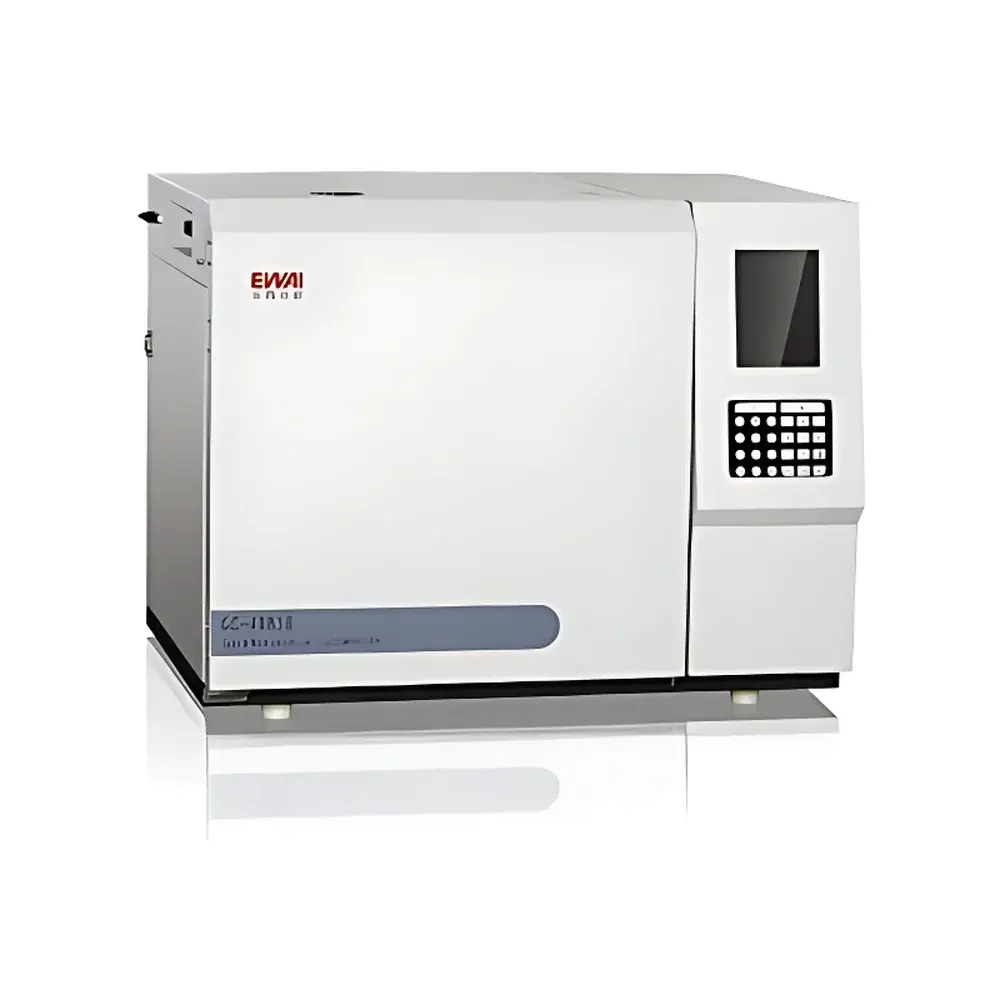
The Dongxi GC-4085B Mine Gas Multi-Parameter Automated Gas Chromatograph is a purpose-built, high-reliability gas chromatography system engineered specifically for continuous, real-time monitoring of gaseous species associated with coal seam spontaneous combustion in underground mining environments. Based on capillary and packed column gas chromatography with flame ionization detection (FID), thermal conductivity detection (TCD), and optional methanizer–FID configuration for CO quantification, the instrument implements a robust multi-column, multi-detector architecture to resolve and quantify O₂, N₂, CH₄, CO, CO₂, C₂H₂, C₂H₄, C₂H₆, C₃H₈, and SO₂—key indicator gases defined in AQT 1019–2006, the Chinese standard for fire-gas chromatographic analysis and index optimization in coal mines. Its dual-oven design enables independent temperature control for analytical and pre-separation columns, ensuring optimal resolution of overlapping hydrocarbon peaks and minimizing co-elution artifacts during rapid cycle analysis (4–8 min per full profile). The system integrates directly with surface-based mine gas monitoring networks via 12–32-channel bundle tube manifolds, supporting unattended, sequential sampling under microprocessor-controlled valve sequencing and data acquisition.
Key Features
- Dual independently programmable column ovens (patent ZL200620012498.4) for simultaneous high-temperature hydrocarbon separation and low-temperature permanent gas analysis
- Triple-column parallel configuration with dedicated pre-columns to protect analytical columns from particulate and moisture contamination—extending column lifetime and operational uptime
- 12-port rotary valve with pull-type actuation mechanism, reducing dependency on high-pressure carrier gas supply and eliminating need for auxiliary air compressors
- Integrated FID and TCD detectors with selectable detector interconversion; optional catalytic methanizer for sub-ppm CO detection
- 5.7-inch backlit LCD interface displaying real-time status of 8 temperature zones, carrier gas flow rates, and system pressures
- Automated back-flush functionality shortening analysis cycle time without sacrificing resolution or reproducibility
- Seamless transition between automatic bundle-tube field monitoring mode and manual laboratory sample injection mode
Sample Compatibility & Compliance
The GC-4085B accepts gaseous samples delivered via stainless steel or polytetrafluoroethylene (PTFE)-lined bundle tubes from underground mining faces, sealed goafs, or ventilation return airways. It supports both continuous online sampling and discrete offline analysis using gas-tight syringes or Tedlar® bags. All hardware and software functions comply with AQT 1019–2006 requirements for detection limits, calibration protocols, and reporting formats for spontaneous combustion early-warning applications. While not certified to IEC 60079 or ATEX standards for intrinsic safety, the instrument is designed for surface-based operation only, interfacing with intrinsically safe sampling systems deployed underground. Data integrity meets GLP-aligned audit trail requirements through timestamped event logging, user-access controls, and non-editable raw data storage.
Software & Data Management
The proprietary A5085E chromatography data system runs natively on Windows platforms (Windows 7 through 11) and incorporates a 24-bit analog-to-digital converter for high-fidelity signal digitization. Key software capabilities include: automated peak identification and integration—even for low-amplitude, tailing, or solvent-front peaks; real-time calculation of critical fire-indicator ratios (e.g., C₂H₄/C₂H₆, CH₄/C₂H₄); dynamic alarm thresholds triggered by preset concentration limits; generation of explosion triangle diagrams based on O₂–CH₄–CO₂ compositional data; and export-ready reporting compliant with mine safety documentation workflows. The system supports networked deployment with OPC UA-compatible interfaces, enabling integration into centralized mine monitoring SCADA platforms. All calibration curves, method files, and raw chromatograms are stored with immutable metadata—including operator ID, acquisition time, column history, and detector gain settings—to support internal QA/QC audits.
Applications
- Real-time surveillance of spontaneous combustion progression in active longwall panels and sealed goaf areas
- Quantitative assessment of fire extinction status in sealed zones via temporal tracking of CO decay kinetics and hydrocarbon ratio trends
- Multi-point gas composition mapping across ventilation circuits to identify abnormal methane migration or oxidation hotspots
- Analysis of SF₆ tracer gas for airflow path validation and leakage quantification in ventilation networks
- Support for regulatory compliance reporting under China’s Coal Mine Safety Regulations (CMR) and Emergency Response Protocols
- Supplemental laboratory analysis of manually collected samples when remote sampling infrastructure is unavailable
FAQ
What gases can the GC-4085B detect and quantify?
It routinely quantifies O₂, N₂, CH₄, CO, CO₂, C₂H₂, C₂H₄, C₂H₆, C₃H₈, and SO₂ at detection limits ranging from 0.1 ppm (CH₄, C₂H₄) to 2.0 ppm (CO₂), as validated per AQT 1019–2006.
Is the system compatible with existing mine bundle tube networks?
Yes—it interfaces directly with standard 12–32 channel bundle tube manifolds and supports scalable expansion to ≥32 sampling points via modular valve manifold upgrades.
Does the instrument meet international safety or data integrity standards?
While not ATEX/IECEx-certified (intended for surface use only), its data handling architecture aligns with GLP principles, including electronic signatures, audit trails, and version-controlled method storage.
Can it operate without continuous PC connectivity?
Yes—the embedded controller manages full sequence automation (sampling, injection, detection, reporting) autonomously; PC connection is required only for method setup, data review, and report generation.
What maintenance intervals are recommended for sustained field operation?
Column conditioning every 3 months, detector cleaning every 6 months, and annual calibration verification against certified gas standards are advised for optimal performance in high-dust mining environments.