
English Product Name
| Brand | OEM / Custom Brand Available |
|---|---|
| Origin | Imported |
| Manufacturer Type | Authorized Distributor |
| Price | USD 2,950 (FOB) |
| Temperature Range | −65 °C to +150 °C |
| Temperature Uniformity | ±2.0 °C |
| Temperature Fluctuation | ±0.5 °C |
| Humidity Range | 20–95% RH |
| Humidity Uniformity | ±3.0% RH |
| Humidity Fluctuation | ±1.5% RH |
| Heating Rate (20 °C → 85 °C, no load) | <60 min |
| Cooling Rate (20 °C → −40 °C, no load) | <70 min |
| Power Supply | 3-phase 5-wire AC 380 V, 50 Hz, PE grounded |
Overview
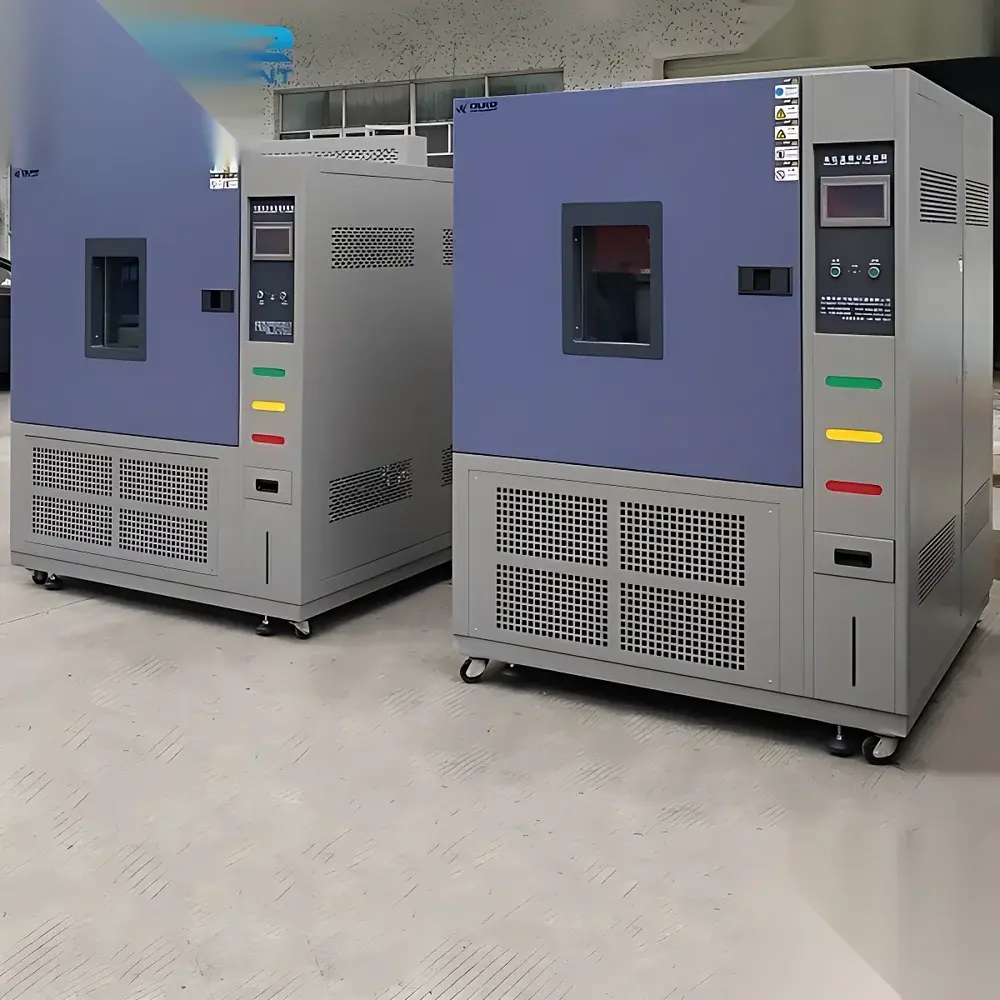
The Pharmaceutical Stability Chamber is an ISO/IEC 17025-aligned environmental test chamber engineered for long-term stability testing of pharmaceutical products in accordance with ICH Q1A(R2), Q5C, and Q5D guidelines. It employs dual independent PID-controlled refrigeration and humidification systems—based on cascade compression cooling and ultrasonic steam generation—to maintain precise, traceable, and reproducible temperature (−65 °C to +150 °C) and relative humidity (20–95% RH) profiles over extended durations (up to 180 days). Designed specifically for compliance-driven QC/QA laboratories, the chamber meets the structural and metrological requirements of GB/T 5170.2–1996 (temperature verification) and GB/T 5170.5–1996 (humidity verification), as well as ASTM E2019–22 for stability chamber qualification. Its air-circulation architecture ensures laminar, low-turbulence airflow across all shelf zones—critical for minimizing thermal gradients during ICH Zone IVb (30 °C/75% RH) or accelerated storage condition (40 °C/75% RH) protocols.
Key Features
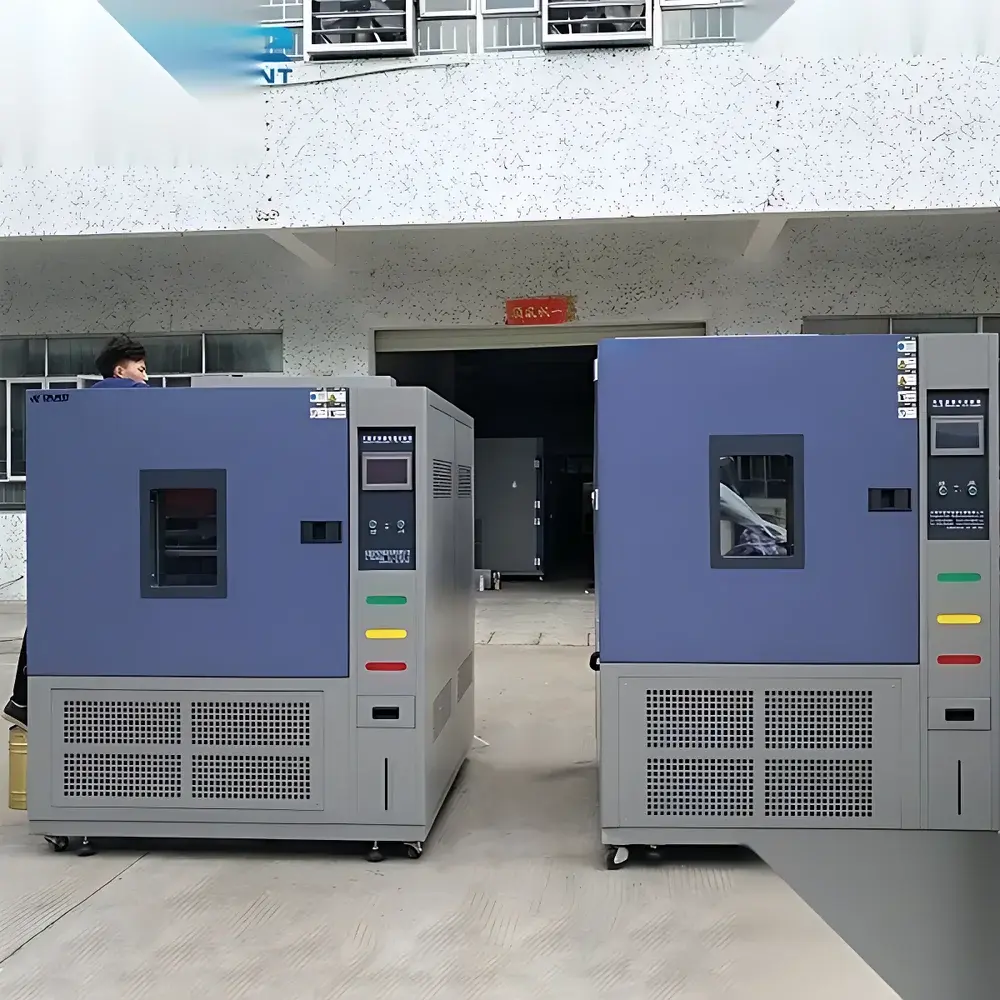
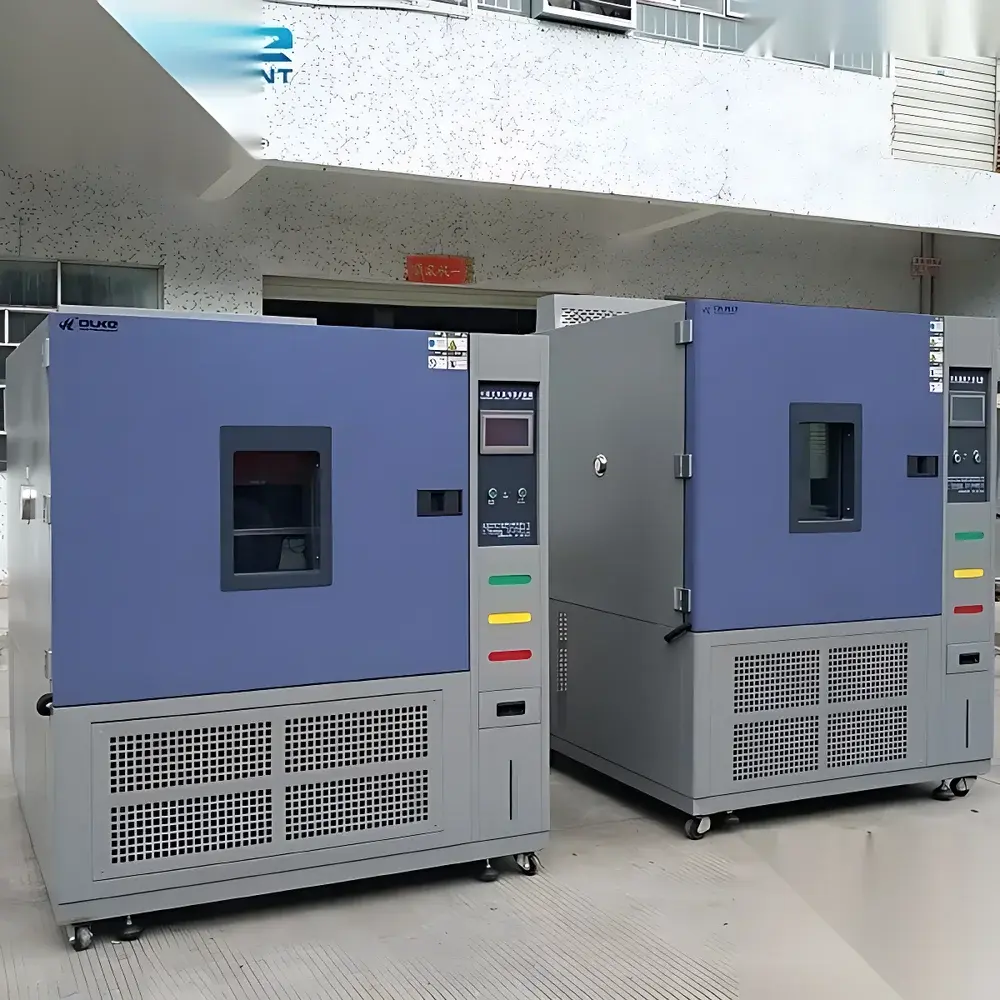
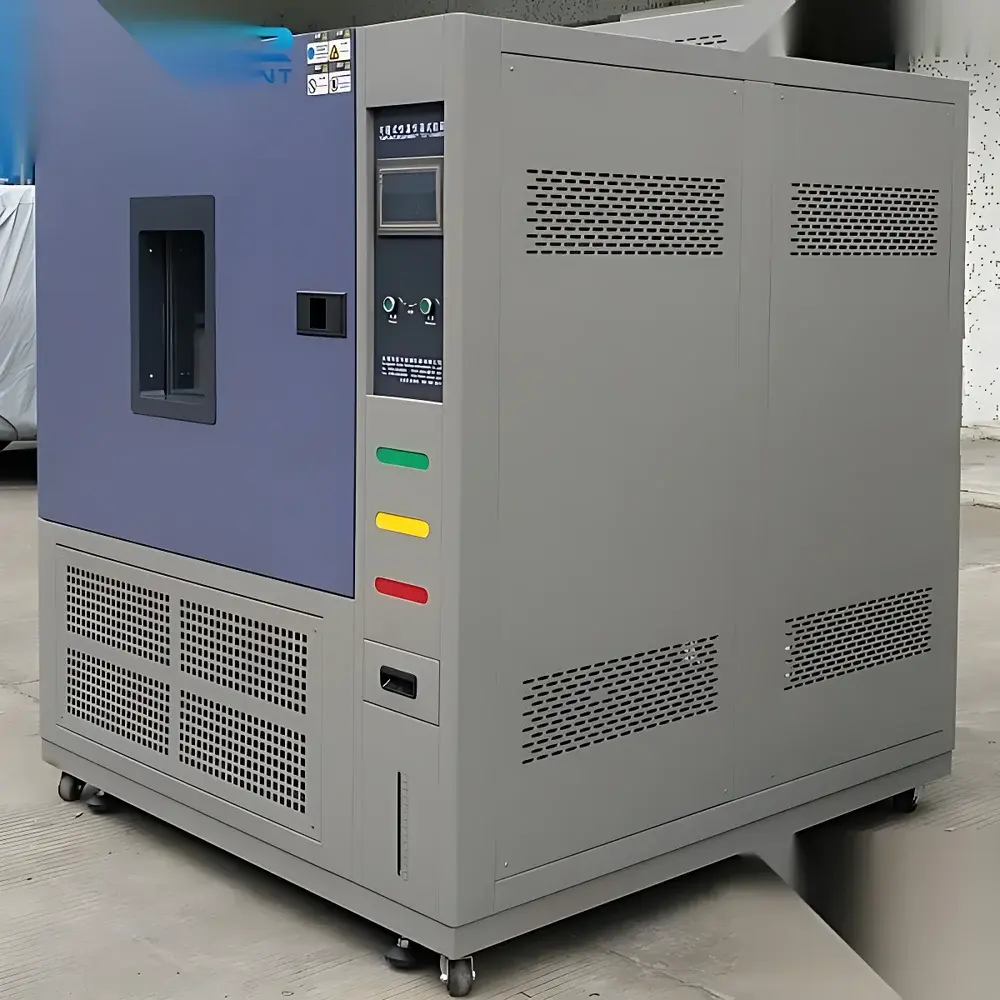
- Compact footprint design: Optimized external dimensions accommodate placement in confined laboratory spaces (minimum clearance: 600 mm rear, 300 mm side)
- Large double-glazed observation window with anti-fog heating film, enabling real-time visual monitoring without compromising chamber integrity
- Integrated 12-L stainless-steel water reservoir with drawer-style access—facilitating rapid draining, cleaning, and residue inspection per USP & EU GMP Annex 15 hygiene protocols
- Multi-layer safety architecture: Independent high-limit temperature cutoff, compressor overheat protection, humidity sensor failure alarm, door-open interlock, and leak-detection circuitry
- Intuitive 7-inch TFT touchscreen HMI with password-protected parameter locking, event logging, and USB data export (CSV format)
- Modular construction: Inner chamber wall—SUS304 stainless steel (electropolished, passivated); outer shell—pre-painted galvanized steel; insulation—rigid polyurethane foam (30 kg/m³ density, 0.022 W/m·K thermal conductivity)
Sample Compatibility & Compliance
The chamber accommodates standard ICH-compliant sample trays (e.g., 300 × 400 mm aluminum racks), vial holders, blister packs, and primary packaging formats—including amber glass, HDPE, and Alu-Alu foil. All internal surfaces are non-outgassing and corrosion-resistant, eliminating risk of volatile organic compound (VOC) interference during stability studies. The system is fully compliant with FDA 21 CFR Part 11 (audit trail enabled, electronic signature support), EU Annex 11 (data integrity controls), and GLP/GMP validation requirements. Factory-installed calibration certificates (NIST-traceable Pt100 sensors and capacitive RH probes) are provided with IQ/OQ documentation templates aligned with ASTM E2500–22 and ISPE Good Practice Guide for Environmental Chambers.
Software & Data Management
Embedded firmware supports continuous 24/7 data acquisition at user-selectable intervals (1–60 min), storing ≥12 months of timestamped temperature/humidity readings internally. Optional Ethernet/Wi-Fi connectivity enables integration with LIMS or ELN platforms via Modbus TCP or OPC UA. Remote monitoring includes email/SMS alerts for deviation events (e.g., >±1.0 °C excursion for >15 min). All data files are digitally signed and encrypted (AES-256), satisfying ALCOA+ principles (Attributable, Legible, Contemporaneous, Original, Accurate, Complete, Consistent, Enduring, Available). Validation-ready reports include trend analysis, uncertainty budgets, and statistical process control (SPC) charts per ISO/IEC 17025 Clause 7.7.
Applications
- ICH Q1A(R2) real-time and accelerated stability testing of APIs, finished dosage forms (tablets, capsules, injectables), and biologics
- Photostability assessment per ICH Q5C when integrated with optional UV/visible light modules
- Excipient compatibility screening under controlled hygrothermal stress
- Package integrity evaluation (e.g., moisture permeation through barrier films per ASTM F1249)
- Method transfer verification between manufacturing sites using identical environmental profiles
- Pre-validation chamber mapping per ISO 14644-3 and EU GMP Annex 15 Annex II
FAQ
What is the maximum allowable thermal load for accurate performance?
Rated capacity assumes ≤15 kg total mass of inert test samples (e.g., empty vials, aluminum trays). Load-dependent derating applies above this threshold—consult the Thermal Load Derating Curve in Section 4.2 of the Operation Manual.
Is the chamber suitable for freeze-thaw cycling studies?
Yes—equipped with a programmable ramp-soak profile engine supporting up to 99 segments per cycle, including dwell times at sub-zero setpoints (e.g., −20 °C for 24 h, followed by +5 °C for 24 h) with ±0.8 °C accuracy at −40 °C.
How often must the humidity sensor be recalibrated?
Annual recalibration is recommended using saturated salt solutions (LiCl, MgCl₂, NaCl, KCl) per ISO 4677–2. The built-in auto-calibration function validates sensor drift against reference dew point measurements every 72 hours.
Can the chamber be validated for GMP production use?
Yes—full IQ/OQ/PQ documentation packages are available, including DQ review, sensor mapping (15-point grid), alarm response verification, and recovery time testing per ASTM E2571–22.
What cooling water specifications are required for optimal low-temperature operation?
For sustained operation below −20 °C, supply chilled water at 10–28 °C and 0.1–0.3 MPa pressure. A closed-loop chiller (not included) is mandatory for −40 °C and lower setpoints.



