
English Product Name
| Brand | OK |
|---|---|
| Origin | Imported |
| Manufacturer Type | Authorized Distributor |
| Price | USD 5,200 (FOB) |
| Internal Dimensions (W×D×H) | 50×50×40 cm / 50×75×60 cm / 80×80×80 cm / 100×100×100 cm |
| External Dimensions | 100×170×90 cm / 110×190×100 cm / 140×190×130 cm / 165×210×150 cm |
| Temperature Range | 0–150°C (chamber), 40–85°C (black panel) |
| Humidity Range | 20–75% RH (light cycle), 20–98% RH (dark cycle) |
| Temperature Uniformity | ±2.0°C |
| Humidity Uniformity | ±3.0% RH |
| Temperature Control Accuracy | ±0.5°C |
| Humidity Control Accuracy | ±2.0% RH |
| Irradiance | 550 W/m² ±10% (300–800 nm) or 1000 W/m² ±10% (300–1200 nm) |
| Xenon Lamp Power | 1.8 kW / 2.5 kW / 6 kW |
| Lamp Life | ~1,500 hours |
| Spray Cycle | 1–999 min (intermittent or continuous) |
| Spray Pressure | 70–127 kPa |
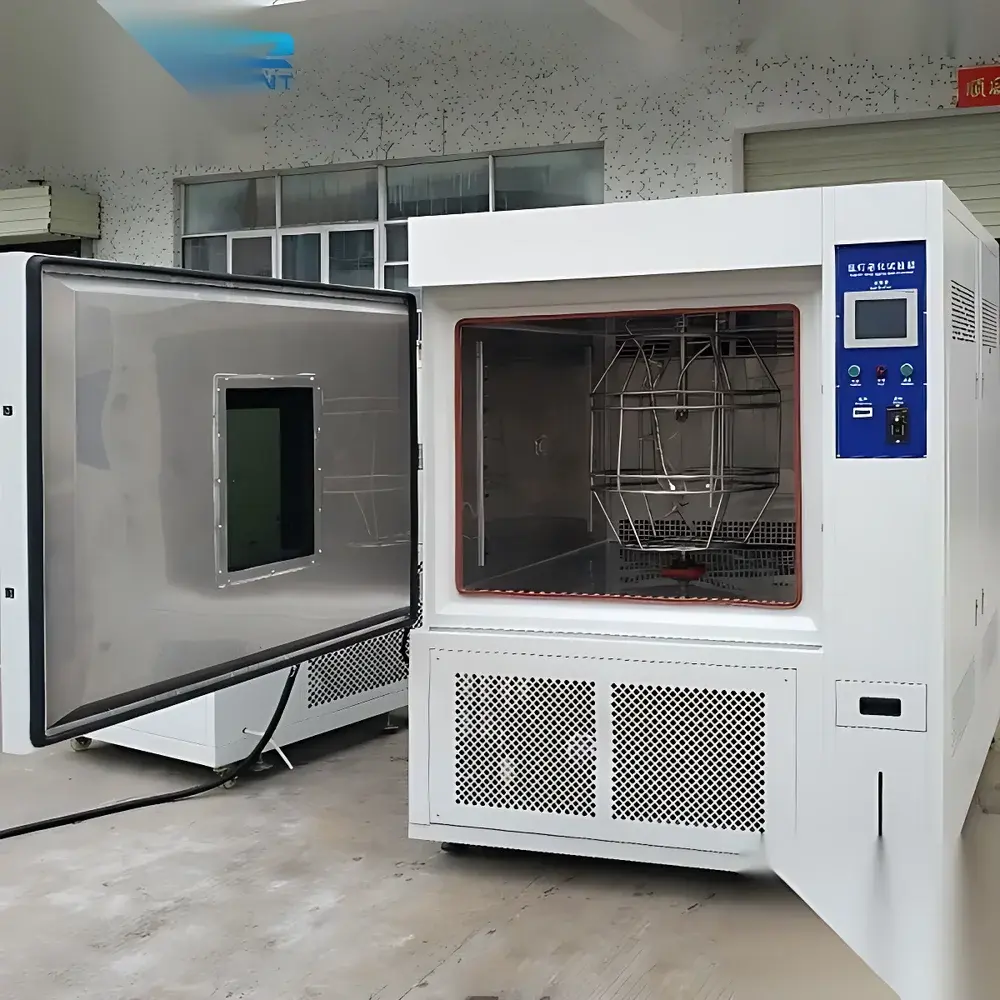
| Sample Mounting | Dual-layer flat mesh rack or 500 mm diameter rotating turntable (0–3 rpm) |
| Inner Chamber Material | SUS304 stainless steel |
| Outer Chamber Material | SUS304 stainless steel or powder-coated steel |
| Power Supply | AC 380 V ±5%, 50 Hz ±0.5 Hz |
Overview
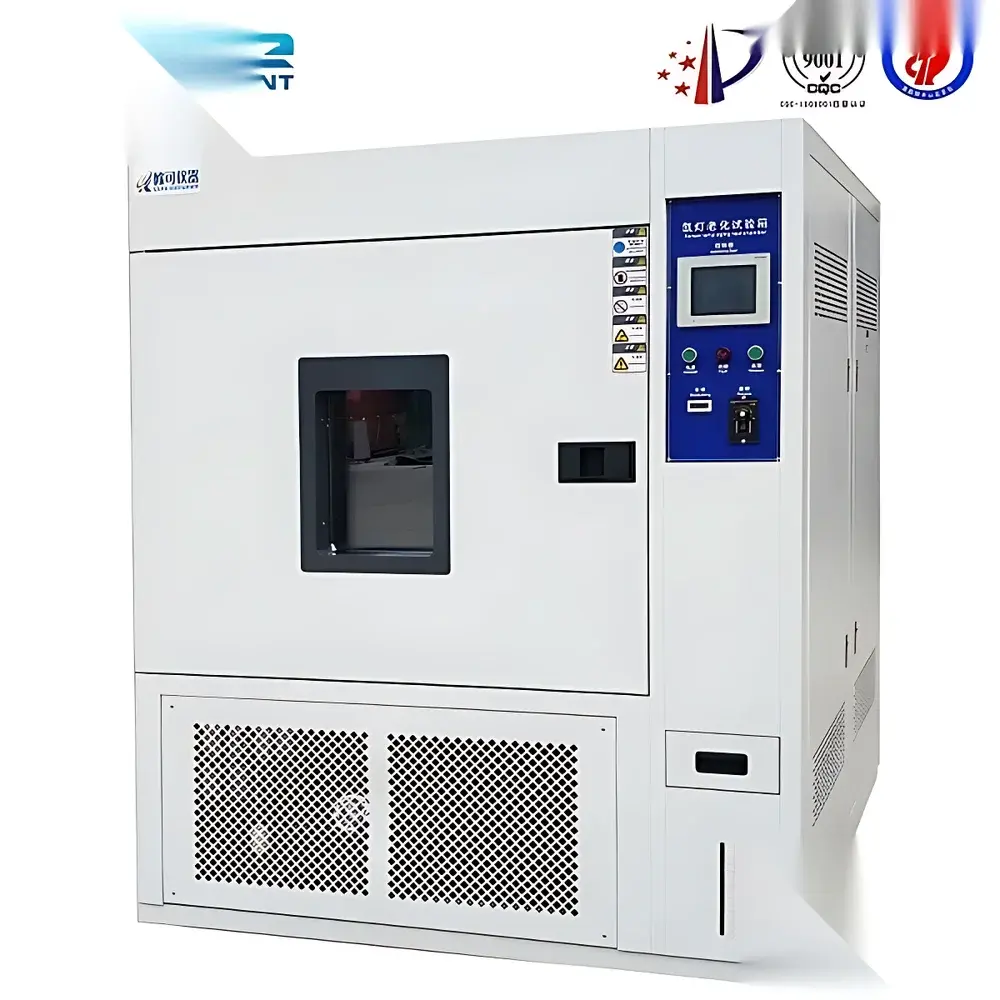
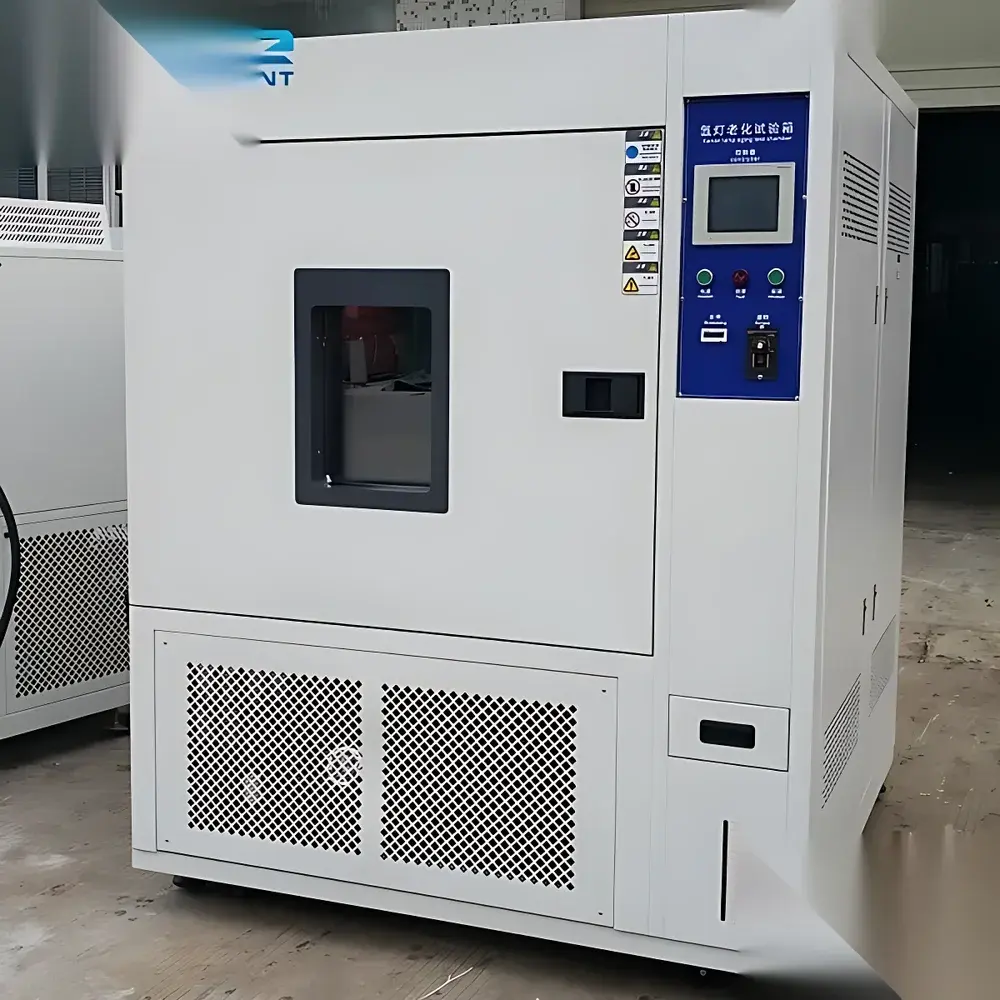
The OK-XD Series Xenon Arc Weathering Test Chamber is an engineered environmental simulation system designed to accelerate the evaluation of material degradation under controlled solar radiation, thermal cycling, and moisture exposure. It employs a long-arc, air-cooled xenon lamp that delivers a spectral output closely matching natural sunlight across the critical 290–2500 nm range—enabling reproducible assessment of photochemical, thermal, and hygroscopic aging mechanisms. Unlike UV-only or fluorescent lamp-based testers, this chamber replicates full-spectrum solar irradiance—including UVA, UVB, visible, and near-infrared wavelengths—making it suitable for evaluating photostability, colorfastness, gloss retention, cracking, chalking, and embrittlement in polymeric, textile, coating, and automotive components. The system conforms to internationally recognized accelerated weathering protocols and supports both light-dark cycles with independent humidity control, simulating diurnal environmental stressors such as solar heating, condensation, and rain immersion.
Key Features
- Full-spectrum xenon arc lamp with precision optical filtering to maintain spectral fidelity per ISO 4892-2 and ASTM G155 requirements.
- Integrated water spray system delivering calibrated, uniform precipitation at adjustable pressure (70–127 kPa) and programmable duration (1–999 min).
- Dual-mode sample rotation: configurable flat mesh racks for planar specimens or motorized 500 mm turntables (0–3 rpm) for isotropic exposure.
- Black panel thermometer (BPT) and chamber air temperature sensors with independent PID control loops ensure traceable thermal profiling per ISO 11341 and ASTM D4329.
- High-stability humidity control across wide operational ranges: 20–75% RH during irradiation; 20–98% RH during dark/condensation phases.
- SUS304 stainless steel interior construction resists corrosion from saline mist, acidic condensate, and organic solvents encountered in coating and textile testing.
- Modular lamp assembly enables rapid xenon tube replacement (<15 min) without recalibration; standard lamp life exceeds 1,500 hours at nominal irradiance settings.
Sample Compatibility & Compliance
The OK-XD chamber accommodates diverse geometries—from flat fabric swatches and painted panels to molded plastic parts and automotive trim components—via its adaptable mounting systems. Its internal volume options (100 L to 1,000 L) allow scalability from R&D screening to batch qualification. The system complies with key international standards including ISO 4892-2 (xenon arc exposure), ASTM G155 (non-metallic materials), GB/T 16422.2, GB/T 8427 (textile colorfastness), ISO 105-B02 (lightfastness), and ASTM D529 (plastics). All control parameters—including irradiance, temperature, humidity, and spray timing—are logged with timestamped resolution for GLP-compliant data integrity. Optional audit trail and user access control modules support FDA 21 CFR Part 11 readiness when integrated with validated software platforms.
Software & Data Management
The chamber operates via a dedicated industrial-grade controller with a 7-inch TFT touchscreen interface supporting multistep test programming, real-time parameter visualization, and alarm history logging. Standard firmware includes preloaded test profiles aligned with ISO, ASTM, and GB methods, with editable setpoints for irradiance (W/m²), black panel temperature (°C), relative humidity (%RH), and spray intervals (min). Data export is supported via USB 2.0 or RS485 Modbus RTU protocol for integration into LIMS or enterprise QA databases. Optional PC-based software provides advanced features including trend analysis, deviation alerts, calibration certificate tracking, and electronic signature-enabled report generation compliant with ISO/IEC 17025 documentation requirements.
Applications
This chamber is routinely deployed in quality assurance laboratories for accelerated durability validation of: exterior automotive coatings and plastics; architectural sealants and cladding materials; outdoor textiles and awning fabrics; LED streetlight housings and lenses; packaging films subjected to retail shelf-life conditions; and photovoltaic encapsulant polymers. Its ability to replicate combined stressors—UV-driven photooxidation, thermal expansion/contraction, hydrolytic cleavage, and mechanical erosion from simulated rainfall—makes it indispensable for failure mode identification, formulation optimization, and supplier qualification against OEM specifications (e.g., Ford CETP, GMW14124, VW TL226).
FAQ
What spectral range does the xenon lamp cover, and how is spectral stability maintained?
The lamp emits across 290–2500 nm, filtered to match CIE daylight (D65) or direct sunlight (AM1.5G) using fused silica and borosilicate glass filters. Spectral consistency is preserved through active lamp voltage regulation and periodic filter replacement per maintenance schedule.
Can the chamber operate without water spray or humidity control?
Yes—each subsystem (irradiation, temperature, humidity, spray) can be independently enabled or disabled to isolate specific degradation mechanisms during method development.
Is calibration traceable to national metrology institutes?
Irradiance sensors are NIST-traceable; temperature and humidity transducers are supplied with factory calibration certificates meeting ISO/IEC 17025 requirements. On-site verification kits are available upon request.
How is sample temperature monitored during exposure?
Black panel thermometers (BPTs) conforming to ISO 4892-2 are mounted adjacent to test specimens to measure surface-relevant thermal loading, while ambient air sensors track chamber thermal dynamics.
What maintenance intervals are recommended for optimal performance?
Xenon lamps every 1,500 hours; optical filters every 1,200 hours; humidity sensor calibration every 6 months; spray nozzles inspected weekly for clogging; full preventive maintenance annually per OEM service manual.



