
English Product Name
| Origin | United Kingdom |
|---|---|
| Manufacturer Type | Authorized Distributor |
| Origin Category | Imported |
| Model | LC-AMF System |
| Product Category | Live-Cell Time-Lapse Imaging & Electromagnetic Field Exposure Platform |
| CO₂ Input | 5% (v/v) |
| Recirculating Water Bath Flow Rate | 320 mL/min |
| Temperature Stability | ±0.2 °C |
| Max Frequency | 951.5 kHz (at 13.2 mT) |
| Min Frequency | 128.8 kHz (at 20 mT) |
| Dimensions | 127 × 85 × 26 mm |
| Compatible Vessel | 35 mm Tissue Culture Dish |
| Frequency Tuning Range | 128.8–951.5 kHz (dependent on inductance/capacitance matching) |
Overview
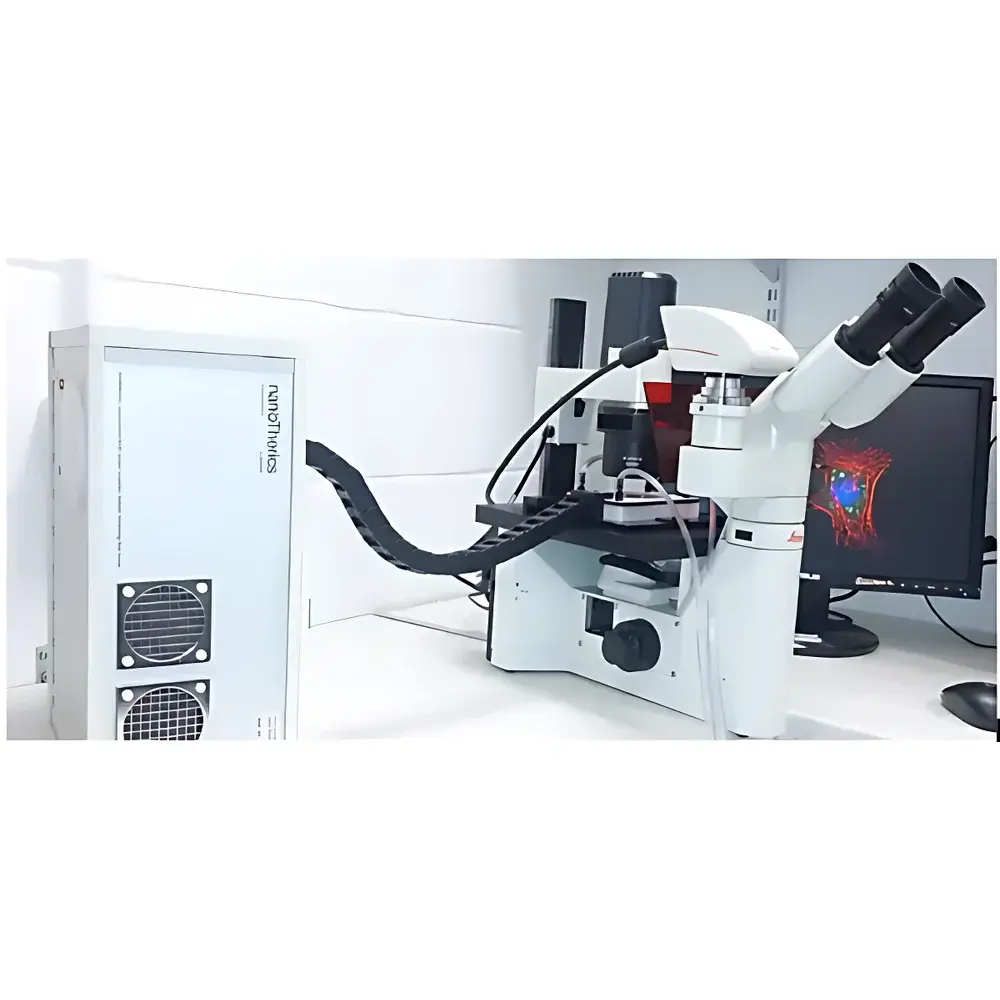
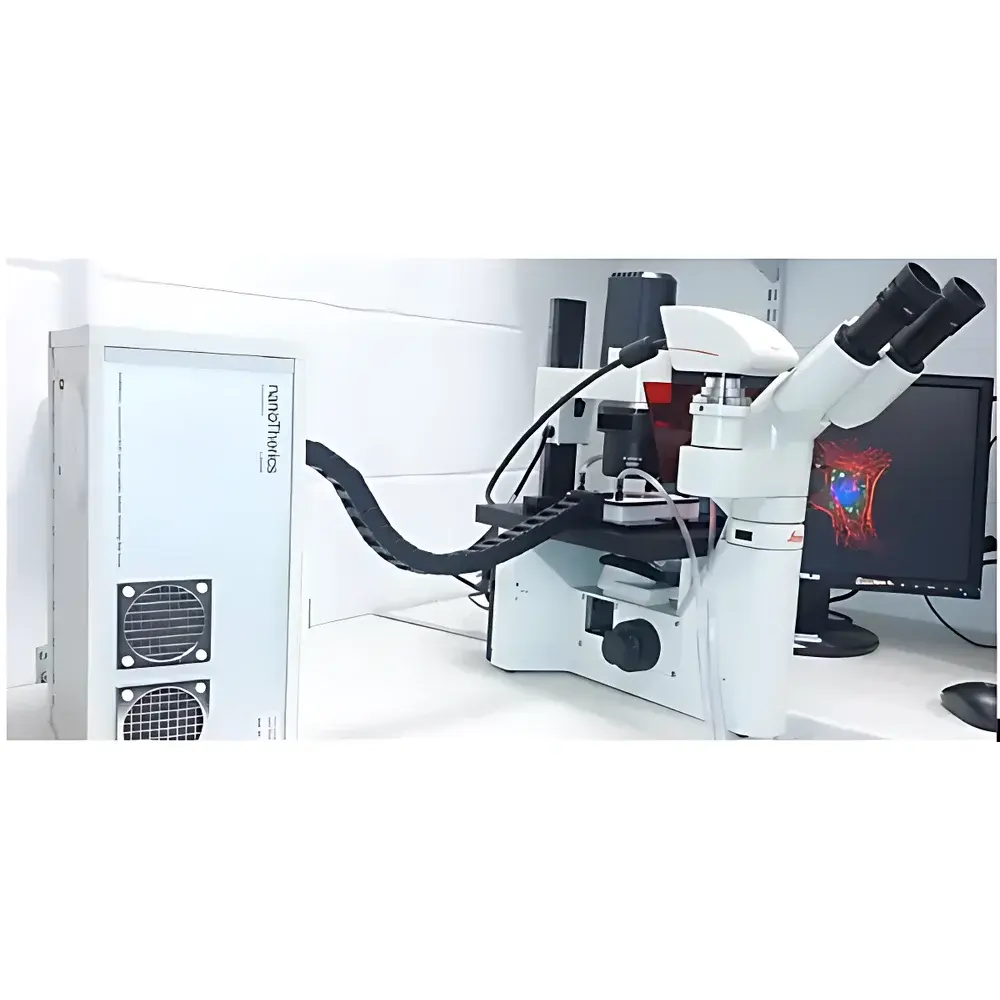
The Nanotherics LC-AMF Live-Cell Real-Time Electromagnetic Field Exposure Time-Lapse Imaging System is an engineered platform designed to integrate controlled alternating magnetic field (AMF) stimulation with high-fidelity, long-duration optical microscopy of living mammalian cells under physiologically relevant conditions. It operates on the principle of inductive coupling between a precisely tuned resonant circuit and biological samples housed in standard tissue culture vessels—enabling non-invasive, contactless AMF delivery while maintaining continuous microscopic observation. Unlike conventional static exposure setups, the LC-AMF system enables dynamic, time-resolved interrogation of cellular responses—including calcium flux, mitochondrial membrane potential shifts, cytoskeletal reorganization, and real-time proliferation kinetics—under programmable electromagnetic stimuli ranging from 128.8 kHz to 951.5 kHz at field amplitudes up to 20 mT. The system is fully compatible with inverted fluorescence microscopes (e.g., Leica DMi8, Nikon Ti2, Olympus IX83), supporting both widefield and confocal modalities without optical path interference.
Key Features
- Engineered for simultaneous live-cell time-lapse imaging and calibrated AMF exposure—no compromise between stimulation fidelity and optical resolution.
- Integrated environmental control: precise 37 °C temperature regulation (±0.2 °C) and stable 5% CO₂ atmosphere via recirculating gas humidification and water-jacketed chamber interface.
- Modular resonant driver architecture compatible with existing magneTherm® systems—supports seamless integration for both new installations and legacy instrument upgrades.
- Compact, ergonomic form factor (127 × 85 × 26 mm) enabling direct mounting onto microscope stages without obstructing objective lenses or stage movement.
- Frequency-tunable operation across 128.8–951.5 kHz; output amplitude and spectral purity maintained through impedance-matched LC circuitry with traceable calibration against NIST-traceable field probes.
- Supports standard cell culture formats including 35 mm dishes and 6/24/96-well plates—compatible with glass-bottom and polymer substrates used in high-content screening.
Sample Compatibility & Compliance
The LC-AMF system is validated for use with adherent and suspension mammalian cell lines (e.g., HeLa, NIH/3T3, primary neurons, iPSC-derived cardiomyocytes) and supports co-culture models requiring spatially resolved AMF dosing. All thermal and gas control components comply with ISO 13485 design controls for laboratory equipment. The system’s environmental stability meets ASTM E1912 requirements for incubated microscopy platforms, and its electromagnetic emission profile conforms to IEC 61000-4-3 (radiated immunity) and IEC 61000-4-6 (conducted immunity) standards. For regulated environments, full audit trails—including temperature logs, CO₂ setpoints, exposure duration timestamps, and frequency calibration records—are exportable in CSV format for GLP/GMP documentation.
Software & Data Management
The LC-AMF system interfaces via USB 2.0 with Nanotherics’ proprietary ControlSuite™ software, which provides synchronized triggering between AMF pulse sequences and camera acquisition (supporting Hamamatsu ORCA-Fusion BT, Photometrics Prime BSI, and Andor Zyla 4.2). Users define multi-step exposure protocols—including ramped frequency sweeps, duty-cycle-modulated bursts, and time-gated stimulation aligned to mitotic phase detection—and associate metadata directly with image stacks. All raw data—including field amplitude waveforms (sampled at 10 MS/s), thermal sensor outputs, and gas flow telemetry—are timestamped using IEEE 1588 PTP synchronization. Export formats include OME-TIFF (with embedded AMF metadata), HDF5, and MIAME-compliant XML for integration into LIMS or ELN systems. Software validation documentation (IQ/OQ/PQ) is available upon request for FDA 21 CFR Part 11 compliance.
Applications
- Investigation of magnetomechanical effects in magneto-responsive nanoparticles (e.g., iron oxide, MnFe₂O₄) internalized by cells.
- Functional assessment of ion channel modulation under high-frequency AMF exposure—relevant to neuromodulation and cardiac electrophysiology studies.
- Long-term viability and phenotypic tracking of stem cells during directed differentiation under AMF cues.
- Quantitative analysis of heat shock protein induction kinetics and DNA damage response (γH2AX foci formation) following controlled hyperthermia.
- Validation of AMF-based drug release mechanisms from thermosensitive nanocarriers in real time.
FAQ
Can the LC-AMF system be used with upright microscopes?
No—the system is ergonomically optimized for inverted microscope configurations only, due to mechanical clearance constraints and gravity-dependent media stability in open dishes.
Is field homogeneity verified across the imaging field of view?
Yes—spatial field mapping is performed using a calibrated Hall-effect probe array (±0.5% accuracy); uniformity exceeds 92% over a 1.2 mm diameter circular region centered on the dish.
Does the system support custom waveform generation (e.g., sinusoidal, square, burst-modulated)?
Yes—ControlSuite™ allows user-defined waveform templates with adjustable rise/fall times, duty cycles, and inter-pulse intervals, subject to hardware bandwidth limits.
What safety certifications does the LC-AMF system hold?
It carries CE marking per Directive 2014/30/EU (EMC) and 2014/35/EU (LVD), and has undergone third-party testing for IEC 61000-6-3 (emissions) and IEC 61000-6-4 (industrial immunity).
How is temperature stability maintained during prolonged (>72 h) time-lapse experiments?
Via dual-loop PID control: primary regulation uses a platinum RTD sensor embedded in the chamber baseplate, while secondary feedback derives from infrared surface thermometry of the dish bottom—ensuring thermal equilibrium independent of ambient lab fluctuations.




