
English Product Name
| Origin | United Kingdom |
|---|---|
| Manufacturer Type | Authorized Distributor |
| Origin Category | Imported |
| Model | P2+ |
| Pricing | Available Upon Request |
Overview
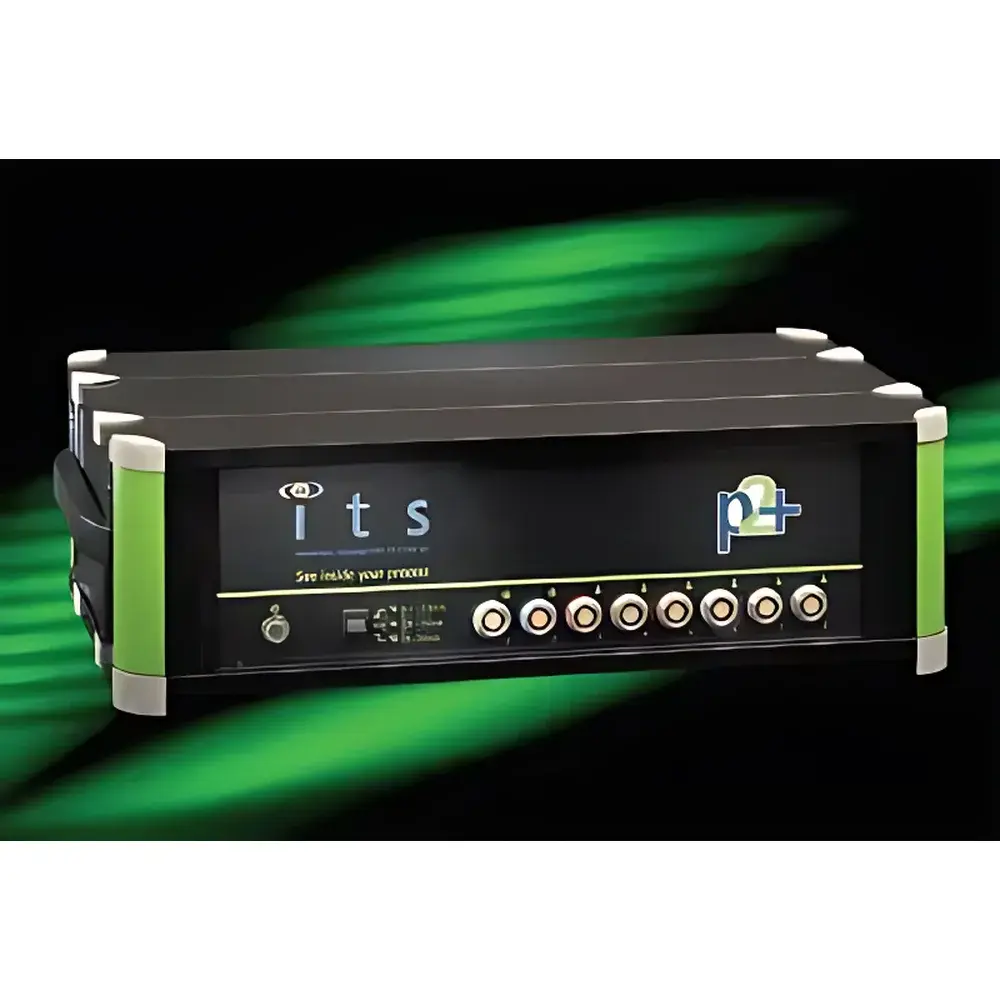
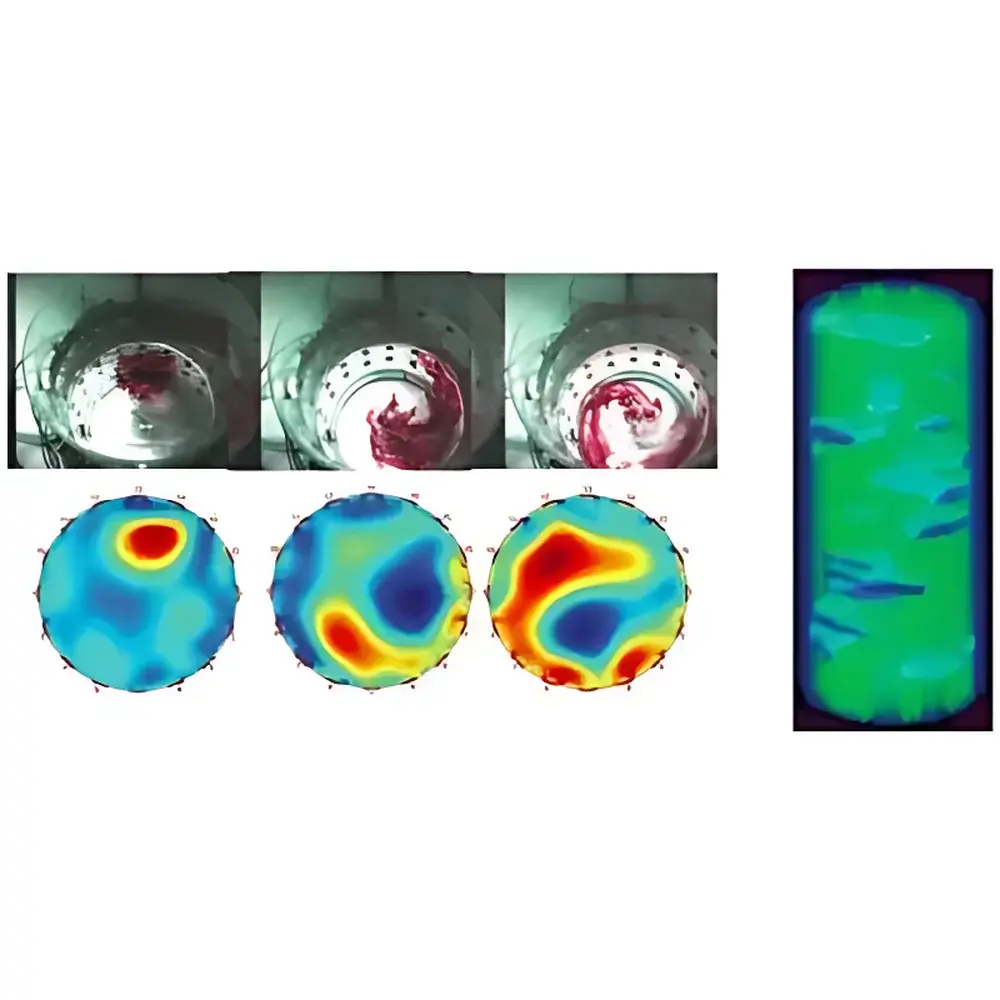
The ITS P2+ Electrical Capacitance Tomography (ECT) System is a high-speed, non-invasive industrial process imaging platform engineered for real-time visualization of multiphase flow structures and material distribution inside opaque vessels, pipelines, reactors, and separators. Unlike medical CT—based on X-ray absorption—ECT reconstructs cross-sectional permittivity distributions from capacitance measurements taken between multiple electrode pairs arranged circumferentially around the process vessel. This principle leverages the dielectric contrast between phases (e.g., gas–solid, oil–water, or powder–air), enabling quantitative mapping of phase concentration, flow regime transitions, segregation patterns, and spatial heterogeneity without physical intrusion or radiation hazards. Designed for continuous online monitoring in demanding industrial environments, the P2+ delivers sub-millisecond temporal resolution—capable of acquiring >200 independent capacitance measurements per frame in under 1 ms—making it suitable for fast transient processes such as fluidized beds, pneumatic conveying, and mixing dynamics.
Key Features
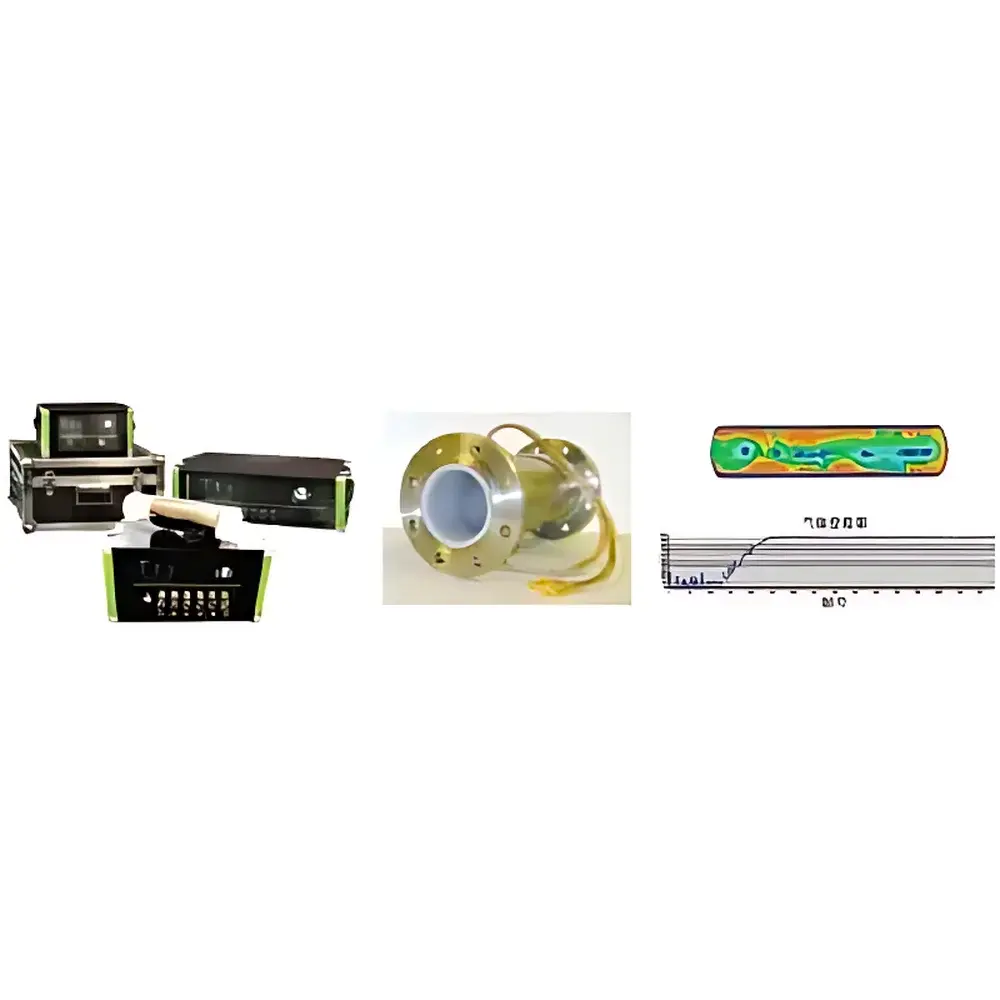
- Modular sensor architecture supporting 12-, 24-, or 36-electrode configurations for flexible spatial resolution and field-of-view adaptation.
- Intrinsically safe, explosion-proof sensor housings compliant with ATEX/IECEx Zone 1/21 requirements for hazardous area deployment.
- Non-contact, non-invasive operation—no internal probes, no process interruption, no calibration drift due to fouling or erosion.
- Scalable multi-plane imaging capability via synchronized axial sensor arrays, enabling 3D volumetric reconstruction of dynamic processes.
- Ruggedized DAS-2 Data Acquisition System with 24-bit resolution ADC, galvanic isolation, and real-time digital filtering to ensure high signal fidelity in electrically noisy plant environments.
- Integrated hardware synchronization interface for time-aligned data acquisition with external sensors (e.g., pressure transducers, high-speed cameras, or laser Doppler anemometers).
Sample Compatibility & Compliance
The P2+ system accommodates a wide range of industrial process geometries—including cylindrical vessels (diameters from 50 mm to 2 m), rectangular ducts, and vertical/horizontal pipes—with minimal geometric constraints. It supports both conductive and non-conductive wall materials (e.g., stainless steel, glass, PVC, FRP) when properly grounded or shielded. Sensor designs are validated per IEC 61508 (Functional Safety) and conform to electromagnetic compatibility standards EN 61326-1 and EN 61000-6-2/4. While ECT does not require regulatory approval as a medical device, its data integrity and audit trail capabilities align with GLP and GMP documentation practices for R&D and pilot-scale process validation. The system supports traceable calibration protocols referenced to NIST-traceable capacitance standards.
Software & Data Management
The P2+ is operated via ITS’s proprietary tomographic reconstruction suite, which includes real-time image reconstruction (linear back-projection, Tikhonov regularization, and iterative Landweber algorithms), dynamic visualization tools, and batch post-processing modules. All software components comply with FDA 21 CFR Part 11 requirements through role-based access control, electronic signatures, and immutable audit logs tracking user actions, parameter changes, and image export events. Raw capacitance datasets are stored in HDF5 format for interoperability with MATLAB, Python (NumPy/H5Py), and commercial CFD platforms (ANSYS Fluent, COMSOL). Export options include time-series video (AVI/MKV), volumetric TIFF stacks, and CSV-based pixel intensity matrices for statistical analysis of phase holdup, velocity profiles, and turbulence metrics.
Applications
- Fluidized bed hydrodynamics: bubble size distribution, bed expansion, and defluidization onset detection.
- Pneumatic conveying: solid mass flux profiling, slug formation, and pipeline blockage early warning.
- Oil–water–gas separation: interfacial position tracking and emulsion stability assessment in three-phase separators.
- Pharmaceutical granulation: real-time monitoring of binder distribution and particle agglomeration kinetics in high-shear mixers.
- Chemical reactor mixing: identification of dead zones, vortex formation, and residence time distribution mapping.
- Academic research: validation benchmarking for multiphase CFD simulations and development of machine learning–based flow regime classifiers.
FAQ
What is the minimum measurable permittivity contrast required for reliable image reconstruction?
Reconstruction sensitivity depends on electrode count, SNR, and regularization strategy; typical detectable contrasts start at Δεr ≥ 0.5 between adjacent phases (e.g., air εr ≈ 1 vs. water εr ≈ 80). Low-contrast systems (e.g., hydrocarbon mixtures) benefit from advanced inversion algorithms and multi-frequency excitation.
Can the P2+ be integrated into existing DCS or SCADA systems?
Yes—the DAS-2 supports OPC UA and Modbus TCP protocols for seamless integration into industrial automation networks, enabling alarm-triggered image capture and live feed embedding into HMI dashboards.
Is on-site installation and commissioning supported?
ITS provides full engineering support including mechanical mounting design, electrical grounding verification, sensor alignment validation, and operator training aligned with ISO/IEC 17025 competency frameworks.



