
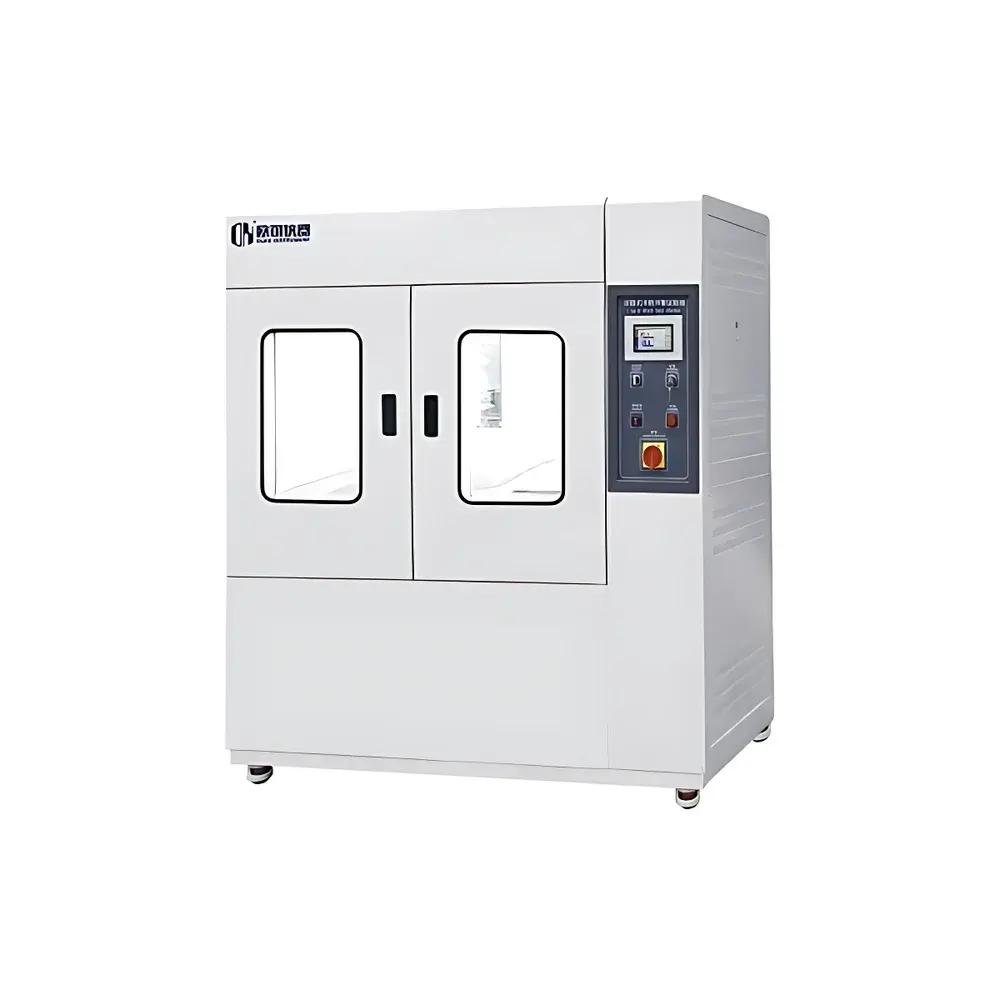
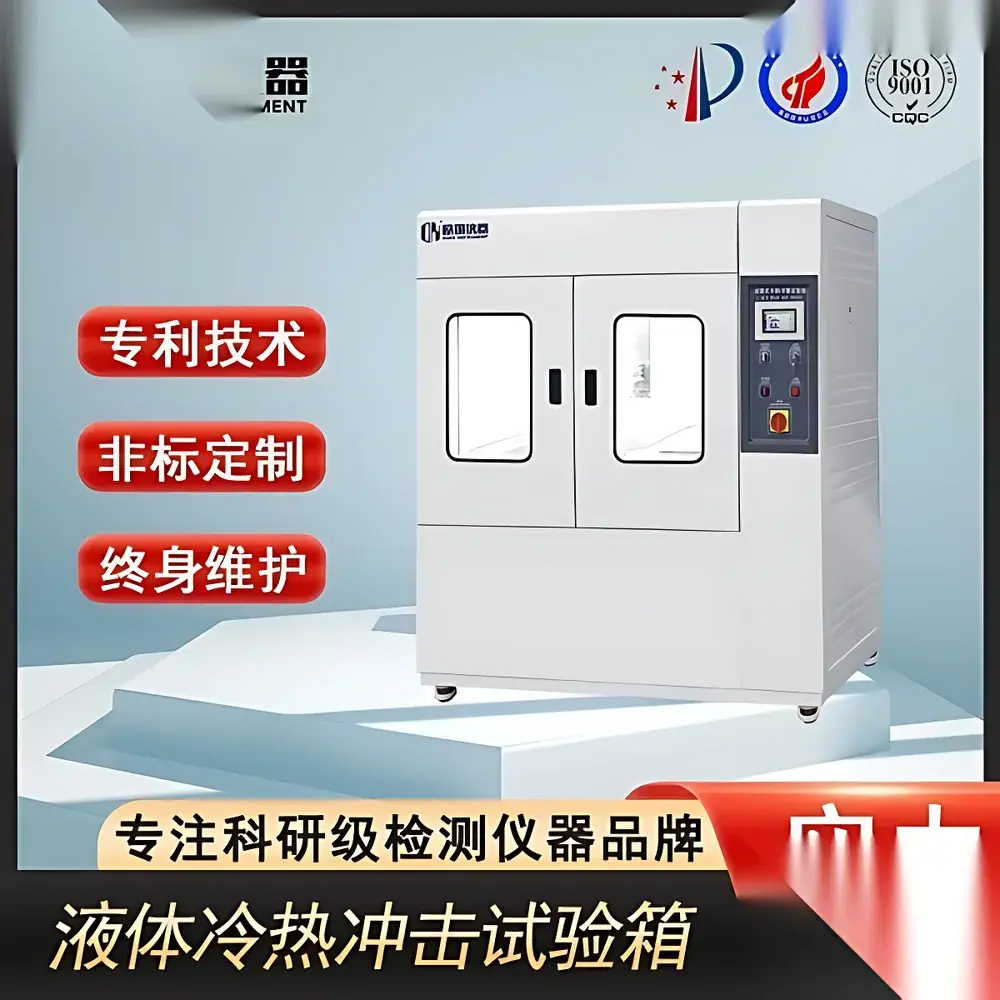
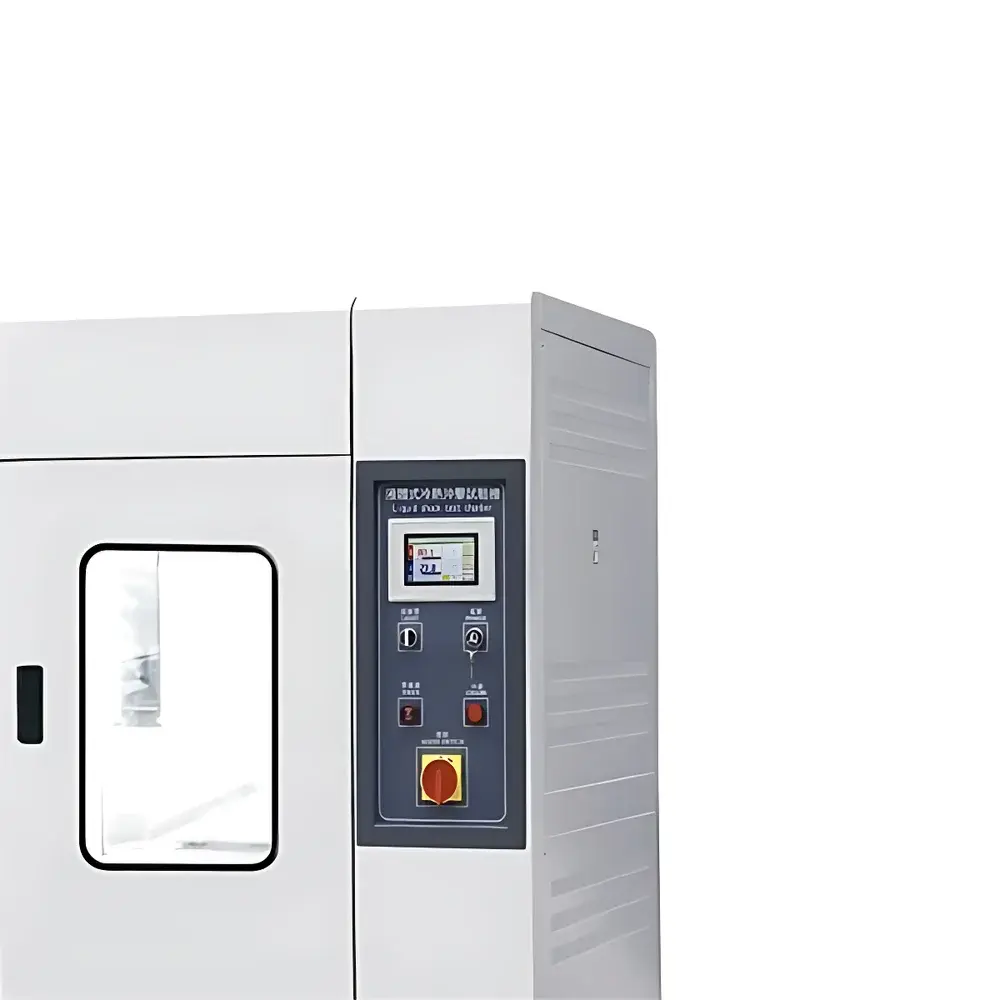
English Product Name
| Brand | OK |
|---|---|
| Model | OK-YT-49 / OK-YT-80 / OK-YT-150 / OK-YT-225 |
| Temperature Range (Hot Zone) | RT to +200 °C |
| Temperature Range (Cold Zone) | RT to −70 °C |
| Test Zone Temperature Range | Hot Shock: +60 °C to +150 °C |
| Cold Shock | 0 °C to −45 °C / −55 °C / −65 °C |
| Temperature Uniformity | ±2.0 °C |
| Temperature Control Accuracy | ±0.5 °C |
| Soak Time (Hot Zone) | ~30 min (RT → +150 °C) |
| Soak Time (Cold Zone) | ~85 min (RT → −70 °C) |
| Recovery Time | <5 min |
| Internal Dimensions (W×H×D, cm) | 40×35×30 / 50×40×40 / 60×50×50 / 70×60×60 |
| External Dimensions (W×H×D, cm) | 145×180×140 / 150×185×145 / 185×150×250 / 190×170×270 |
| Refrigeration System | Dual-stage cryogenic system with hermetic or semi-hermetic compressors |
| Chamber Material | Interior – mirror-finish SUS#304 stainless steel |
| Insulation | High-density fire-retardant PU foam |
| Power Supply | AC 380 V ±5%, 50 Hz ±0.5 Hz, 3-phase 5-wire |
| Interface | LAN-enabled controller with remote monitoring capability |
| Compliance | GB/T 2423.1, GB/T 2423.2, GB/T 2423.22, GJB 150.5, GJB 360.7, GJB 367.2–405 |
Overview
The OK-YT Series Liquid-Bath Thermal Shock Test Chamber is an engineered solution for accelerated evaluation of material and component reliability under rapid, repetitive thermal transitions between extreme high and low temperature environments. Unlike air-based thermal shock systems, this chamber employs a dual-liquid-bath architecture—separate hot and cold reservoirs filled with thermally stable heat-transfer fluids—to achieve high-rate temperature transfer and exceptional thermal stability. The test specimen remains stationary within a vertically actuated stainless-steel basket; pneumatic cylinders precisely shuttle the basket between the hot and cold baths, enabling controlled, repeatable thermal shock cycles without airflow-induced mechanical disturbance. This design minimizes convective variability and ensures consistent thermal loading across heterogeneous samples—including metallic alloys, polymer composites, elastomers, PCB assemblies, and medical device housings—making it particularly suitable for qualification testing in aerospace, defense, nuclear instrumentation, and high-reliability electronics manufacturing.
Key Features
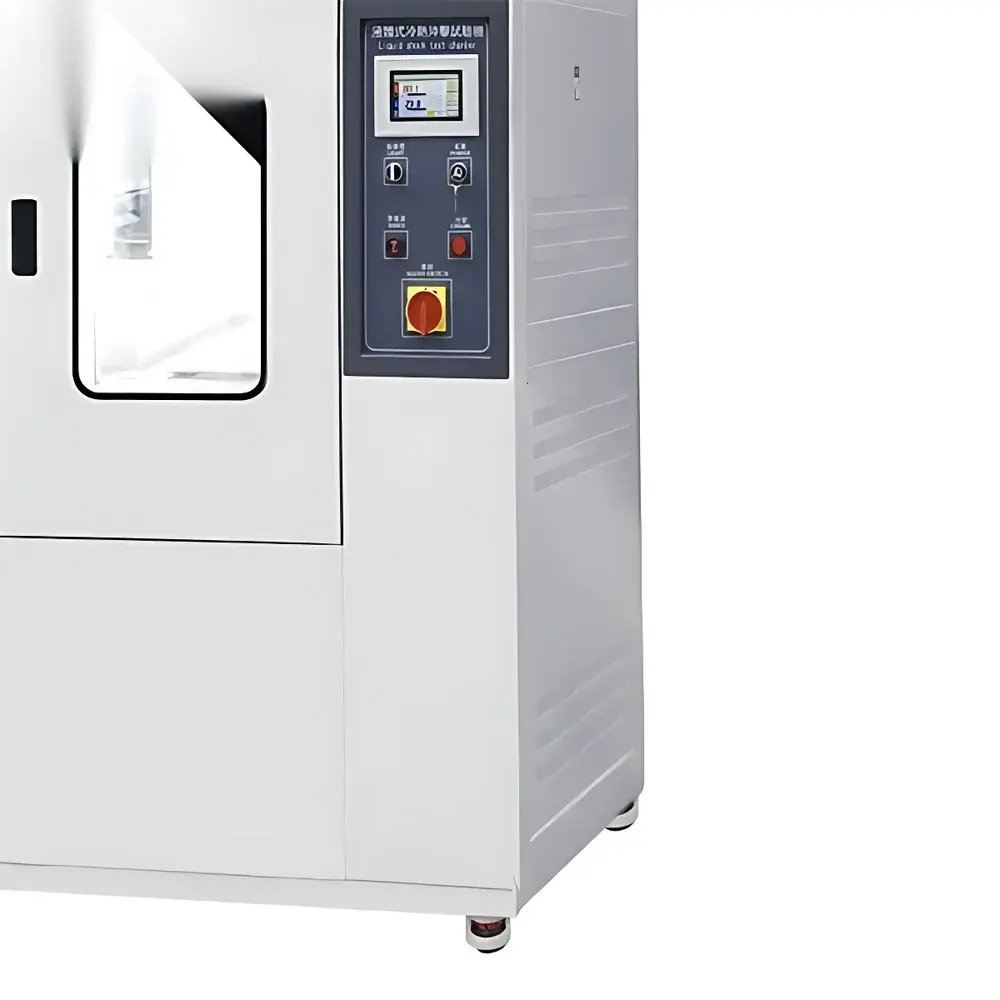
- Intuitive 7-inch full-color LCD touchscreen controller with real-time graphical display of chamber status, setpoints, and alarm history—designed for GLP-compliant operation and operator traceability.
- Dual-stage refrigeration system featuring hermetic or semi-hermetic compressors and environmentally compliant refrigerants (R404A for primary stage, R23 for ultra-low subcooling), integrated with plate-type heat exchangers for enhanced thermal efficiency.
- Liquid-bath thermal storage architecture delivering precise, stable soak temperatures: hot zone (RT to +200 °C), cold zone (RT to −70 °C), with programmable ramp rates and dwell times per cycle phase.
- LAN interface supporting TCP/IP communication for integration into centralized lab management networks, enabling remote parameter setting, data logging, and event-triggered notifications via standard Ethernet infrastructure.
- Multi-mode operational flexibility: independent high-temperature testing, low-temperature testing, or fully automated thermal shock cycling—including user-defined sequence logic for mixed-profile tests (e.g., pre-conditioning followed by shock).
- Automated pre-conditioning functions: scheduled pre-cooling/pre-heating during standby periods to minimize cycle start latency; configurable defrost cycles (manual or time/temperature-triggered) to maintain long-term condenser performance.
Sample Compatibility & Compliance
The chamber accommodates diverse sample geometries up to 70 cm × 60 cm × 60 cm (OK-YT-225 model), with standardized 50 mm-diameter cable/port access and two-tier SUS#304 stainless-steel shelves. Its stationary-sample configuration eliminates vibration artifacts common in moving-chamber designs—critical for evaluating solder joint integrity, adhesive bond durability, and coating delamination in microelectronics and MEMS devices. The system conforms to internationally recognized environmental stress screening standards, including GB/T 2423.1 (cold), GB/T 2423.2 (dry heat), GB/T 2423.22 (temperature change), and military-grade specifications GJB 150.5, GJB 360.7, and GJB 367.2–405. All control firmware supports audit-ready logging with timestamped parameter changes, alarm events, and calibration records—aligning with FDA 21 CFR Part 11 requirements for electronic record integrity when deployed in regulated QA/QC laboratories.
Software & Data Management
The embedded controller runs proprietary deterministic firmware optimized for thermal shock protocol execution, supporting up to 999 programmable steps per test profile and 999 total cycles per run. Data is logged at user-selectable intervals (1–60 s) to internal flash memory (≥16 GB) and simultaneously exported in CSV format via USB or network share. Optional PC-based software provides advanced analysis tools—including thermal gradient mapping, cycle deviation tracking, and statistical process control (SPC) charting—for trend analysis across multiple test batches. All logged data includes metadata such as operator ID, test ID, environmental ambient conditions (if external sensors are connected), and hardware calibration status—ensuring full traceability for ISO/IEC 17025-accredited testing facilities.
Applications
This thermal shock chamber serves critical roles in failure mode and effects analysis (FMEA), HALT/HASS development, and product qualification across regulated sectors. In aerospace, it validates avionics enclosures against rapid altitude-induced thermal transients. In medical device R&D, it assesses seal integrity of implantable housing assemblies under simulated sterilization-cooling cycles. For automotive suppliers, it verifies connector reliability after exposure to under-hood thermal cycling. Universities and national metrology institutes utilize its high repeatability for inter-laboratory comparison studies on coefficient-of-thermal-expansion (CTE) mismatch in multi-material laminates. Its liquid-bath thermal mass also enables extended dwell stability required for creep and stress-relaxation correlation studies in polymeric materials.
FAQ
What distinguishes liquid-bath thermal shock from air-circulating thermal shock chambers?
Liquid-bath systems provide higher thermal inertia, superior temperature uniformity, and reduced thermal lag—especially critical for validating low-thermal-mass components where air-based convection introduces measurement noise.
Can the chamber perform non-shock temperature tests independently?
Yes. It operates in standalone high-temperature, low-temperature, or temperature-ramp modes—functioning equivalently to a precision environmental chamber when shock cycling is not required.
Is remote monitoring compatible with industry-standard SCADA platforms?
The LAN interface supports Modbus TCP and HTTP API protocols, enabling native integration with Siemens Desigo, Schneider EcoStruxure, or custom LabVIEW-based monitoring systems.
How is temperature calibration verified and maintained?
The system includes dual calibrated PT100 sensors per zone (working + reference), with built-in calibration offset adjustment and NIST-traceable certificate options for initial commissioning and periodic revalidation.
What safety protections are implemented during abnormal thermal excursions?
Hardware-level safeguards include independent over-temperature cutouts (mechanical and electronic), refrigerant pressure monitoring, door interlock circuits, and automatic power-down upon loss of coolant flow or excessive chamber differential pressure.



