
English Product Name
| Brand | Other Brands |
|---|---|
| Origin | Imported |
| Manufacturer Type | Authorized Distributor |
| Price | USD 14,000 (FOB) |
Overview
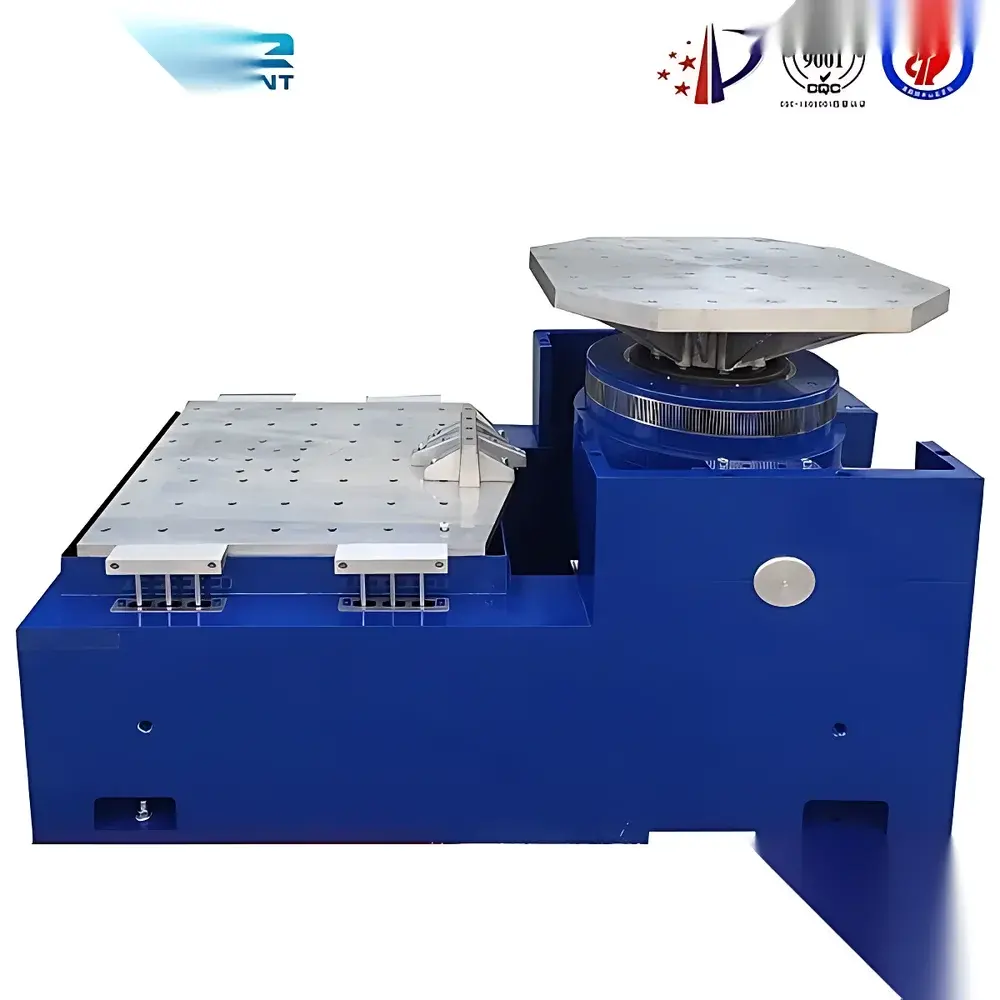
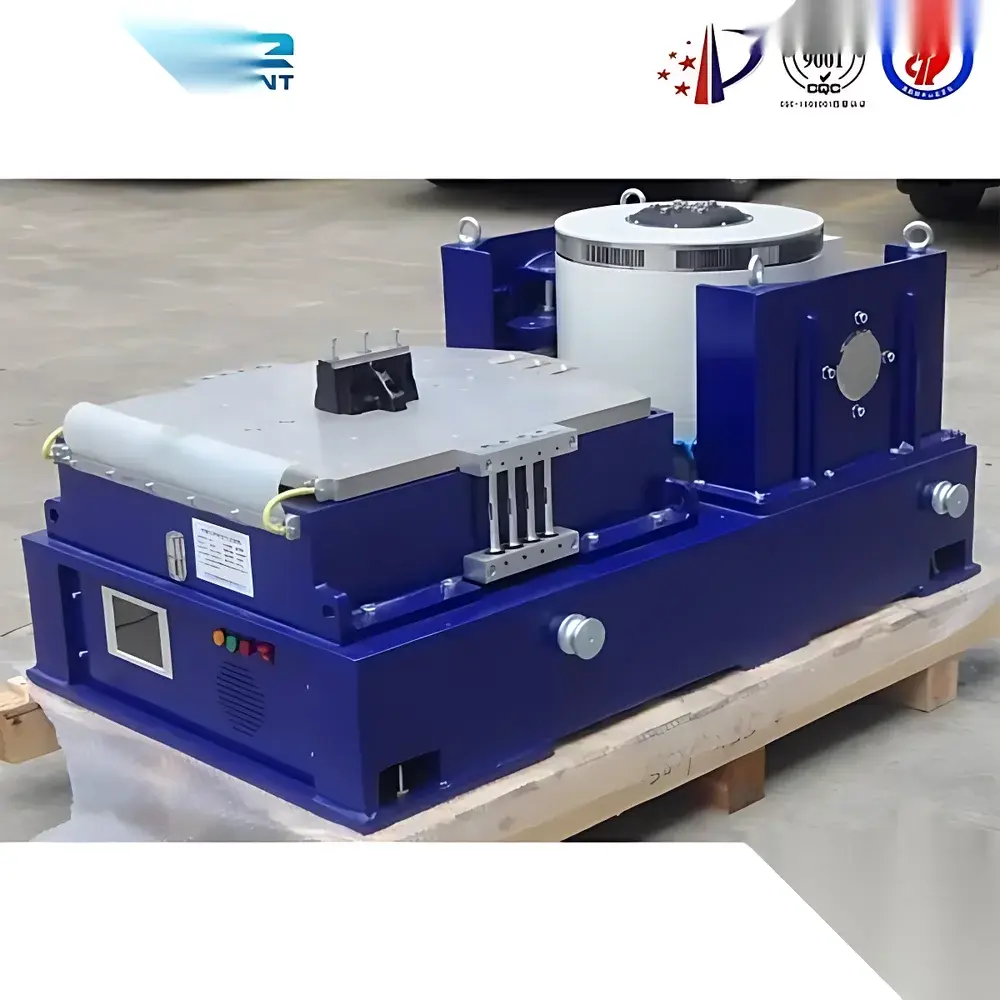
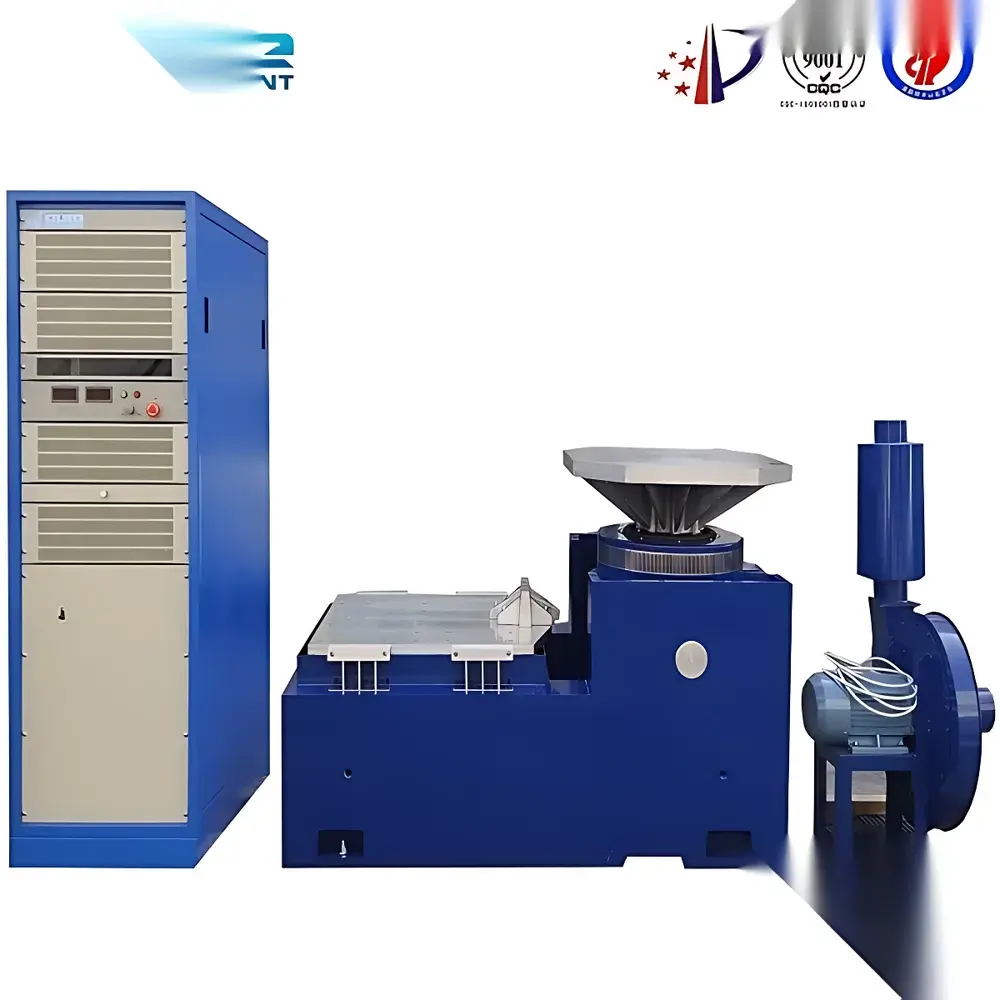
The Triaxial Vibration Shaker System is an electrodynamic vibration testing platform engineered for simultaneous excitation along three orthogonal axes (X, Y, and Z), enabling realistic simulation of multi-directional mechanical stress environments encountered in transportation, aerospace, automotive, and electronics manufacturing. Unlike single-axis shakers, this system employs coupled electromagnetic actuators with synchronized motion control to reproduce complex real-world vibration spectra—including road profiles, engine harmonics, and launch-induced transient shocks—based on ISO 5344, ASTM D999, and MIL-STD-810H methodologies. Its core architecture integrates force-coil symmetry, low-inertia moving masses, and high-bandwidth feedback loops to ensure phase coherence and amplitude fidelity across the full operational frequency range (typically 5 Hz to 3,000 Hz, dependent on payload). Designed for laboratory-based environmental reliability validation, it supports both deterministic (sine sweep, resonance dwell) and stochastic (random, shock response spectrum) test profiles per IEC 60068-2-64 and ISO 10816 standards.
Key Features
- Triple-axis electrodynamic actuation with independent force control and real-time cross-axis coupling compensation
- High-stiffness pneumatic suspension system with optimized static/dynamic stiffness ratio—ensuring >10 kN static load capacity while maintaining low dynamic impedance for enhanced low-frequency response
- D-Class amplifier topology delivering 3σ peak current capability, <0.5% total harmonic distortion (THD) at rated output, and energy-efficient power conversion
- Integrated self-diagnostic firmware with hardware interlock monitoring (coil temperature, armature displacement, cooling flow, amplifier status) compliant with IEC 61508 SIL2 functional safety requirements
- Passive air-spring isolation base eliminating structural anchoring needs; reduces floor-borne transmission by ≥35 dB below 100 Hz
- Modular mounting interface supporting horizontal and vertical expansion platforms (up to 1,200 mm × 1,200 mm), compatible with slip tables and reaction mass configurations
- Controller-agnostic design—certified for seamless integration with industry-standard vibration controllers (e.g., Vibration Research VR9500, m+p VibControl, Data Physics Quattro)
Sample Compatibility & Compliance
The system accommodates test specimens ranging from small PCB assemblies (<1 kg) to full automotive ECUs or avionics enclosures (up to 200 kg, depending on configuration). Payload mounting is facilitated via standardized 1/4"-20, 10-32, and M6 threaded inserts on the shaker table surface, with optional inertia-matched adapters available for non-planar fixtures. All mechanical interfaces comply with ISO 5347-11 (transducer mounting) and ASTM E1492 (fixture validation). The system meets regulatory requirements for environmental stress screening (ESS) and HALT/HASS protocols under IPC-9592B and GEIA-STD-0009. Electrical safety conforms to IEC 61000-6-2 (immunity) and IEC 61000-6-4 (emission); mechanical safety adheres to EN 60204-1 and ANSI B11.19.
Software & Data Management
Test execution, profile definition, and real-time monitoring are managed through vendor-neutral controller software supporting IEEE 1451.4 TEDS-compliant transducers. Raw acceleration, velocity, and displacement data are acquired at up to 200 kHz sampling rate with 24-bit resolution and timestamped using GPS-synchronized NTP clocks. All test logs include embedded metadata (test ID, operator, calibration certificate ID, environmental chamber status if integrated) to satisfy FDA 21 CFR Part 11 audit trail requirements. Data export formats include UFF58, HDF5, and CSV; automated report generation supports customizable templates aligned with internal QA documentation workflows and ISO/IEC 17025 accredited lab reporting structures.
Applications
This triaxial shaker system serves critical roles in product development and quality assurance across multiple sectors: validating solder joint integrity in automotive ADAS modules under combined thermal-vibration stress; assessing structural fatigue life of satellite deployable mechanisms subjected to launch vibration spectra; performing accelerated life testing of consumer appliance compressors per IEC 60335-1; executing resonance search-and-dwell tests on turbine blade assemblies; and conducting road-load data replication for electric vehicle battery pack durability assessment. It is routinely deployed in third-party certification labs for CE marking (EMC Directive Annex II), UL 62368-1 mechanical stress verification, and AEC-Q200 component qualification.
FAQ
What is the maximum payload capacity for full triaxial operation?
Standard configuration supports 100 kg at 5–2,000 Hz with ≤2 grms random; higher payloads require customized armature mass tuning and are subject to frequency-range derating.
Does the system support closed-loop control using accelerometer feedback?
Yes—integrated analog and digital input channels accept signals from IEPE and charge-mode accelerometers; all controllers implement real-time PID and adaptive feedforward algorithms per ISO 10816-3.
Is calibration traceable to national metrology institutes?
Factory calibration includes NIST-traceable acceleration sensitivity verification (per ISO 16063-21) and annual recalibration services are available with ISO/IEC 17025-accredited certificates.
Can the shaker be integrated with climatic chambers?
Yes—standardized flanged interfaces and extended-stroke armatures enable direct coupling with environmental chambers meeting IEC 60068-3-5 thermal performance criteria.
What maintenance intervals are recommended for pneumatic isolation components?
Air springs and pressure regulators require inspection every 12 months or 2,000 operating hours; filter elements must be replaced quarterly under continuous duty cycles.



