
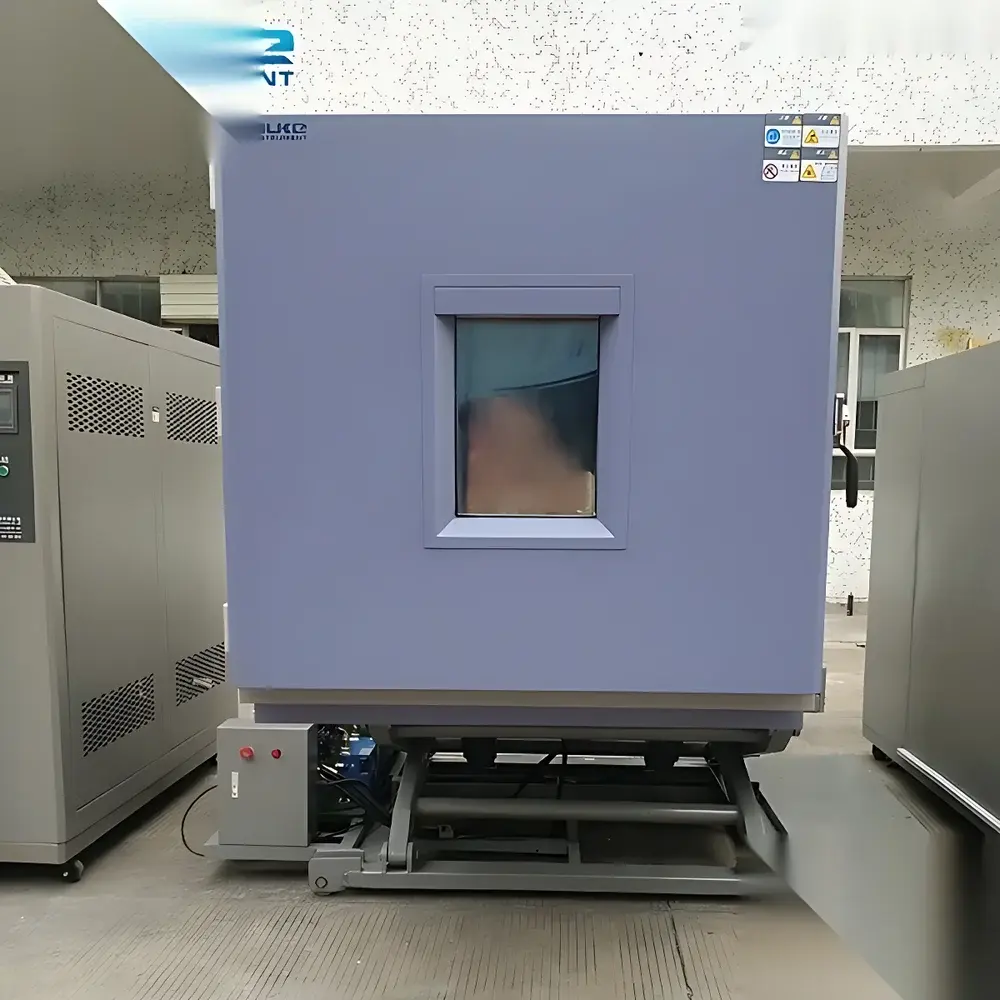
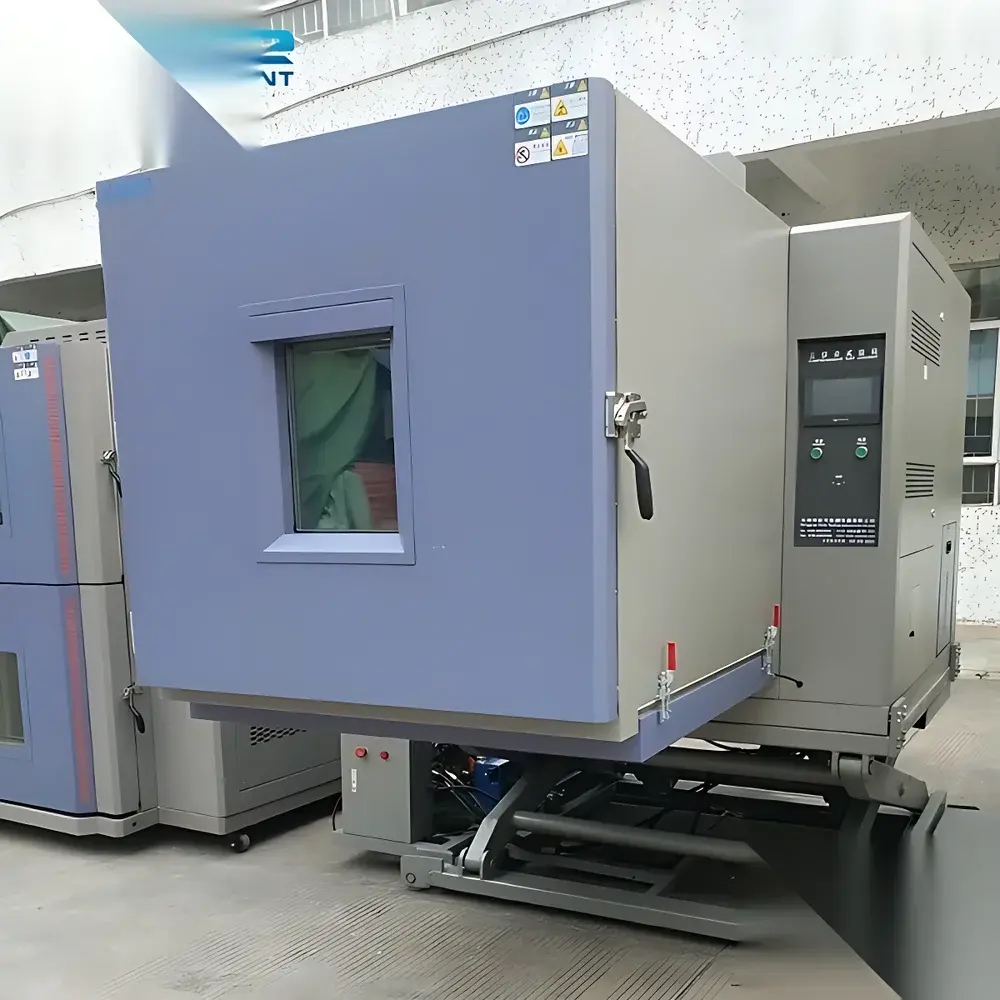
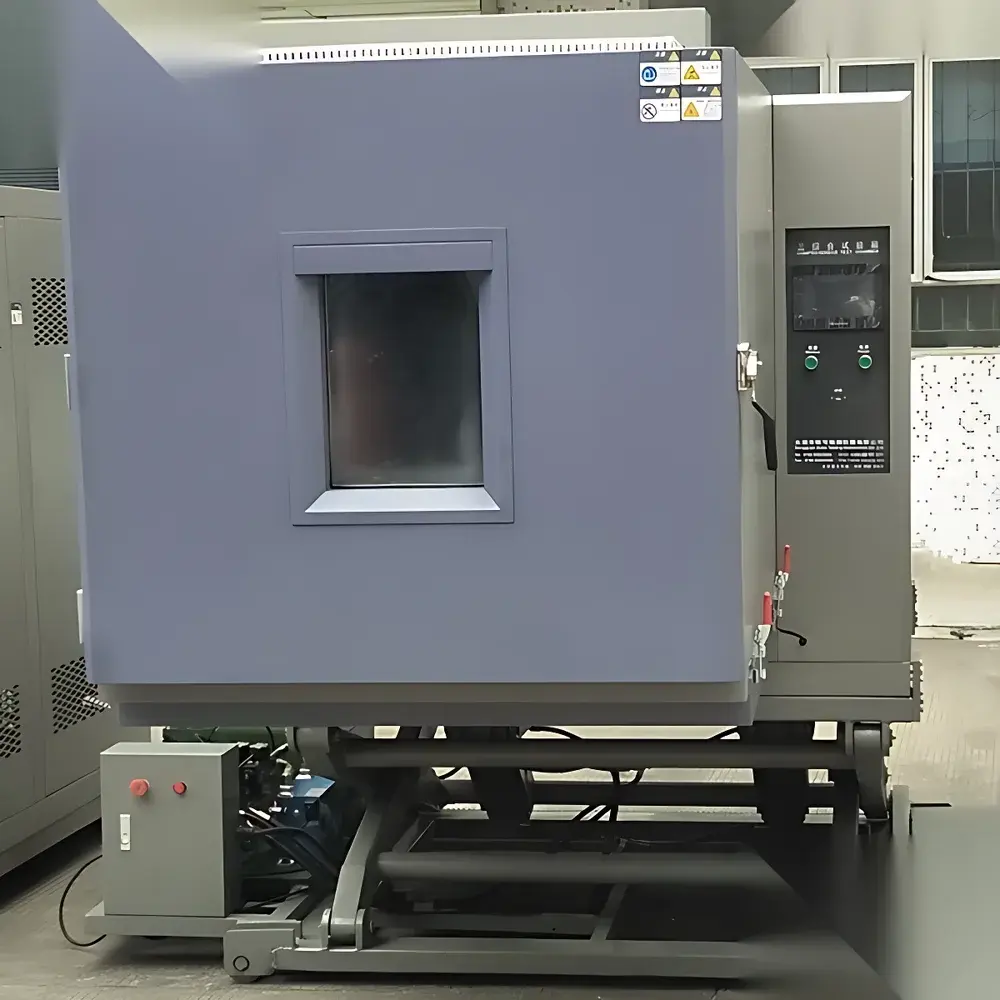
English Product Name
| Brand | Other Brands |
|---|---|
| Origin | Imported |
| Manufacturer Type | Authorized Distributor |
| Temperature Range | -70 °C to +150 °C |
| Humidity Range | 20–98% RH |
| Temperature Uniformity | ≤ ±2 °C |
| Temperature Fluctuation | ≤ ±0.5 °C |
| Humidity Deviation | +2 % / –3 % RH |
| Cooling Rate | 1 °C/min |
| Heating Rate | 4 °C/min |
| Vibration Frequency Range | 1–5000 Hz |
| Max Acceleration | <20 g |
| Max Displacement (p-p) | 0–5 mm |
| Load Capacity | 100 kg |
| Vibration Axes | Vertical & Horizontal (Dual-Axis) |
| Waveform | Sine (Half/Full Cycle) |
| Power Supply | AC 220 V / 380 V, 50 Hz |
Overview
The Tri-Environmental Vibration Test System with Temperature and Humidity Control is an integrated reliability validation platform engineered for simultaneous exposure of test specimens to controlled thermal, hygrothermal, and mechanical vibrational stressors. It combines a climatic chamber—capable of precise temperature and humidity regulation—with a dual-axis electrodynamic shaker system, enabling concurrent or sequential application of environmental and dynamic mechanical loads per MIL-STD-810F, GJB 150.5, and IEC 60068-2 series standards. Unlike single-stress test systems, this tri-combined architecture replicates real-world service conditions encountered during transportation, storage, and operational deployment—particularly critical for aerospace avionics, automotive ECUs, medical electronics, and industrial control modules. The system operates on the principle of forced sinusoidal excitation in vertical and horizontal directions while maintaining stable chamber conditions, ensuring that thermomechanical coupling effects are captured without specimen relocation—eliminating mounting-induced artifacts and enhancing measurement repeatability.
Key Features
- Integrated dual-axis vibration capability: Independent vertical (500 × 500 × 150 mm) and horizontal (500 × 500 × 250 mm) shaker tables support synchronized or decoupled excitation across 1–5000 Hz frequency range.
- High-fidelity environmental control: Chamber workspace dimensions (W × H × D = 400 × 500 × 500 mm) accommodate mid-size assemblies; temperature stability maintained at ≤ ±0.5 °C, uniformity ≤ ±2 °C; humidity accuracy within +2 % / –3 % RH deviation.
- Programmable dynamic profiles: User-defined sine sweep, dwell, and random vibration sequences with adjustable acceleration (up to 19.6 m/s²), displacement (0–5 mm p-p), and duration (1–65,000 s).
- Intuitive operator interface: Dual-language (English/Chinese) touchscreen HMI with digital parameter readout, real-time waveform visualization, and temperature offset calibration function for metrological traceability.
- Robust mechanical architecture: Critical components—including shaker armature, refrigeration compressors, and humidity generation nozzles—sourced from Tier-1 international suppliers to ensure long-term operational integrity and minimal mean time between failures (MTBF).
- Comprehensive safety interlocks: Over-temperature, over-humidity, over-acceleration, phase-loss, and door-open cut-off protections conforming to IEC 61000-6-2 EMC and EN 61000-6-4 emission requirements.
Sample Compatibility & Compliance
The system accommodates test articles up to 100 kg mass and 400 mm × 500 mm × 500 mm volume, supporting rigidly mounted PCBs, enclosures, sensor housings, and subassemblies without requiring re-fixturing between environmental and vibration phases. It satisfies mandatory compliance testing protocols including GB/T 2423.1 (cold), GB/T 2423.2 (dry heat), GB/T 2423.22 (temperature shock), GJB 150.5A (temperature cycling under vibration), and MIL-STD-810F Method 503.4 (combined temperature/humidity/vibration). Data logging meets GLP/GMP documentation prerequisites, with timestamped event records suitable for FDA 21 CFR Part 11–compliant audit trails when paired with validated software packages.
Software & Data Management
Control and analysis are executed via PC-based software compliant with Windows 10/11 (64-bit). The application supports ISO/IEC 17025-aligned test method definition, automated sequence execution, and raw data export in CSV and MATLAB-compatible formats. Real-time FFT spectrum analysis, time-history plots, and pass/fail threshold mapping are embedded. Optional add-ons include remote monitoring via secure HTTPS API, electronic signature workflows, and integration with enterprise LIMS platforms through OPC UA protocol. All calibration certificates and firmware revision logs are digitally archived with SHA-256 hash verification.
Applications
This system serves as a primary qualification tool for design verification (DVT) and production lot acceptance testing (LAT) across regulated sectors. Typical use cases include: fatigue life assessment of solder joints under thermal cycling + vibration; validation of MEMS accelerometer packaging integrity; screening of battery management systems for EV powertrain modules; accelerated aging of optical sensor housings exposed to condensing humidity and resonant frequencies; and reliability benchmarking of 5G base station RF front-end assemblies subjected to transport-induced broadband excitation. Its tri-combined stress profile enables identification of failure modes inaccessible to standalone thermal or vibration chambers—such as moisture-assisted crack propagation or thermoelastic damping anomalies.
FAQ
What standards does this system fully support for combined environment-vibration testing?
It complies with MIL-STD-810F Method 503.4, GJB 150.5A, and IEC 60068-2-64 for simultaneous temperature/humidity/vibration profiles.
Can the system perform random vibration while maintaining constant temperature and humidity?
Yes—vibration control and environmental regulation operate independently yet synchronously, with closed-loop feedback ensuring chamber stability during dynamic loading.
Is third-party calibration certification available?
Factory calibration includes NIST-traceable temperature, humidity, and acceleration verification; optional UKAS or DAkkS-certified calibration reports are available upon request.
What is the maximum allowable specimen height when using both vertical and horizontal shakers?
With dual-axis operation active, the effective vertical clearance is limited to 150 mm above the vertical table surface; horizontal table height remains unconstrained within chamber envelope limits.
Does the system support automated test report generation with digital signatures?
Yes—when configured with the Validation Package, it generates PDF reports containing test parameters, pass/fail status, raw data snippets, and electronic sign-off fields compliant with 21 CFR Part 11 Annex 11 requirements.



