
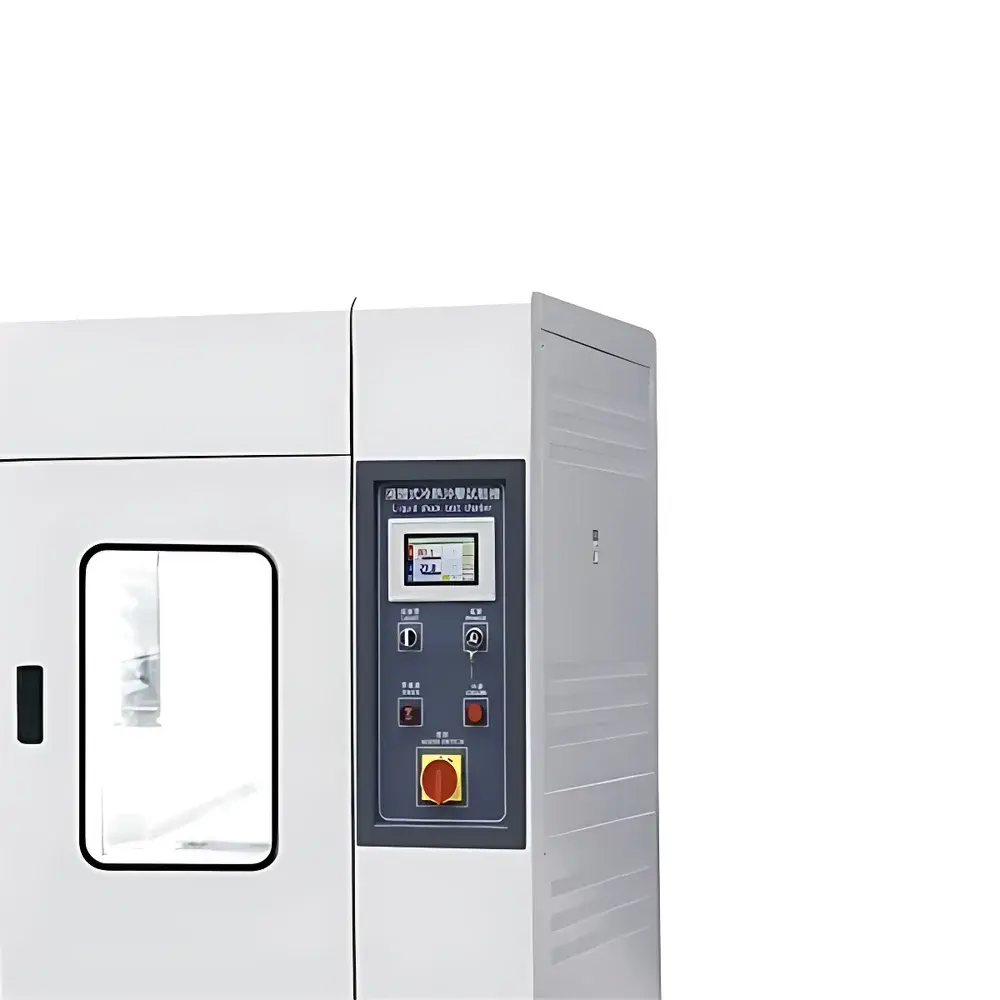
English Product Name
| Brand | Other Brands |
|---|---|
| Origin | Imported |
| Manufacturer Type | General Distributor |
| Price | USD 12,500 (FOB) |
| Internal Dimensions (W×H×D) | 40×35×30 cm to 70×60×60 cm |
| External Dimensions (W×H×D) | 145×180×140 cm to 190×170×270 cm |
| Hot Zone Storage Temperature Range | RT to +200 °C |
| Cold Zone Storage Temperature Range | RT to −70 °C |
| Test Zone Temperature Range | +60 °C to +150 °C (hot shock) |
| Temperature Control Accuracy | ±0.5 °C |
| Temperature Uniformity | ±2.0 °C |
| Recovery Time | <5 min |
| Preheating Time (RT → 150 °C) | ~30 min |
| Precooling Time (RT → −70 °C) | ~85 min |
| Refrigeration System | Hermetic or Semi-Hermetic Compressor with Eco-Friendly Refrigerants (R404A/R23) |
| Interior Material | SUS#304 Mirror-Finish Stainless Steel |
| Exterior Material | SUS#304 Stainless Steel or Powder-Coated Steel |
| Insulation | High-Density Fire-Retardant PU Foam |
| Power Supply | AC 380 V ±5%, 50 Hz ±0.5 Hz, 3-Phase 5-Wire |
Overview
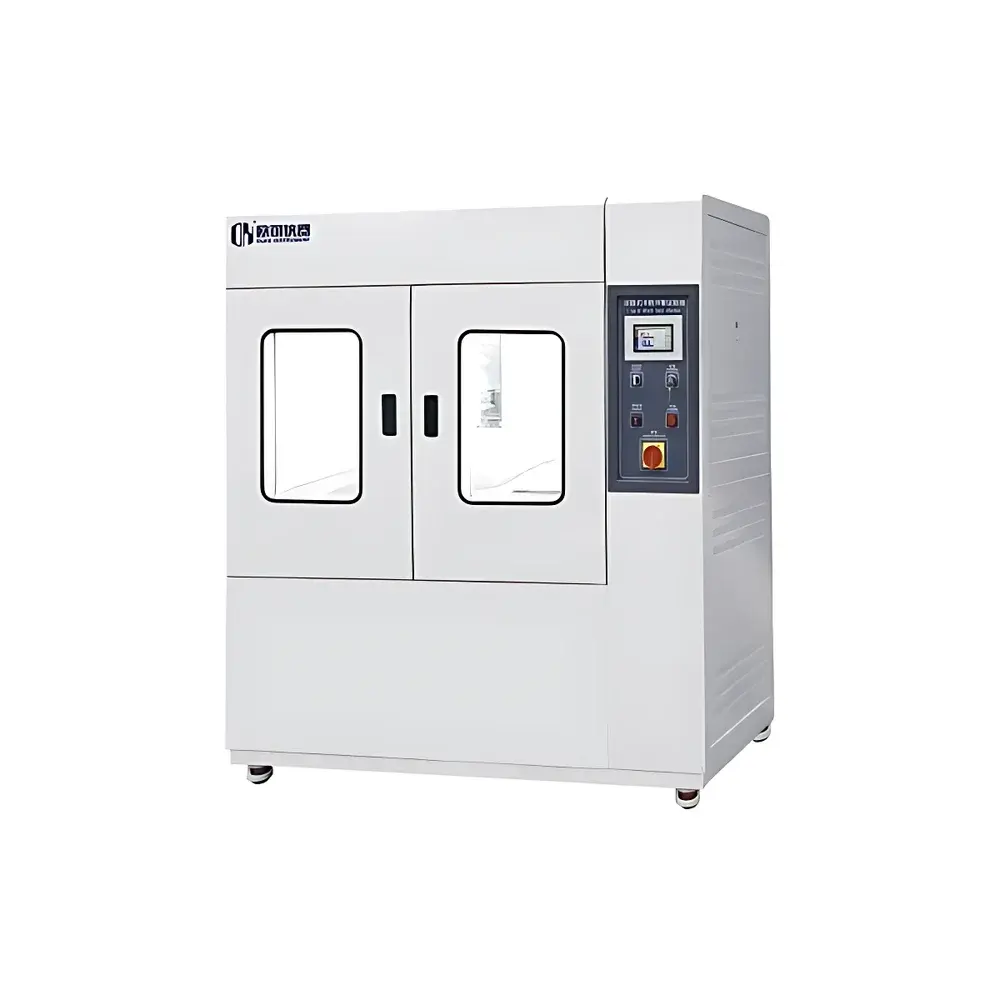
The Liquid-Medium Thermal Shock Test Chamber is a dual-zone, liquid-coupled thermal cycling system engineered for rapid, high-fidelity evaluation of material and component resilience under extreme temperature transitions. Unlike air-based thermal shock chambers, this design employs thermally stabilized liquid media in segregated hot and cold reservoirs—enabling faster heat transfer rates, superior thermal stability, and reduced thermal inertia during transition phases. The test specimen remains stationary while pneumatically actuated isolation doors rapidly switch exposure between the pre-conditioned hot zone (up to +200 °C) and cold zone (down to −70 °C), minimizing mechanical stress from moving fixtures and ensuring repeatable thermal gradients across the sample surface. This architecture complies with fundamental principles of accelerated environmental stress screening (ESS) and is calibrated for traceable performance per IEC/ISO/ASTM thermal shock methodology frameworks.
Key Features
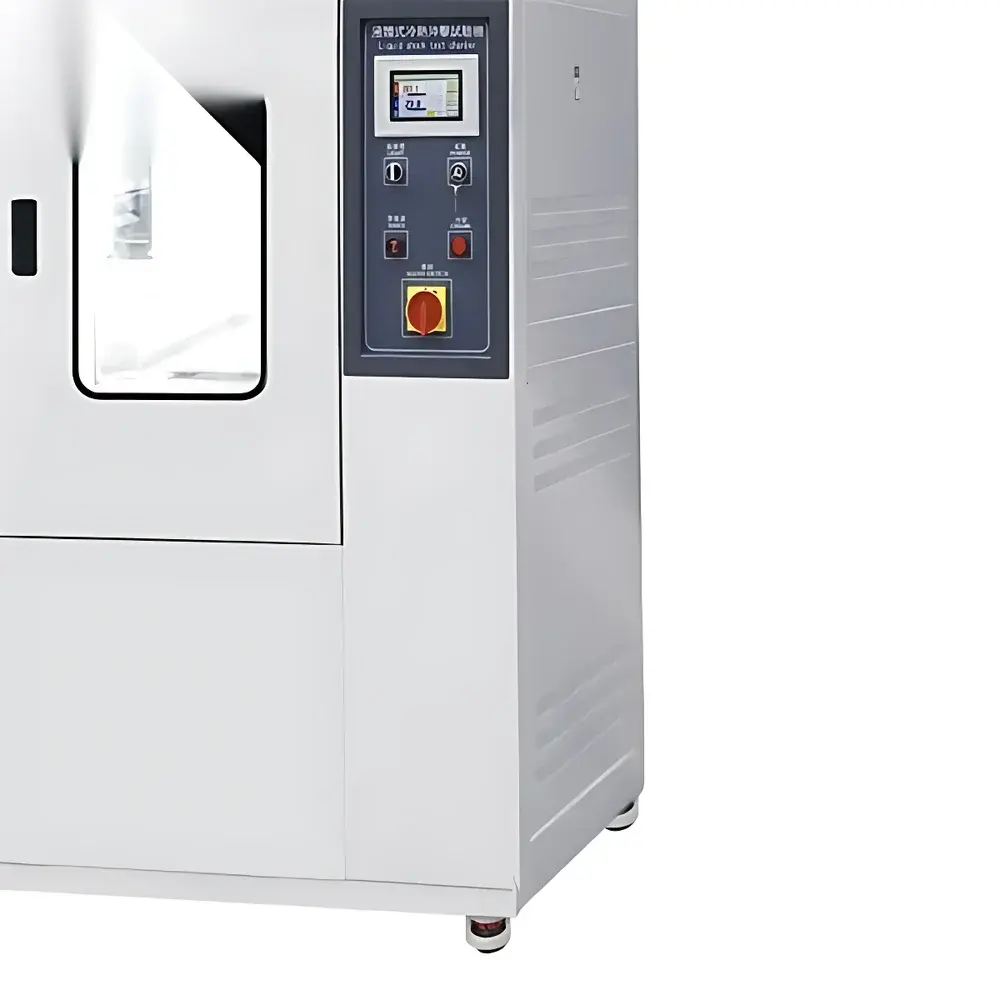
- Large-format color LCD touchscreen controller with intuitive HMI interface, real-time graphical monitoring of chamber status, temperature profiles, and alarm history
- Dual-refrigeration circuit architecture: independent hermetic or semi-hermetic compressors paired with plate-type heat exchangers and binary ultra-low-temperature refrigeration stages for stable cold zone maintenance at −65 °C
- Liquid-mediated thermal storage design ensures high thermal mass retention, enabling consistent shock amplitude and minimized overshoot during repeated cycles
- Integrated LAN interface supporting TCP/IP communication for remote operation, data logging, and integration into centralized lab management systems (e.g., LabWare LIMS or Siemens Desigo)
- Multi-mode operation: configurable as standalone high-temperature test chamber, low-temperature test chamber, or fully automated thermal shock sequencer with programmable dwell times, transition rates, and cycle counts
- Intelligent preconditioning logic: automatic precooling/preheating activation based on scheduled start time, reducing operator intervention and improving test readiness consistency
- Comprehensive diagnostics: self-monitoring of refrigerant pressure, compressor current, door seal integrity, and heater continuity; fault codes mapped to actionable service procedures
Sample Compatibility & Compliance
The chamber accommodates rigid and semi-rigid specimens up to 70 cm × 60 cm × 60 cm (internal volume: 225 L), including printed circuit assemblies (PCBAs), aerospace fasteners, medical device housings, automotive sensors, and polymer composites. Its static-test configuration eliminates vibration-induced artifacts common in basket-transfer systems—critical for evaluating solder joint integrity (per IPC-J-STD-001), encapsulant delamination (per MIL-STD-883 Method 1010), and glass transition behavior in thermosets. The system meets requirements of GB/T 2423.1–1989 (cold), GB/T 2423.2–1989 (heat), GB/T 2423.22–1989 (temperature change), GJB 150.5–1986, GJB 360.7–1987, and GJB 367.2–1987. Optional calibration certificates are available traceable to NIM (China National Institute of Metrology) or UKAS-accredited laboratories.
Software & Data Management
The embedded controller supports user-defined test profiles with up to 99 segments per program, each specifying target temperature, dwell duration, ramp rate (if applicable), and cycle repetition count. All operational parameters—including actual chamber temperatures, compressor runtimes, defrost events, and power consumption—are logged at 1-second intervals and exportable via USB or Ethernet as CSV or XML files. Audit trail functionality records user login/logout timestamps, parameter modifications, and manual interventions—supporting GLP/GMP compliance when configured with password-protected administrator access levels. Optional software add-ons enable automated report generation aligned with ISO/IEC 17025 documentation standards and FDA 21 CFR Part 11 electronic signature validation.
Applications
This chamber serves critical qualification workflows across regulated industries: validation of thermal cycling endurance for avionics modules per DO-160 Section 4.5; reliability screening of implantable electronics under simulated body-to-environment transitions; assessment of ceramic capacitor microcracking following JEDEC JESD22-A104; evaluation of coating adhesion on aluminum alloys exposed to marine thermal transients; and accelerated aging studies of lithium-ion battery enclosures subjected to diurnal ambient extremes. Its precision temperature control (±0.5 °C) and uniformity (±2.0 °C) make it suitable for comparative analysis across material lots, supplier qualification, and failure mode identification in root cause investigations.
FAQ
What distinguishes liquid-medium thermal shock from air-based systems?
Liquid-coupled reservoirs provide higher thermal capacity and lower thermal resistance than forced-air ducts, resulting in shorter recovery times (<5 min), tighter temperature stability during dwell periods, and reduced thermal lag across large or thermally massive samples.
Can the chamber operate continuously in single-zone mode?
Yes—it supports standalone high-temperature testing (RT to +200 °C) or low-temperature testing (RT to −70 °C) without engaging the shock sequence, functioning equivalently to a precision environmental chamber.
Is remote monitoring compatible with industrial SCADA platforms?
The standard Modbus TCP and optional OPC UA protocol support enables bidirectional integration with Siemens PCS7, Rockwell FactoryTalk, or Schneider EcoStruxure systems for centralized chamber fleet management.
What maintenance intervals are recommended for the refrigeration system?
Compressor oil analysis and refrigerant purity verification are advised every 12 months or after 2,000 operational hours; condenser coil cleaning and door gasket inspection should occur quarterly.
Does the system include validation documentation for IQ/OQ protocols?
Factory-installed sensor calibration certificates (NIST-traceable Pt100 probes) and a comprehensive User Requirements Specification (URS) template are provided; full IQ/OQ/ PQ execution services are available through authorized field application engineers.



