
English Product Name
| Brand | Other Brands |
|---|---|
| Origin | Imported |
| Manufacturer Type | General Distributor |
| Price | USD 11,200 (approx.) |
Overview
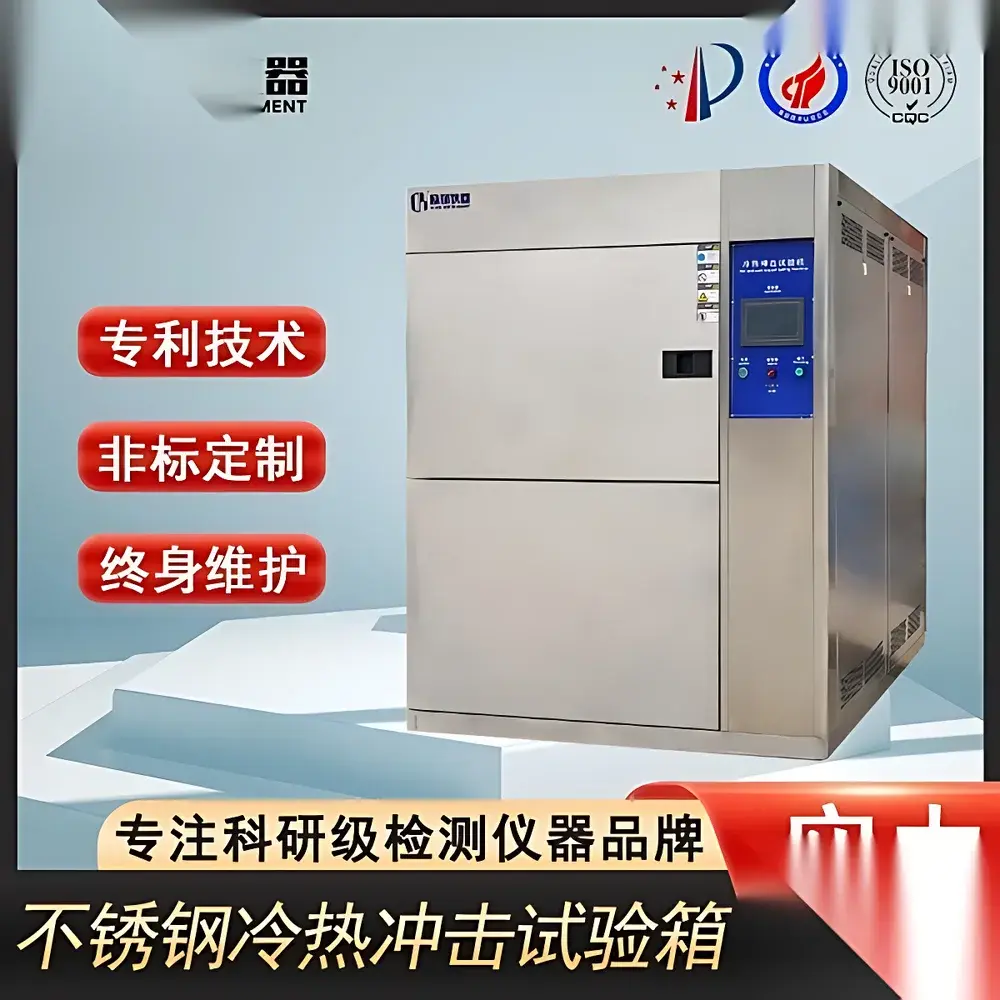
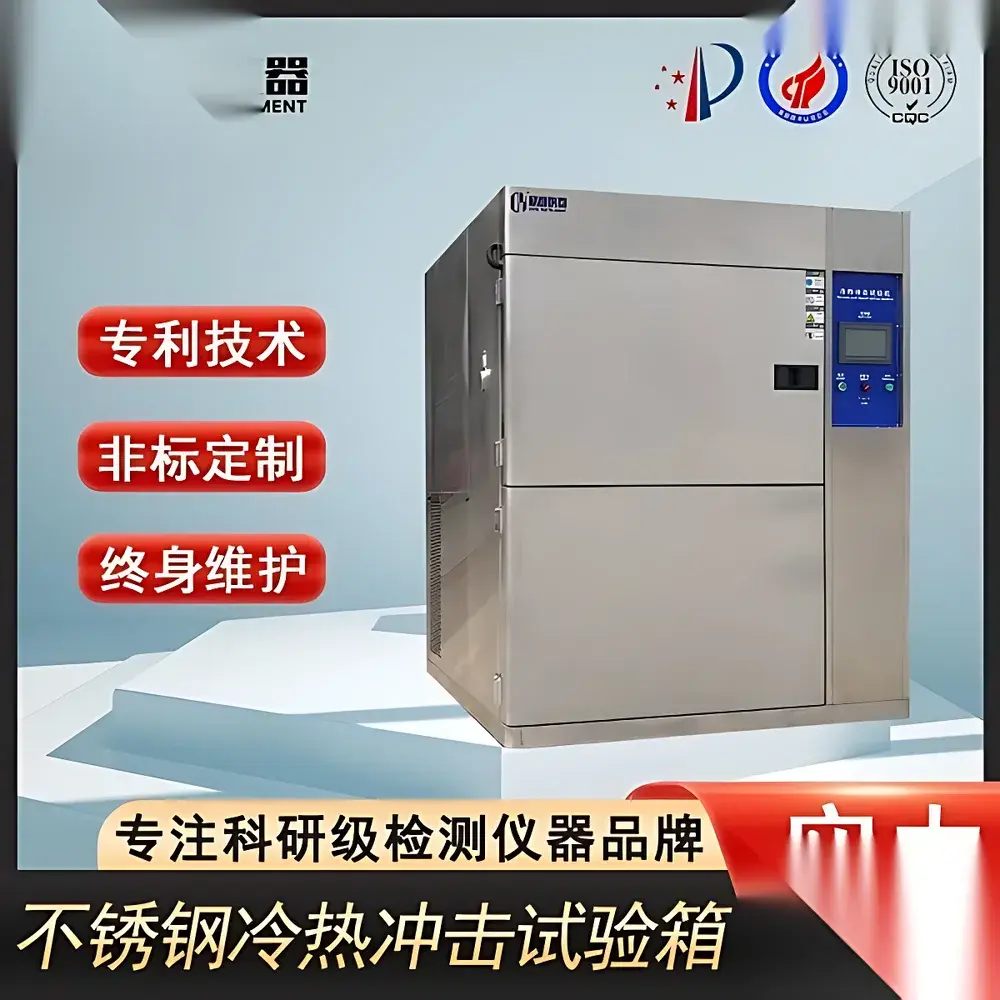
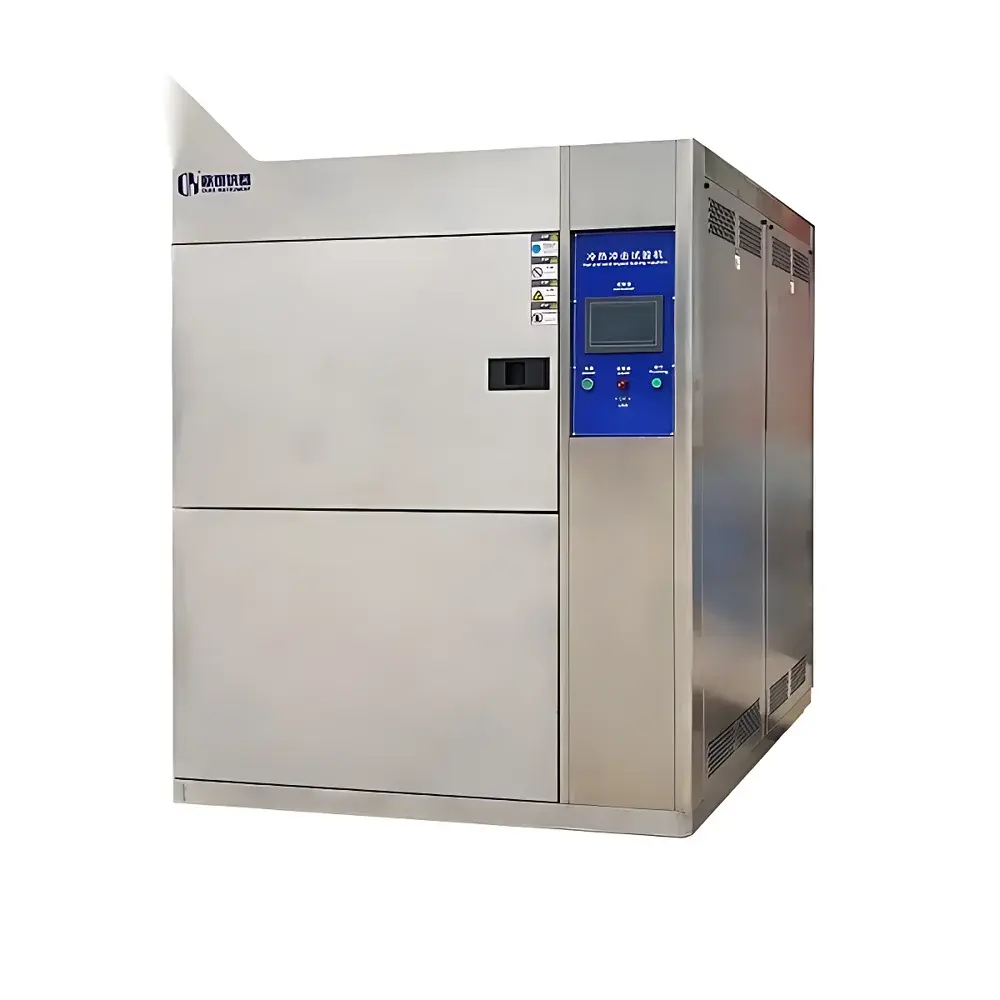
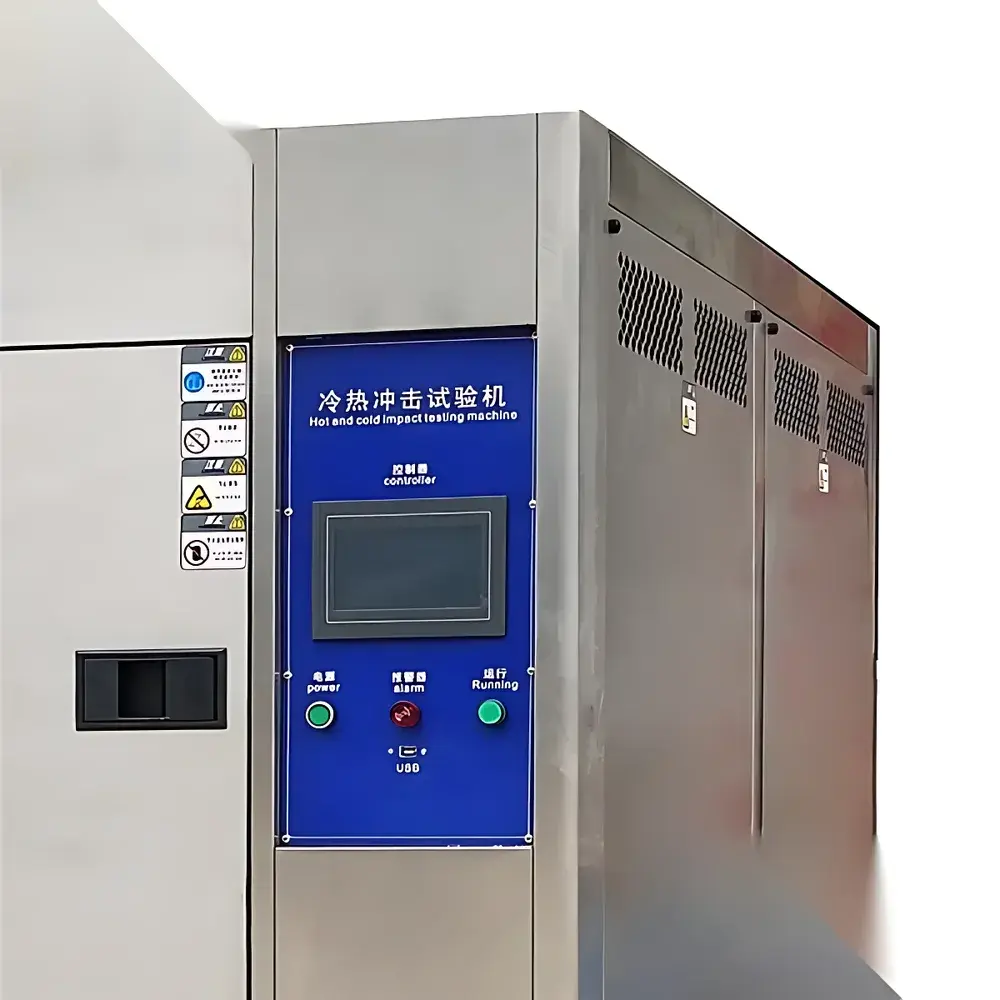
The Stainless Steel Thermal Shock Test Chamber is an engineered environmental test system designed to evaluate material and component reliability under rapid, extreme temperature transitions. It operates on the principle of air-based thermal shock via independent high-temperature and low-temperature zones, with a stationary test zone where specimens remain fixed during cycling—eliminating mechanical stress from movement and ensuring consistent thermal load application. Unlike single-chamber ramping systems, this tri-zone architecture (high-temp chamber, low-temp chamber, and insulated test chamber) utilizes optimized thermal mass storage and high-efficiency air-switching ducts to achieve precise, repeatable shock profiles. The chamber conforms to fundamental thermodynamic requirements for controlled thermal gradient exposure, supporting deterministic qualification testing in R&D, quality assurance, and production validation workflows across automotive, aerospace, electronics, and defense sectors.
Key Features
- Tri-zone stainless steel construction with advanced thermal insulation and minimized heat leakage—ensuring long-term dimensional stability and corrosion resistance in demanding lab or production-floor environments.
- Programmable dual-mode operation: configurable for either 2-zone (hot/cold) or 3-zone (hot/cold/test) thermal shock protocols, accommodating diverse test standards and specimen mounting configurations.
- Industrial-grade PLC-based control architecture with full logic locking—every actuator, valve, heater, and refrigeration stage is monitored and managed in real time for deterministic sequence execution.
- Large-format Japanese-made LCD controller (302 × 240 dots) with bilingual (English/Chinese) interface, supporting intuitive parameter entry, real-time trend visualization, and error-code diagnostics.
- Robust safety subsystems including voltage fluctuation detection with automatic emergency shutdown, hardware interlocked door switches, and redundant over-temperature/over-pressure protection circuits.
- High-capacity program memory: up to 100 user-defined test profiles; maximum cycle count of 9,999; individual segment duration up to 999 hours 59 minutes—enabling extended durability and accelerated life-cycle testing.
Sample Compatibility & Compliance
The chamber accommodates rigid and semi-rigid samples—including PCB assemblies, automotive sensors, molded plastic housings, metal castings, and sealed electronic enclosures—up to standard internal dimensions (customizable upon request). Its stationary test zone eliminates vibration-induced artifacts, making it suitable for optically sensitive or mechanically delicate devices. It meets core international thermal shock and temperature change standards, including IEC 60068-2-14 (Test N: Change of Temperature), GB/T 2423.22–2002 (Temperature Change), GB/T 2424.13–2002 (Guidance for Temperature Change Testing), MIL-STD-810H Method 503.5, GJB 367.2–1987 (Clause 405), and EIA-364-32 (Thermal Shock for Connectors). While not inherently GLP/GMP-certified, its architecture supports integration into regulated environments when paired with validated software and audit-trail add-ons.
Software & Data Management
Standard RS-232C interface enables serial communication with host PCs for remote command execution, real-time data logging, and script-based test sequencing. Optional RS-485 expansion supports multi-chamber LAN monitoring with dedicated network management software—providing synchronized timestamped logs, alarm history, and configurable email/SNMP alerts. An optional temperature data logger (compliant with ISO/IEC 17025 traceability requirements) can be integrated for independent verification. All digital interfaces support CSV export and are compatible with common laboratory information management systems (LIMS) and MES platforms. Firmware updates are delivered via secure USB loading—no internet connectivity required during operation.
Applications
This thermal shock chamber is routinely deployed in failure mode analysis (FMA), solder joint integrity assessment, coating adhesion validation, sealant performance evaluation, and qualification of conformal coatings under cyclic thermal stress. In automotive Tier-1 supply chains, it supports QC testing per QC/T 17–1992 (Environmental Durability of Automotive Components). Electronics manufacturers use it to verify package-level CTE mismatch resilience in BGA, QFN, and wafer-level CSP devices. Defense contractors apply it to screen avionics modules against rapid altitude-driven ambient shifts. Academic labs utilize its reproducible profiles for polymer crystallinity studies and composite delamination onset characterization.
FAQ
What is the typical temperature range for hot and cold zones?
Standard configuration supports +150 °C (hot zone) and –70 °C (cold zone); extended ranges are available upon customization.
Does the system support automated data export to Excel or LIMS?
Yes—via RS-232C or RS-485, with ASCII-formatted time-stamped temperature logs and event markers.
Is calibration certification included with shipment?
A factory-as-tested report is provided; NIST-traceable calibration certificates are available as an optional service.
Can the chamber be integrated into a centralized facility monitoring system?
Absolutely—the RS-485 option supports Modbus RTU protocol for seamless SCADA and building management system (BMS) integration.
What maintenance intervals are recommended for long-term reliability?
Compressor oil and refrigerant checks every 12 months; air filter replacement every 3 months; annual validation of thermal uniformity and transition rate per IEC 60068-3-5.



