
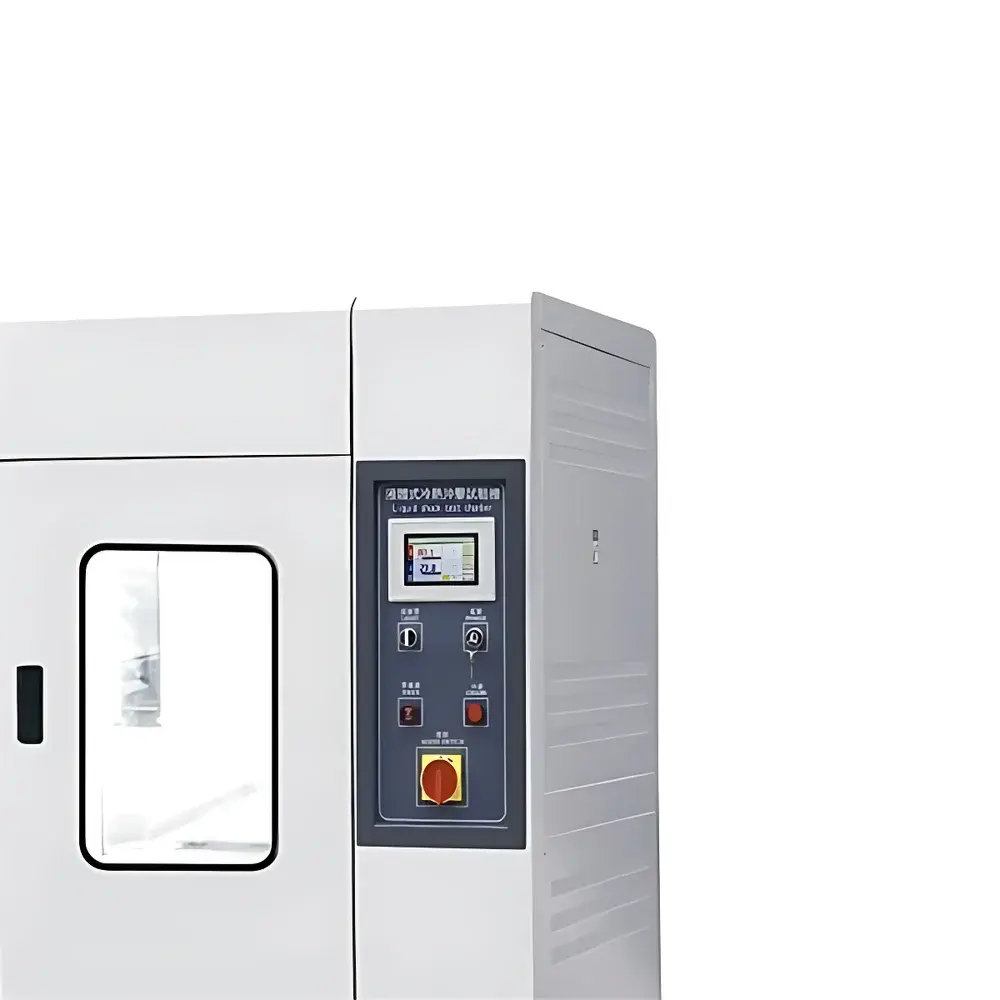
English Product Name
| Brand | Other Brands |
|---|---|
| Origin | Imported |
| Manufacturer Type | General Distributor |
| Price | USD 12,500 (FOB) |
| Internal Dimensions (W×H×D) | 40×35×30 cm to 70×60×60 cm |
| External Dimensions (W×H×D) | 145×180×140 cm to 190×170×270 cm |
| Hot Zone Temperature Range | RT to +200 °C |
| Cold Zone Temperature Range | RT to −70 °C |
| Test Zone Temperature Range | +60 °C to +150 °C (hot shock) |
| Temperature Control Accuracy | ±0.5 °C |
| Temperature Uniformity | ±2.0 °C |
| Soak Time (Hot) | ~30 min (RT → 150 °C) |
| Soak Time (Cold) | ~85 min (RT → −70 °C) |
| Recovery Time | <5 min |
| Refrigeration System | Hermetic or Semi-Hermetic Compressor, Eco-Friendly Refrigerants (R404A/R23) |
| Interior Material | SUS#304 Mirror-Finish Stainless Steel |
| Exterior Material | SUS#304 Stainless Steel or Powder-Coated Steel |
| Insulation | High-Density Fire-Retardant PU Foam |
| Power Supply | AC 380 V ±5%, 50 Hz ±0.5 Hz, 3-Phase 5-Wire |
| Port | One Ø50 mm Cable Port |
| Standard Accessories | Two-Tier SUS#304 Stainless Steel Shelves |
Overview
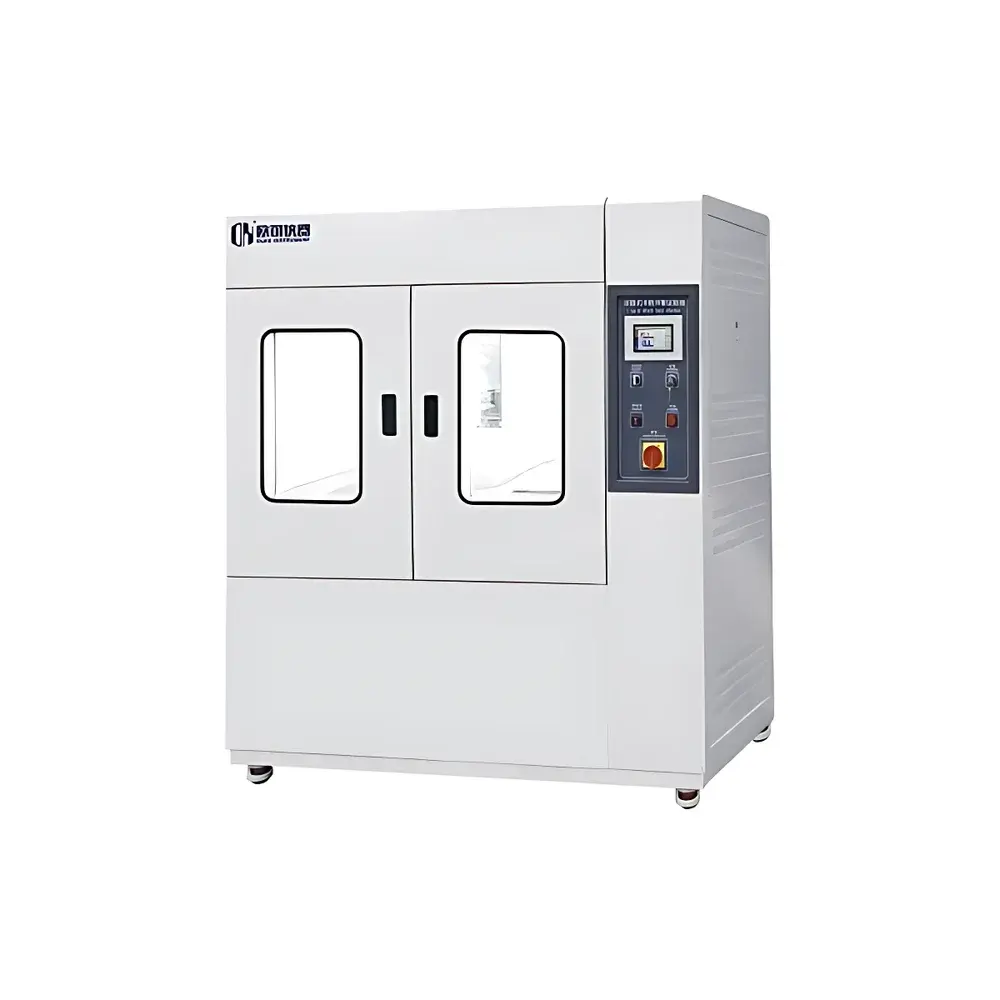
The OK-YT Series Liquid Thermal Shock Test Chamber is a dual-zone, liquid-immersion–compatible thermal shock system engineered for rapid, repeatable evaluation of material and component resilience under extreme temperature transitions. Unlike air-based thermal shock chambers, this platform supports optional liquid-phase thermal transfer via compatible immersion media (e.g., silicone oil or fluorinated fluids), enabling accelerated heat exchange rates and enhanced thermal loading fidelity—particularly critical for aerospace composites, hermetically sealed electronics, and medical device housings subject to operational thermal transients. The chamber employs a dual-tank architecture: a high-temperature soak zone (up to +200 °C) and a low-temperature soak zone (down to −70 °C), with test specimens mounted on a pneumatically actuated lift basket that transfers samples between zones in under 5 seconds. This design conforms to the fundamental principle of thermal shock testing—inducing controlled, abrupt volumetric strain via differential thermal expansion—thereby accelerating failure modes such as interfacial delamination, solder joint fatigue, sealant cracking, and coating adhesion loss. The system operates under strict adherence to transient thermal stress protocols defined in MIL-STD-810, IEC 60068-2-14, and JESD22-A104, making it suitable for qualification testing in defense, avionics, and regulated medical device development.
Key Features
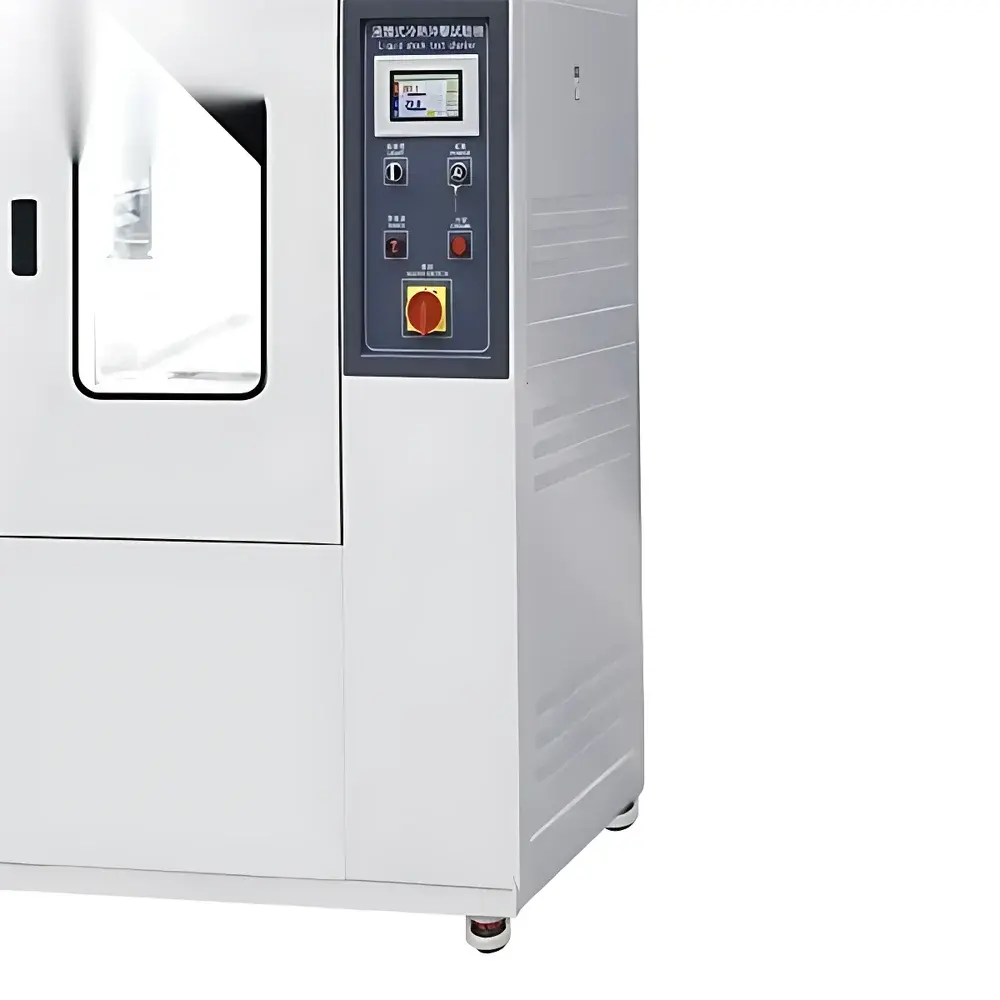
- Large-format color LCD touchscreen controller with intuitive graphical interface, real-time trend plotting, and multilingual support (English, German, Japanese)
- Dual independent refrigeration circuits: high-efficiency plate-type heat exchangers coupled with a two-stage ultra-low-temperature cascade system using R404A (high stage) and R23 (low stage)
- Integrated LAN interface compliant with Modbus TCP/IP and Ethernet/IP protocols for remote monitoring, script-based test sequencing, and integration into centralized lab management systems
- Triple-mode operation: standalone high-temperature cycling, standalone low-temperature cycling, and fully programmable thermal shock sequences—including user-defined dwell times, transition rates, and cycle counts
- Intelligent pre-conditioning logic: automatic pre-cooling or pre-heating during standby to minimize test initiation delay and ensure precise thermal boundary conditions at t=0
- Configurable defrost management: both time-based and demand-driven defrost cycles with manual override; frost accumulation monitored via evaporator pressure differentials
- Fault diagnostics with event logging: all alarms (e.g., overtemperature, compressor shutdown, door interlock breach) are timestamped and stored with contextual sensor data for root-cause analysis
Sample Compatibility & Compliance
The OK-YT chamber accommodates test specimens up to 70 × 60 × 60 cm (interior volume: 225 L), with load capacity optimized for rigid and semi-rigid components including printed circuit board assemblies (PCBAs), turbine blade coatings, polymer encapsulated sensors, and stainless steel surgical instruments. All internal surfaces are fabricated from electropolished SUS#304 stainless steel to resist corrosion from condensate and cleaning agents, while the high-density polyurethane insulation meets UL 94 HF-1 flame retardancy requirements. The system complies with key international standards for environmental stress screening (ESS) and qualification testing, including GB/T 2423.1 (cold), GB/T 2423.2 (dry heat), GB/T 2423.22 (temperature change), GJB 150.5 (military thermal shock), and ISO 16750-4 (road vehicles—electrical disturbances). Optional validation packages include IQ/OQ documentation aligned with GLP and ISO/IEC 17025 laboratory accreditation frameworks.
Software & Data Management
The embedded controller firmware supports full traceability per FDA 21 CFR Part 11 requirements when paired with optional audit trail software modules. All test profiles, execution logs, calibration records, and alarm histories are exportable in CSV and PDF formats with digital signature capability. Remote access enables secure web-based supervision via HTTPS-enabled dashboard, supporting concurrent multi-user sessions with role-based permissions (operator, engineer, QA reviewer). Data synchronization is configurable for periodic upload to network-attached storage or cloud-based LIMS platforms using SFTP or RESTful API endpoints. Real-time data streaming allows third-party SCADA integration for enterprise-wide environmental test fleet monitoring.
Applications
This thermal shock chamber serves critical roles across multiple high-reliability sectors: validating thermal cycling endurance of MEMS accelerometers in automotive ADAS modules; assessing solder joint integrity in space-grade FPGA packages per ECSS-Q-ST-70-08C; qualifying cryogenic-to-ambient transition behavior of MRI coil housings; evaluating thermal fatigue resistance of ceramic matrix composites (CMCs) used in jet engine shrouds; and verifying hermetic seal performance of implantable neurostimulator enclosures under simulated body-to-ambient thermal gradients. Its rapid recovery time (<5 min) and tight temperature uniformity (±2.0 °C) ensure statistically robust failure mode acceleration—reducing qualification timelines by up to 40% compared to conventional step-stress methods.
FAQ
Does the chamber support liquid immersion testing?
Yes—while primarily configured for air-based thermal shock, the chamber’s structural integrity, material compatibility, and optional fluid containment accessories enable validated liquid-phase thermal shock protocols using non-corrosive, thermally stable immersion media.
What is the maximum allowable sample weight per cycle?
The pneumatic lift mechanism supports up to 30 kg per test load; dynamic load distribution must remain within ±5% center-of-gravity tolerance to maintain positional repeatability during zone transfer.
Can test data be exported in machine-readable format for statistical process control (SPC)?
Yes—raw sensor outputs (temperature, pressure, time stamps) are available in IEEE 1588-compliant timestamped CSV files, compatible with JMP, Minitab, and Python-based SPC libraries.
Is the system compatible with external humidity control modules?
No—the OK-YT series is purpose-built for dry thermal shock only; for combined temperature/humidity stress, refer to the OK-TH series environmental test chambers.
What calibration intervals are recommended for ISO/IEC 17025 compliance?
Temperature sensors require annual calibration against NIST-traceable references; system-level performance verification (uniformity, recovery time, stability) is recommended every six months or after major maintenance events.



