
English Product Name
| Brand | Other Brands |
|---|---|
| Origin | Imported |
| Manufacturer Type | Authorized Distributor |
| 冲击 Energy Range | 0–100,000 g·mm (0–980.7 J) |
| Peak Acceleration Capability | Up to 100,000 g (theoretical, dependent on mass & pulse duration) |
| Impact Velocity Range | 0–9.3 m/s |
| Table Surface Dimensions | 180 × 180 mm |
| Mass | 2,500 kg |
| Compliance | JESD22-B110, IEC 60068-2-27, ISO 13374-2 |
| Waveform Generation | Half-Sine Pulse (adjustable via interchangeable elastomeric impact seats) |
| Platform Uniformity (within Ø160 mm) | ±10% |
| Repeatability | Acceleration ±10%, Duration ±15%, Δv ±10% |
| Optional Features | Pneumatic braking system, spring-assisted acceleration enhancement, vibration-isolating mounting feet |
Overview
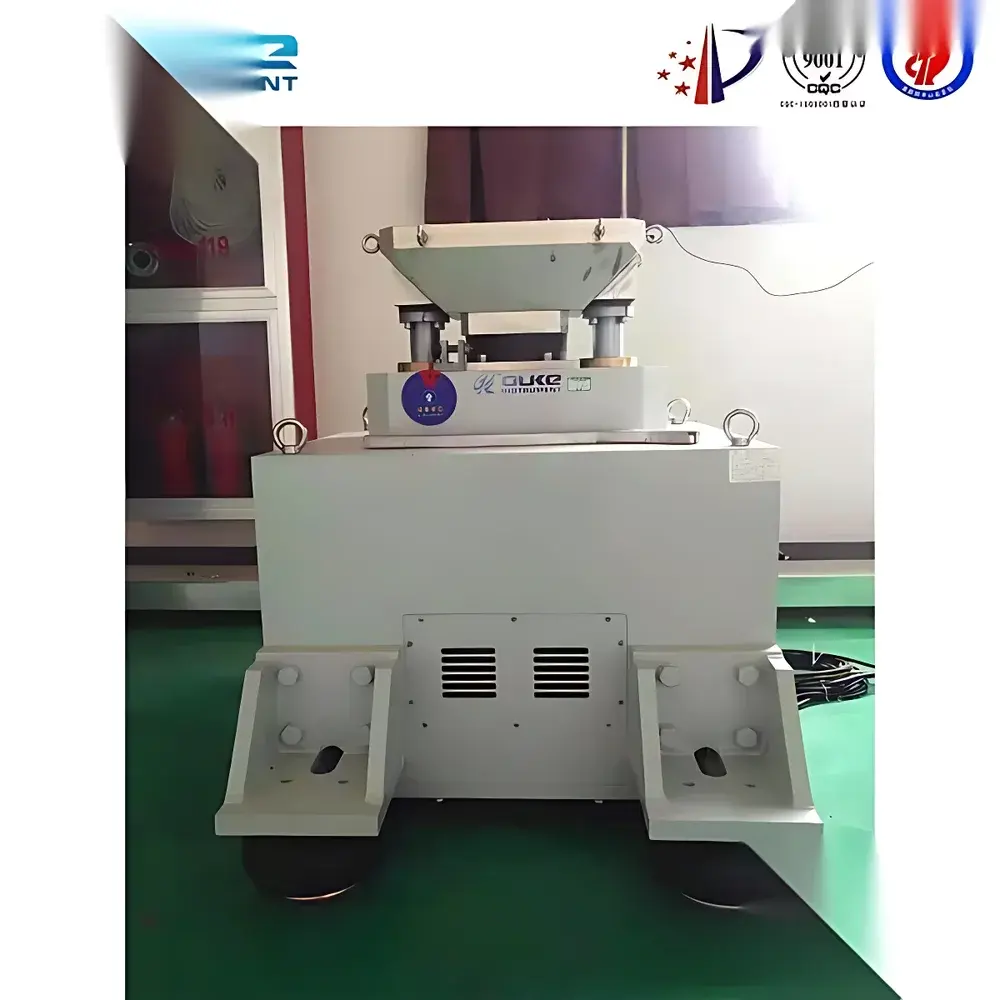
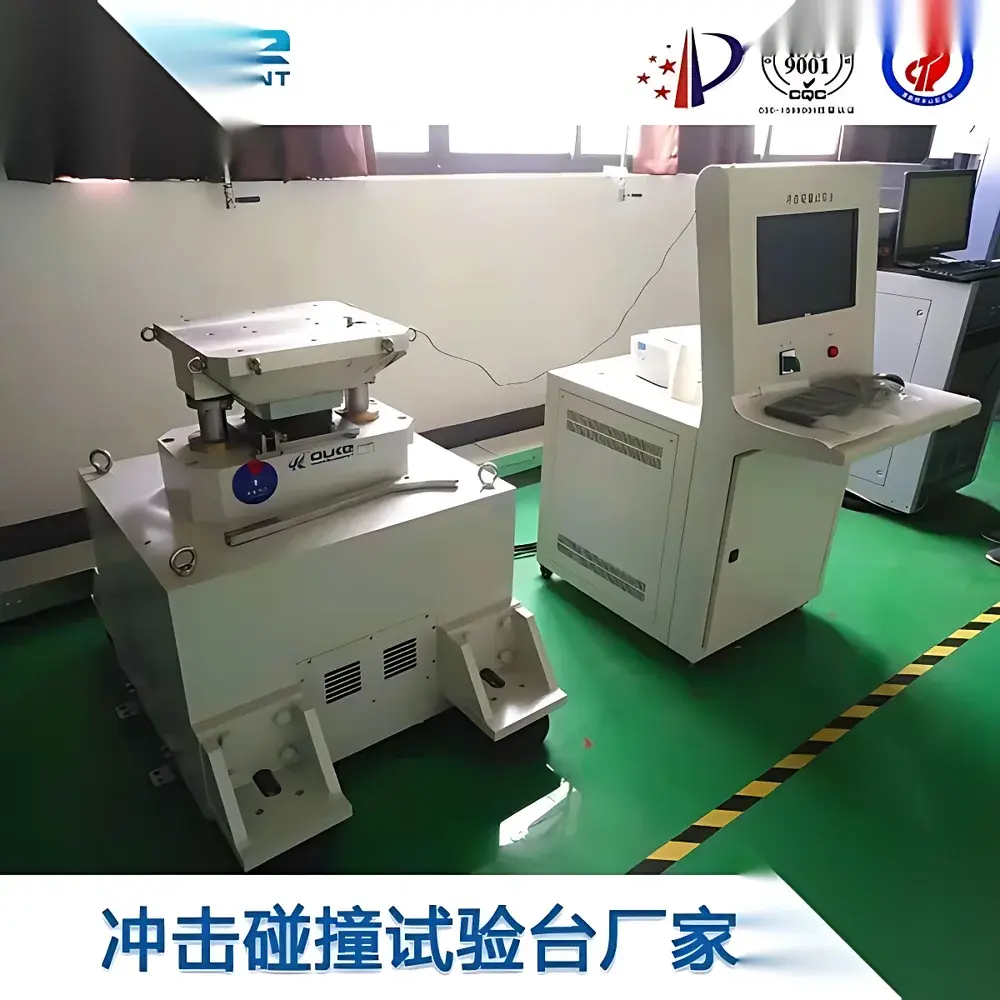
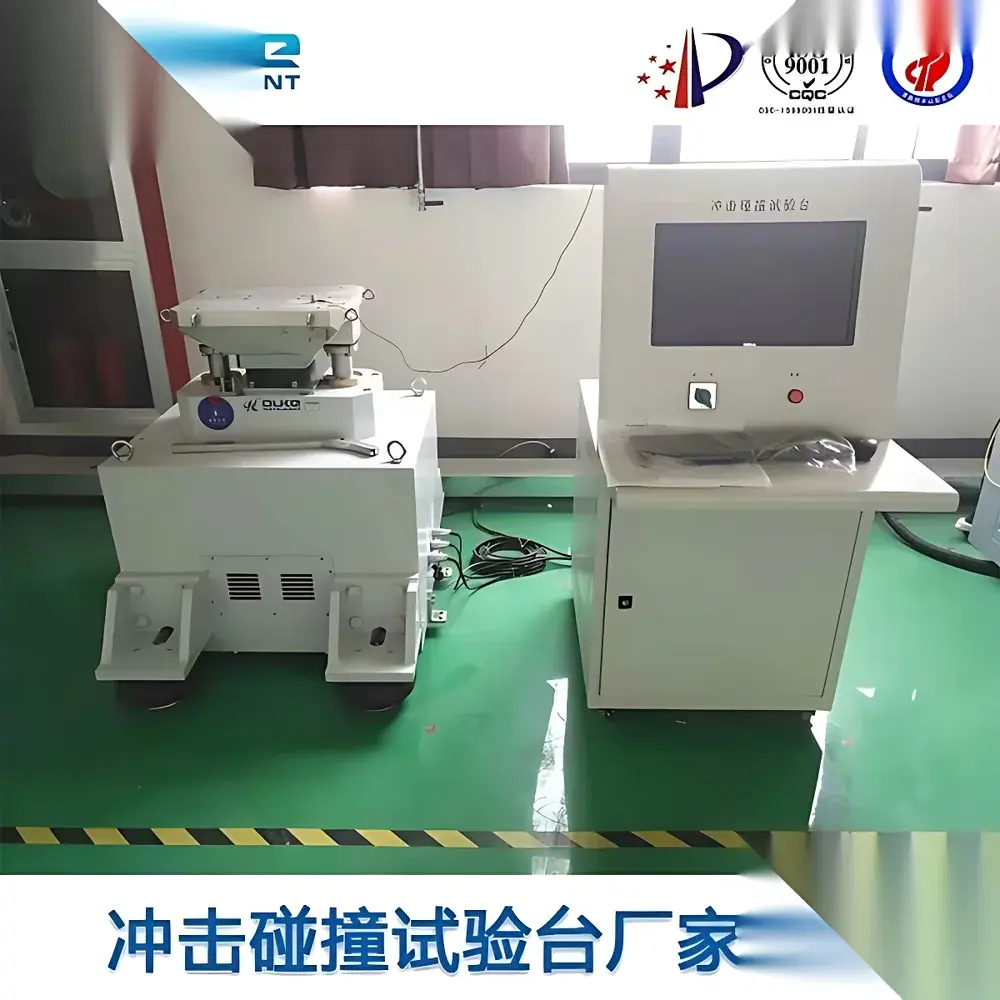
The OKPZ-50 High-Acceleration Shock Test Table is an electromechanically actuated, semi-automated shock simulation platform engineered for non-repetitive mechanical impact testing in reliability engineering and product qualification workflows. It operates on the principle of controlled free-fall or pneumatic impulse delivery to generate calibrated half-sine acceleration pulses—consistent with the fundamental physics of transient mechanical shock as defined in IEC 60068-2-27 and JEDEC JESD22-B110. Unlike vibratory shakers or servo-hydraulic systems, this table delivers discrete, high-g, short-duration impulses (typically 0.5–15 ms) to replicate real-world transport drop events, mounting-point shocks, or sudden structural loading scenarios. Its robust cast-iron base and precision-machined aluminum table surface ensure minimal modal coupling and high mechanical integrity during repeated high-energy impacts. Designed for integration into GLP-compliant quality assurance labs and R&D validation centers, the OKPZ-50 supports deterministic shock profiling without requiring operator intervention beyond initial setup and pulse parameter selection.
Key Features
- Interchangeable elastomeric impact seats enabling precise waveform tailoring—each seat calibrated to produce standardized half-sine pulses per JESD22-B110 Annex A specifications.
- Pneumatic braking system with high-speed solenoid valves eliminates secondary rebound, ensuring single-pulse fidelity and preventing unintended double-impact artifacts.
- Modular seat architecture extends service life and reduces long-term calibration drift; each seat is traceably characterized and individually certified.
- Vibration-isolating mounting feet minimize floor-transmitted energy, mitigating resonance risks in shared laboratory infrastructure and complying with ISO 10816-1 vibration emission limits for test equipment.
- Four-point platform uniformity verification (±10% within Ø160 mm) ensures spatial consistency of acceleration across the test surface—critical for multi-DUT fixtures and PCB-level shock assessment.
- Spring-assisted acceleration enhancement module available for applications requiring peak accelerations exceeding standard gravity-based limits (e.g., aerospace component qualification).
Sample Compatibility & Compliance
The OKPZ-50 accommodates rigidly mounted specimens up to 50 kg (dependent on pulse profile), including automotive rearview mirrors, consumer electronics enclosures, medical device housings, and printed circuit board assemblies. Fixturing is performed using M6 threaded inserts integrated into the 180 × 180 mm table surface. The system meets the mechanical and metrological requirements of multiple international standards: IEC 60068-2-27 (Shock), JESD22-B110 (Board-Level Shock), MIL-STD-810H Method 516.8 (Shock), and ISO 13374-2 (Condition Monitoring — Data Processing). All delivered waveforms are validated using traceable piezoelectric accelerometers (e.g., PCB Piezotronics Model 352C33) and digital oscilloscopes compliant with IEEE 1057 Class A accuracy criteria. Full audit trails—including pulse timestamp, seat ID, measured g-peak, duration, and velocity change—are retained for FDA 21 CFR Part 11–compliant environments when paired with validated data acquisition software.
Software & Data Management
While the OKPZ-50 operates as a standalone hardware platform, it interfaces seamlessly with third-party data acquisition systems (e.g., National Instruments DAQmx, Dewesoft X, or Brüel & Kjær Pulse) via analog voltage outputs (0–10 V proportional to acceleration) and TTL trigger signals. Optional OEM firmware upgrades support Ethernet/IP or Modbus TCP protocols for integration into factory MES or PLM ecosystems. Raw time-domain acceleration data is exported in ASCII or HDF5 format, preserving full resolution (≥1 MS/s sampling rate supported). Calibration certificates include NIST-traceable uncertainty budgets per ISO/IEC 17025:2017, and periodic verification procedures align with ASTM E2565-22 (Standard Practice for Verification of Shock Testing Machines).
Applications
This test table serves critical functions across industries where mechanical robustness under impulsive loading must be quantified prior to field deployment. In automotive engineering, it validates rearview mirror retention integrity under simulated side-impact conditions per SAE J211-1. In electronics manufacturing, it performs board-level shock screening to detect solder joint fatigue, capacitor delamination, or flex-circuit cracking before burn-in. For industrial IoT sensors, it replicates mounting-bolt loosening scenarios induced by machinery vibration transients. In packaging development, it assesses protective foam performance under controlled drop-simulation pulses. Additionally, academic researchers use the OKPZ-50 to study strain-rate-dependent material behavior in polymers and composites under microsecond-scale loading conditions.
FAQ
What shock waveforms does the OKPZ-50 generate?
It produces half-sine acceleration pulses per JESD22-B110 and IEC 60068-2-27, with pulse durations from 0.5 ms to 15 ms, adjustable via physical elastomeric seat selection.
Is the system compliant with FDA 21 CFR Part 11?
Yes—when configured with validated third-party data acquisition software featuring electronic signatures, audit trails, and role-based access control.
Can the table be used for repetitive shock testing?
No—it is designed exclusively for non-repetitive, single-event shock simulation. Repetitive shock requires a different mechanical architecture (e.g., electrodynamic shaker with shock response spectrum synthesis).
What is the maximum specimen mass supported?
Up to 50 kg for standard half-sine pulses; load capacity decreases with increasing peak g-level and shorter pulse durations due to momentum conservation constraints.
Does the system require foundation anchoring?
Not for standard operation—its 2,500 kg mass and optional isolation feet provide sufficient inertial stability. Anchoring is recommended only for facility-specific seismic or high-acceleration (>50,000 g) configurations.



