

English Product Name
| Brand | Santiyiqi |
|---|---|
| Origin | Shandong, China |
| Manufacturer Type | Direct Manufacturer |
| Regional Category | Domestic (China) |
| Model | ST-NLA3 |
| Price | USD 6,300 (approx. based on ¥45,000 at 1 USD = ¥7.14) |
Overview
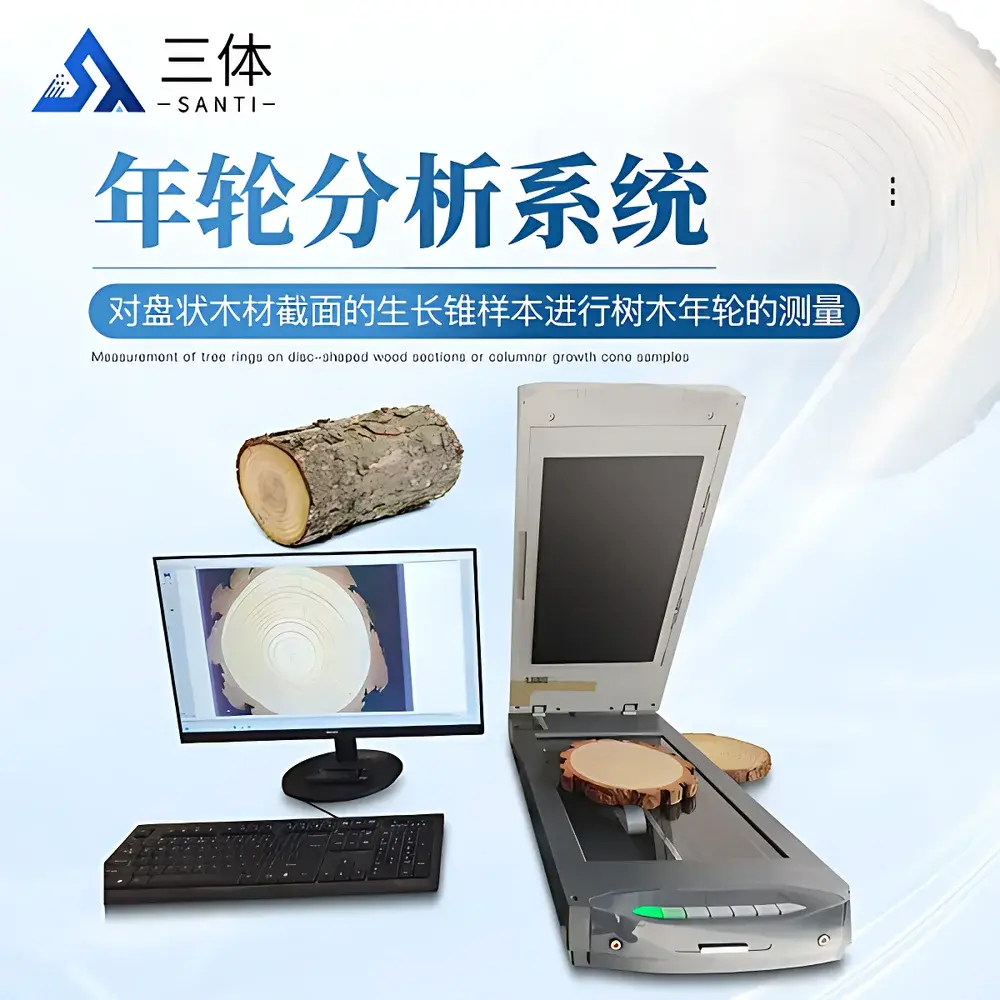
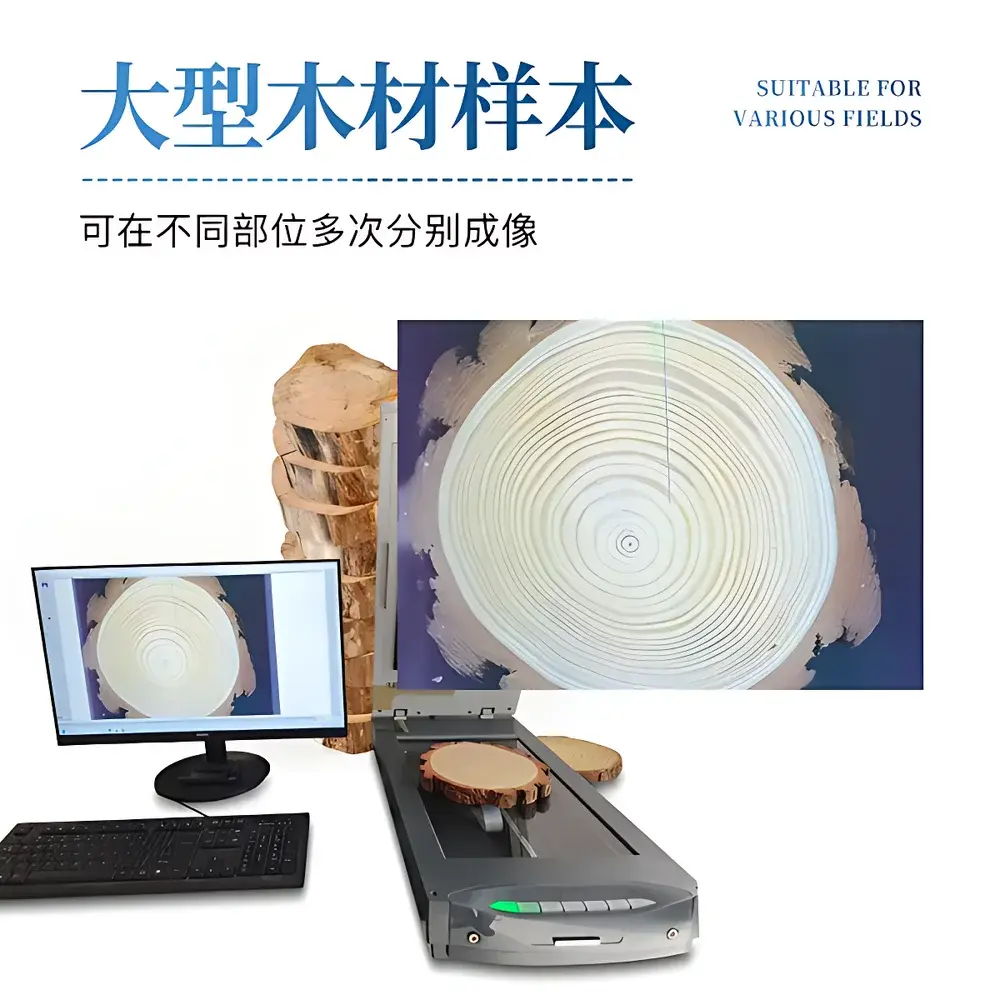
The Santiyiqi ST-NLA3 Dendrochronological Image Analysis System is a precision-engineered digital platform designed for high-resolution, non-destructive analysis of tree-ring structures in wood samples. Built upon the principles of quantitative dendrochronology and digital image metrology, the system integrates calibrated optical scanning with algorithm-driven ring detection to deliver reproducible measurements of annual growth increments—including ring width, earlywood/latewood differentiation, radial density gradients, and geometric morphometrics. It supports both disk-sectioned timber specimens and increment-core samples extracted via standard growth coring techniques. The system adheres to internationally recognized dendrochronological standards (e.g., ITRDB protocols, NOAA-NCDC metadata conventions) and is validated for use in climate reconstruction, forest dynamics modeling, ecological chronosequence studies, and archaeological wood dating.
Key Features
- Multi-resolution scanning support: A4-format scanner (22 × 30 cm scan area, 4800 DPI, 5 µm minimum resolvable feature) and optional A3-format scanner (31 × 44 cm scan area, 2400 DPI, 11 µm resolution)
- Dual-mode ring detection: Intensity-gradient-based auto-detection optimized for diffuse-porous species (e.g., oak, maple), and edge-contrast-enhanced detection for conifers and ring-porous hardwoods
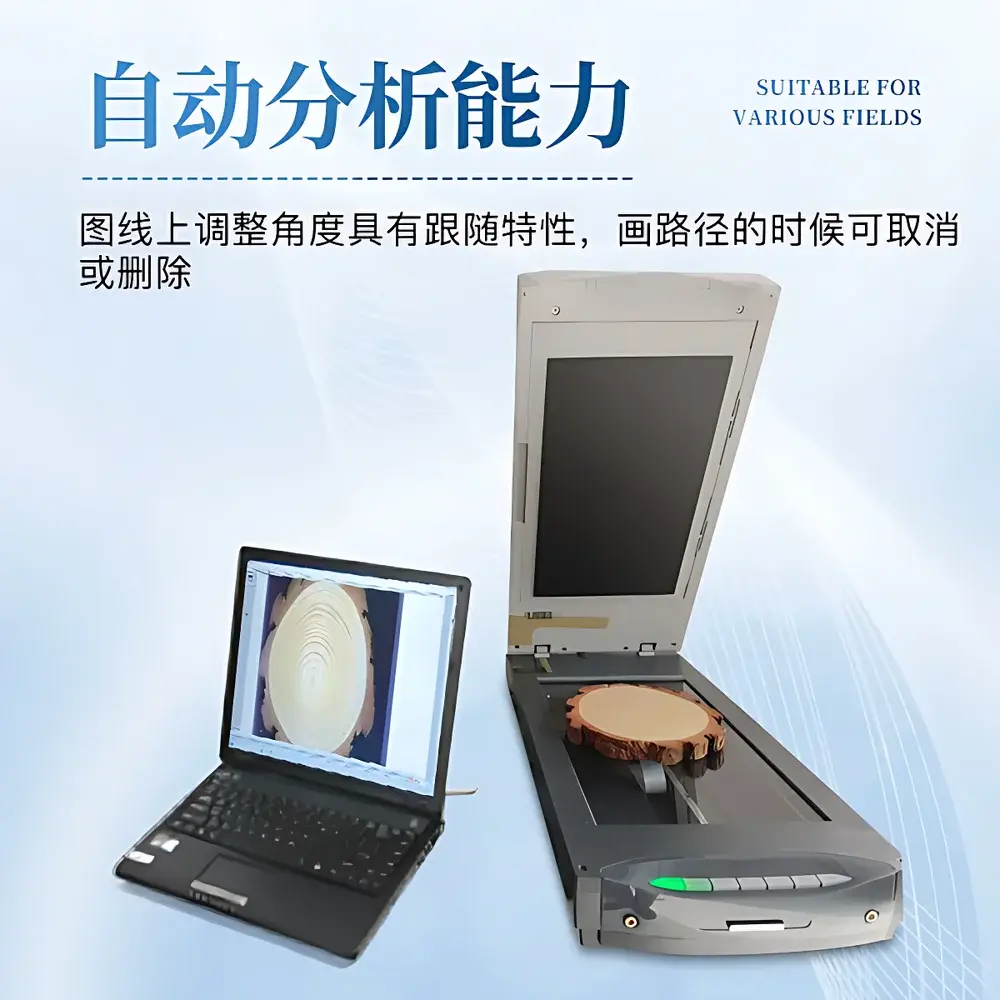
- Interactive correction suite: Manual path editing with endpoint snapping, gap interpolation, false-ring deletion, missing-ring insertion, and tangent-line alignment across cracks or resin ducts
- Sub-millimeter analytical capability: Reliable automatic segmentation of rings narrower than 0.2 mm—critical for slow-growing alpine or arid-zone specimens
- Comprehensive morphometric quantification: Cross-sectional area, stem radius/diameter, perimeter, shape factor (circularity index), porosity mapping, and pith-centered radial coordinate transformation
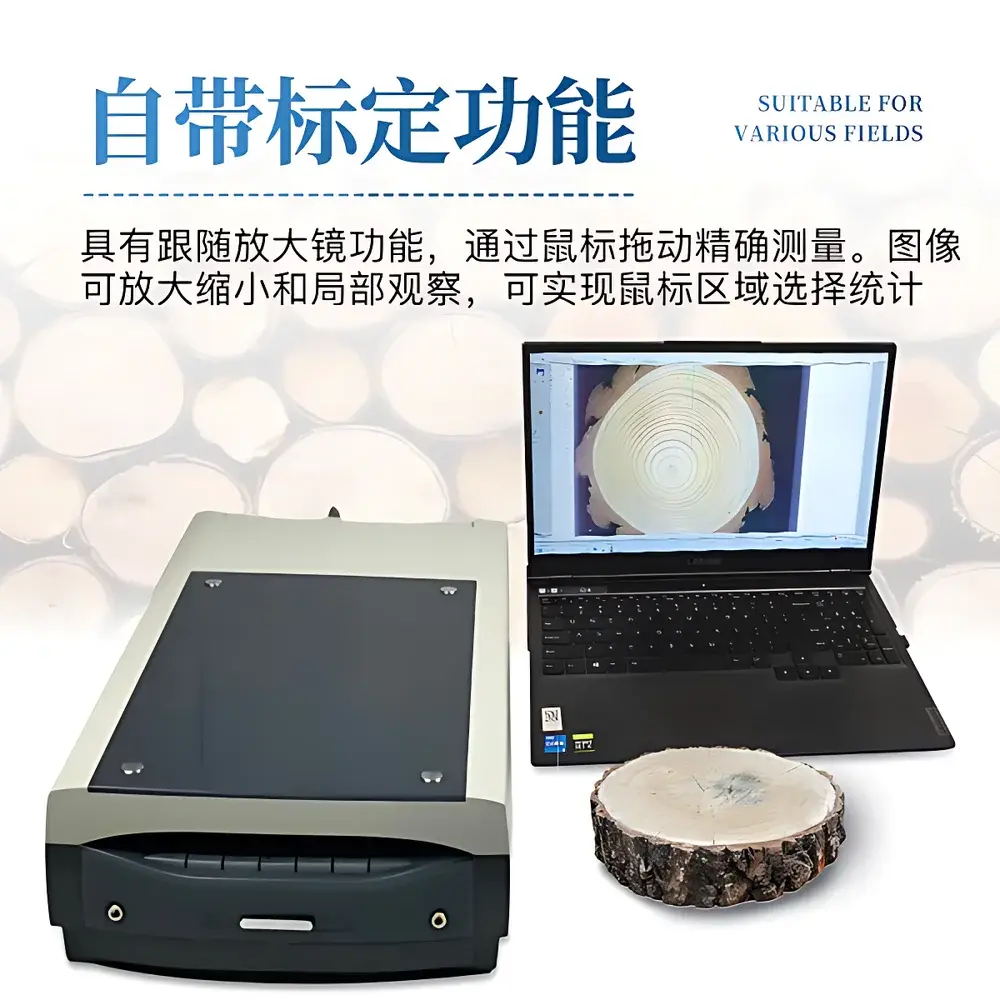
- Calibration-flexible metrology: Independent X- and Y-axis calibration using user-defined reference scales; real-time magnification with mouse-dragged digital zoom and region-of-interest statistical overlay
Sample Compatibility & Compliance
The ST-NLA3 accommodates solid wood disks up to 31 cm in diameter and increment cores (typically 5 mm diameter, up to 60 cm length) mounted in proprietary core holders with angular indexing. Sample preparation follows ISO 13341:2015 (Wood — Determination of density and moisture content) and ITRDB specimen handling guidelines. All measurement outputs comply with FAO Forest Resource Assessment reporting templates and are exportable in standardized formats (TIFF, PNG, BMP, JPEG) for cross-platform interoperability. The software maintains full audit trails for all manual edits and calibration events, supporting GLP-aligned documentation requirements in academic and regulatory research contexts.
Software & Data Management
The native ST-NLA3 Analysis Suite includes a modular GUI with dedicated modules for image preprocessing, ring tracing, chronology building, and statistical validation. It generates standardized ring-width measurement files (.RWL format) compatible with COFECHA, ARSTAN, and dplR workflows. Batch processing supports sequential analysis of multi-sample datasets with consistent parameter propagation. All results—including ring-width series, earlywood/latewood ratios, reflectance profiles (min/max/mean per ring), and geometric metrics—are exportable to Microsoft Excel (.xlsx) with embedded metadata headers. The software implements local timestamped versioning for analysis sessions and supports lossless re-loading of annotated paths and measurement histories.
Applications
- Climatological proxy development: Reconstruction of past temperature/precipitation regimes using ring-width and density chronologies
- Forest ecology: Stand-age structure analysis, disturbance history mapping (fire, insect outbreak, windthrow), and competition indices derived from inter-tree ring synchrony
- Conservation biology: Age estimation of endangered or ancient trees without felling; monitoring of growth response to habitat restoration interventions
- Archaeology and art history: Dating of wooden artifacts, shipwrecks, and panel paintings via cross-dating against regional master chronologies
- Agricultural science: Evaluation of rootstock-scion interactions, irrigation stress responses, and carbon allocation patterns in orchard systems
- Education and training: Visual pedagogical tool for teaching plant phenology, secondary xylem development, and long-term environmental signal integration
FAQ
Does the ST-NLA3 support cross-dating with international chronology databases?
Yes—the software exports .RWL files compliant with ITRDB submission standards and includes built-in tools for visual and statistical cross-dating against reference chronologies.
Can it process scanned images larger than 1 GB?
Yes—the analysis engine uses memory-mapped file handling and tile-based rendering to maintain responsiveness with ultra-high-resolution scans (e.g., 1+ GB TIFFs at 4800 DPI).
Is calibration traceable to SI units?
Calibration is performed using NIST-traceable stage micrometers or certified scale bars; users may define custom scaling factors per axis with uncertainty documentation fields.
What operating systems are supported?
Windows 10/11 (64-bit) with .NET Framework 4.8 and DirectX 12; no macOS or Linux native version is available.
Is FDA 21 CFR Part 11 compliance supported?
While not certified for regulated pharmaceutical environments, the software provides full user login logging, edit timestamps, and immutable audit trails—suitable for GLP-compliant academic and forestry research labs.



