English Product Name
| Measurement Range | -30 °C to 1100 °C |
|---|---|
| Accuracy | ±0.5 °C |
| Resolution | 1 °C |
| Repeatability | ±1 °C |
| Spectral Band | 8–14 µm |
| Optical Field of View | Standard 2° or 15°, optional 60° |
| Emissivity Adjustment | 0.2–0.98 (user-selectable via rear panel) |
| Response Time | 0.1 s |
| Operating Ambient Temperature | -10 °C to 50 °C, ≤99% RH (non-condensing) |
| Storage Temperature | -10 °C to 50 °C |
| Lens Material | Dual-coated zinc selenide (ZnSe), MIL-C-13508 compliant |
| Output Signal | RS-232C standard, optional 1 mV/°C analog output |
| Power Supply | Rechargeable NiCd battery, 40 h continuous operation |
| Battery Charger | 120 V/60 Hz/3 W or 230 V/50 Hz optional |
| Minimum Measurement Distance | 2 cm |
| Maximum Measurement Distance | 300 m |
| Housing | Stainless steel |
| Origin | Imported |
| Manufacturer Type | Distributor |
Overview
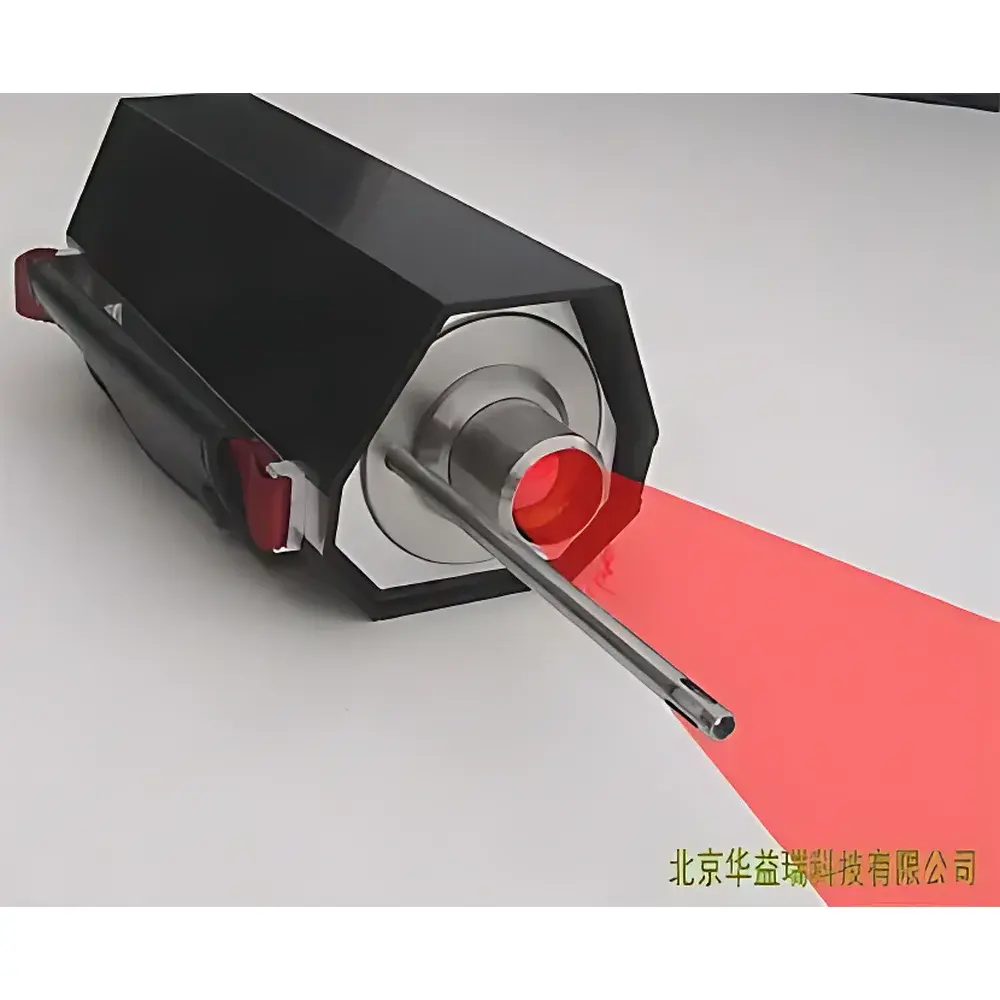
The 100H Low-Temperature Handheld Infrared Thermometer is a precision non-contact temperature measurement instrument engineered for demanding field and laboratory applications where thermal monitoring across extreme ambient and target conditions is required. Based on broadband infrared radiometry in the 8–14 µm atmospheric transmission window, the 100H detects emitted thermal radiation from surfaces and converts it into calibrated temperature readings using Planck’s law and real-time emissivity compensation. Its extended measurement range—from -30 °C to 1100 °C—enables reliable operation in both cryogenic environmental studies and high-temperature industrial research scenarios. The device complies with military-grade optical durability standards (MIL-C-13508), ensuring consistent performance under mechanical stress, thermal cycling, and variable humidity. Unlike fixed-mount IR sensors, the 100H integrates ergonomic portability with laboratory-grade metrological traceability—making it suitable for outdoor ecological surveys, HVAC system diagnostics, materials science prototyping, and calibration verification workflows.
Key Features
- Stainless steel ruggedized housing rated for field deployment and long-term operational integrity
- Dual-coated zinc selenide (ZnSe) lens optimized for high transmittance and abrasion resistance in the 8–14 µm spectral band
- Adjustable emissivity (0.2–0.98) via rear-panel interface, supporting accurate measurements across diverse material classes—including oxidized metals, ceramics, polymers, and organic surfaces
- Fast 0.1-second response time enables dynamic thermal profiling of transient events such as combustion onset, phase transitions, or rapid cooling cycles
- Rechargeable NiCd battery delivering up to 40 hours of continuous use per full charge—ideal for extended remote deployments without AC infrastructure
- Multiple field-of-view options (2°, 15°, and optional 60°) allow optimization of spatial resolution versus measurement distance, supporting spot size calculations per ISO 18434-1
Sample Compatibility & Compliance
The 100H is compatible with non-reflective, semi-transparent, and opaque solid and liquid surfaces within its spectral response window. It is not intended for measuring gases or highly reflective polished metals without surface treatment or emissivity correction. The instrument meets general-purpose electromagnetic compatibility (EMC) requirements per IEC 61326-1 for industrial environments and conforms to safety guidelines outlined in IEC 61010-1 for handheld electrical measurement equipment. While not certified to FDA 21 CFR Part 11 or GLP/GMP Annex 11 out-of-the-box, its RS-232C digital output supports integration into validated data acquisition systems with audit-trail capabilities when configured with appropriate middleware and documentation controls.
Software & Data Management
The 100H provides native RS-232C serial communication for direct connection to PCs, PLCs, or SCADA platforms. ASCII-formatted output includes timestamped temperature values, emissivity setting, and status flags. Optional analog output (1 mV/°C) facilitates integration with legacy chart recorders or analog input modules. Third-party software tools—including LabVIEW drivers, Python-based PySerial libraries, and MATLAB Instrument Control Toolbox examples—are widely available for automated logging, statistical process control (SPC) charting, and batch report generation. All firmware updates and configuration utilities are distributed via secure HTTPS download portals, with version-controlled release notes aligned to ISO/IEC 17025 documentation practices.
Applications
- Environmental monitoring: Surface temperature mapping of soil, vegetation, snowpack, and water bodies in climatological and ecological field studies
- Materials testing labs: Thermal characterization of composites, coatings, and additive-manufactured parts during thermal cycling or laser heating experiments
- Energy efficiency audits: Non-invasive detection of insulation defects, thermal bridging, and HVAC duct leakage in building envelope assessments
- Research & development: Validation of thermographic models, emissivity library development, and cross-calibration against reference blackbody sources
- Preventive maintenance: Spot-checking of bearings, motors, transformers, and electrical connections under operational load
FAQ
What is the minimum focus distance for accurate measurement?
The 100H achieves optimal spot size accuracy at a minimum working distance of 2 cm; however, effective measurement requires adherence to the distance-to-spot (D:S) ratio specified for the selected field-of-view optic.
Can the 100H measure through glass or plastic windows?
No—standard silica-based or acrylic windows absorb strongly in the 8–14 µm band. Measurements must be performed through IR-transparent materials such as germanium or polyethylene, or with direct line-of-sight to the target.
Is calibration traceable to NIST or other national standards?
Yes—factory calibration is performed against blackbody references accredited to ISO/IEC 17025, with optional on-site recalibration services available through authorized service centers.
Does the device support data logging internally?
No—the 100H does not include onboard memory; external logging requires connection to a host system via RS-232C or analog output.
How is emissivity set and verified during operation?
Emissivity is manually adjusted via a rotary switch on the rear panel; users are advised to validate settings using comparative contact probe measurements or reference emissivity tables per ASTM E1933 and ISO 18434-1.