
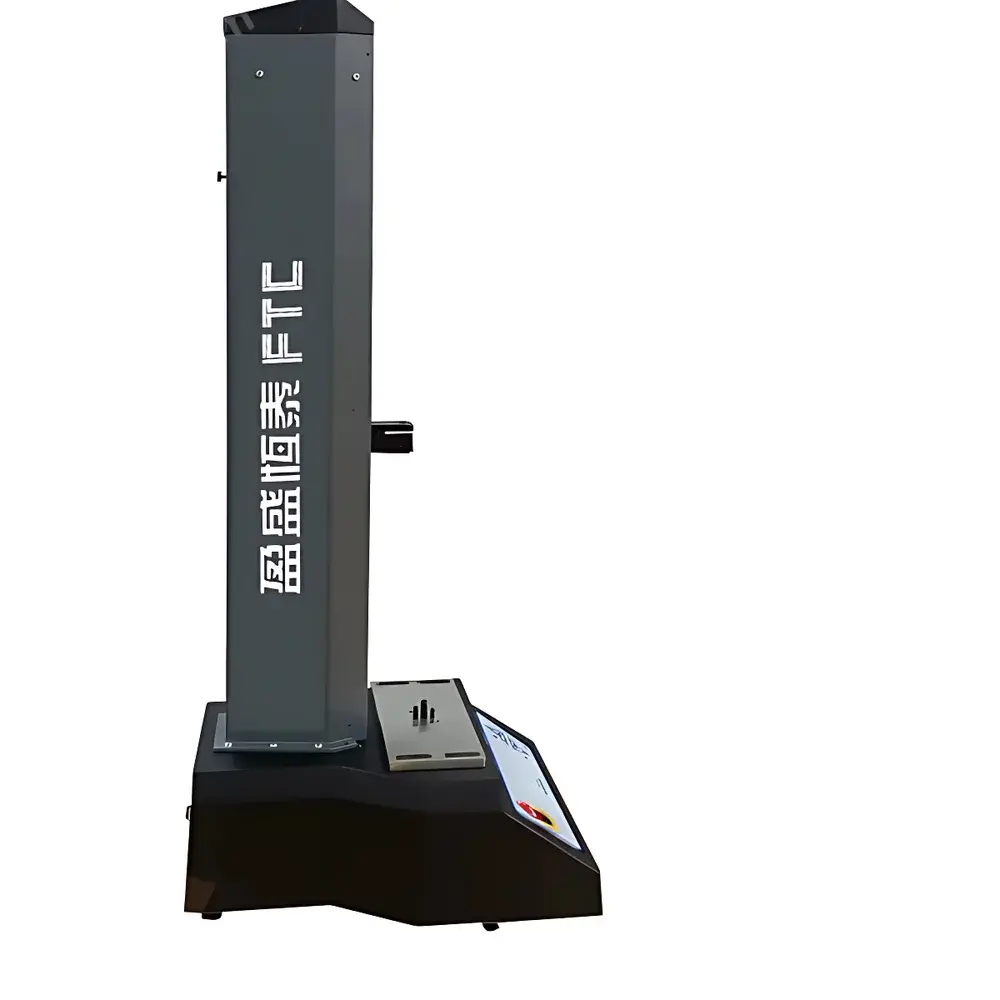
ENS ENSOUL FT-CTM Series Cosmetic-Specific Texture Analyzer (Co-developed with FTC, USA)
| Brand | ENSOUL |
|---|---|
| Origin | Beijing, China |
| Manufacturer Type | Authorized Distributor |
| Country of Origin | China |
| Model | Lipstick-Specific Texture Analyzer |
| Pricing | Available Upon Request |
Overview
The ENSOUL FT-CTM Series Cosmetic-Specific Texture Analyzer is a co-engineered instrument developed in collaboration with Food Technology Corporation (FTC), USA, and optimized for rigorous physical property evaluation across cosmetic formulations. Built upon the proven principles of controlled-force compression, penetration, extrusion, and tensile deformation, this texture analyzer operates under standardized mechanical testing paradigms aligned with ASTM D638 (tensile properties), ASTM D790 (flexural properties), and ISO 178 (rigidity testing). It delivers quantitative, reproducible metrics—including hardness, adhesion, cohesion, spreadability, snap force, extrudability, and stringiness—critical for R&D, QC, and regulatory documentation in cosmetic product development. Designed specifically for low-to-medium force ranges (0.01–50 N typical, scalable via interchangeable load cells), the system ensures high-resolution displacement control (±0.001 mm) and force resolution (0.001 N), enabling precise characterization of semi-solids, gels, emulsions, anhydrous sticks, and fibrous substrates such as human hair.
Key Features
- Modular dual-load-cell architecture: Selectable force transducers (e.g., 5 N, 10 N, 25 N, 50 N) ensure optimal signal-to-noise ratio across diverse sample categories—from delicate facial serums to rigid lipsticks.
- High-precision linear actuator: Achieves ±0.001 mm positional repeatability and programmable speed range (0.01–20 mm/s), supporting both quasi-static and dynamic deformation protocols.
- Compliance with international probe standards: All standard probes—including spherical (3 mm, 5 mm), cylindrical (2 mm, 4 mm), conical (30°, 45°), wire-cut, and hair-clamp fixtures—conform to ASTM F2732 (hair mechanical testing) and ISO 11357-3 (thermal-mechanical analysis interface compatibility).
- Custom probe engineering capability: OEM-designed fixtures available for proprietary sample geometries (e.g., mascara wands, pressed powder compacts, hydrogel sheet masks) with full dimensional traceability and material certification (316L stainless steel or anodized aluminum).
- Real-time force-displacement data acquisition at ≥1 kHz sampling rate, synchronized with high-speed video capture (optional add-on) for multimodal correlation of mechanical behavior and visual deformation.
Sample Compatibility & Compliance
The FT-CTM platform supports direct mechanical interrogation of raw materials, finished products, and biological substrates relevant to cosmetic science. Validated applications include hair tresses (wet/dry, treated/untreated), viscous surfactant systems (shampoos, conditioners), oil-in-water emulsions (creams, lotions), anhydrous waxes (lipsticks, eyeliners), compressed powders (blushes, compact foundations), and hydrophilic films (sheet masks). All test methods are compatible with GLP-compliant workflows; software audit trails meet FDA 21 CFR Part 11 requirements for electronic records and signatures. Method templates align with emerging industry guidelines from CTFA (now PCPC), ISO/TC 217 (Cosmetics), and national standards under SAC/TC 277 (China National Standardization Committee on Cosmetics).
Software & Data Management
The included TexturePro CT v4.x software provides ISO/IEC 17025-aligned method creation, execution, and reporting. Users define multi-stage test sequences (pre-test equilibration, trigger-based start, post-test relaxation), assign statistical parameters (mean, SD, CV%, min/max), and apply real-time curve smoothing algorithms (Savitzky-Golay filters). Raw ASCII data export (CSV/TXT) enables integration with JMP, Minitab, or Python-based analytics pipelines. The system supports automated calibration verification logs, user-access-level permissions (admin/operator/auditor), and timestamped metadata embedding (operator ID, environmental conditions, probe ID, firmware version). Optional LIMS connectivity via ODBC or RESTful API allows seamless data ingestion into enterprise quality management systems.
Applications
- Hair mechanics: Tensile strength, elongation-at-break, Young’s modulus, and recovery ratio of single fibers or bundled tresses after chemical or thermal treatment.
- Rheo-textural profiling of cleansers: Yield stress, thixotropic recovery time, and pump dispensability index derived from extrusion and oscillatory squeeze-flow tests.
- Emulsion stability indicators: Penetration depth vs. dwell time to assess phase separation kinetics; adhesion work during probe withdrawal to quantify interfacial film integrity.
- Lipstick performance mapping: Break force (snap test), glide coefficient (lubricity index), and compressive yield point using conical probe indentation.
- Powder compact characterization: Friability index (force required for first fracture), surface smoothness (peak-to-valley deviation during scraping), and cohesion energy (area under compression curve).
- Mask film functionality: Peel strength (180° peel test), puncture resistance (needle penetration), and elastic recovery (retraction distance after 60 s dwell).
FAQ
Does the FT-CTM comply with ISO/IEC 17025 for accredited testing laboratories?
Yes—hardware traceability, software validation documentation, and method verification reports are provided to support accreditation scope expansion.
Can the system be integrated into existing ERP or QMS platforms?
Yes—via configurable ODBC drivers or secure REST API endpoints for bidirectional data exchange with SAP QM, TrackWise, or Veeva Vault QMS.
Is training and method transfer support available for global R&D teams?
Yes—onsite and remote technical training modules, SOP drafting assistance, and collaborative method development workshops are offered in English, German, Japanese, and Mandarin.
What maintenance intervals and calibration standards are recommended?
Annual metrological calibration using NIST-traceable deadweight standards is advised; daily system self-checks and quarterly load cell verification are embedded in the software workflow.
Are there application notes or peer-reviewed publications validating these test protocols?
Yes—methodology references include Journal of Cosmetic Science (Vol. 72, 2021), International Journal of Cosmetic Science (Vol. 44, 2022), and ASTM STP 1625 (2023) on instrumental texture assessment in personal care products.





