
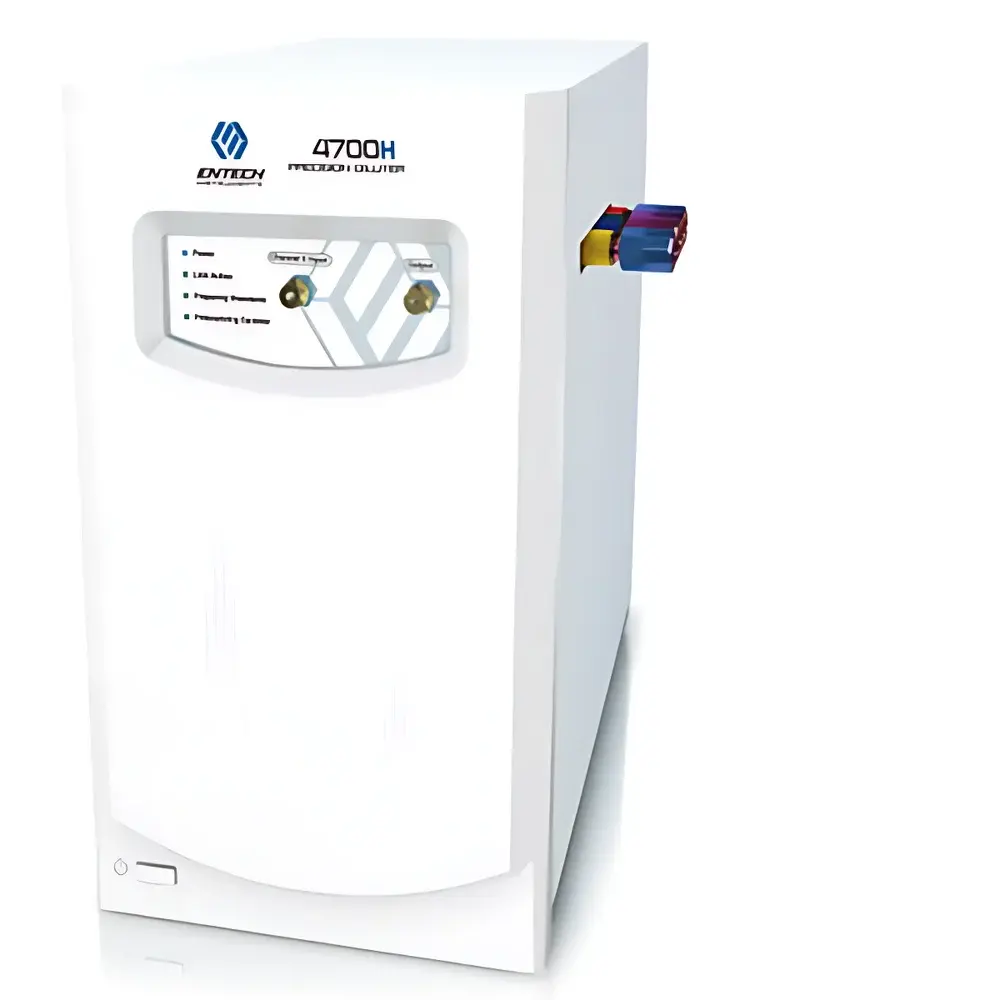
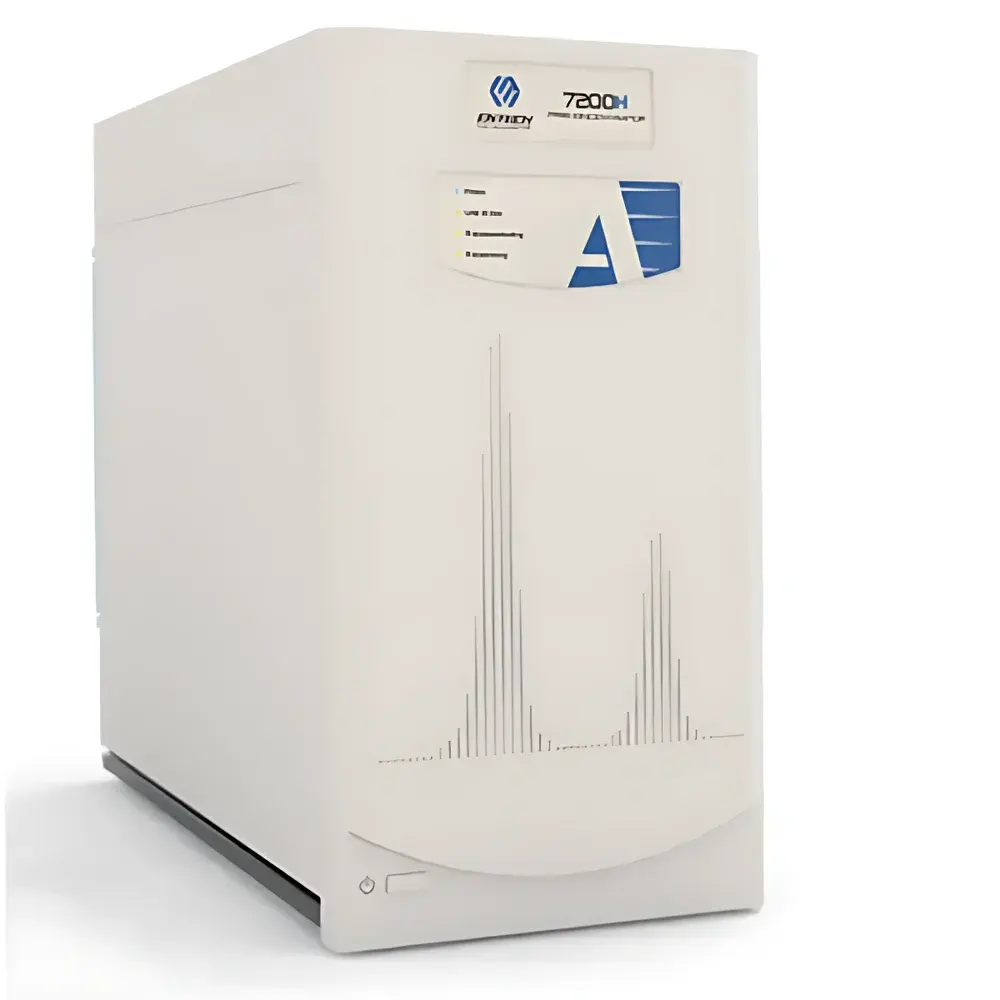
ENTECH 7200H+4700H Hydrogen Fuel Impurity Preconcentration System
| Brand | ENTECH |
|---|---|
| Origin | USA |
| Model | 7200H+4700H |
| Application | Trace-level impurity preconcentration for high-purity hydrogen fuel analysis |
| Cooling Method | Liquid nitrogen–cooled single-stage cryogenic trap |
| Sample Line Treatment | Silica-fused inertized tubing |
| Volume Measurement | EVC (Electronic Volume Control) technology |
| Compliance | ASTM D7652, GB/T 37244–2018, GB/T 44243–2024, T/CECA-G 0180–2022 |
Overview
The ENTECH 7200H+4700H Hydrogen Fuel Impurity Preconcentration System is an integrated, cryogenically enhanced sample introduction platform engineered for ultra-trace analysis of critical contaminants in high-purity hydrogen fuel streams. Designed specifically to meet the stringent analytical requirements of proton exchange membrane fuel cell (PEMFC) applications, the system combines a liquid nitrogen–cooled single-stage cryotrapping module (7200H) with a high-efficiency automated preconcentrator (4700H) to achieve sub-ppt (part-per-quadrillion) detection limits for reactive and volatile impurities—including hydrogen sulfide (H₂S), carbonyl sulfide (COS), methyl mercaptan (CH₃SH), carbon disulfide (CS₂), formaldehyde (CH₂O), and organic halides (e.g., chloromethanes, fluoromethanes). Its measurement principle relies on quantitative cryofocusing followed by rapid thermal desorption into a gas chromatograph (GC), enabling robust coupling with sulfur-selective detectors (e.g., SCD, PFPD) or mass spectrometers (MS). The architecture eliminates intermediate transfer lines and minimizes surface contact, thereby preserving analyte integrity—especially for highly adsorptive species such as thiols and aldehydes.
Key Features
- Single-stage cryogenic trapping using liquid nitrogen cooling (–196 °C), optimized for minimal LN₂ consumption without compromising trapping efficiency or reproducibility.
- Fused-silica inertized sample pathway throughout—from inlet valve to trap—to prevent catalytic decomposition or surface adsorption of reactive sulfur- and oxygen-containing compounds.
- EVC (Electronic Volume Control) technology delivers precise, pressure- and temperature-compensated sample volume metering across diverse carrier matrices (H₂, N₂, He), independent of gas compressibility or composition.
- Automated, software-controlled sequence integration for unattended operation: sample draw, cryofocusing, desorption, GC injection, and trap regeneration.
- Modular design allows seamless interfacing with industry-standard GC systems equipped with sulfur chemiluminescence detectors (SCD), pulsed flame photometric detectors (PFPD), or quadrupole/time-of-flight mass spectrometers (QTOF-MS).
- Compliance-ready architecture supports audit trails, method locking, and electronic signatures in alignment with GLP and GMP environments.
Sample Compatibility & Compliance
The system is validated for use with gaseous fuel matrices including hydrogen (≥99.999% purity), nitrogen, helium, and synthetic air. All wetted surfaces are passivated via fused-silica coating to ensure chemical inertness toward acidic, polar, and nucleophilic trace impurities. It fully satisfies the sampling and preconcentration methodology stipulated in ASTM D7652 (Standard Test Method for Determination of Trace Sulfur Compounds in Gaseous Hydrogen Fuels), GB/T 37244–2018 (Fuel Hydrogen for PEM Fuel Cell Vehicles), GB/T 44243–2024 (Determination of Sulfur Compounds, Formaldehyde, and Organic Halides in Hydrogen Fuel by GC), and T/CECA-G 0180–2022 (Preconcentration–GC–SCD/MS Method for Reactive Impurities in Hydrogen). Instrument qualification documentation includes IQ/OQ protocols aligned with ISO/IEC 17025 and supports 21 CFR Part 11 compliance when deployed with validated LIMS or chromatography data systems (CDS).
Software & Data Management
Operation is managed via ENTECH’s proprietary PreConcControl™ software, which provides real-time monitoring of trap temperature, sample volume, desorption profile, and system status. The software logs all user actions, method parameters, and hardware events with time-stamped, immutable records—enabling full traceability required under GLP, ISO 17025, and FDA-regulated workflows. Export formats include CSV, XML, and direct CDS-compatible injection files (e.g., Agilent .AIA, Thermo .RAW). Audit trail functionality meets ALCOA+ principles (Attributable, Legible, Contemporaneous, Original, Accurate, Complete, Consistent, Enduring, Available) for regulatory submissions.
Applications
- Quantitative determination of total sulfur content and speciated sulfur compounds (H₂S, COS, CH₃SH, CS₂, SO₂) in hydrogen fuel per ISO 14687–2:2019 and SAE J2719.
- Analysis of formaldehyde and other C1–C3 aldehydes arising from reformate degradation or compression-induced reactions.
- Detection of organic halides (e.g., CH₃Cl, CH₂Cl₂, CHF₃) introduced during electrolyzer membrane degradation or upstream purification processes.
- Method development and validation support for hydrogen refueling station certification and supplier quality assurance programs.
- Research-grade impurity profiling in green hydrogen production pathways (PEM, AEM, SOEC electrolysis) and downstream distribution infrastructure.
FAQ
What detection limits can be achieved for H₂S and COS using this system coupled with an SCD?
Typical method detection limits (MDLs) range from 10–50 ppt (v/v) for H₂S and COS when using standard 100 mL sample volumes and optimized GC–SCD conditions.
Is the system compatible with helium-based carrier gases?
Yes—the EVC technology inherently corrects for gas-specific compressibility, ensuring accurate volumetric sampling regardless of carrier gas identity (H₂, He, N₂, or Ar).
How frequently does the cryotrap require maintenance or replacement?
The fused-silica trap substrate is non-consumable under normal operation; routine maintenance consists of periodic bake-out cycles and verification of trap sealing integrity—typically every 6–12 months depending on usage frequency and sample cleanliness.
Can the 7200H+4700H be retrofitted to existing GC systems?
Yes—the system interfaces via standard 1/8″ or 1/4″ VCR fittings and includes configurable trigger outputs and analog/digital I/O for synchronization with most modern GC ovens and autosamplers.
Does ENTECH provide application support for method development per GB/T 44243–2024?
Yes—application scientists offer remote and on-site method transfer, validation assistance, and SOP drafting aligned with Chinese national standards and international hydrogen fuel specifications.




