
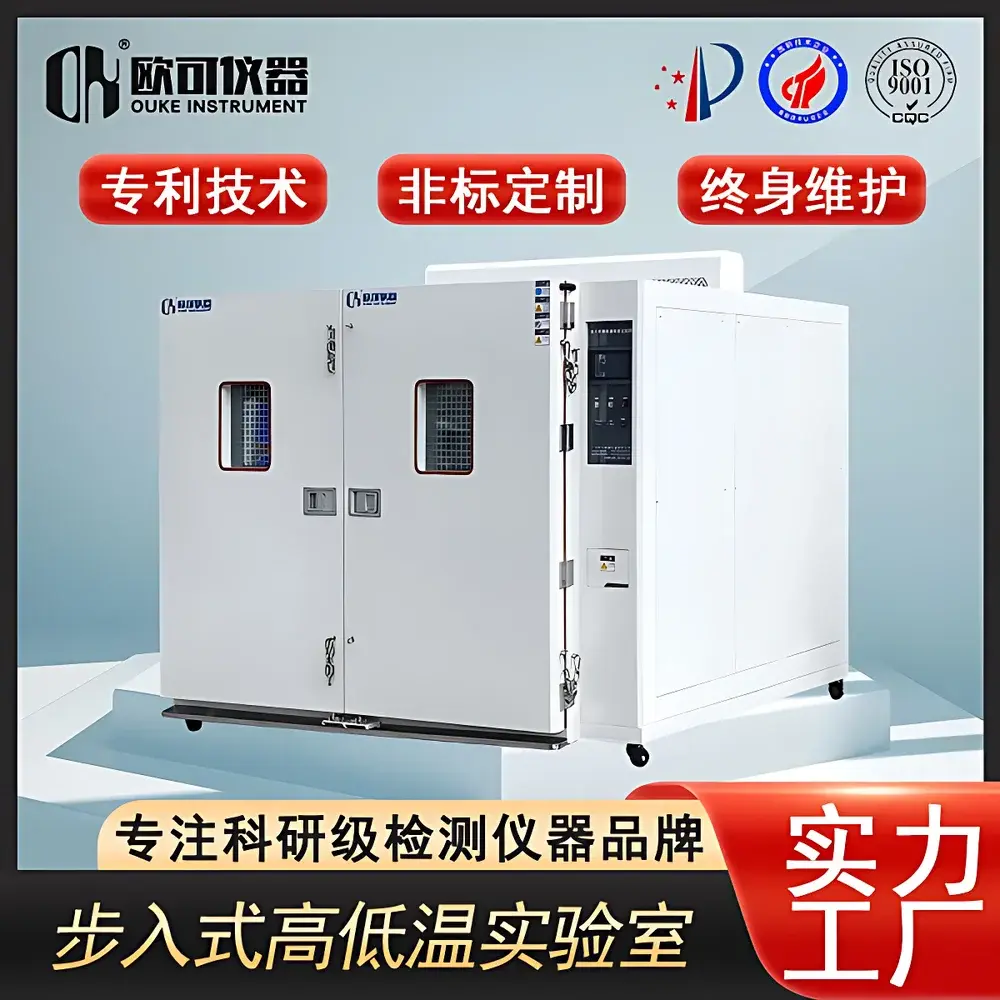
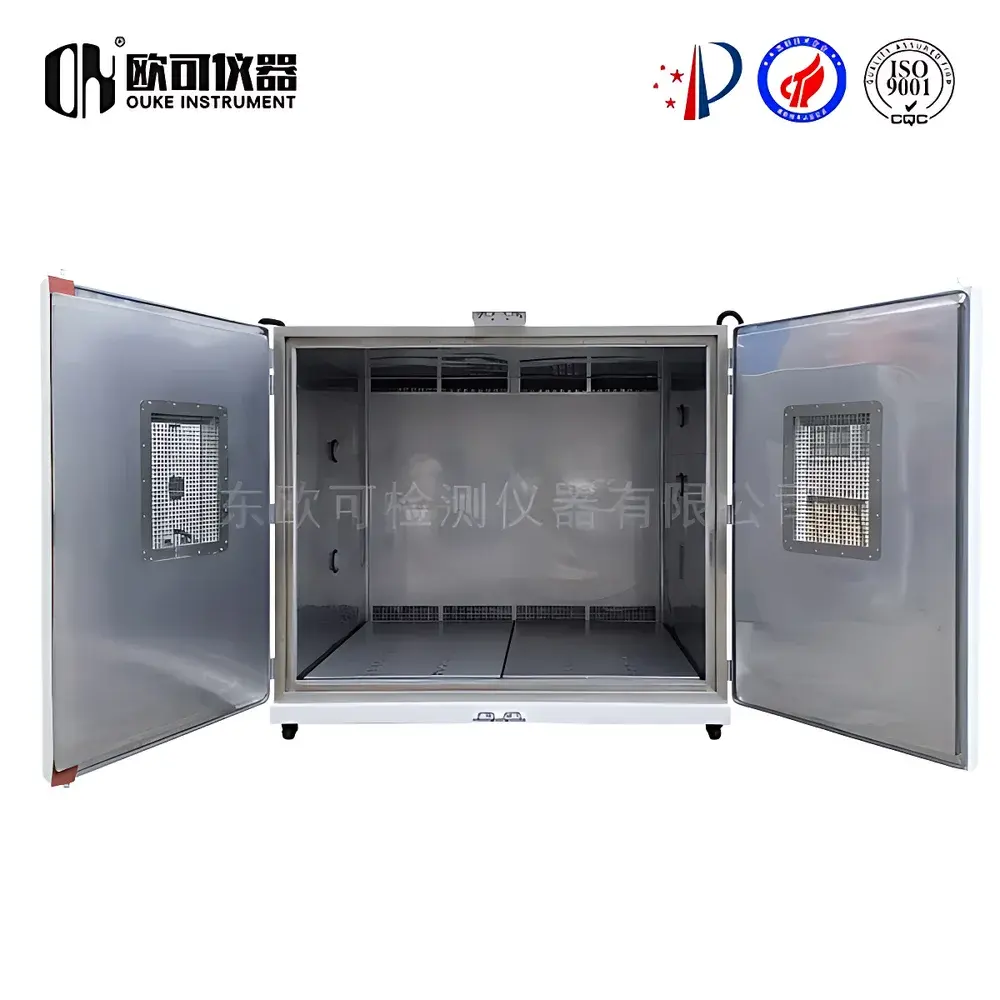
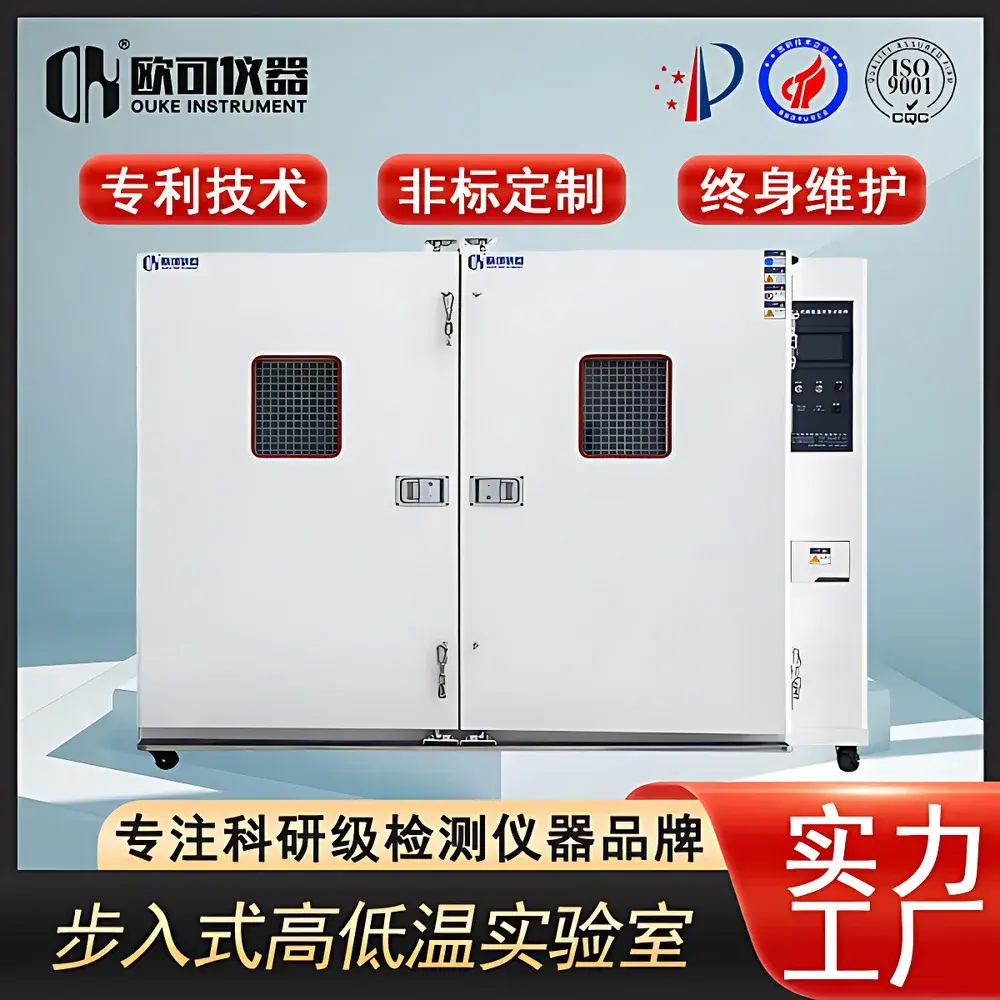
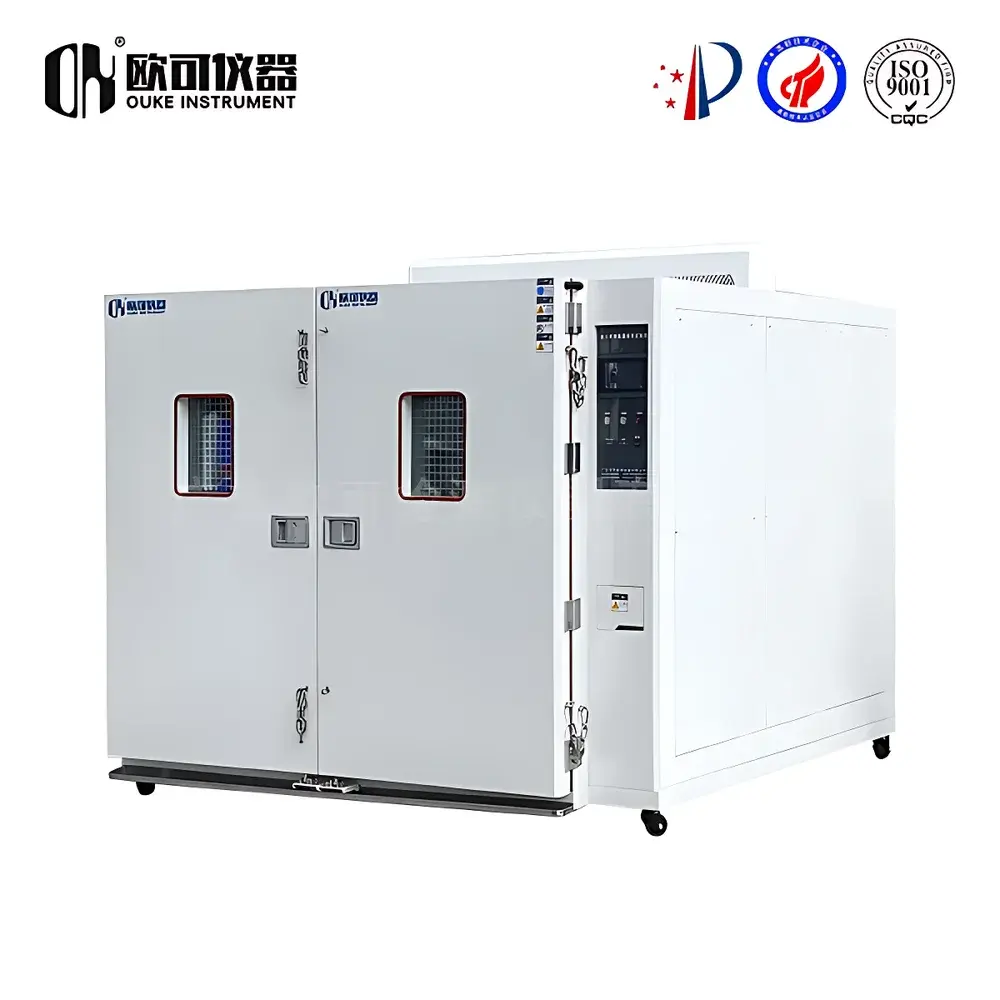
OK Environmental Systems OK-STH-12.000000m² Walk-in Multi-Stress Environmental Test Chamber
| Brand | OK Environmental Systems |
|---|---|
| Origin | Guangdong, China |
| Manufacturer Type | Direct Manufacturer |
| Country of Origin | China |
| Model | OK-STH-12.000000m² |
| Temperature Range Options | 0°C / −20°C / −40°C / −60°C / −70°C |
| Temperature Uniformity | ±3°C |
| Temperature Control Stability | ±2°C |
| Heating Rate | 1.0–4.0°C/min |
| Internal Dimensions | Custom-engineered per client specification (floor area ≥12.0 m²) |
Overview
The OK Environmental Systems OK-STH-12.000000m² is a fully integrated walk-in multi-stress environmental test chamber engineered for high-fidelity simulation of compound environmental conditions encountered in real-world operational and transportation scenarios. Unlike conventional single-variable walk-in chambers, this system implements synchronized, programmable control of two or more independent environmental stressors—primarily temperature and humidity—combined with one or more additional physical stress domains: mechanical vibration, low-pressure/altitude simulation, salt fog corrosion, or solar irradiance. Its architecture follows the Couette–Reynolds–Bernoulli coupling paradigm common to advanced reliability testing platforms, where thermal-hygrometric dynamics are co-regulated with dynamic mechanical loading, pressure differentials, or electrochemical exposure pathways. Designed for compliance with MIL-STD-810H Method 520.5 (Combined Environments), ISO 16750-4 (Road Vehicles – Environmental Conditions), and GJB 150.25A (Military Equipment – Combined Stress Testing), the OK-STH-12.000000m² serves as a foundational platform for HALT (Highly Accelerated Life Testing), CERT (Combined Environmental Reliability Testing), and qualification-level validation under GLP/GMP-aligned test protocols.
Key Features
- Modular multi-stress integration architecture supporting up to five concurrent environmental vectors: temperature, humidity, vibration, altitude/pressure, and salt fog (configurable subsets available)
- Customizable internal volume with minimum floor area of 12.0 m²; structural reinforcement rated for static load ≥5 kN/m² and dynamic acceleration up to 10 gpk (vibration-integrated configuration)
- Dual-stage refrigeration system with cascade compressor staging for stable operation down to −70°C; integrated steam-based humidification with dehumidification via cold trap and desiccant backup
- Hermetically sealed chamber body constructed from 316L stainless steel interior lining, EPDM gasketing, and welded seam integrity verified per ASTM E283 leakage class A (≤0.05 m³/h·m² at 75 Pa differential)
- Integrated central control system featuring deterministic real-time OS (VxWorks-based), synchronized I/O timing resolution ≤10 ms, and full audit trail logging compliant with FDA 21 CFR Part 11 requirements
- Interlocked safety subsystems including vibration-gated door interlocks, overtemperature/overpressure cut-off relays, and automatic neutralization of exhaust effluent in salt fog mode per ISO 9223 classification
Sample Compatibility & Compliance
The OK-STH-12.000000m² accommodates full-system DUTs (Devices Under Test) up to 3.0 m in height and 2.5 m in width—including EV battery packs, avionics racks, military vehicle ECUs, and server chassis—with provisions for through-wall feedthroughs (IP67-rated, 24-channel signal + 4-channel power). All internal materials—including insulation, ductwork, sensor housings, and mounting fixtures—are selected for long-term compatibility across the full operational envelope: −70°C to +150°C, 10–98% RH, 0.1–101.3 kPa absolute pressure, and continuous NaCl aerosol exposure. The system meets electromagnetic compatibility (EMC) requirements per EN 61000-6-3/6-4 and supports third-party verification against MIL-STD-461G RS103 and CS114 when vibration or irradiance modules are active. Calibration traceability follows ISO/IEC 17025 via NIST-traceable reference standards for temperature (PRT-100), humidity (chilled-mirror hygrometer), pressure (deadweight tester), and vibration (laser Doppler vibrometer).
Software & Data Management
OK-TestSuite™ v4.2 provides unified control, sequencing, and data acquisition across all integrated stress domains. The software implements hierarchical test definition: top-level profiles define time-synchronized segments (e.g., “Ramp to −40°C @ 1.5°C/min → Hold 2 h → Apply 5–500 Hz random vibration @ 1.2 g2/Hz → Introduce 5% NaCl fog at 35°C”), while lower-level controllers handle closed-loop regulation using PID+feedforward algorithms tuned per stress interaction matrix. All raw sensor data (≥1 kHz sampling rate per channel) is timestamped with GPS-synchronized UTC and stored in HDF5 format with embedded metadata (test ID, operator, calibration expiry, environmental context). Export options include CSV, MATLAB .mat, and ASAM MDF 4.2 for downstream analysis in Weibull++, JMP Pro, or MATLAB Reliability Toolbox. Audit trails record every parameter change, user login/logout, alarm event, and hardware state transition—retained for ≥15 years per configurable retention policy.
Applications
- Automotive: Validation of ADAS sensors, traction inverters, and battery thermal management systems under combined thermal cycling, road vibration, and coastal humidity/salt exposure per ISO 16750-4 and LV-124
- Aerospace: Ground testing of UAV flight controllers and satellite payload electronics under rapid decompression (−70°C/0.1 kPa) coupled with broadband vibration per DO-160G Section 21
- Defense: MIL-STD-810H-compliant certification of handheld radios and targeting systems across arctic, desert, and maritime mission profiles
- Electronics: Accelerated aging of 5G mmWave RF front-ends and optical transceivers under UV-enhanced thermal-hygro-mechanical stress per IEC 60068-2-66
- Materials Science: Corrosion-fatigue interaction studies on aluminum-lithium alloys and polymer composites under cyclic salt fog + thermal shock + bending load
FAQ
What standards does the OK-STH-12.000000m² support for combined environment testing?
It is configured to execute test methods defined in MIL-STD-810H (Methods 520.5, 521.4, 522.2), ISO 16750-4, GJB 150.25A, and IEC 60068-2-66, with optional add-on modules enabling full compliance with RTCA DO-160G Section 21 and SAE J2334.
Can the chamber operate with vibration and low-pressure simultaneously?
Yes—the system includes active pressure compensation during vibration actuation and employs oil-free vacuum pumps with redundant sealing to maintain differential pressure stability within ±0.5 kPa during 5–2000 Hz random vibration at 2.5 grms.
Is remote monitoring and 21 CFR Part 11 compliance available?
All configurations include secure TLS 1.3-enabled web interface with role-based access control, electronic signatures, and immutable audit logs meeting FDA 21 CFR Part 11 Subpart B requirements for closed systems.
What is the lead time for custom dimensioning and multi-stress integration?
Standard delivery for baseline temperature/humidity/vibration configuration is 24 weeks from PO; altitude or salt fog integration extends lead time by 6–8 weeks due to specialized fabrication and leak-integrity validation.
Does OK Environmental Systems provide test protocol development support?
Yes—application engineers collaborate with clients to translate product specifications into executable test profiles, perform feasibility analysis, and generate IQ/OQ/PQ documentation packages aligned with ISO/IEC 17025 and ANSI Z540-1.



