
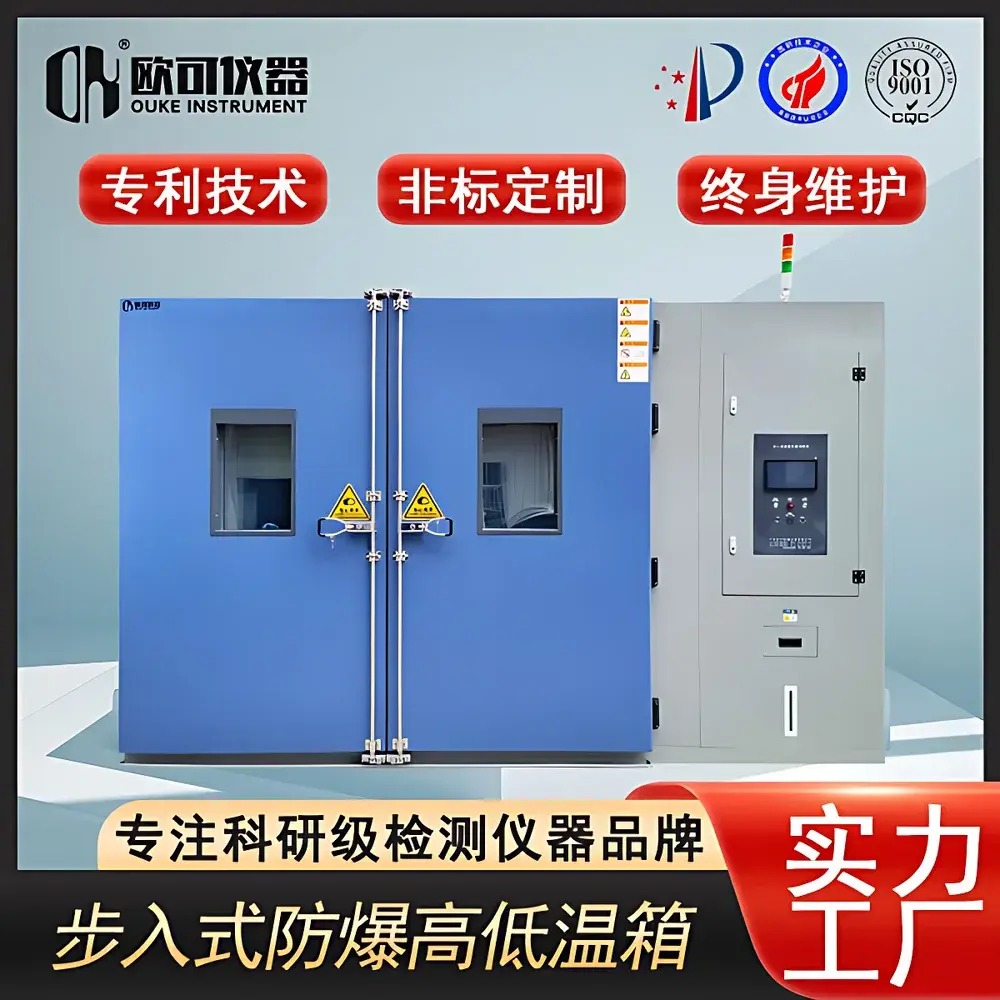
OK Environmental Systems OK-STH-8.223m² Walk-in Constant Temperature & Humidity Chamber
| Brand | OK Environmental Systems |
|---|---|
| Origin | Guangdong, China |
| Manufacturer Type | OEM/ODM Manufacturer |
| Product Category | Domestic |
| Model | OK-STH-8.223m² |
| Internal Dimensions (W×D×H) | 2000 × 2000 × 2000 mm |
| Temperature Range Options | A: 0°C to +85°C |
| B | −20°C to +85°C |
| C | −40°C to +85°C |
| D | −60°C to +85°C |
| E | −70°C to +85°C |
| Temperature Uniformity | ±3°C (at steady state, per IEC 60068-3-5) |
| Temperature Control Stability | ±1°C |
| Heating Rate | 1.0–4.0°C/min (load-dependent, no internal heat load) |
Overview
The OK Environmental Systems OK-STH-8.223m² Walk-in Constant Temperature & Humidity Chamber is an engineered environmental simulation platform designed for system-level reliability validation under controlled thermal and hygrothermal conditions. Unlike benchtop or upright climatic chambers, this walk-in chamber features a fully accessible interior volume of 8.223 m³ (2000 mm × 2000 mm × 2000 mm), enabling direct human entry for sample loading, instrumentation cabling, real-time sensor calibration, and in-situ operational monitoring. Its core architecture implements dual-stage refrigeration (cascade compression cycle), high-capacity electric heating, and precision steam-based humidification—integrated with a low-turbulence, high-CFM air distribution system to ensure spatial uniformity across the entire test volume. The chamber operates on fundamental principles of psychrometric control and forced-convection thermal equilibrium, delivering repeatable, traceable environmental profiles compliant with international standards including IEC 60068-2-1 (cold), IEC 60068-2-2 (dry heat), IEC 60068-2-30 (damp heat cyclic), and ISO 16750-4 (road vehicles—environmental conditions). It serves as primary infrastructure for qualification testing where physical scale, power dissipation, or operational integration precludes use of compact enclosures.
Key Features
- Modular structural design using 150 mm thick double-skinned PIR-polyurethane insulated panels (λ ≤ 0.022 W/m·K), sealed with cam-lock gasketed joints for rapid field assembly and future expansion
- Reinforced steel frame with anti-vibration mounting base, supporting static loads up to 1,200 kg distributed across floor area
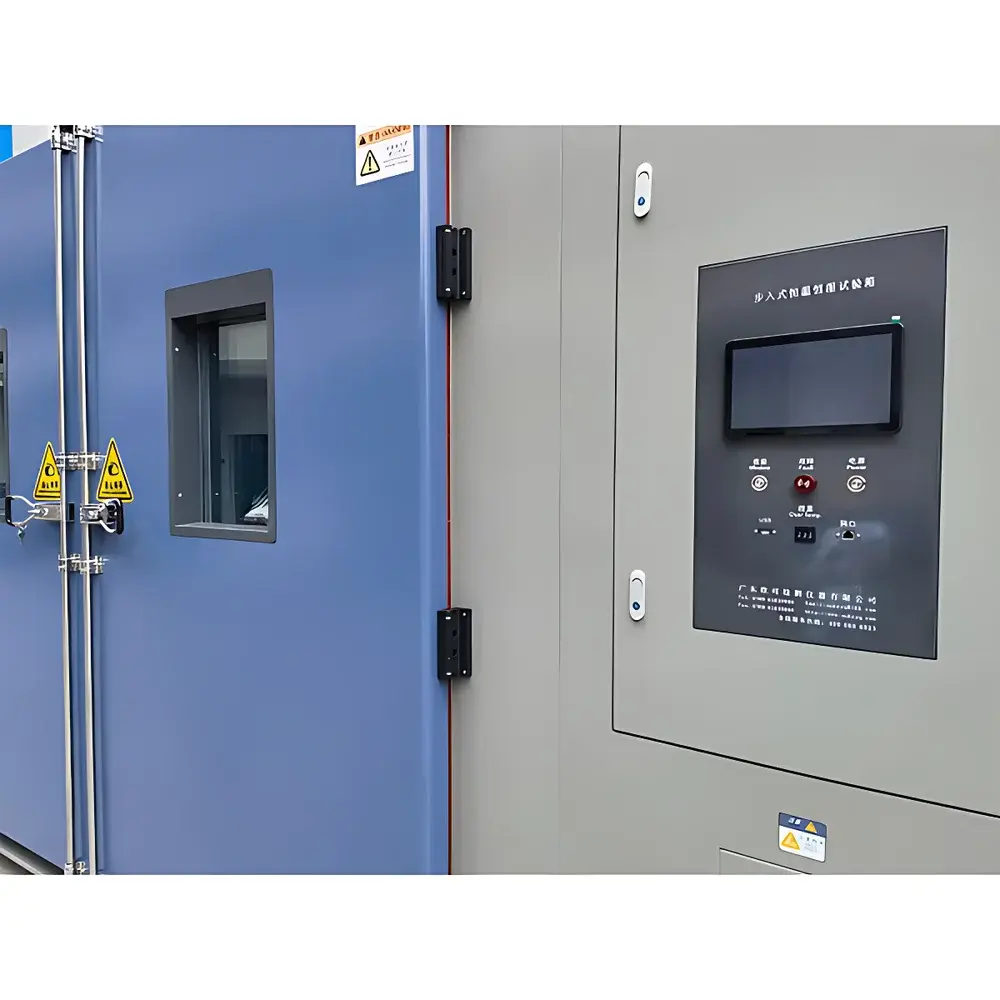
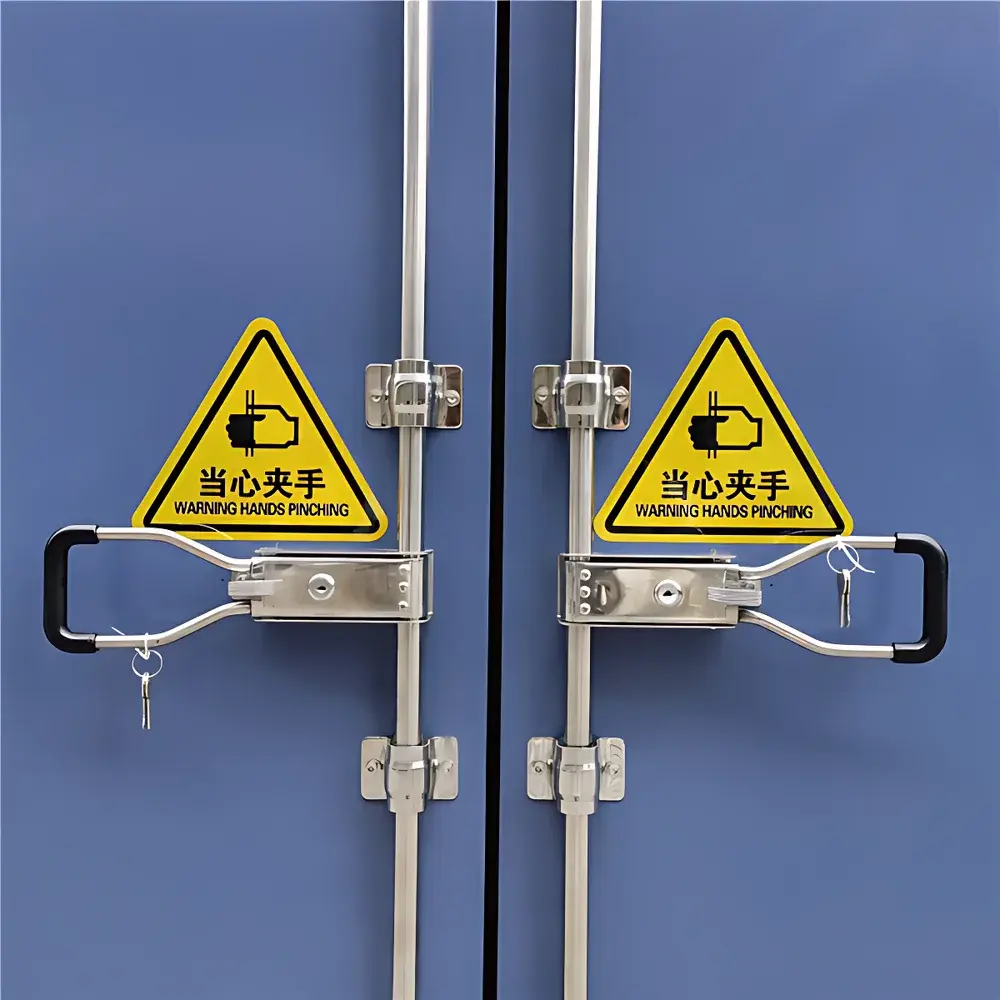
- Double-sealed, electrically heated observation door (900 × 1,200 mm) with anti-fog coating and emergency egress release mechanism
- Cascade refrigeration system comprising separate high-temperature (R404A) and low-temperature (R23) compressor stages, rated for continuous operation at −70°C with full-load thermal recovery
- Steam-humidification subsystem with PID-controlled stainless-steel boiler, capable of maintaining 20–98% RH at temperatures ≥ +10°C (per ISO 16750-4 Annex B)
- Integrated air handling unit (AHU) with three-speed centrifugal fans, directional vanes, and multi-point temperature/humidity sensing (12 calibrated PT100 sensors + 6 capacitive RH transmitters)
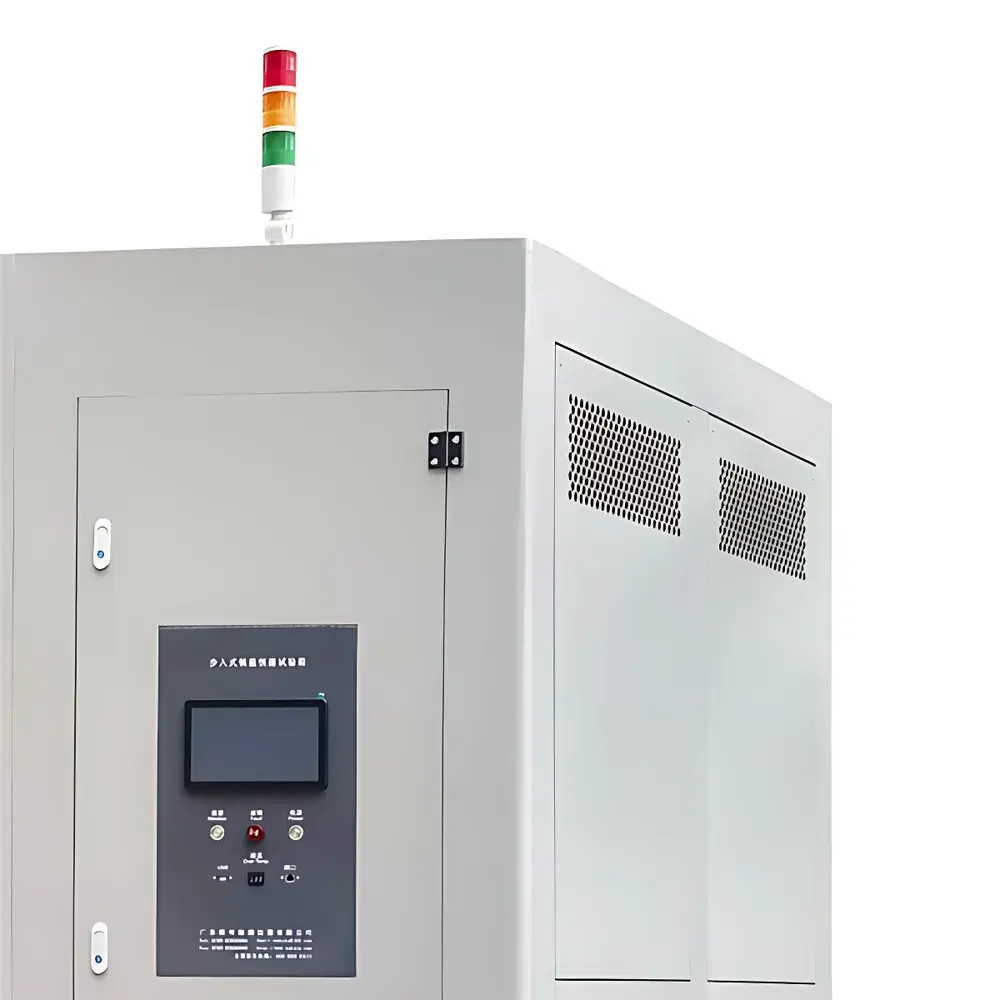
- PLC-based control system with 10.4″ color touchscreen HMI, supporting up to 99 programmable test segments, ramp/soak profiles, and event-triggered logging
Sample Compatibility & Compliance
The chamber accommodates full-system DUTs—including electric vehicle battery packs (up to 2.5 m tall), aerospace avionics racks, photovoltaic inverters, telecom server cabinets, and multi-unit production batches. Its open-floor layout and multiple 100 mm diameter cable ports (with silicone-sealed feedthroughs) facilitate simultaneous power, signal, and coolant line integration. All hardware and firmware comply with CE marking requirements (2014/30/EU EMC Directive, 2014/35/EU LVD Directive), and the control software architecture supports audit-ready data integrity per FDA 21 CFR Part 11 (electronic signatures, change history, user role permissions). Calibration certificates are provided traceable to NIM (China National Institute of Metrology) or UKAS-accredited labs upon request.
Software & Data Management
The embedded OK-ClimateControl™ v4.2 software enables synchronized acquisition of up to 32 analog/digital channels (temperature, humidity, voltage, current, CAN bus status) at 1 Hz resolution. Raw data is stored in encrypted CSV and SQLite formats with automatic timestamping and metadata tagging (operator ID, test ID, chamber serial number). Remote access via secure HTTPS interface allows real-time monitoring, alarm escalation (SMS/email), and historical trend analysis. Optional IQ/OQ documentation packages align with GLP and GMP validation protocols, including uncertainty budgets, sensor mapping reports, and temperature uniformity verification per ASTM E744-19 Annex A2.
Applications
- Automotive: Whole-vehicle cold soak, HVAC performance validation, battery thermal management system (BTMS) characterization, and ECUs functional testing across ISO 16750-4 severity levels
- Aerospace: Ground-based environmental stress screening (ESS) of flight-critical avionics, satellite payload thermal vacuum pre-test conditioning, and UAV endurance evaluation
- Energy Storage: Cycle-life testing of grid-scale BESS cabinets under combined thermal cycling and humidity exposure per UL 9540A and IEC 62619
- Telecom & Data Centers: Thermal load profiling of 19″ rack-mounted equipment under simulated edge-computing ambient conditions (ASHRAE TC 90.4)
- Industrial Electronics: High-volume HALT/HASS screening of industrial PLCs, motor drives, and power converters under accelerated temperature-humidity stress
FAQ
What is the maximum allowable internal heat load for stable operation at −70°C?
At full low-temperature capability (−70°C), the chamber maintains setpoint stability with up to 3.5 kW continuous internal heat dissipation—subject to confirmation during engineering review based on DUT geometry and airflow obstruction.
Can the chamber be integrated into an existing factory MES or SCADA system?
Yes. Native Modbus TCP and OPC UA (UA 1.04) interfaces are standard; optional Profibus-DP and EtherNet/IP gateways are available for legacy automation environments.
Is on-site commissioning and IQ/OQ validation included in the supply scope?
Standard delivery includes mechanical completion verification and FAT documentation. On-site SAT, IQ, and OQ services are offered as billable engineering engagements, aligned with ISO/IEC 17025 accredited procedures.
How is temperature uniformity verified and documented?
Per IEC 60068-3-5, 9-point sensor mapping is performed at three vertical planes (top/mid/bottom) during thermal stabilization; deviation reports include expanded uncertainty (k=2) and are archived with each chamber’s calibration dossier.
What maintenance intervals are recommended for the cascade refrigeration system?
Compressor oil analysis and filter replacement every 3,000 operating hours; full refrigerant circuit integrity check and moisture trap replacement annually—both supported by OK’s certified field service network across APAC and EMEA.



