
EOTECH MiniSURF Single-Hair Surface Roughness Analyzer
| Brand | EOTECH |
|---|---|
| Origin | France |
| Manufacturer Type | Authorized Distributor |
| Origin Category | Imported Instrument |
| Model | MiniSURF |
| Pricing | Available Upon Request |
Overview
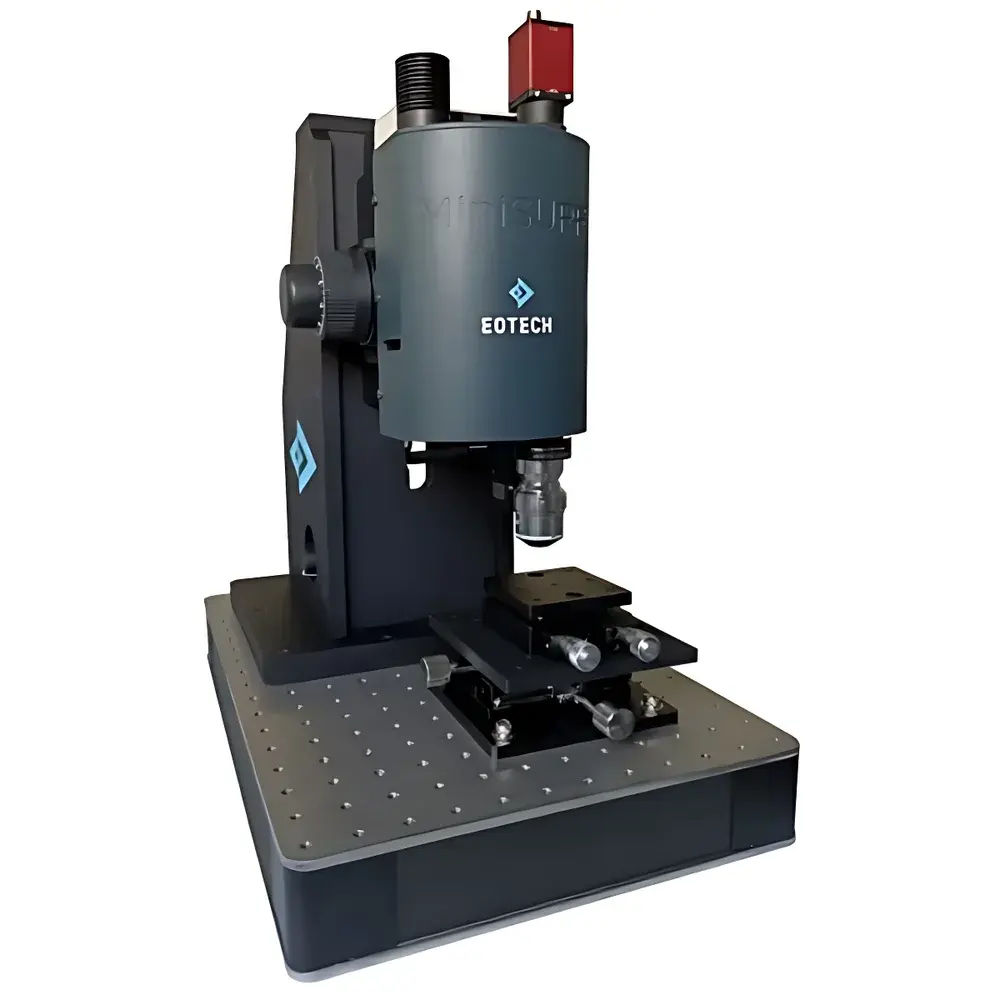
The EOTECH MiniSURF Single-Hair Surface Roughness Analyzer is a high-precision optical metrology system engineered for quantitative, non-contact 3D topographic characterization of individual human hairs at the microscale. It operates on the principle of phase-shifting interferometric microscopy (PSIM), a coherent optical technique that delivers sub-nanometer vertical resolution by analyzing interference fringe patterns generated from reflected light waves. Unlike conventional contact profilometers or stylus-based systems—whose mechanical interaction risks sample deformation or damage—the MiniSURF enables repeatable, artifact-free surface profiling of delicate biological fibers without physical contact. The instrument integrates a high-magnification imaging camera with a piezoelectric-driven objective stage capable of nanometer-precise axial displacement, enabling precise phase stepping across multiple interferograms. Mounted on a vibration-isolated granite base with rigid pillar support, the optical path remains mechanically stable during acquisition, ensuring measurement repeatability under standard laboratory conditions (ISO 25178-601 compliant setup environment).
Key Features
- Phase-shifting interferometric microscopy (PSIM) architecture delivering <1 nm vertical resolution and ≤0.5 nm repeatability in Z-height measurements
- Vibration-damped granite platform with rigid vertical support pillar to minimize environmental mechanical noise
- Motorized, tilt-adjustable single-hair sample stage (±5° fine angular control) for optimal fringe contrast and orientation alignment during interferogram capture
- Automated Z-scan and multi-field stitching capability for extended-area 3D reconstruction of hair shaft segments up to 2 mm in length
- Integrated illumination module with tunable coherence length to suppress speckle noise and enhance surface feature discrimination on keratinous substrates
- Real-time interferogram validation feedback to ensure data fidelity prior to full-phase reconstruction
Sample Compatibility & Compliance
The MiniSURF is optimized for single-fiber specimens with diameters ranging from 40–120 µm and surface reflectivity typical of untreated, bleached, or chemically modified human hair. Samples are mounted using low-adhesion, non-residue silicone grips or custom micro-clamps to preserve native cuticle morphology. The system supports standardized test protocols aligned with ISO 19978:2022 (Cosmetics — Hair care — Method for assessment of cuticle integrity) and ASTM D7991-21 (Standard Practice for Microscopic Evaluation of Hair Surface Damage). All measurement workflows comply with GLP documentation requirements, including electronic audit trails, user access controls, and raw interferogram archiving—facilitating FDA 21 CFR Part 11 readiness when integrated into regulated R&D or QC environments.
Software & Data Management
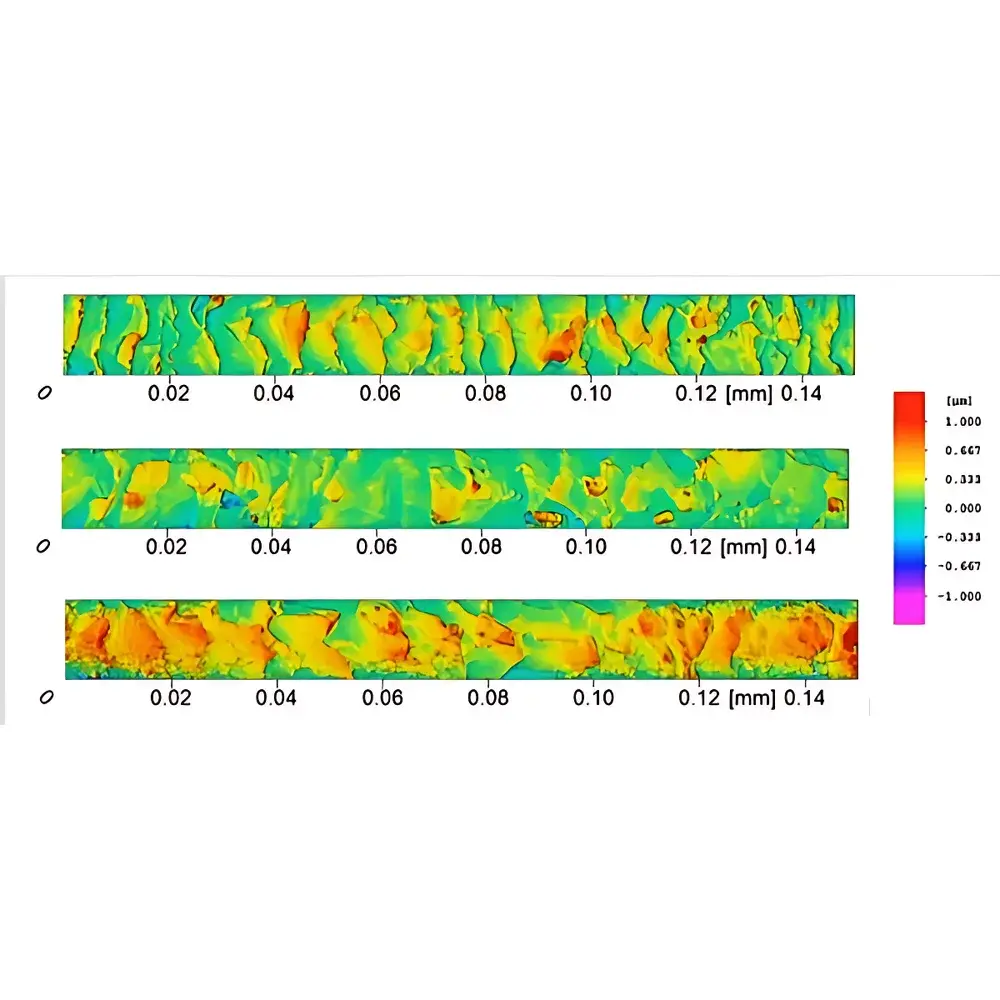
The proprietary MiniSURF Control & Analysis Suite (v4.2+) provides a validated, menu-driven interface for acquisition, processing, and reporting. Software modules include: (1) Auto-focus and tilt-compensation calibration routines; (2) Multi-region ROI selection with batch processing; (3) ISO 25178-compliant surface texture parameter calculation (Sa, Sq, Sz, Sdr, Vmc, Vvc); (4) Cuticle edge detection and defect mapping via gradient-threshold segmentation; (5) Cross-sectional profile extraction along user-defined longitudinal paths; (6) Pre/post-treatment comparative analysis with statistical overlay (t-test, ANOVA). Raw interferograms and processed height maps are stored in vendor-neutral HDF5 format with embedded metadata (timestamp, operator ID, calibration status, environmental log). Export options include CSV, TIFF (16-bit), and PDF reports conforming to ISO/IEC 17025 documentation standards.
Applications
- Quantitative evaluation of cuticle lift, erosion, or delamination following shampoo, dye, or thermal treatments
- Correlation of surface roughness metrics (e.g., Sa, Sdr) with sensory perception scores in cosmetic efficacy studies
- Preclinical assessment of novel conditioning agents targeting keratin repair or lipid replenishment
- Forensic hair analysis requiring objective, traceable surface morphology documentation
- Academic research in biophysics of keratin fiber mechanics and hydration-dependent topographic response
- Stability testing of hair care formulations under accelerated aging (UV, humidity, temperature cycling)
FAQ
What surface parameters does the MiniSURF calculate according to ISO 25178?
It computes all primary 3D areal surface texture parameters—including Sa (arithmetical mean height), Sq (root-mean-square height), Sz (maximum height), Sdr (developed interfacial area ratio), and functional parameters such as Vmc (material volume at core roughness depth) and Vvc (void volume in valley voids).
Can the system analyze wet or hydrated hair samples?
Yes—when used with an environmental chamber accessory (optional), the MiniSURF supports controlled RH (20–95%) and temperature (15–40°C) conditions for dynamic hydration-state surface monitoring.
Is calibration traceable to national metrology institutes?
Yes—each unit ships with NIST-traceable step-height reference artifacts (SiO₂-on-Si, 100 nm and 500 nm steps) and includes automated calibration verification routines per ISO/IEC 17025 Annex A.3.
Does the software support automated pass/fail decision logic for QC release?
Yes—customizable acceptance thresholds can be defined per parameter; the system generates binary compliance flags and auto-generates deviation reports for non-conforming samples.
What is the typical measurement time per hair segment?
A full 3D topographic map (512 × 512 pixels, 100 µm × 100 µm FOV) requires ~12 seconds acquisition + ~8 seconds reconstruction; multi-region batch runs scale linearly with number of ROIs.





