
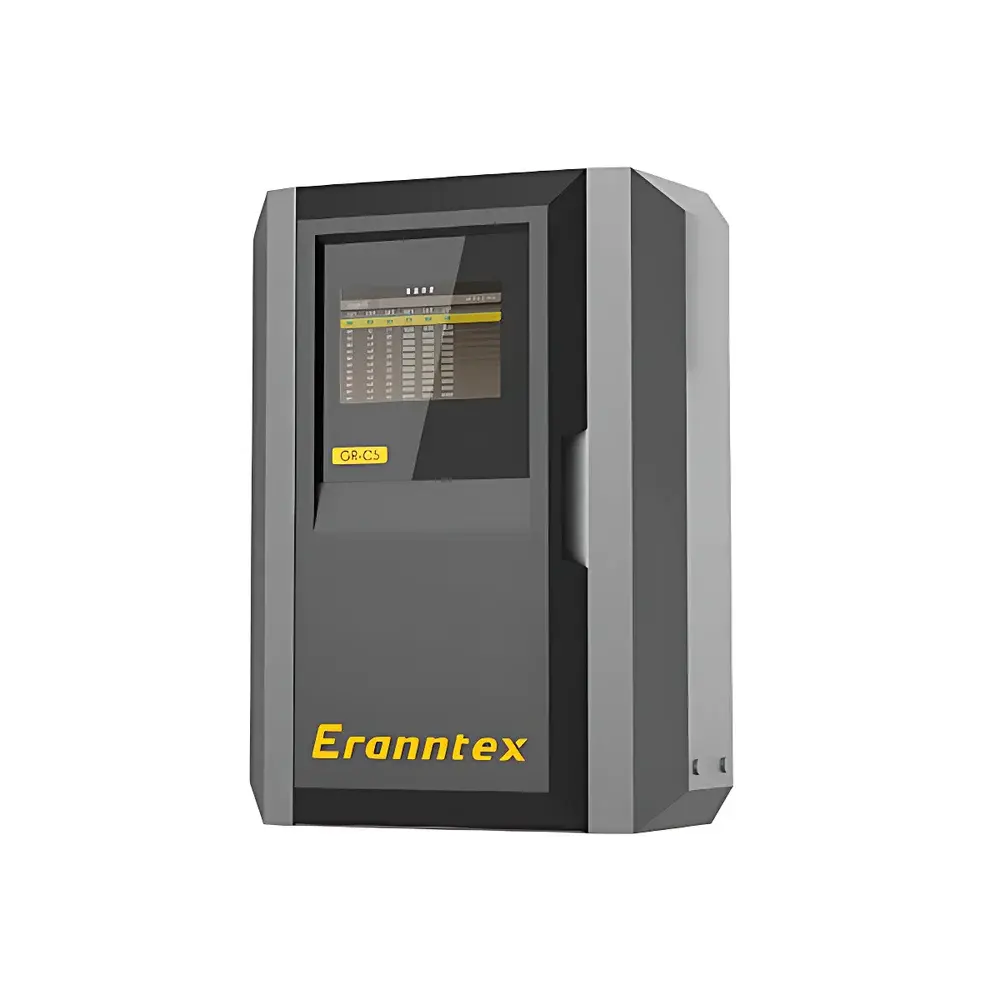
Eranntex DOAS-2000 Online Differential Optical Absorption Spectroscopy (DOAS) Analyzer for Hydrogen Sulfide
| Brand | Eranntex |
|---|---|
| Model | DOAS-2000 |
| Detection Principle | UV Differential Optical Absorption Spectroscopy (DOAS) |
| Measurement Range | 0–2 to 0–2000 ppm (configurable) |
| Operating Temperature | −40 °C to +600 °C (standard), up to +1300 °C (custom) |
| Sampling Humidity | 0–99% RH |
| Protection Rating | IP66 (outdoor, explosion-proof optional) |
| Sampling Flow Rate | 4 L/min (standard), up to 10 L/min (optional) |
| Data Storage | 16 GB internal (daily folder-based archiving) |
| Output Signals | 4–20 mA, RS485, dry contact outputs |
| Power Supply | 220 VAC, 50 Hz |
| Dimensions | 700 × 430 × 400 mm (H × W × D) |
Overview
The Eranntex DOAS-2000 is a fixed-installation, continuous-emission monitoring (CEM) analyzer engineered for real-time, multi-component gas quantification in demanding industrial and environmental emission streams. It employs ultraviolet differential optical absorption spectroscopy (UV-DOAS), a well-established, physics-based optical technique that resolves trace gas concentrations by measuring wavelength-dependent absorption features across a broadband UV spectrum (typically 190–420 nm). Unlike single-wavelength or NDIR methods, DOAS inherently corrects for broadband interferences—including light scattering from particulates, optical window fouling, and baseline drift—by separating structured molecular absorption signatures from smooth background attenuation. This enables robust, low-drift measurement of H₂S, SO₂, NO, NO₂, NH₃, O₃, benzene, toluene, xylene, and other UV-absorbing species at sub-ppm detection limits—even in high-moisture, high-dust flue gas environments typical of coal-fired boilers, waste incinerators, chemical process vents, and biogas pipelines.
Key Features
- Integrated dual-stage thermoelectric condenser system with automatic dew point control, minimizing SO₂ dissolution and H₂S hydrolysis during sample conditioning while maintaining >95% analyte recovery across 0–99% RH.
- Long-path absorption cell (optical path length configurable up to 2 m) with pulsed xenon lamp source—cold, stable, and rated for >2 × 10⁹ flashes—ensuring <0.5% intensity drift over 12 months without recalibration.
- Auto-ranging dual-scale detection for NOx and SO₂: high-sensitivity mode (0–20 ppm) and extended-range mode (0–2000 ppm), dynamically selected based on real-time concentration feedback to preserve signal-to-noise ratio and dynamic linearity.
- Onboard heating module (PID-controlled, up to +80 °C) maintains optical path and detector thermal stability under ambient conditions as low as −40 °C—validated per IEC 60068-2-1/2 for arctic deployment.
- IP66-rated outdoor enclosure with optional ATEX/IECEx-certified explosion-proof variants (Zone 1/21, II 2G/2D); ingress protection verified per EN 60529; vibration resistance compliant with IEC 60068-2-6.
- Self-diagnostic firmware with event-logged fault reporting (e.g., lamp failure, flow deviation >±15%, optical density drop >10%), supporting predictive maintenance and GLP-compliant audit trails.
Sample Compatibility & Compliance
The DOAS-2000 is designed for direct extractive sampling from hot, wet, and corrosive gas matrices without catalytic scrubbers or chemical conversion. Its heated sample line (up to 200 °C standard, 400 °C optional) and inert PTFE/Teflon-lined internal plumbing prevent adsorption loss of polar species such as NH₃ and H₂S. The system meets EN 15267-3 (QAL1 certification framework), supports EN 14181 (ASTM D6522-equivalent QA/QC protocols), and is configurable for EPA Method 205 compliance when paired with certified calibration gases and documented traceability chains. Data integrity conforms to FDA 21 CFR Part 11 requirements via electronic signature-capable software, audit trail logging, and role-based access control.
Software & Data Management
The embedded Windows-based host software provides real-time spectral visualization, multi-gas concentration overlays, and user-adjustable time-series scaling. All raw spectra and processed results are timestamped, stored in encrypted SQLite databases on the 16 GB onboard flash memory—with automatic daily folder creation and configurable retention policies (default: 365 days). Communication interfaces include isolated RS485 (Modbus RTU), galvanically separated 4–20 mA analog outputs (NIST-traceable), and dry contact alarms. Optional secure TLS 1.2 Ethernet or LTE-M connectivity enables remote configuration, spectral diagnostics, and cloud synchronization via MQTT or OPC UA—fully compatible with SCADA, DCS, and EMS platforms.
Applications
- Continuous monitoring of H₂S in biogas upgrading facilities and landfill gas collection systems per ISO 14067 carbon accounting guidelines.
- Regulatory compliance for SO₂/NOx/H₂S emissions from coal- and biomass-fired power plants under EU IED BREF and China’s GB 13223–2011 standards.
- Process safety surveillance in sulfur recovery units (SRUs), Claus plants, and amine regeneration off-gas streams.
- VOCs speciation (BTEX, formaldehyde precursors) in semiconductor fab exhaust and pharmaceutical reactor vent stacks.
- Multi-parameter flue gas analysis including O₂ (via zirconia sensor option), temperature, pressure, and velocity (with integrated Pitot tube interface) for stoichiometric combustion optimization.
FAQ
What is the minimum detectable concentration (MDL) for H₂S using the DOAS-2000?
The instrument achieves an MDL of ≤0.2 ppm for H₂S (1σ, 60-second averaging) under standard sampling conditions (4 L/min, 1 m path length, 20 °C).
Can the DOAS-2000 operate continuously in high-dust environments such as cement kiln exhaust?
Yes—the dual-stage condenser removes >99.5% of liquid water and coarse particulates; optional inline sintered metal filter (5 µm) and programmable purge cycles further extend maintenance intervals to ≥3 months in PM-rich streams.
Is third-party type approval available for regulatory reporting?
The DOAS-2000 platform has undergone QAL1 testing per EN 15267-3 at accredited laboratories; site-specific QAL2/QAL3 validation support and TÜV-certified installation documentation are provided upon request.
How is calibration performed, and what traceability standards are used?
Calibration uses NIST-traceable, gravimetrically prepared gas standards (e.g., Scott Specialty Gases, Air Liquide); zero gas is synthetic nitrogen (<1 ppb total hydrocarbons); span verification follows ISO 6145-7 procedures with automated leak-check routines before each calibration sequence.
Does the system support remote firmware updates and spectral diagnostics?
Yes—secure over-the-air (OTA) firmware updates and full spectral download (raw interferograms, fitted residuals, Beer-Lambert coefficients) are supported via authenticated HTTPS or VPN-tunneled SSH sessions.







