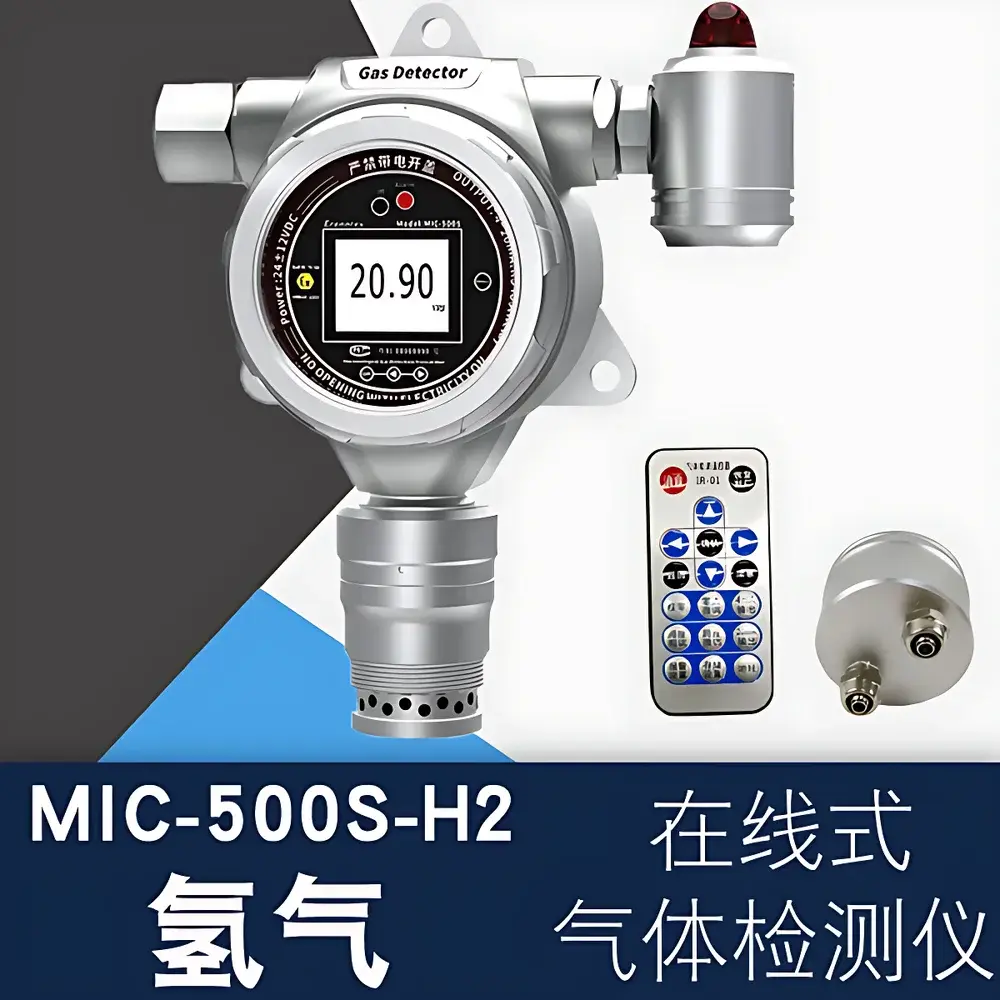
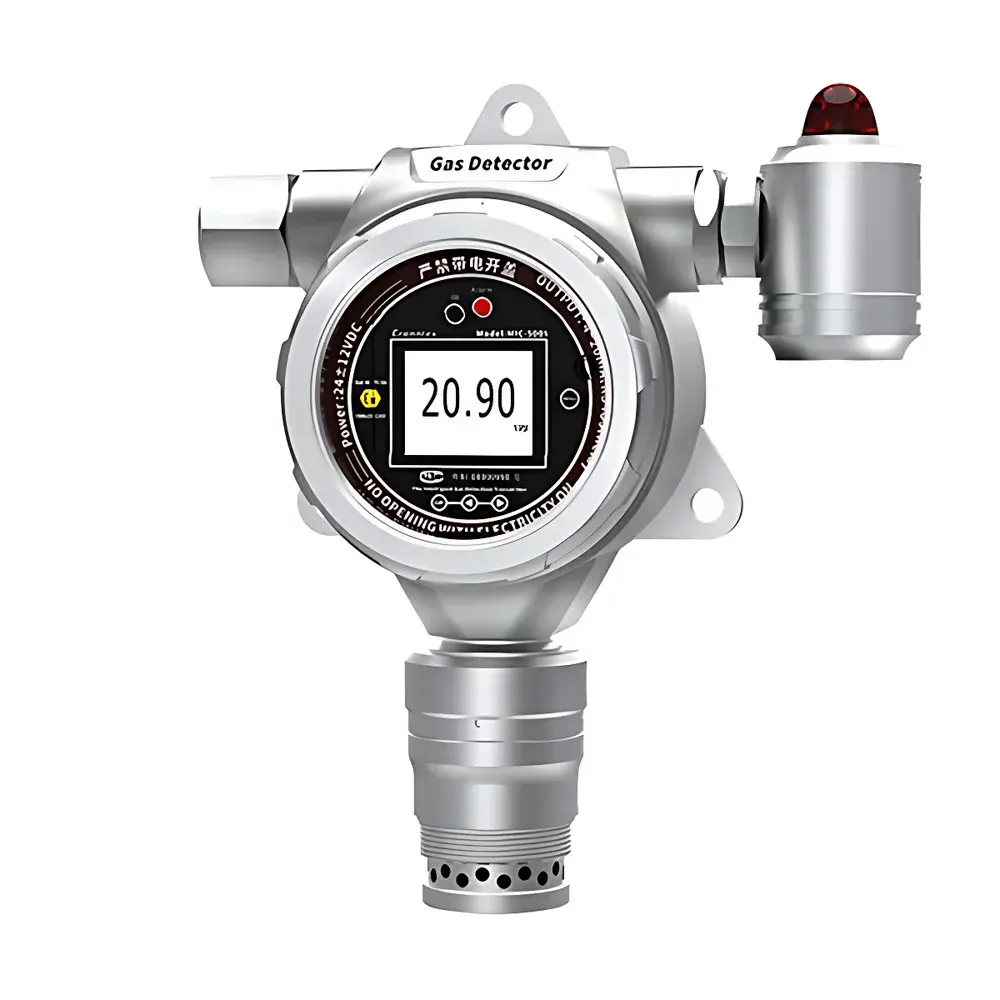
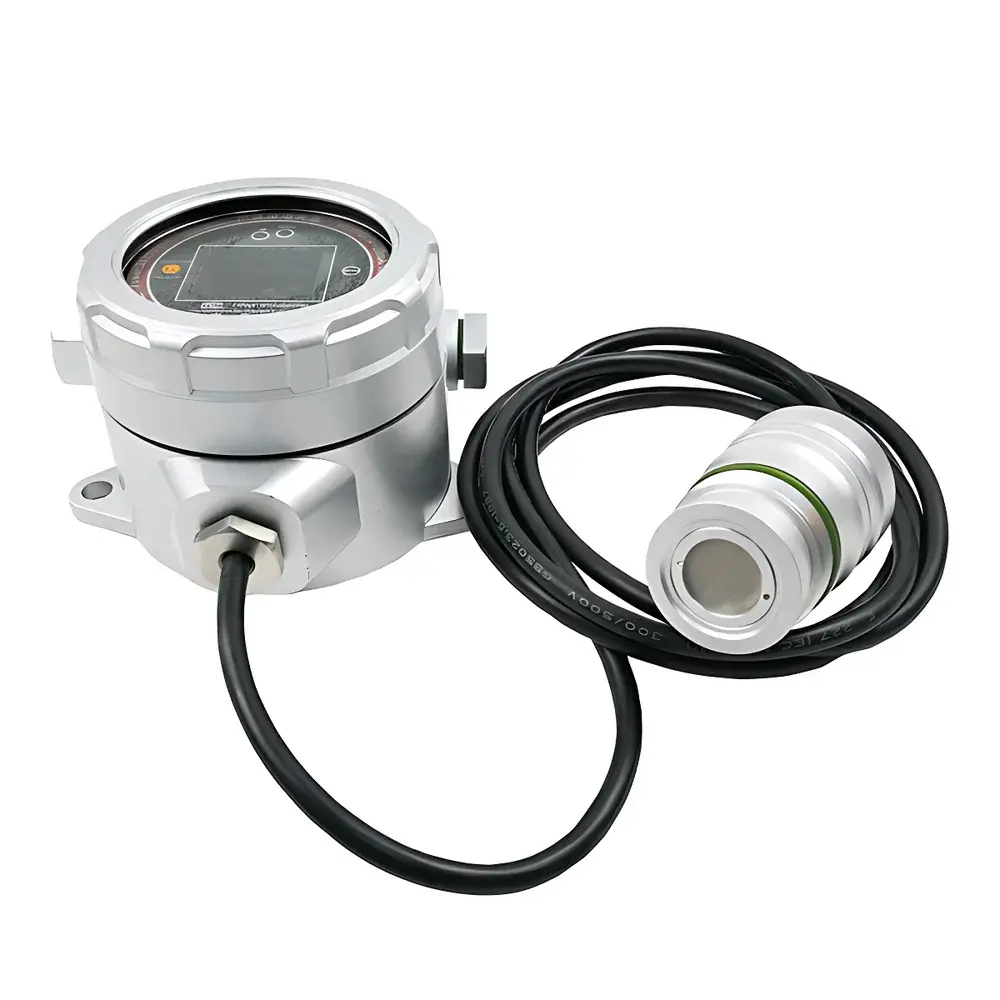
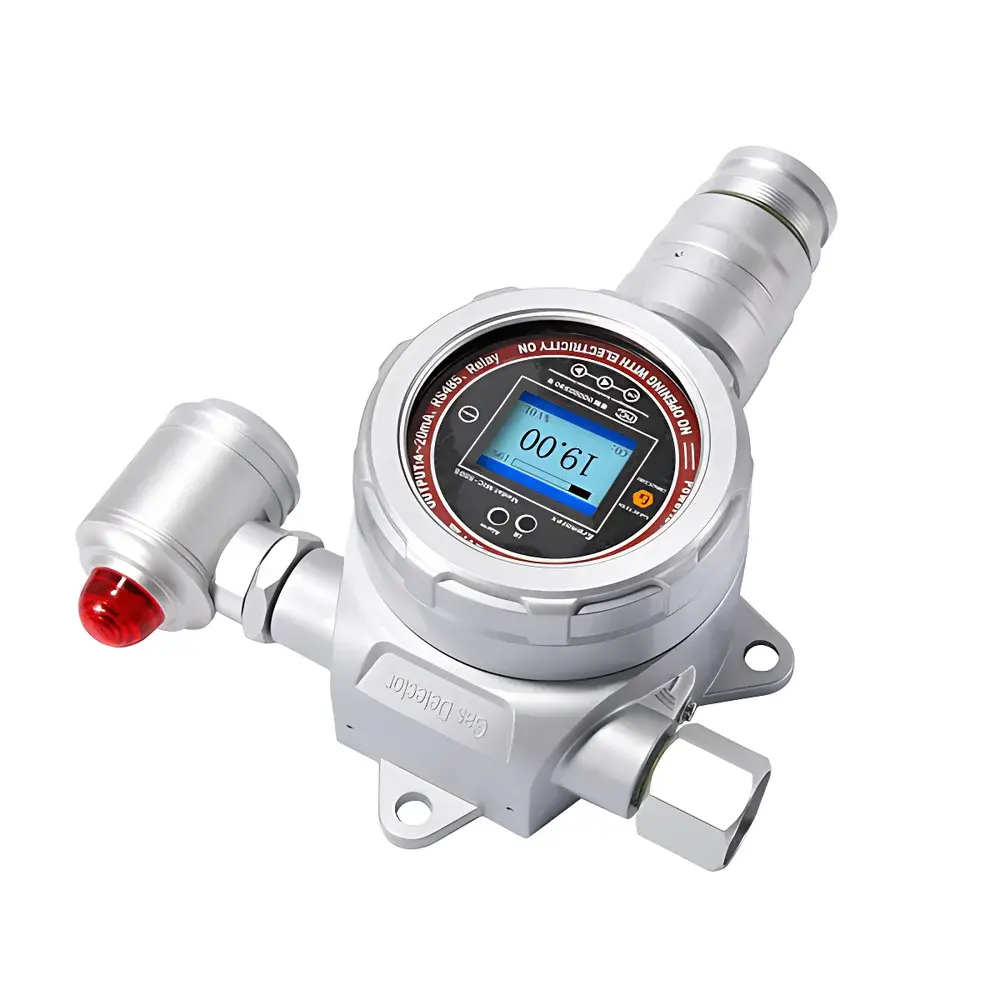
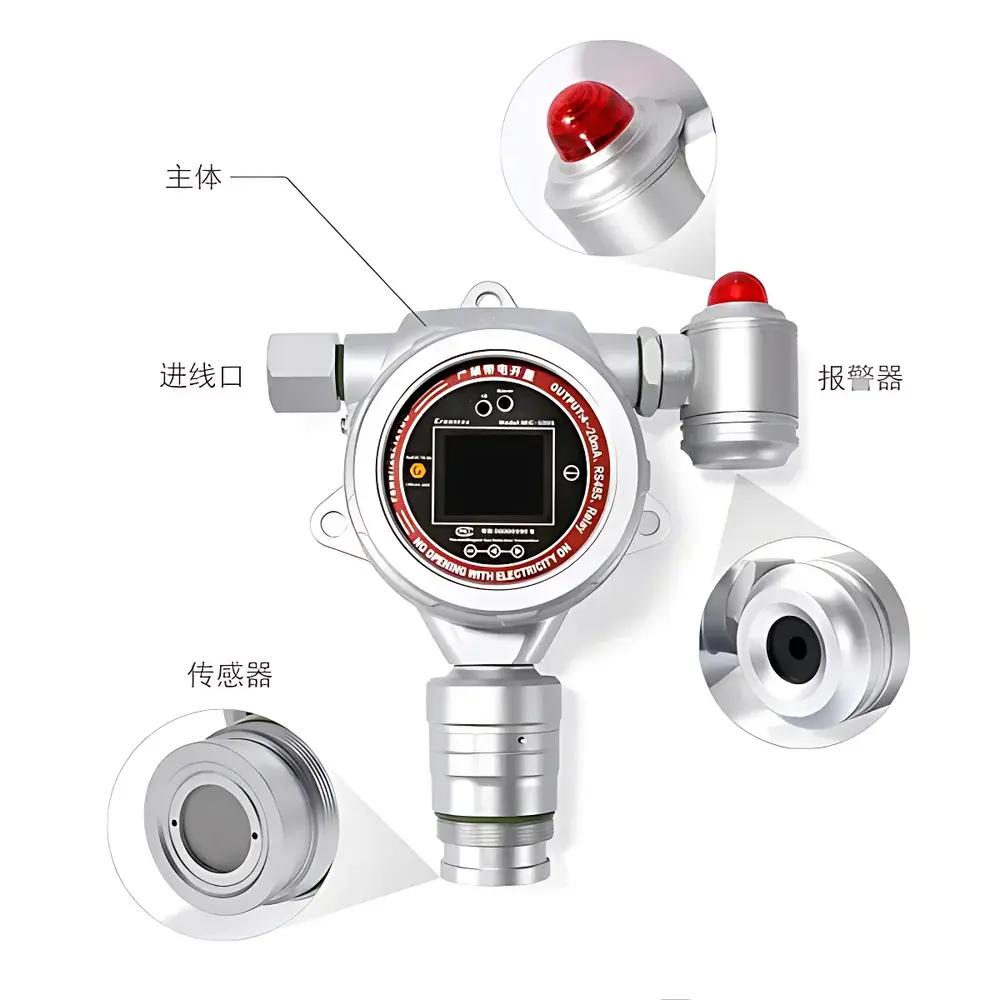
Eranntex MIC-500S-H2 Fixed Hydrogen Gas Detector
| Brand | Eranntex |
|---|---|
| Origin | Shenzhen, China |
| Manufacturer Type | OEM/ODM Manufacturer |
| Country of Origin | China |
| Model | MIC-500S-H2 |
| Detection Principle | Electrochemical / Catalytic Combustion / Infrared / Thermal Conductivity / PID |
| Explosion Protection Rating | Exd IIC T6 Gb |
| IP Rating | IP65 |
| Output Signals | 4–20 mA (3-/4-wire), RS485 (Modbus RTU), Relay Outputs (2 x SPDT), Optional Wireless (GPRS/WiFi/433 MHz) |
| Operating Temperature | −40 °C to +70 °C |
| Humidity Range | 10–95% RH (non-condensing) |
| Display | 1.7″ Color LCD |
| Power Supply | 12–36 VDC |
| Dimensions (L×H×W) | 238 × 210 × 90 mm (with beacon) |
| Weight | 1.8 kg |
| Compliance | GB 15322.1–2019, GB 3836.1–2010, GB 3836.2–2010, CPA Certified |
Overview
The Eranntex MIC-500S-H2 is a fixed-mount, intrinsically robust hydrogen gas detector engineered for continuous, real-time monitoring in hazardous and industrial environments where hydrogen leakage poses explosion, asphyxiation, or process integrity risks. It operates on multiple detection principles—including electrochemical, catalytic combustion, infrared absorption, thermal conductivity, and photoionization (PID)—selected per application requirements such as required range, ambient conditions, cross-sensitivity constraints, and regulatory compliance. The device conforms to the measurement physics of hydrogen-specific sensing: for low-concentration trace detection (ppm-level), electrochemical or PID sensors deliver high selectivity and sub-ppm resolution; for %LEL or volumetric monitoring (e.g., in fuel cell enclosures or electrolyzer rooms), catalytic bead or thermal conductivity configurations ensure stability under fluctuating background gas composition. Its Exd IIC T6 Gb explosion-proof enclosure enables safe deployment in Zone 1/Zone 2 classified areas per IEC 60079 standards—fully aligned with global hydrogen infrastructure safety frameworks including ISO/IEC 80079-36 and NFPA 2.
Key Features
- Multi-principle sensor architecture: Configurable with certified sensors from Honeywell, Figaro, City Technology, Alphasense, Dynament, and Membrapor to match target detection range (0–1 ppm to 100% vol), accuracy class (±3% FS standard), and environmental resilience.
- Industrial-grade signal integrity: Triple-layer EMI/EMC hardening, surge protection (6 kV lightning-rated), reverse-polarity and static discharge immunity—validated per IEC 61000-4 series.
- Dual-output architecture: Simultaneous analog (4–20 mA, 3-/4-wire) and digital (RS485 Modbus RTU) outputs enable seamless integration into DCS, PLC, and SCADA systems without protocol translation.
- Hazardous-area operational flexibility: Infrared remote control (15 m range, ATEX-compliant IR protocol) permits zero-entry calibration and parameter adjustment—eliminating hot-work permits during maintenance.
- Adaptive signal processing: Auto-zero tracking, multi-point linearization, and drift compensation algorithms maintain metrological stability across temperature gradients (−40 °C to +70 °C) and humidity swings (10–95% RH non-condensing).
- Scalable communication: Optional wireless telemetry modules (GPRS, WiFi, 433 MHz) support long-range data transmission to cloud platforms or local HMIs—with TLS 1.2 encryption and configurable reporting intervals (1 s to 24 h).
Sample Compatibility & Compliance
The MIC-500S-H2 is validated for use in hydrogen production (alkaline/PEM electrolysis), compression & storage (tube trailers, stationary tanks), refueling stations (HRS), fuel cell testing labs, semiconductor fabrication cleanrooms, and chemical synthesis reactors. It meets mandatory certification requirements for Chinese domestic markets: CPA (China Metrology Accreditation) Type Approval Certificate, Exd IIC T6 Gb explosion-proof certification (CNEx17.3959), and full compliance with GB 15322.1–2019 (Combustible Gas Detectors – Part 1) and GB 3836.1/2–2010 (Explosive Atmospheres – Equipment General Requirements & Flameproof Enclosures). While not pre-certified for UL 2075 or EN 50194, its hardware architecture and sensor traceability align with functional safety pathways toward SIL 2 per IEC 61508 when integrated into a certified safety instrumented system (SIS).
Software & Data Management
The detector supports native integration with Eranntex’s free PC-based upper-layer software (MIC-View), enabling real-time concentration visualization, historical trend logging (up to 1 million records), alarm event tagging, and CSV/PDF report generation. All configuration changes, calibration events, and alarm triggers are time-stamped and logged with user ID—meeting audit trail requirements under GLP and basic GMP documentation practices. When deployed with optional TCP/IP gateways or MQTT-enabled edge modules, data streams comply with OPC UA PubSub and can be ingested into Industry 4.0 platforms (e.g., Siemens MindSphere, PTC ThingWorx). Firmware updates are performed via secure OTA (Over-the-Air) using signed binaries, ensuring integrity verification prior to execution.
Applications
- Hydrogen refueling station (HRS) safety interlocks: Monitoring dispenser nozzles, compressor skids, and vent stacks for H₂ accumulation above 1% LEL (400 ppm).
- Electrolyzer room perimeter monitoring: Detecting membrane failure or seal degradation in PEM/ALK systems at sub-ppm levels to prevent explosive mixtures.
- Fuel cell stack test benches: Quantifying crossover hydrogen in cathode exhaust to assess MEA durability and optimize humidification control.
- Ammonia cracking facilities: Verifying H₂ purity downstream of thermal decomposition units before feeding into fuel cells or turbines.
- Semiconductor diffusion furnaces: Ensuring inert carrier gas integrity by detecting H₂ ingress in N₂/H₂ blends used for epitaxial growth.
- Pharmaceutical hydrogenation reactors: Providing secondary safety layer for exothermic catalytic reactions operating under elevated H₂ partial pressure.
FAQ
What hydrogen detection principle is recommended for low-concentration leak detection in indoor labs?
Electrochemical or PID sensors are preferred for 0–10 ppm applications due to their high sensitivity (0.001 ppm resolution), minimal cross-sensitivity to CO or VOCs, and stable baseline under controlled temperature/humidity.
Can the MIC-500S-H2 be integrated into a SIL 2 safety loop?
Yes—when paired with certified relays, redundant power supplies, and configured per IEC 61511, its relay outputs and diagnostic coverage support SIL 2 architecture; formal FMEDA analysis and proof test procedures must be conducted by end-user safety engineers.
Does the device support HART protocol?
No—only 4–20 mA (analog) and RS485 (Modbus RTU) are natively supported; HART requires external converters and is not recommended for Ex d installations.
Is calibration traceable to NIST or CNAS standards?
Sensor modules are factory-calibrated using certified H₂ gas standards (ISO 6141); field calibration kits include NIST-traceable span gases (e.g., 500 ppm H₂ in N₂), and calibration certificates list uncertainty budgets per ISO/IEC 17025 principles.
What is the maximum cable length for RS485 communication?
Up to 1200 meters with 1.5 mm² shielded twisted pair (STP) cabling and proper termination resistors; for distances >500 m, an RS485 repeater or fiber-optic media converter is advised to maintain signal integrity.