
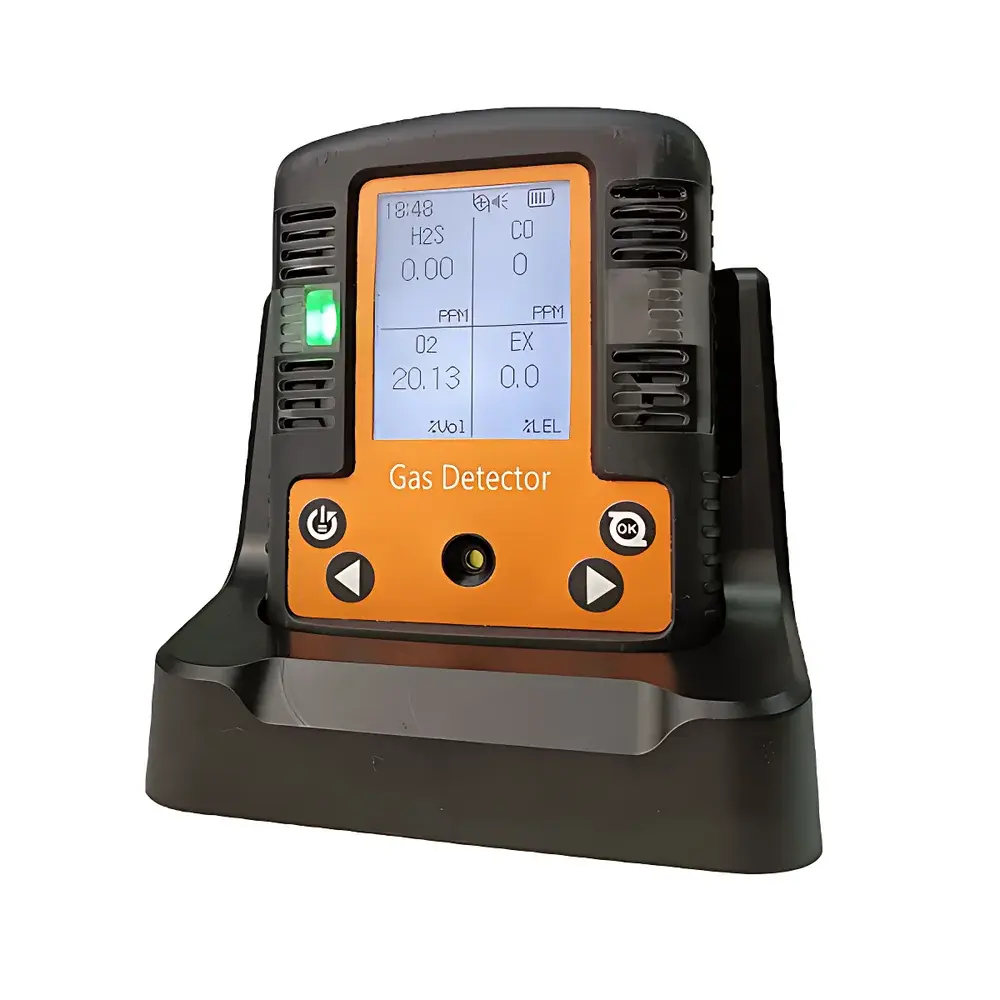
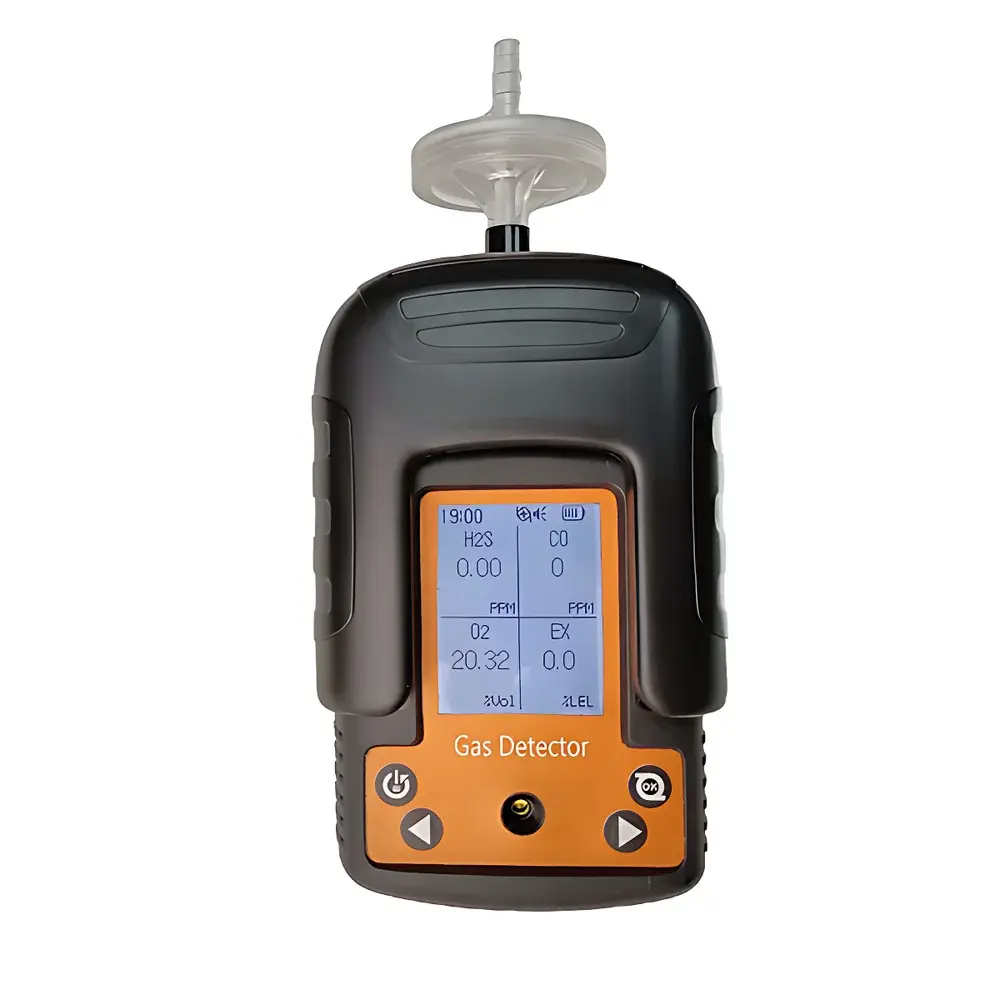
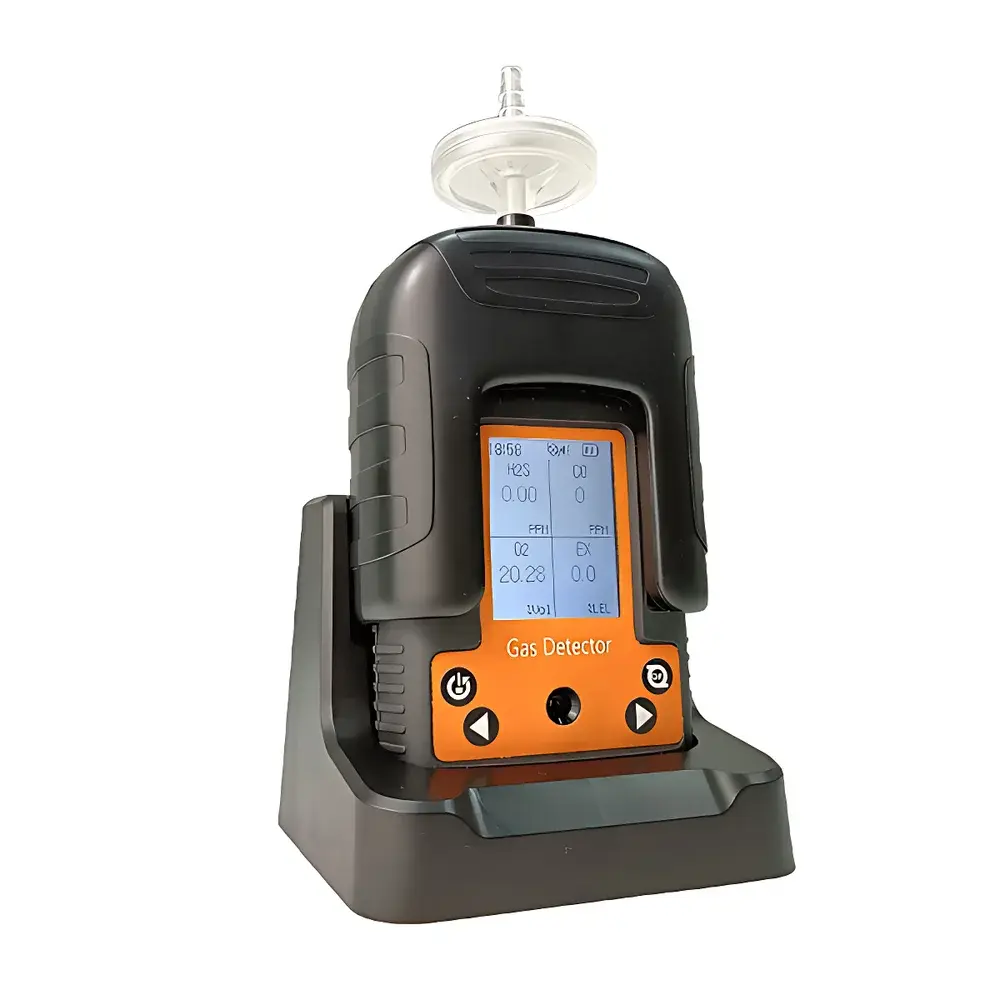
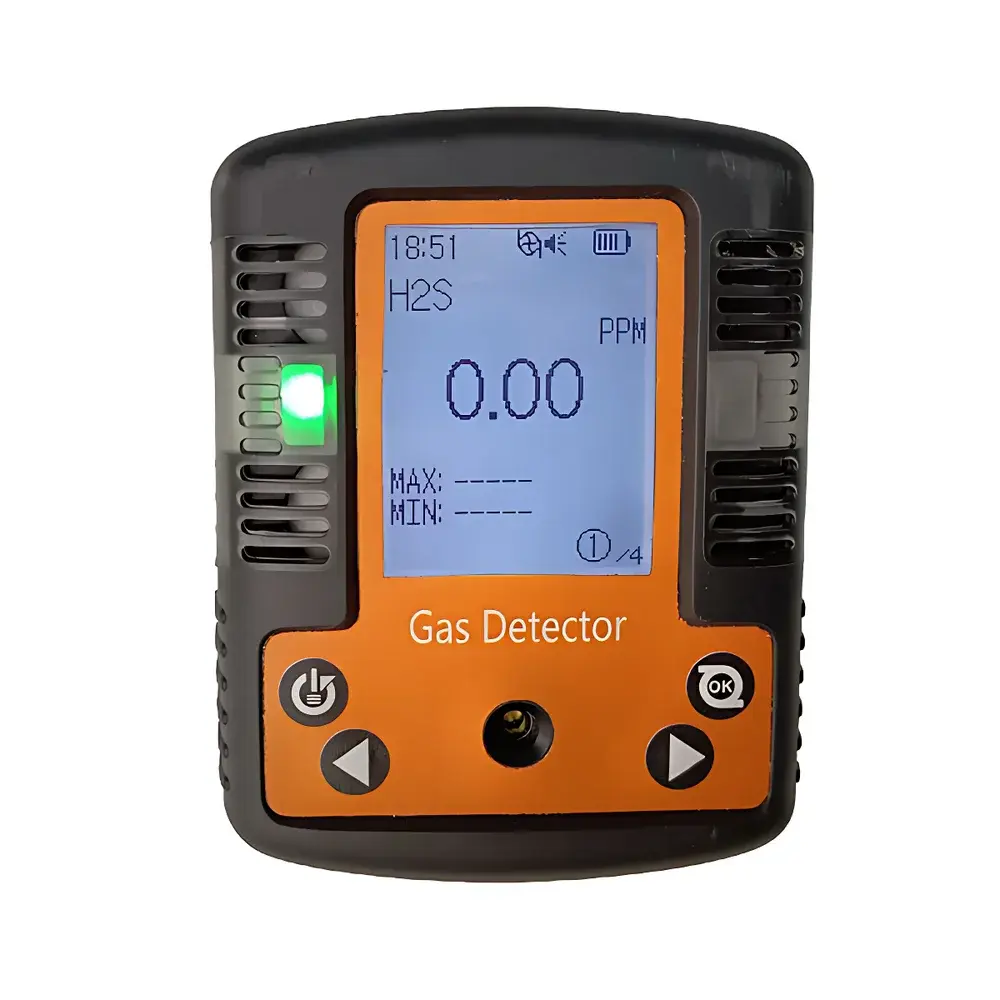
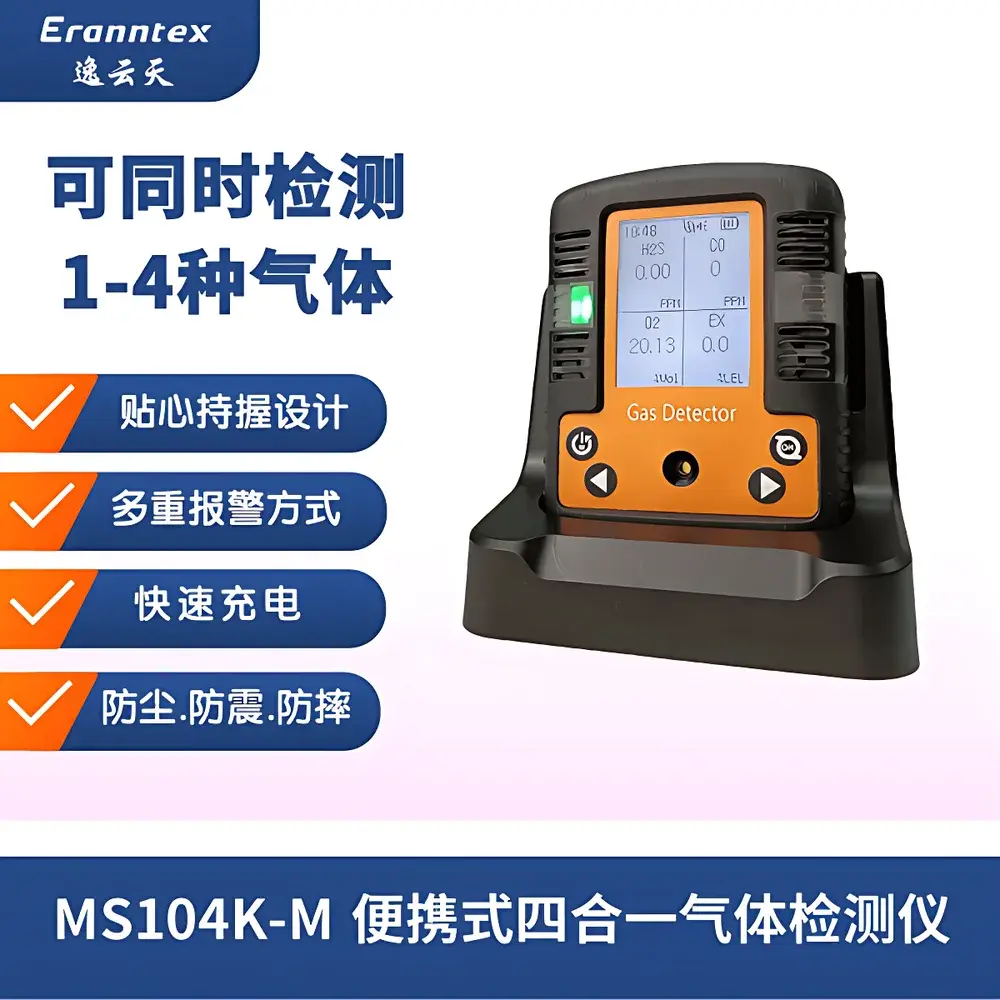
Eranntex MS104K-M-H2 Portable Hydrogen Gas Detector
| Brand | Eranntex |
|---|---|
| Origin | Guangdong, China |
| Manufacturer Type | Manufacturer |
| Origin Category | Domestic |
| Model | MS104K-M |
| Detection Target | H₂ (Hydrogen) |
| Detection Principle | Electrochemical / Catalytic Combustion / Infrared / Thermal Conductivity / PID |
| Resolution | 0.001 ppm (0–10 ppm), 0.01 ppm (0–100 ppm), 0.1 ppm (0–1000 ppm), 1 ppm (>5000 ppm), 0.1%LEL, 0.01%Vol |
| Display | 2-inch LCD |
| Power | Rechargeable 7.4 V / 1400 mAh Li-polymer battery |
| Operating Time | >100 h (diffusion mode, no catalytic sensor) |
| IP Rating | IP68 |
| Explosion Protection | Ex ia IIC T4 Ga |
| Compliance | GB/T 3836.1–2021, GB/T 3836.4–2021, GB/T 50493–2019, GB 15322.3–2019 |
| Data Storage | >200,000 records |
| Communication | Type-C interface (charging & data transfer), optional LoRa / Bluetooth / NB-IoT |
| Dimensions | 90 × 70 × 38 mm (L×W×H) |
| Weight | ~380 g |
Overview
The Eranntex MS104K-M-H2 is a certified intrinsically safe portable hydrogen gas detector engineered for high-reliability monitoring in hydrogen energy infrastructure, fuel cell facilities, electrolyzer plants, and other critical environments where rapid leak detection and real-time concentration assessment are essential for personnel safety and process integrity. Unlike fixed-point monitors, this handheld instrument employs dual-mode sampling—diffusion and pump-assisted aspiration—to ensure representative measurement across diverse operational scenarios, including confined spaces, maintenance zones, and mobile inspection routes. Its core detection architecture supports multiple transduction principles—including electrochemical, catalytic combustion, infrared, thermal conductivity, and photoionization (PID)—selected based on application-specific requirements such as required range, interference resistance, response speed, and sensor longevity. The device complies with stringent international intrinsic safety standards (GB/T 3836.4–2021) and industrial design guidelines for flammable gas detection (GB/T 50493–2019), making it suitable for deployment in Class I, Division 1 hazardous locations.
Key Features
- Intrinsically safe circuitry certified to Ex ia IIC T4 Ga per GB/T 3836.4–2021, enabling safe operation in explosive atmospheres containing hydrogen-air mixtures.
- IP68-rated enclosure constructed from high-strength flame-retardant polycarbonate with full rubber overmolding, providing dust-tight, submersible (up to 1.5 m for 30 min), and impact-resistant performance (tested to 5 m drop resistance).
- Multi-gas capability: Configurable for simultaneous detection of up to four gases—including H₂, CO, H₂S, O₂, CH₄, CO₂, or VOCs—with interchangeable sensor modules tailored to site-specific hazard profiles.
- Integrated external sampling pump with adjustable flow rate, automatic pump blockage alarm, and built-in calibration shroud for field verification without disassembly.
- High-resolution display showing real-time concentration, unit (ppm, %LEL, %Vol, mg/m³, µmol/mol), gas identity, battery status, communication state, and time-stamped alarm events.
- Comprehensive alarm system featuring audible (>90 dB), visual (dual-color LED), and vibratory alerts, configurable for low/high, TWA, STEL, and interval-based thresholds.
- Advanced data management: On-device storage of >200,000 timestamped readings with user-defined logging intervals; full export via Type-C interface or optional wireless protocols (Bluetooth, LoRa, NB-IoT).
- Zero-point auto-tracking and multi-point span calibration support ensure long-term stability and measurement traceability—critical for regulatory compliance under GLP and ISO 9001 quality frameworks.
Sample Compatibility & Compliance
The MS104K-M-H2 is validated for hydrogen detection across multiple concentration domains: 0–100% LEL (lower explosive limit), 0–1000 ppm, 0–20,000 ppm, and 0–100% Vol, with resolution down to 0.001 ppm in ultra-low-range configurations. Sensor selection adheres to application-specific demands—for instance, electrochemical sensors deliver optimal sensitivity for ambient H₂ monitoring (<100 ppm), while catalytic bead elements provide robust response in high-concentration leak surveys (up to 100% LEL). All sensor modules conform to GB 15322.3–2019 for portable combustible gas detectors and are supported by factory calibration certificates traceable to national metrological standards (CPA certification included). The instrument meets occupational exposure monitoring requirements aligned with OSHA PELs and ACGIH TLVs, and its hardware/software architecture supports audit-ready data integrity features—including tamper-evident timestamps and non-erasable event logs—essential for compliance with ISO 45001 occupational health and safety management systems.
Software & Data Management
Data acquisition and configuration are managed through an embedded firmware platform accessible via the Type-C USB interface. Standard PC software enables full parameter configuration (alarm thresholds, units, sampling mode), firmware updates, and secure data download with CSV export functionality. Optional wireless integration extends interoperability: Bluetooth pairing supports connection to smartphones for remote viewing and printing via compatible thermal printers; LoRa gateways enable mesh-networked area monitoring in large-scale hydrogen production sites; NB-IoT connectivity facilitates cloud-based telemetry for centralized asset monitoring and predictive maintenance analytics. All stored records include metadata such as GPS coordinates (when paired with external GNSS module), ambient temperature/humidity (optional add-on), and sensor health indicators—ensuring contextual fidelity for incident investigation and regulatory reporting under ISO 14001 environmental management protocols.
Applications
- Hydrogen refueling stations: Pre-fill verification, dispenser integrity checks, and perimeter monitoring during compression and dispensing operations.
- Electrolysis plant maintenance: Leak screening of PEM/AWE stack housings, piping flanges, and valve manifolds during shutdown inspections.
- Fuel cell vehicle service bays: Post-diagnostic hydrogen residual checks before technician entry into battery compartments or powertrain enclosures.
- Industrial laboratories: Monitoring inert gas purging effectiveness and detecting unintended H₂ ingress in gloveboxes or reactor vessels.
- Emergency response: Rapid deployment by fire and rescue teams for post-accident atmospheric assessment in hydrogen transport corridors or storage depots.
- Renewable energy integration sites: Field validation of hydrogen blending ratios in natural gas pipelines and verification of compressor seal integrity.
FAQ
What hydrogen detection ranges and resolutions are supported?
The MS104K-M-H2 supports configurable H₂ measurement spans including 0–100% LEL (0.1%LEL resolution), 0–1000 ppm (0.1 ppm), 0–20,000 ppm (1 ppm), and 0–100% Vol (0.01%Vol), with ultra-high-sensitivity variants offering 0.001 ppm resolution in the 0–10 ppm range.
Is the device certified for use in Zone 0/1 hazardous areas?
Yes—it carries Ex ia IIC T4 Ga certification per GB/T 3836.4–2021, permitting continuous operation in Zone 0 (continuous gas presence) and Zone 1 (occasional gas presence) classified locations.
How is calibration performed in the field?
Calibration uses a standard gas cylinder with known H₂ concentration; the instrument supports one-point zero and multi-point span adjustment with automatic drift compensation and error-lockout for invalid inputs.
Can historical data be retrieved after battery depletion?
Yes—data storage is non-volatile; all logged entries persist through power cycles and can be fully recovered via Type-C interface or exported wirelessly.
Does the unit meet FDA 21 CFR Part 11 requirements for electronic records?
While not explicitly validated for pharmaceutical GxP environments, its audit-trail-capable firmware, password-protected configuration, and immutable timestamped logs align with foundational ALCOA+ data integrity principles applicable to regulated hydrogen infrastructure QA/QC workflows.





