
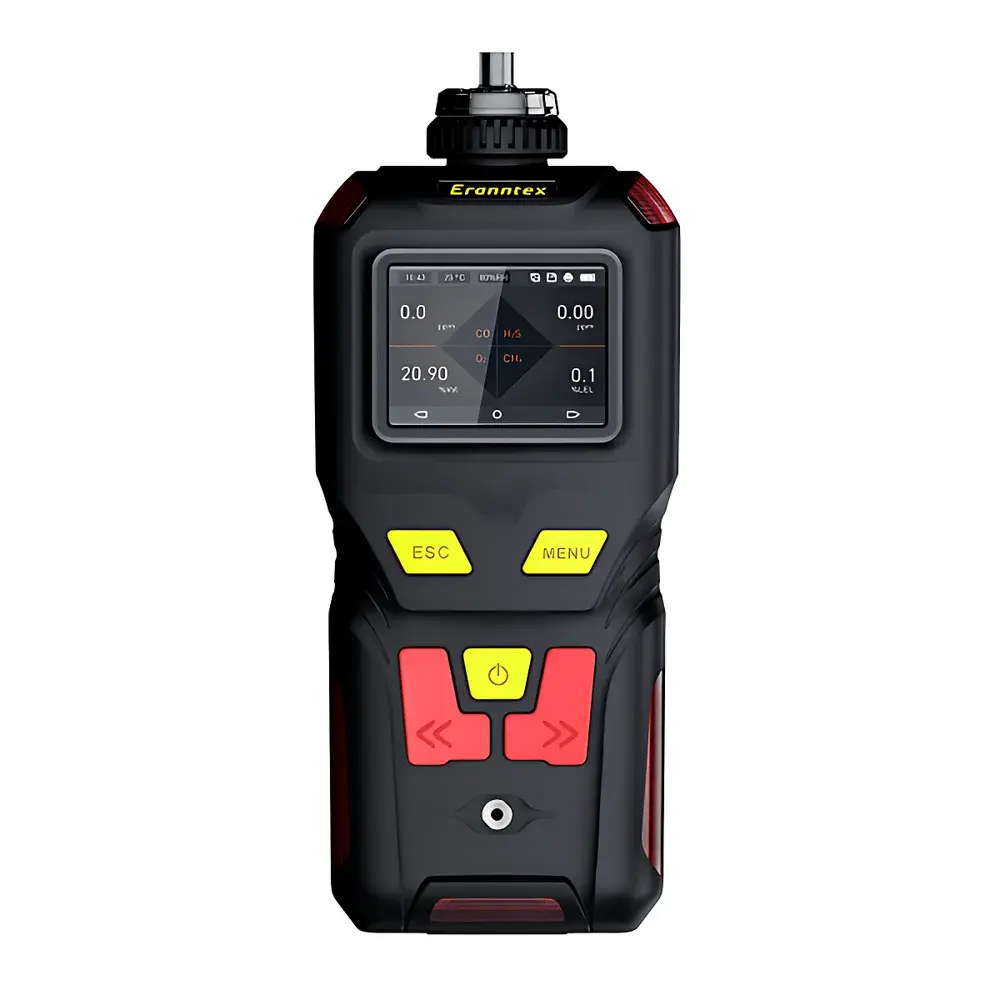
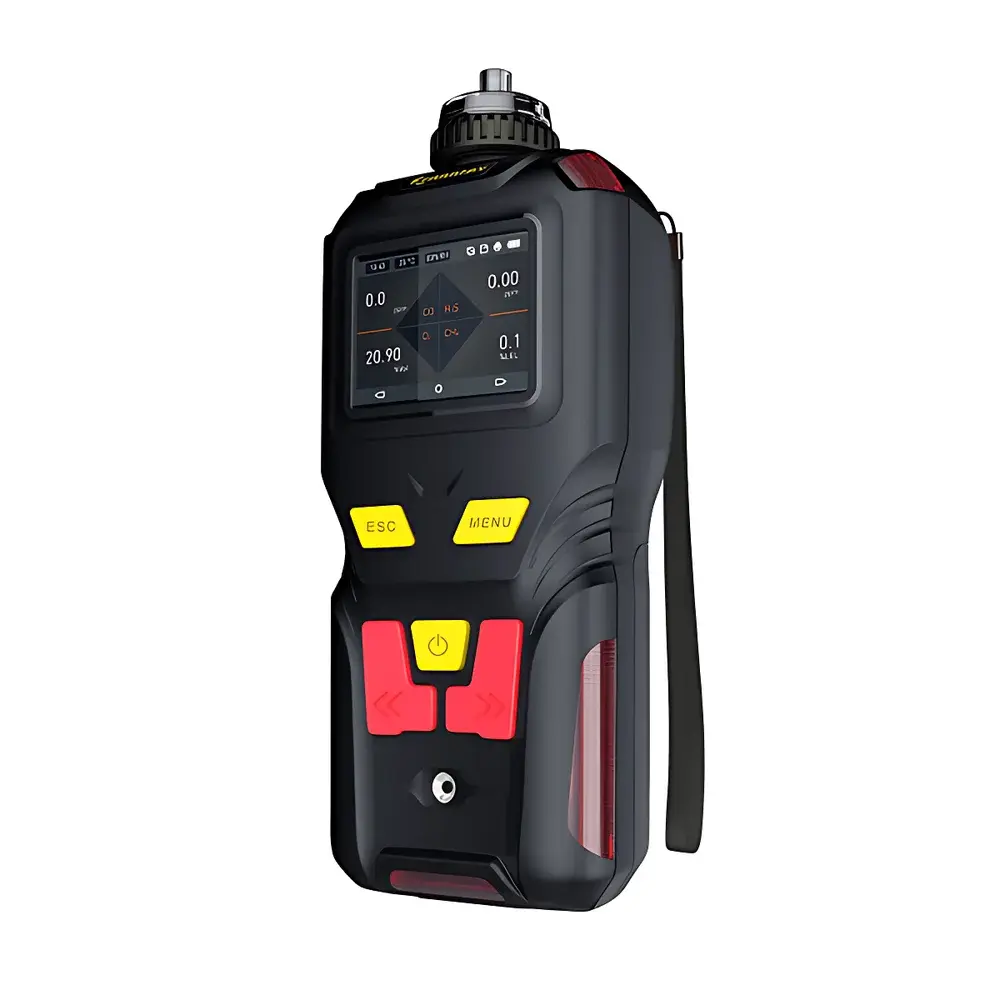
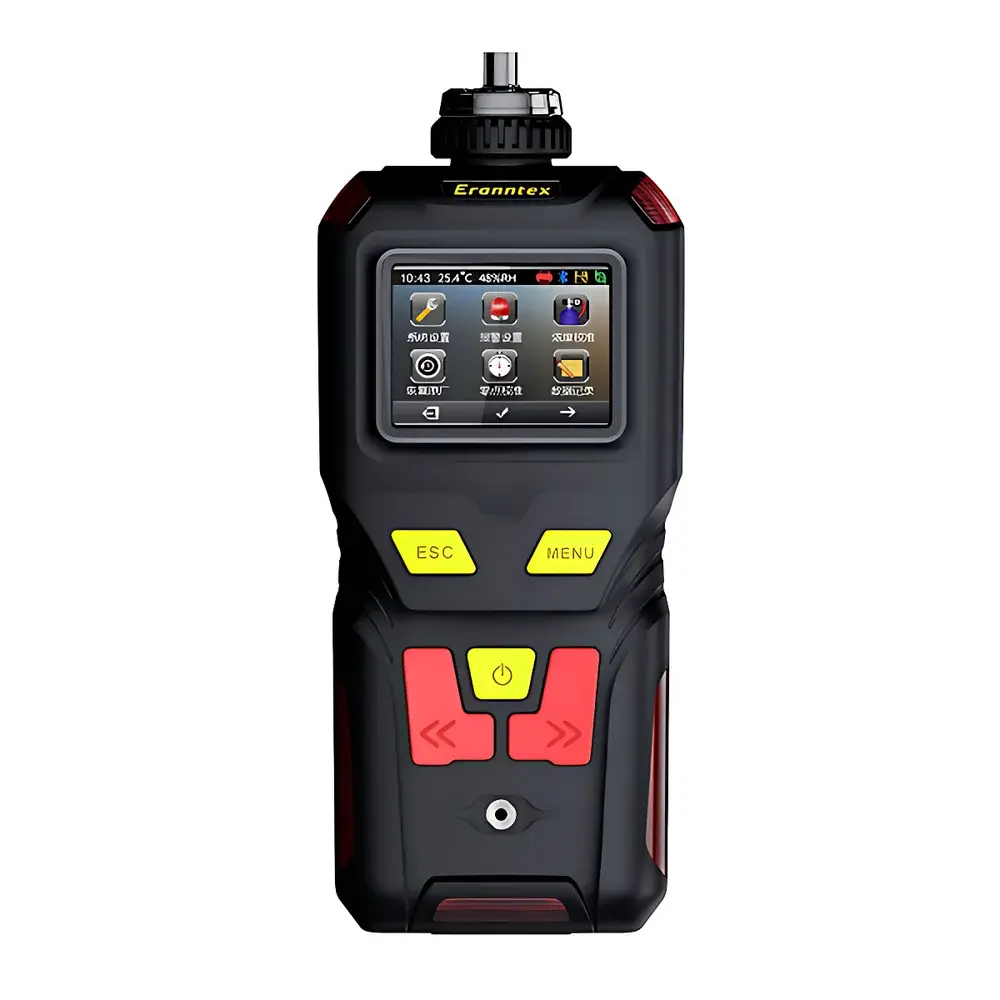
Eranntex MS400-CH4 Portable Methane (CH₄) Gas Detector with Alarm
| Brand | Eranntex |
|---|---|
| Origin | Guangdong, China |
| Manufacturer Type | OEM/ODM Manufacturer |
| Country of Origin | China |
| Model | MS400-CH4 |
| Pricing | Upon Request |
Overview
The Eranntex MS400-CH4 is a certified intrinsically safe, portable methane (CH₄) gas detection instrument engineered for rapid, reliable, and field-deployable concentration measurement in hazardous and non-hazardous environments. It operates on multiple detection principles—including catalytic combustion (for LEL-range CH₄), infrared (NDIR), thermal conductivity, and electrochemical—selected per application requirements to ensure optimal sensitivity, selectivity, and long-term stability. Designed for compliance with international functional safety expectations for portable gas monitors, the MS400-CH4 delivers real-time quantitative analysis of methane in ambient air, confined spaces, pipeline purge verification, landfill monitoring, biogas facilities, and emergency response scenarios. Its robust architecture supports operation across extreme environmental conditions (–40 °C to +70 °C), while integrated temperature and humidity compensation algorithms maintain measurement fidelity under variable meteorological loads.
Key Features
- Intrinsically safe design certified to Exia II CT4, meeting IEC 60079-0/-11 standards for use in Zone 0/1 explosive atmospheres
- IP65-rated enclosure with built-in hydrophobic particulate and moisture filtration—enabling stable sensor performance in high-humidity, dusty, or rain-exposed field conditions
- Integrated sampling pump (500 mL/min flow rate) with extendable 10-meter sampling hose option for remote or inaccessible location monitoring
- 2.31-inch 320×240 high-resolution color TFT display with intuitive icon-based UI; supports dual-language (English/Chinese) interface and three display modes: quad-gas simultaneous view, large-font single-channel cycling, and real-time concentration trend graphing
- High-capacity 4600 mAh rechargeable Li-polymer battery with overcharge, over-discharge, overvoltage, short-circuit, and thermal protection; enables continuous operation >12 hours (typical), with USB hot-swap charging capability
- Multi-modal alarm system: audible (≥85 dB @ 30 cm), visual (high-brightness LED strobe), haptic (vibration), and on-screen status highlighting; configurable alarm types include low/high, TWA/STEL, and weighted average thresholds
- Comprehensive data logging: standard 100,000-entry storage capacity (expandable); supports time-stamped event logging (alarms, calibrations, faults), USB export, and PC-based analysis via included software
Sample Compatibility & Compliance
The MS400-CH4 is validated for methane detection in diverse sample matrices—including ambient air, nitrogen- or oxygen-balanced background gases, biogas mixtures, and post-combustion flue streams (with optional high-temperature sampling accessories). When equipped with the optional high-temp probe (rated up to 400 °C), it accommodates thermally demanding applications such as flare stack monitoring or incinerator off-gas analysis. The device complies with national metrological certification requirements (CMC license), conforms to GB/T 50493–2019 (China’s Code for Design of Flammable Gas and Toxic Gas Detection Systems), and supports traceability under ISO/IEC 17025-accredited calibration protocols. Sensor modules meet RoHS and REACH directives; all firmware updates preserve audit trail integrity for GLP/GMP-aligned operations.
Software & Data Management
The bundled PC software provides full configuration, calibration history review, data visualization (time-series plots, statistical summaries), and report generation (PDF/CSV export). All calibration events—including zero, span, and multi-point target calibration—are timestamped and digitally signed to satisfy FDA 21 CFR Part 11 electronic record requirements. Firmware supports secure over-the-air (OTA) updates via USB, with rollback capability and version-controlled change logs. Data encryption (AES-128) applies during USB transfer; stored records include sensor serial numbers, calibration gas certificates, operator ID fields, and environmental metadata (T/RH at time of reading).
Applications
- Natural gas distribution: leak surveying along pipelines, valve pits, and metering stations
- Wastewater treatment plants: digester headspace and sludge dewatering area CH₄ monitoring
- Landfill operations: surface emission scanning and leachate collection system integrity checks
- Biogas upgrading facilities: purity verification pre- and post-membrane separation
- HVAC maintenance: detection of refrigerant cross-contamination or combustion byproduct ingress
- Emergency response: first-responder screening for explosive atmospheres in structural collapse or industrial accidents
- Environmental compliance: EPA Method 21–aligned fugitive emission surveys and quarterly reporting
FAQ
What detection principle is used for methane in the MS400-CH4?
The default configuration employs catalytic bead (pellistor) sensors for %LEL-range detection; NDIR sensors are available for ppm- to %Vol-range quantification with superior selectivity and no oxygen dependency.
Can the instrument be calibrated onsite without external hardware?
Yes—zero and span calibration can be performed using push-button menu navigation and certified calibration gases; the device supports 3-point linear calibration with automatic drift correction and invalid entry rejection logic.
Is the data logger compliant with regulatory audit requirements?
Yes—each stored record contains immutable timestamps, sensor identification, calibration status flags, and user-defined tags; the software enforces role-based access control and generates audit-ready PDF reports.
Does the unit support ATEX or IECEx certification for European deployment?
The base MS400-CH4 holds CNEx and CMC certifications; ATEX/IECEx versions are available under separate model variants (e.g., MS400-CH4-ATEX) upon request and subject to regional conformity assessment.
How often does the sensor require replacement?
Catalytic combustion sensors typically require replacement every 3 years under normal operating conditions; NDIR modules offer 5–10 year service life with periodic optical path verification recommended annually.







