
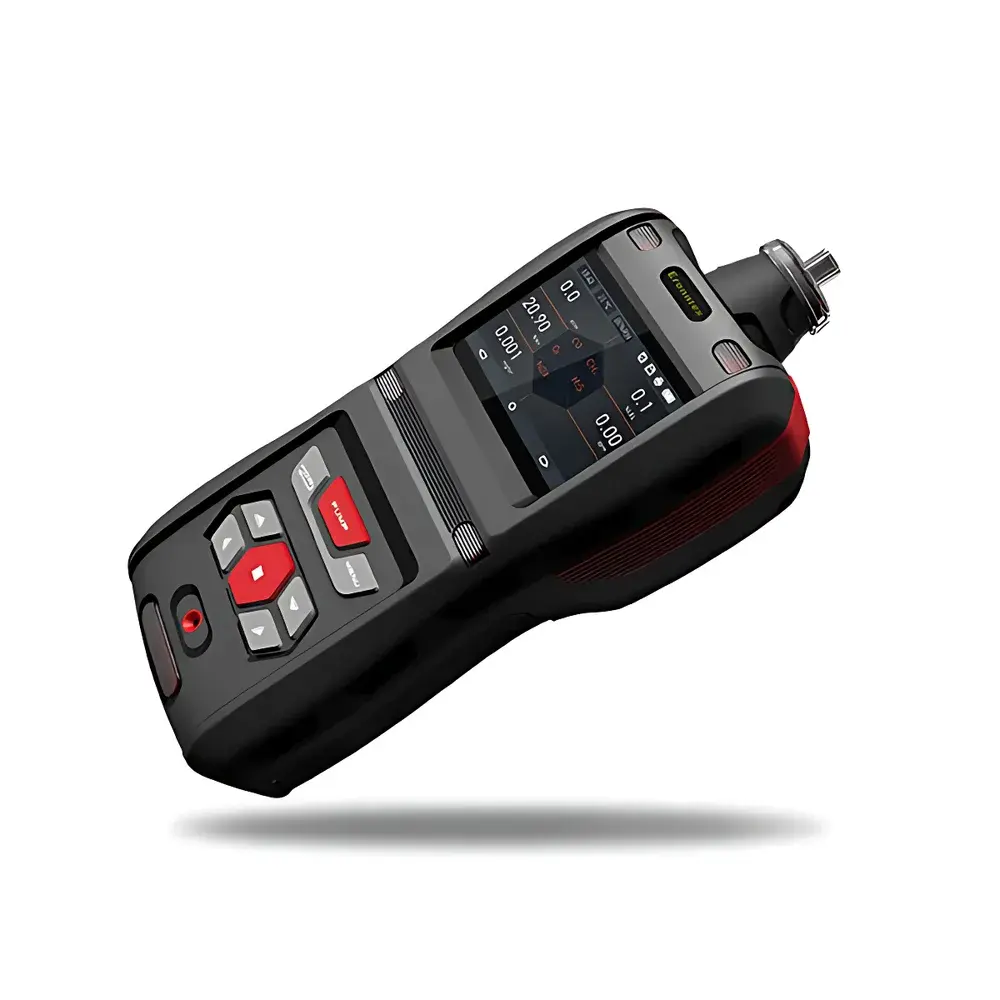
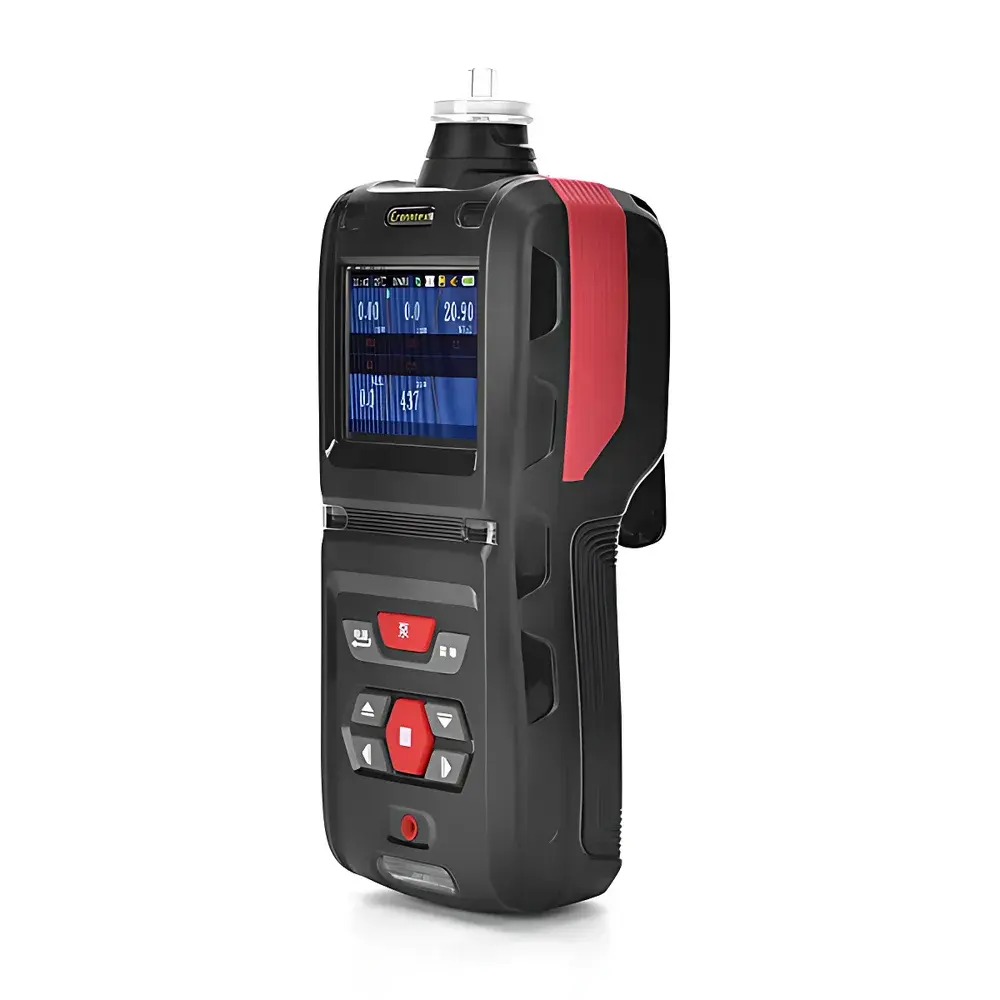
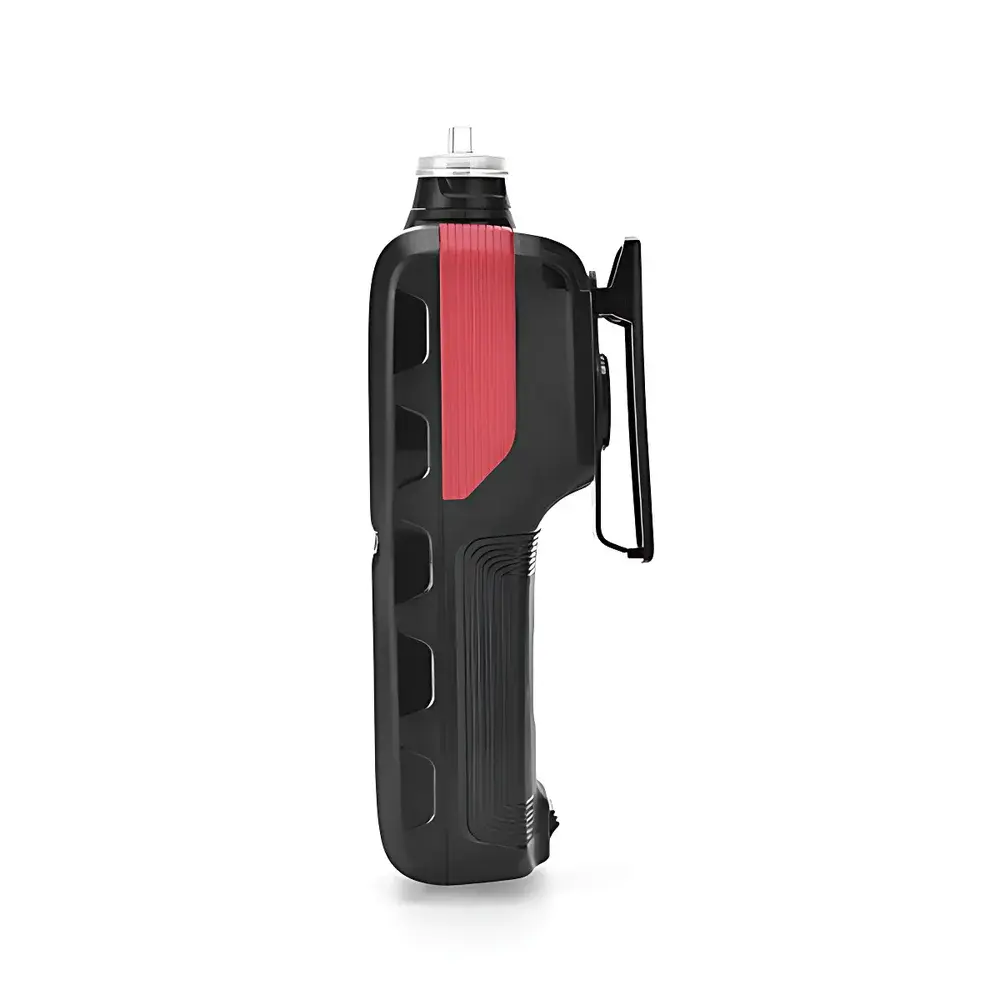
Eranntex MS500-MEK Portable Butanone (MEK) Gas Detector
| Brand | Eranntex |
|---|---|
| Model | MS500-MEK |
| Detection Principle | Electrochemical (Standard), Optional IR/PID/Catalytic/Thermal Conductivity |
| Gas Measured | Methyl Ethyl Ketone (MEK, C₄H₈O) |
| Display | 2.5" HD Color TFT Screen |
| Protection Rating | IP66 |
| Ingress Protection | Dust-tight & Powerful Water Jet Resistant |
| Explosion Protection | Intrinsically Safe (Ex ib IIB T4 Gb) |
| Operating Temperature | −40 °C to +70 °C |
| Battery | Rechargeable 6000 mAh Polymer Li-ion |
| Runtime | Up to 20 h (typical, single-gas, pump off) |
| Data Storage | 100,000 entries (expandable) |
| Communication | USB, RS232, Bluetooth (optional) |
| Sampling Method | Built-in Pump with >10 m Sampling Distance |
| Filtration | Integrated Water Vapor & Particulate Filter |
| Calibration | Multi-point Target Gas Calibration |
| Compliance | CMC Certified (China Metrology Accreditation), GB/T 34004–2017, GB 12358–2006 |
| Alarm Modes | Visual (LED/Screen), Audible (≥85 dB), Vibration, Undervoltage & Fault Indication |
| Units | ppm, mg/m³, %LEL, %Vol (auto-converted via molecular weight input) |
| Humidity & Temp Measurement | Optional Integrated Sensor (±2% RH, ±0.5 °C) |
| Software Support | PC-based Data Analysis Suite with Audit Trail, Export (CSV/XLS), Print & Trend Graphing |
Overview
The Eranntex MS500-MEK is a field-deployable, intrinsically safe portable gas detector engineered for the reliable, real-time quantification of methyl ethyl ketone (MEK, C₄H₈O) in occupational and environmental settings. MEK—a volatile organic compound widely used as a solvent in coatings, adhesives, and pharmaceutical manufacturing—poses acute inhalation hazards and flammability risks (LEL = 1.8% v/v). The MS500-MEK employs an industry-grade electrochemical sensor as standard, delivering high selectivity and stability for MEK at sub-ppm detection thresholds. Its measurement architecture conforms to the fundamental principles of amperometric gas sensing: MEK diffuses through a hydrophobic membrane into an aqueous electrolyte cell, where oxidation at the working electrode generates a current linearly proportional to concentration. Optional sensor modules—including PID (for broad VOC screening), catalytic bead (for LEL monitoring), or NDIR (for high-concentration %Vol verification)—enable multi-mode validation and cross-platform method alignment. Designed for use in confined spaces, industrial hygiene surveys, leak detection, and emergency response, the instrument operates across extreme ambient conditions (−40 °C to +70 °C) and supports direct sampling from ducts, reactors, or ambient air via its integrated suction pump and extended 10-meter sampling line.
Key Features
- Intrinsically safe circuit design certified to Ex ib IIB T4 Gb per GB 3836.4–2010, enabling safe deployment in Zone 1 hazardous areas.
- IP66-rated enclosure with dual-stage particulate and hydrophobic water-vapor filtration—validated for continuous operation in high-humidity (>95% RH) and high-dust environments.
- 2.5-inch high-resolution color TFT display with intuitive icon-driven UI; supports simultaneous real-time visualization of up to four gas channels, trend curves, and environmental parameters (temperature, humidity).
- Configurable alarm logic: low/high, TWA/STEL-weighted, interval-based, or custom threshold bands—with visual, audible (≥85 dB), and haptic alerts synchronized across all active warning states.
- Intelligent power management: 6000 mAh polymer lithium-ion battery with five-level state-of-charge indication, overvoltage/overcurrent/overtemperature protection, and hot-swap USB charging (operational during charge).
- Comprehensive data integrity framework: timestamped storage of 100,000 measurement records (expandable), automatic zero-tracking compensation, and anti-drift calibration algorithms validated against national metrological standards (GB/T 34004–2017).
Sample Compatibility & Compliance
The MS500-MEK is validated for direct measurement of MEK vapor in air, nitrogen, oxygen, and common inert background matrices. It accommodates variable sample conditions via optional accessories: high-temperature sampling probes (up to 800 °C), heated sample lines, and condensate-trap pre-conditioners for saturated or corrosive streams. All sensor modules undergo factory calibration traceable to NIM (National Institute of Metrology, China) reference standards. The device complies with Chinese national standards GB 12358–2006 (general requirements for gas detectors) and GB/T 34004–2017 (performance testing methods), and carries CMC certification (Manufacturing License for Measuring Instruments, No. CMSC2022A00123). While not FDA 21 CFR Part 11–certified out-of-box, audit trail logs (calibration history, fault events, user actions) are exportable in tamper-evident CSV format for internal GLP/GMP documentation workflows.
Software & Data Management
Data acquisition and post-processing are supported by Eranntex’s proprietary PC software suite, compatible with Windows 10/11. The application enables full bidirectional communication via USB or RS232, supporting firmware updates, sensor configuration, and alarm parameter programming. Stored datasets include concentration values, timestamps, sensor status flags, battery voltage, and environmental readings. Users may generate compliance reports with customizable headers (company name, site ID, analyst signature), export trend graphs (PNG/PDF), and apply statistical filters (e.g., “show only alarm-triggered records”). Optional Bluetooth connectivity allows wireless pairing with certified thermal printers for on-site hardcopy generation—including pass/fail determinations against preset exposure limits (e.g., OSHA PEL: 200 ppm; ACGIH TLV: 200 ppm).
Applications
- Occupational hygiene monitoring during MEK handling, transfer, or cleaning operations in paint manufacturing, printing facilities, and electronics assembly lines.
- Confined space entry verification prior to maintenance in solvent recovery units, distillation columns, or waste storage tanks.
- Leak detection along piping flanges, valve stems, and drum seals using the extended-pump sampling probe.
- Environmental compliance checks near wastewater treatment off-gas vents or landfill leachate collection systems where MEK may volatilize.
- Emergency response triage following solvent spills or container ruptures—providing immediate hazard classification (IDLH, LEL%, toxicity band).
- Validation of local exhaust ventilation (LEV) system performance through upstream/downstream concentration profiling.
FAQ
What is the default detection principle for MEK on the MS500-MEK?
Electrochemical sensing is the standard configuration, optimized for specificity, low-power operation, and ppm-range sensitivity.
Can the instrument measure other gases simultaneously?
Yes—it supports up to five sensor channels; additional gases (e.g., H₂S, CO, O₂, CH₄) may be added via modular sensor bays with appropriate cross-interference compensation.
Is calibration traceable to international standards?
Factory calibrations are traceable to NIM-certified reference gases; end-user bump tests and span adjustments follow ISO 17025–aligned procedures documented in the calibration log.
Does the device support data encryption or user access control?
No hardware-level encryption is implemented; however, password-protected configuration menus and immutable audit trails meet baseline requirements for internal QA/QC governance.
What maintenance intervals are recommended for field use?
Sensor lifespan averages 24 months under normal conditions; filter elements require quarterly replacement in dusty/humid environments; full functional verification is advised every 6 months or after exposure to saturation events.







