
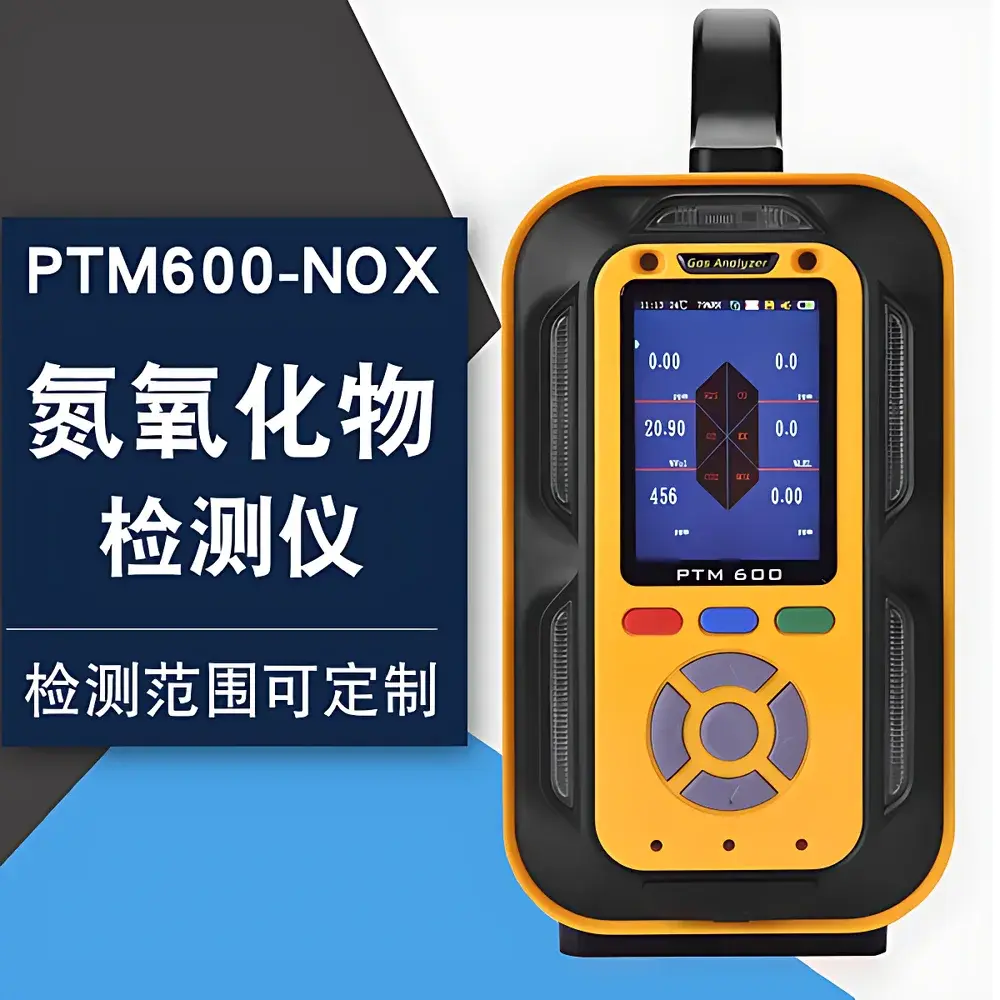
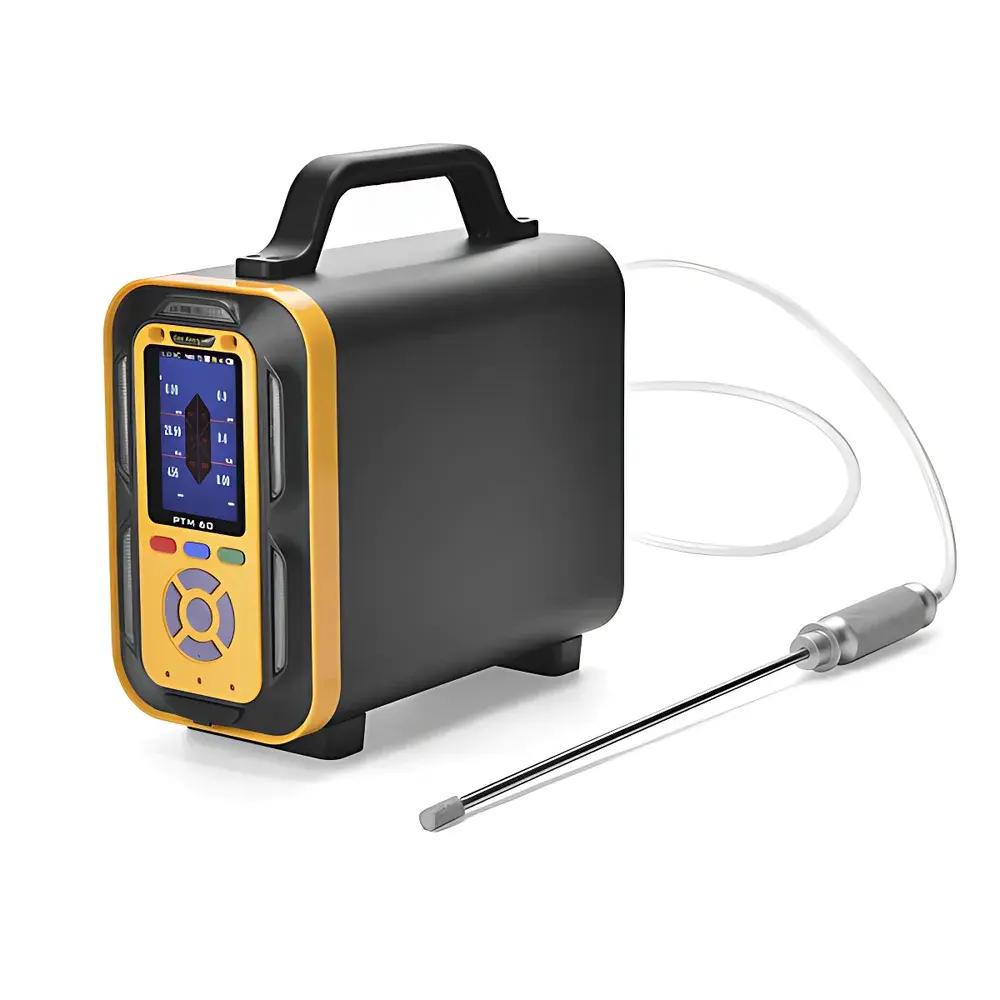
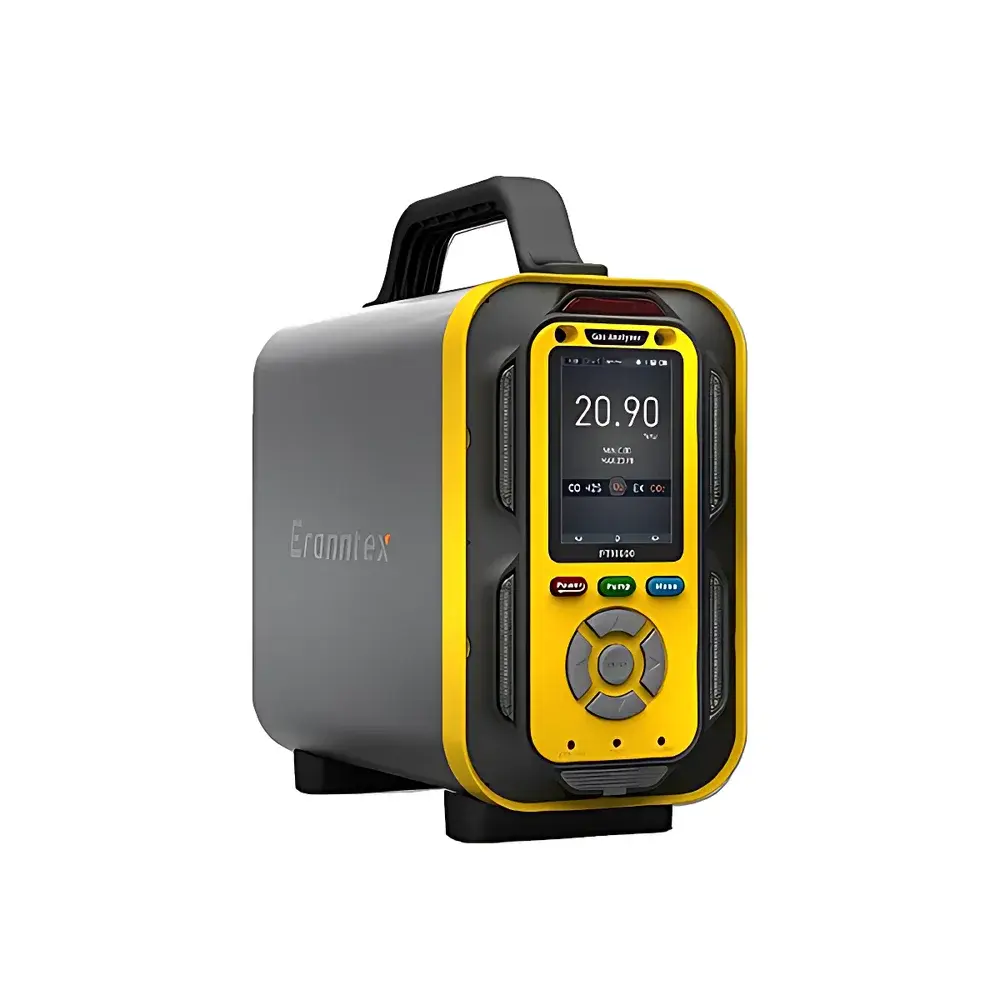
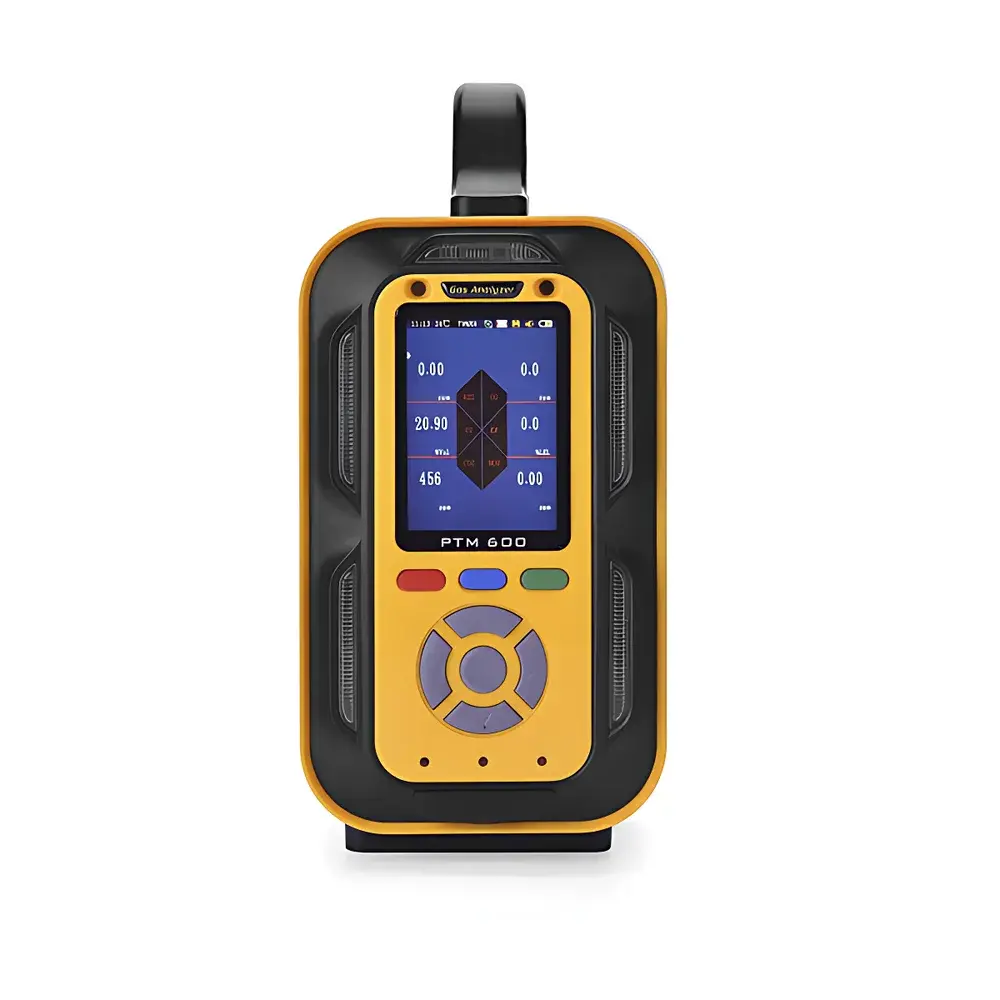
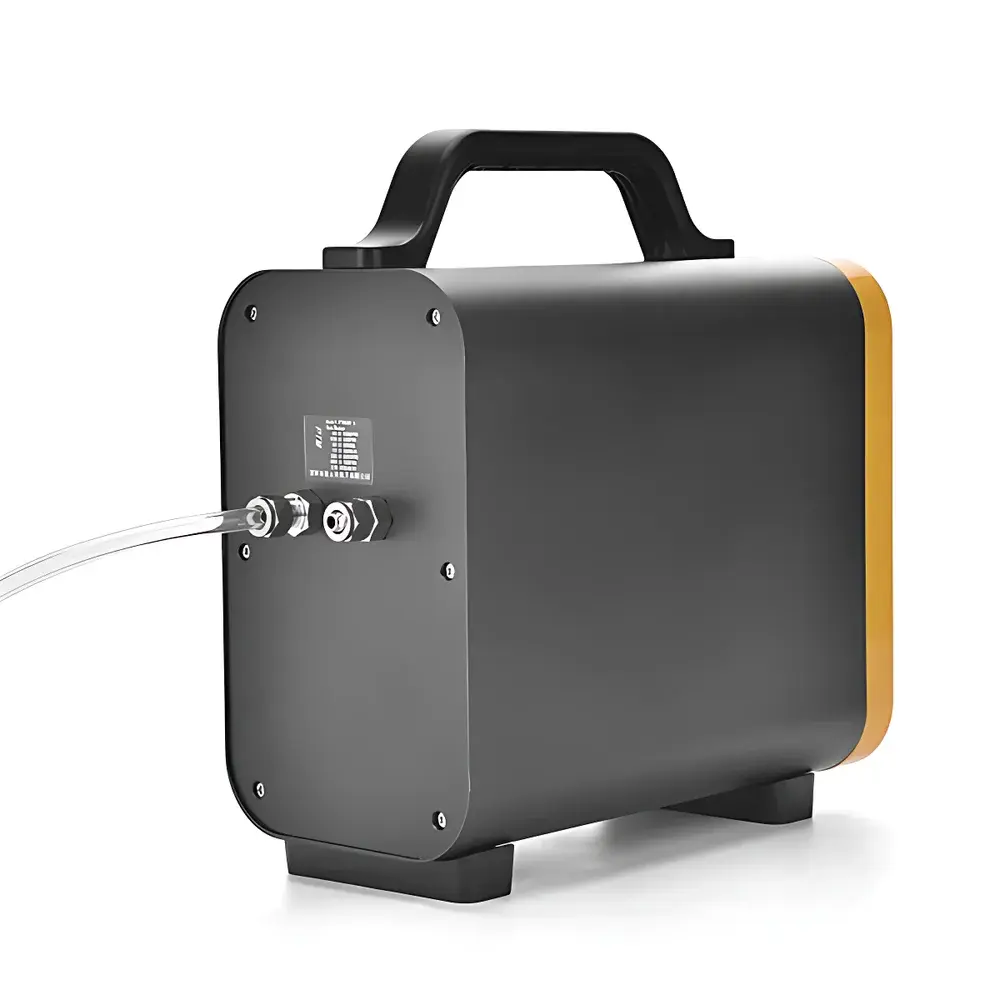
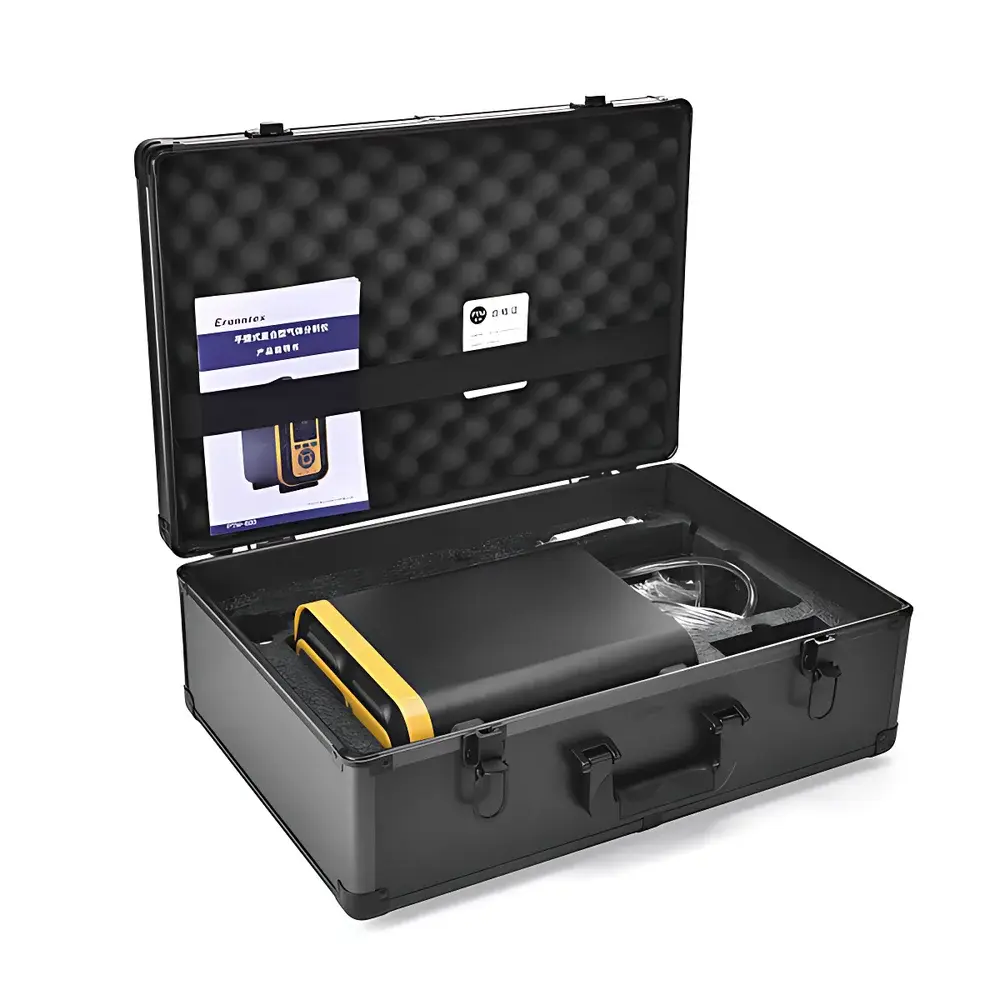
Eranntex PTM600-NOX Portable Nitrogen Oxides (NOₓ) Analyzer
| Brand | Eranntex |
|---|---|
| Model | PTM600-NOX |
| Detection Principle | Electrochemical (standard for NOₓ), optional IR/PID/Catalytic Bead/Thermal Conductivity |
| Detection Range | 0–100 ppm (NOₓ, standard), extendable to 0–5000 ppm or 0–100% Vol |
| Resolution | 0.01 ppm (0–100 ppm), 0.1 ppm (0–1000 ppm), 1 ppm (>1000 ppm) |
| Accuracy | ≤±2% FS |
| Response Time (T90) | ≤20 s |
| Operating Temperature | −40 °C to +70 °C |
| IP Rating | IP66 |
| Intrinsic Safety Certification | Ex ia II C T4 |
| Battery | 10,800 mAh Li-polymer, continuous operation >12 h |
| Display | 3.5″ 320×240 color TFT LCD |
| Data Storage | 100,000 records (expandable via SD/UVC/USB) |
| Communication | Bluetooth v5.0, USB-C, RS232 |
| Pump Flow Rate | 800 mL/min |
| Weight | 2.5 kg |
| Dimensions | 255 × 210 × 125 mm (L×H×W) |
Overview
The Eranntex PTM600-NOX is a field-deployable, intrinsically safe portable analyzer engineered for quantitative measurement of nitrogen oxides (NOₓ)—primarily nitric oxide (NO) and nitrogen dioxide (NO₂)—in ambient air, flue gas, confined spaces, and industrial process streams. It employs high-stability electrochemical sensing as the default detection principle for NOₓ, delivering trace-level sensitivity (down to 0.01 ppm) with robust cross-interference rejection in complex matrices. Optional sensor modules—including nondispersive infrared (NDIR), photoionization detection (PID), catalytic bead, and thermal conductivity—enable configurable multi-gas analysis across over 500 target compounds. Designed for regulatory-grade environmental monitoring and occupational health compliance, the PTM600-NOX adheres to international performance benchmarks for response linearity (≤±2% FS), repeatability (≤±2%), and measurement uncertainty (≤±2%). Its architecture integrates real-time temperature and humidity compensation using a calibrated capacitive digital hygrometer (±3% RH, −40–70 °C), ensuring metrological integrity across extreme operational environments.
Key Features
- Intrinsically safe design certified to Ex ia II C T4, compliant with IEC 60079-0/-11 for use in Zone 0/1 hazardous areas.
- IP66-rated enclosure with integrated hydrophobic particulate and moisture filtration, enabling reliable operation in rain, dust, and high-humidity conditions.
- Integrated sampling pump (800 mL/min) with 10-meter aspiration capability; optional high-temperature probe (up to 1300 °C) and active pre-conditioning modules for hot/wet/dirty gas streams.
- 3.5-inch high-resolution color TFT display supporting triple viewing modes: quad-gas simultaneous readout, large-font single-channel cycling, and real-time concentration trend curves.
- Multi-parameter environmental compensation: automatic zero tracking, multi-point span calibration, and algorithmic temperature/humidity correction applied per sensor channel.
- Comprehensive data governance: 100,000-point onboard storage (expandable via SD card or UVC), timestamped logging with audit-ready metadata (calibration history, fault events, battery status).
- Dual power architecture: 10,800 mAh rechargeable Li-polymer battery with five-level state-of-charge indication, overvoltage/overcurrent/thermal protection, and hot-swap USB-C charging (operational during charge).
Sample Compatibility & Compliance
The PTM600-NOX supports direct analysis of gaseous samples from ambient air, ducts, stack emissions, and inert background matrices (e.g., N₂ or O₂). It accommodates variable sample temperatures (−40 °C to +70 °C standard; up to 1300 °C with optional high-temp probe) and relative humidity (0–99% RH). Sensor configurations are validated per ISO 12039 (stationary source NOₓ measurement), ASTM D6522 (NOₓ by chemiluminescence reference), and EN 14181 (QAL2/QAL3 system validation requirements). The device meets China’s CMC metrological certification standards and supports GLP-compliant workflows through encrypted calibration logs, user-accessible audit trails, and tamper-evident firmware versioning. All electrical interfaces comply with EMC Directive 2014/30/EU and Low Voltage Directive 2014/35/EU.
Software & Data Management
The analyzer operates on embedded firmware with dual-language UI (English/Chinese) and intuitive icon-driven navigation. Data export is supported via USB-C, Bluetooth 5.0, and RS232 protocols—with automatic interface detection and plug-and-play driver compatibility. Included PC software enables full spectral analysis, customizable report generation (PDF/CSV), statistical trending (min/max/avg/std dev), and regulatory alignment (e.g., EPA Method 7E, ISO 9001 calibration documentation). Optional features include remote firmware updates, scheduled data dumps, selective record recovery, and 21 CFR Part 11–compliant electronic signatures for QA/QC sign-off. All stored entries retain immutable timestamps, sensor IDs, and environmental context (T/RH), satisfying ISO/IEC 17025 documentation requirements.
Applications
- Stack emission monitoring per local environmental regulations (e.g., China’s GB 13223, EU’s IED 2010/75/EU)
- Industrial hygiene assessments in chemical manufacturing, semiconductor fabrication, and metal processing facilities
- Indoor air quality (IAQ) verification in hospitals, laboratories, and HVAC commissioning
- Leak detection and source identification during refinery turnarounds or pipeline integrity testing
- Field validation of fixed continuous emission monitoring systems (CEMS) and ambient air quality stations
- Research-grade NOₓ kinetics studies under controlled atmospheric simulation chambers
FAQ
What detection principle is used for NOₓ measurement by default?
Electrochemical sensing is the standard configuration for NOₓ, optimized for selectivity, low-power operation, and sub-ppm resolution in ambient and low-concentration applications.
Can the instrument measure NO and NO₂ separately?
Yes—dual-channel electrochemical modules allow independent quantification of NO and NO₂; alternatively, a single NOₓ sensor reports total reactive nitrogen oxides as NO₂-equivalent.
Is high-temperature sampling supported out of the box?
No—the base unit is rated to +70 °C inlet temperature; high-temperature capability requires the optional cooled probe assembly with ceramic filtration and active condensate management.
Does the device support automated calibration verification?
It provides guided manual calibration with multi-point span checks and zero drift alerts; fully automated calibration requires external gas standards and optional relay-controlled solenoid valve integration.
How is data integrity ensured during long-term unattended deployment?
All measurements are time-stamped with internal RTC, cryptographically signed during export, and backed by redundant storage buffers—ensuring chain-of-custody compliance for regulatory submissions.
Related Products







