ErgoVR Industrial Design & User Experience Virtual Reality Laboratory
| Brand | Kingfar |
|---|---|
| Origin | Imported |
| Manufacturer Type | Authorized Distributor |
| Pricing | Available Upon Request |
Overview
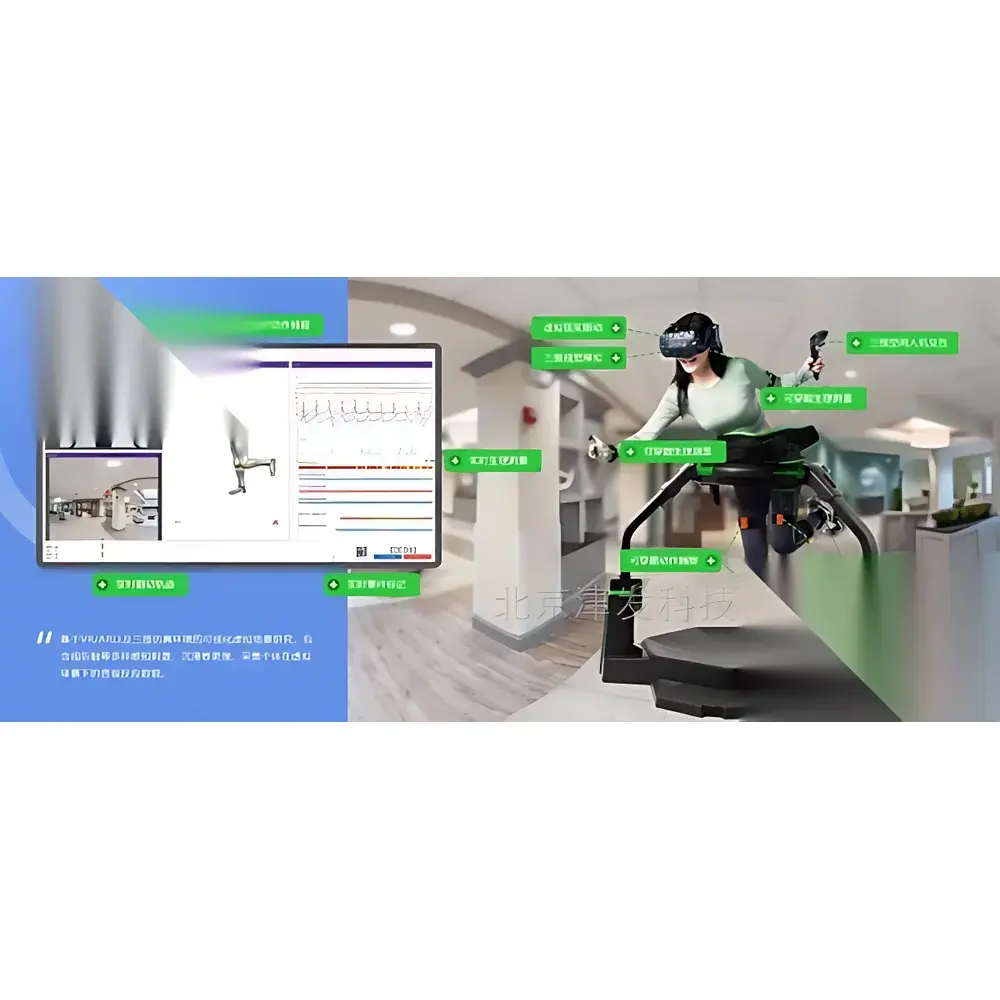
The ErgoVR Industrial Design & User Experience Virtual Reality Laboratory is a turnkey research infrastructure engineered for evidence-based human-centered design and immersive UX evaluation. Unlike traditional lab-based VR setups, this system integrates high-fidelity virtual environments with synchronized multimodal biometric and behavioral sensing—enabling rigorous experimental control while preserving ecological validity. At its core, the platform leverages real-time, wireless physiological telemetry (e.g., EEG, ECG, GSR), wearable eye-tracking, motion capture, facial expression analysis, and environmental sensor fusion—all time-locked to VR stimulus delivery via the ErgoLAB Human-Machine-Environment Synchronization Cloud Platform. This architecture supports both controlled laboratory studies and field-deployable usability testing under realistic task conditions, making it suitable for ISO 9241-compliant interface validation, automotive HMI prototyping, medical device interaction assessment, and consumer product ergonomics research.
Key Features
- Wireless, low-latency multimodal data acquisition: Supports concurrent streaming of EEG/fNIRS, electrodermal activity (EDA), heart rate variability (HRV), pupillometry, facial electromyography (fEMG), and 6DoF motion tracking without tethering constraints.
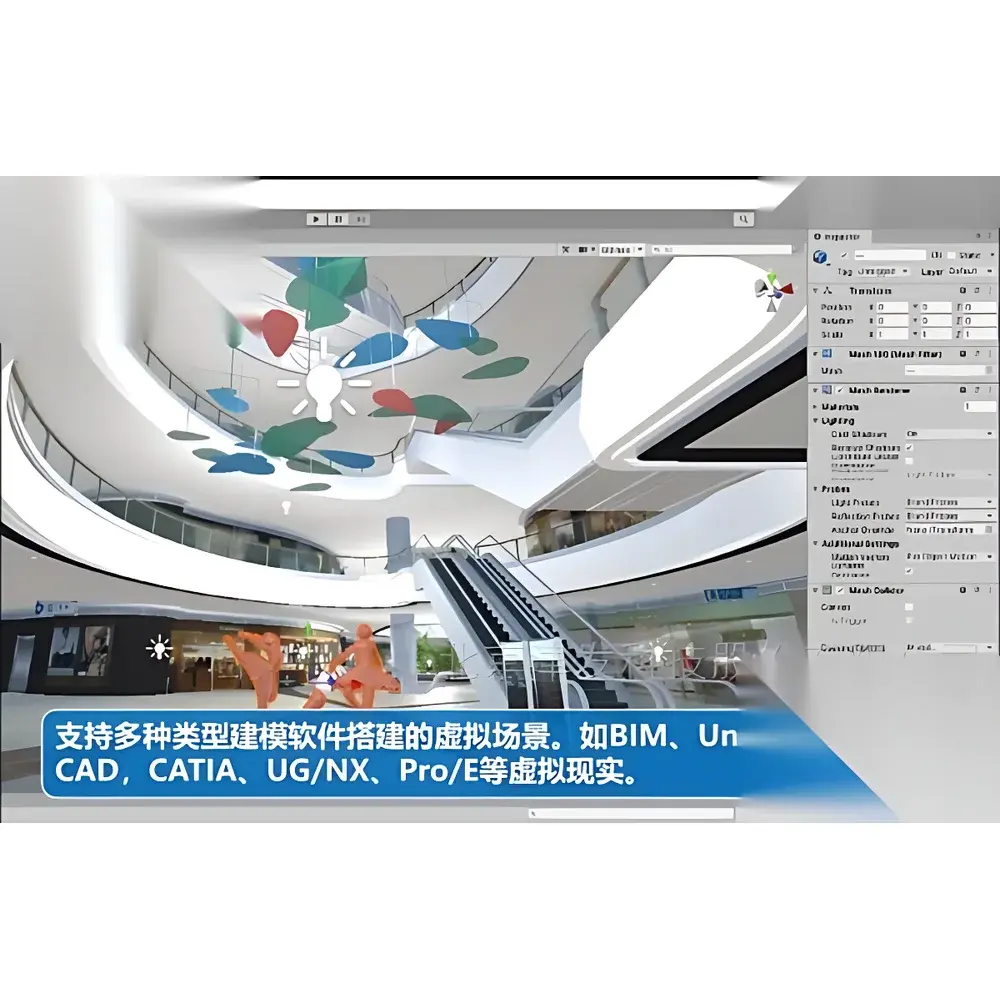
- Real-time VR stimulus integration: Compatible with Unity- and Unreal Engine–based virtual prototypes; enables dynamic stimulus triggering and gaze-contingent rendering synchronized to biometric event markers.
- Cloud-based synchronization engine: Achieves sub-50 ms temporal alignment across heterogeneous data streams (video, audio, VR pose, biosignals, environmental metrics) using hardware timestamping and network time protocol (NTP)-refined clock drift compensation.
- Modular experimental design framework: Includes preconfigured paradigms for NASA-TLX, SUS, UEQ, and ISO/IEC 25010-aligned usability metrics, plus support for custom behavioral tasks (e.g., visual search, decision latency, error recovery trials).
- GLP-compliant data governance: All raw signals, processed features, and metadata are stored in FAIR-compliant HDF5 containers with embedded audit trails, user authentication logs, and version-controlled analysis pipelines.
Sample Compatibility & Compliance
The ErgoVR Laboratory accommodates diverse participant cohorts—including industrial end-users, elderly populations, and individuals with motor or sensory impairments—through adjustable VR headset mounting, adaptive input modalities (voice, gaze, gesture), and customizable calibration protocols. It complies with key international standards for human factors research, including ISO 13407 (Human-centred design processes), ISO 9241-210 (Ergonomics of human-system interaction), and ASTM F2500 (Standard Practice for Evaluating Virtual Reality Systems). Data handling procedures align with GDPR Article 32 (security of processing) and support FDA 21 CFR Part 11 readiness through role-based access control, electronic signatures, and immutable audit logs.
Software & Data Management
The ErgoLAB Synchronization Cloud Platform serves as the central analytical hub, offering integrated modules for signal preprocessing (bandpass filtering, artifact rejection, ICA decomposition), feature extraction (fixation duration, saccade amplitude, spectral power bands, HRV time-frequency indices), and multivariate statistical modeling (mixed-effects regression, cluster-based permutation testing, canonical correlation analysis). All outputs—including annotated timelines, heatmaps, gaze-path overlays, and cohort-level comparative dashboards—are exportable in CSV, MATLAB .mat, and BIDS-compatible formats. The platform supports API-driven integration with Jupyter notebooks, RStudio, and Python-based ML workflows (scikit-learn, MNE-Python), and offers optional white-label deployment for enterprise clients requiring on-premises infrastructure or HIPAA/FDA audit readiness.
Applications
- Automotive UX validation: Assess driver attention allocation, cognitive load during ADAS interaction, and HUD information salience under simulated driving scenarios.
- Medical device usability testing: Evaluate workflow interruption risks, error-prone interactions, and training effectiveness for surgical navigation systems or infusion pumps.
- Consumer electronics interface optimization: Quantify first-use success rates, mental model alignment, and emotional valence shifts during smartphone or smart home controller interaction.
- Ergonomic workstation design: Measure biomechanical strain, visual fatigue, and postural adaptation during extended VR-based assembly task simulations.
- Accessibility research: Benchmark performance and subjective comfort of voice- or gaze-controlled interfaces for users with upper-limb mobility limitations.
FAQ
Is the system compatible with existing VR development pipelines?
Yes—the platform provides native SDKs for Unity and Unreal Engine, supporting both standalone builds and editor-integrated debugging with live biometric overlay.
Can data be exported for third-party statistical analysis?
All raw and processed datasets are exportable in open, non-proprietary formats (CSV, HDF5, BIDS), including full metadata schemas and event annotation files.
Does the solution support multi-site collaborative studies?
The cloud architecture enables secure cross-institutional data sharing via encrypted project workspaces, with configurable permissions and federated analysis capabilities.
What level of technical support is provided post-installation?
Kingfar offers comprehensive implementation services—including on-site system validation, researcher training, SOP documentation, and annual GLP/GMP compliance review support.
Are customization options available for domain-specific research requirements?
Yes—custom module development, proprietary algorithm integration, and regulatory submission package preparation (e.g., FDA 510(k) human factors reports) are available under formal service agreements.