
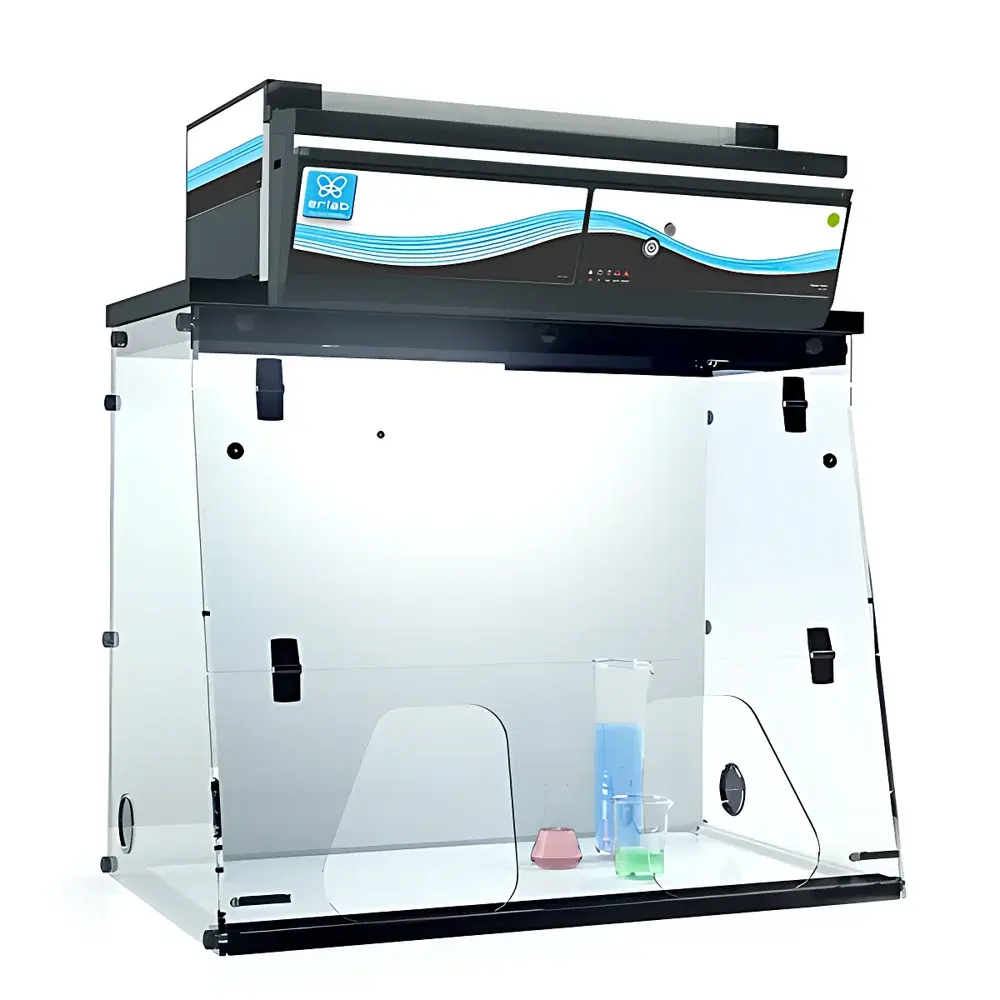
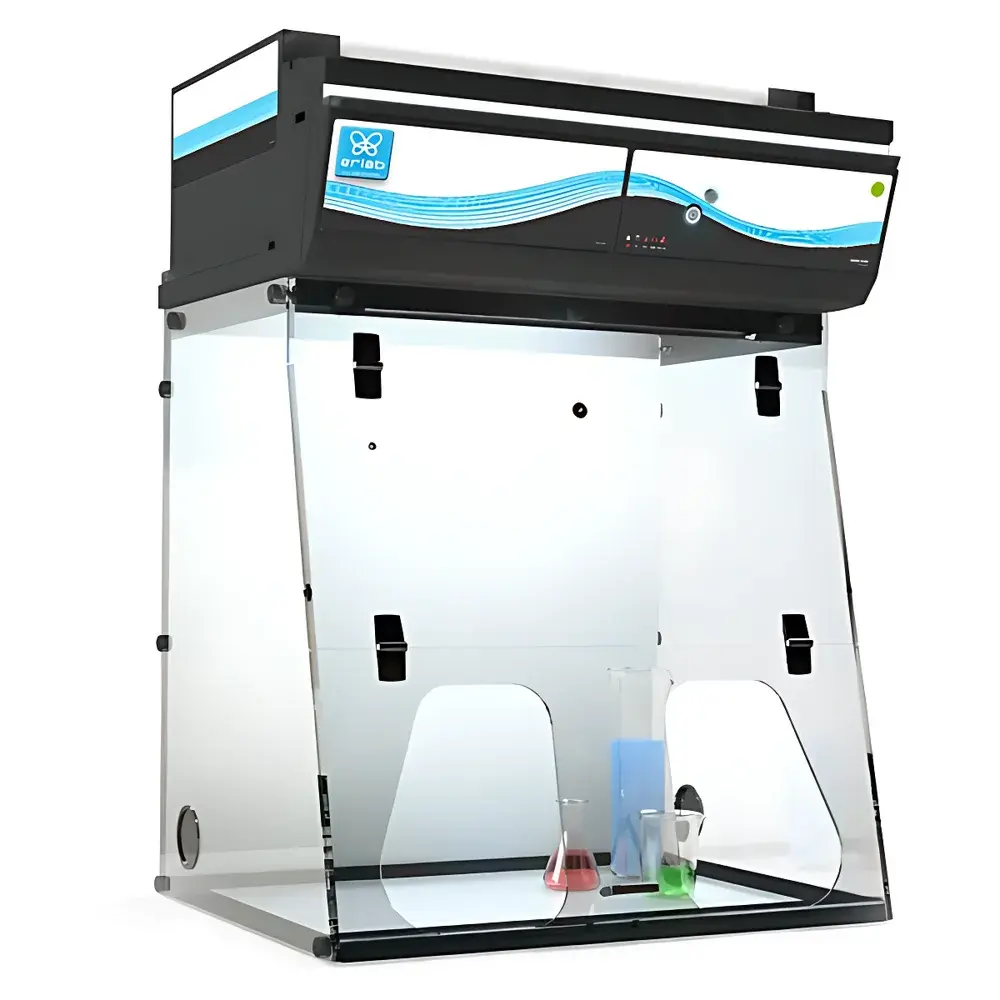
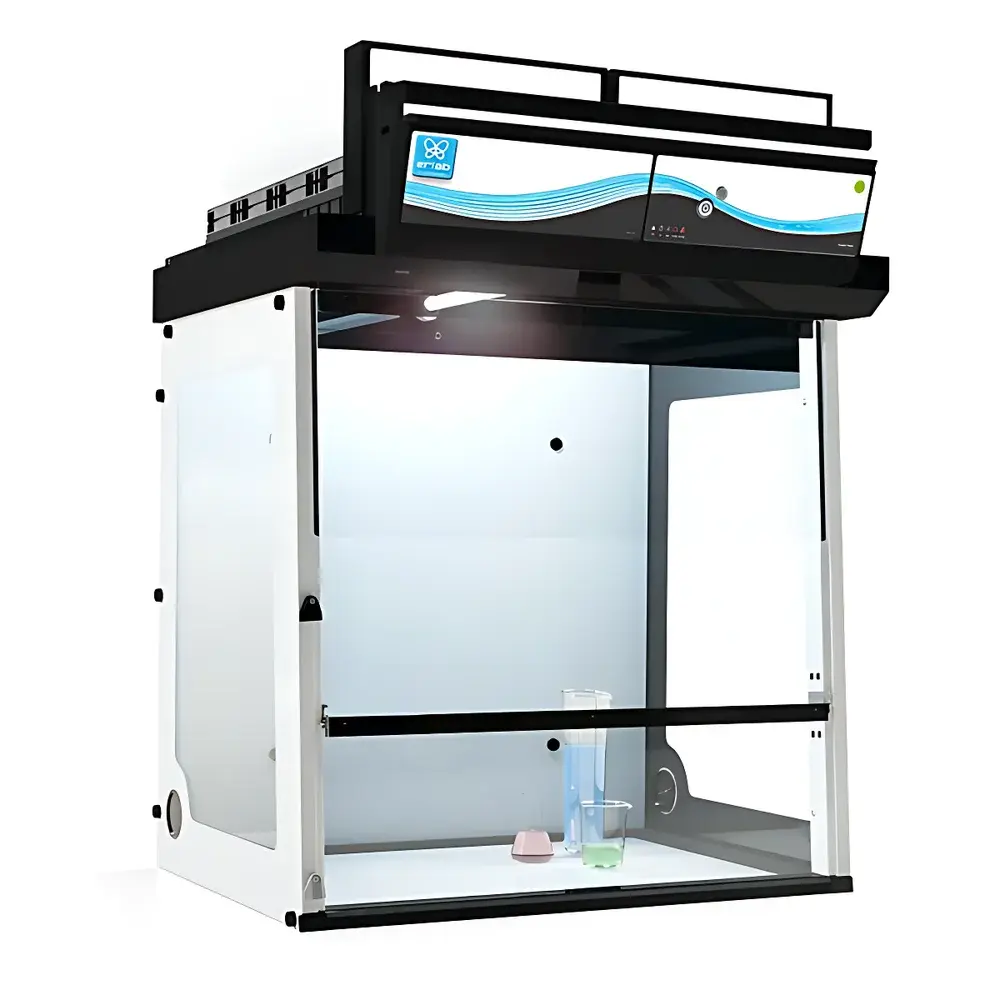
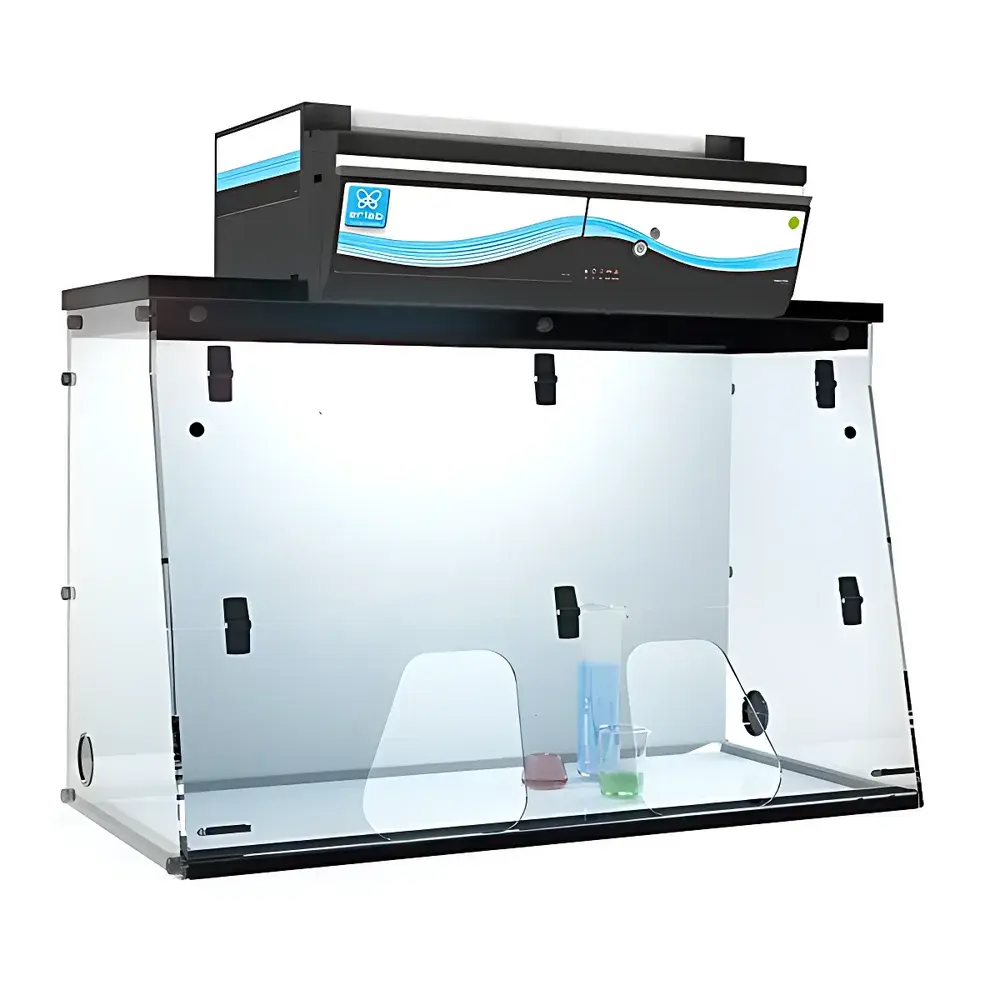
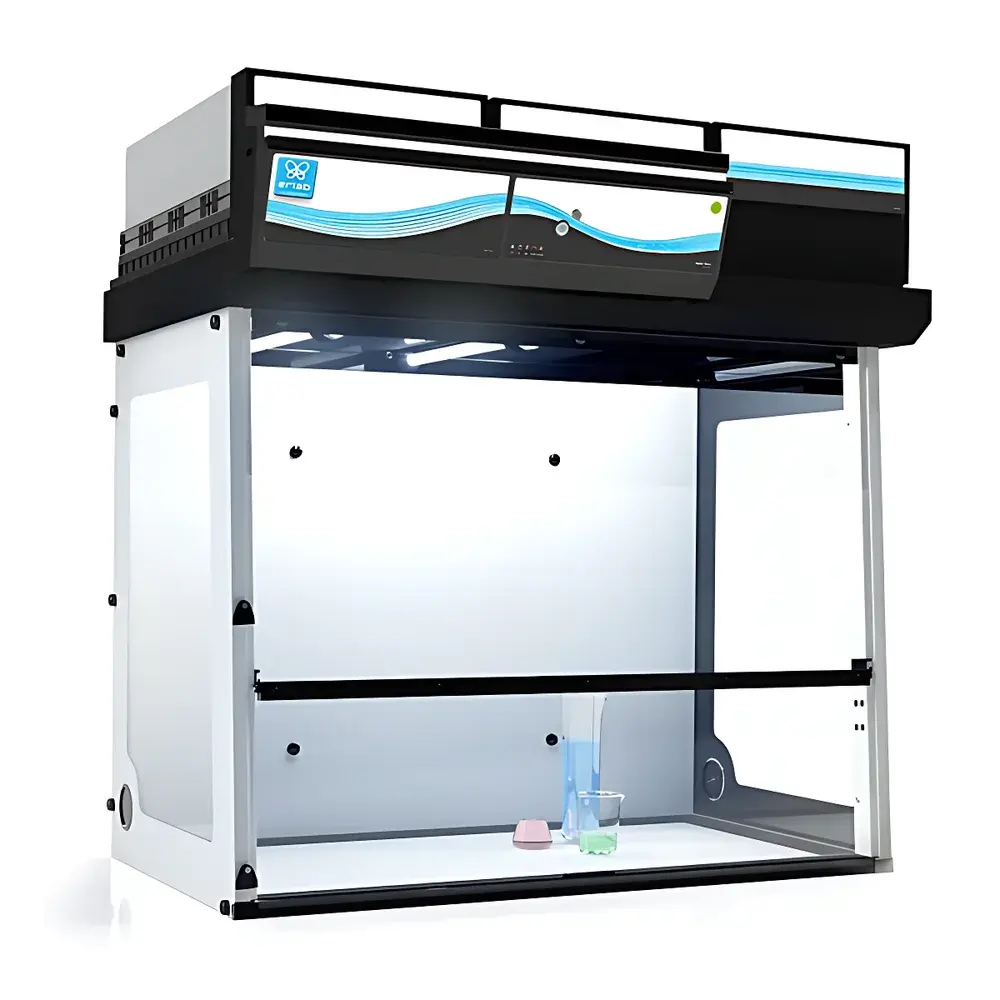
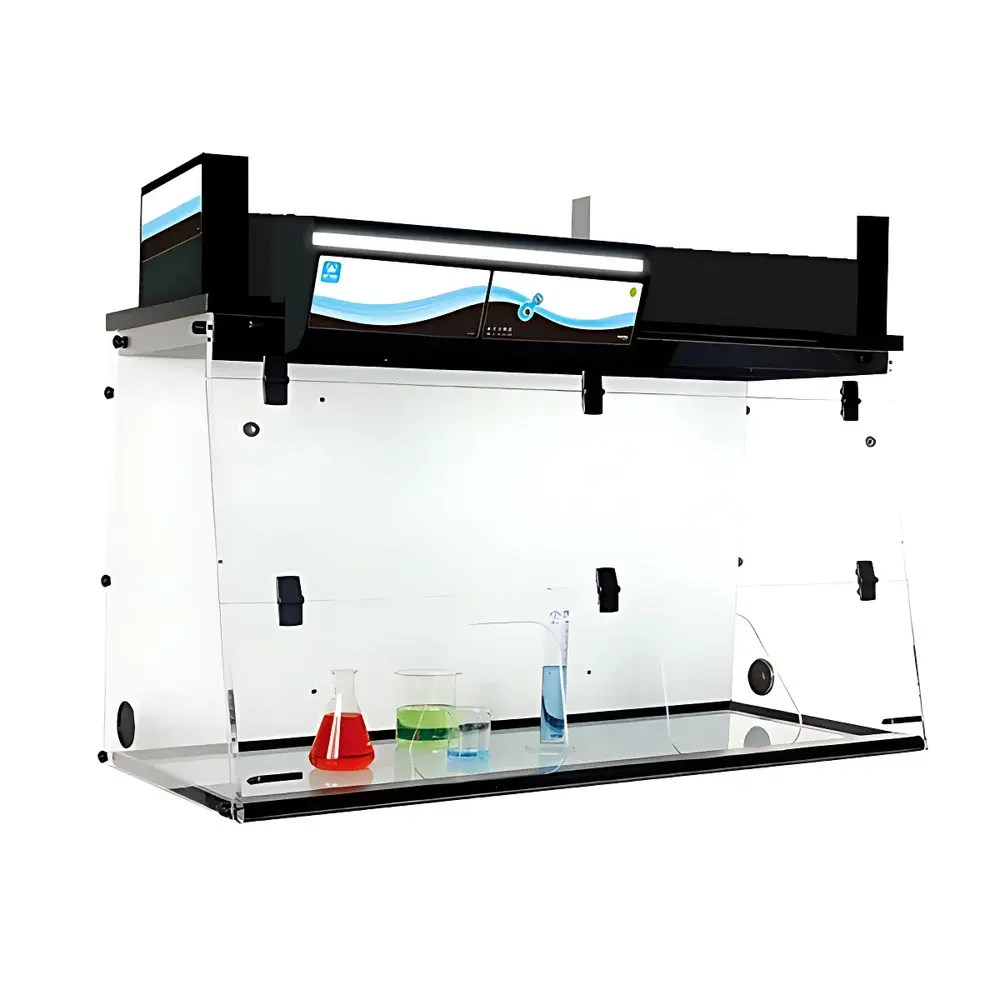
Erlab Captair 391 Smart Ductless Fume Hood
| Brand | Erlab |
|---|---|
| Origin | Jiangsu, China |
| Manufacturer Type | Authorized Distributor |
| Product Category | Domestic |
| Model | Captair 391 Smart |
| Price Range | USD 7,000–14,000 (FOB) |
| Cabinet Material | Polypropylene (PP) |
| Design Type | Ductless (Recirculating) Fume Hood |
| Average Face Velocity | 0.4–0.6 m/s |
| Airflow Volume | 220 m³/h |
| Lighting | Integrated LED Tube |
| Rated Power | 65 W |
| Net Weight | 36.3 kg |
Overview
The Erlab Captair 391 Smart is a high-performance ductless fume hood engineered for precision containment and operator safety in modern chemical, pharmaceutical, and academic laboratories. Unlike traditional ducted hoods that rely on building exhaust infrastructure, the Captair 391 Smart employs a closed-loop recirculation system with multi-stage filtration—comprising pre-filters, activated carbon media, and optional HEPA or molecular filters—to capture and neutralize airborne contaminants at the source. Its operation is based on aerodynamic containment principles validated by face velocity profiling and tracer gas testing (e.g., SF₆), ensuring consistent inward airflow across the work surface. Designed to meet stringent international performance benchmarks—including JG/T 385–2012 (China), ANSI Z9.5–2012 (USA), and AFNOR NF X15-211 (France, Class 1 & 2)—the unit delivers certified protection for low-to-moderate volatility chemicals, including organic solvents, weak acids, and basic reagents. With no external ducting required, it eliminates architectural constraints and reduces commissioning time significantly.
Key Features
- Self-contained recirculating architecture: No connection to central HVAC or roof-mounted exhaust systems required.
- Polypropylene (PP) cabinet construction: Chemically resistant, non-corrosive, and compliant with ISO 15190:2020 laboratory safety requirements for material compatibility.
- Intelligent airflow monitoring: Real-time face velocity display with audible/visual alarms if velocity falls outside the 0.4–0.6 m/s operational envelope.
- Energy-efficient operation: 65 W nominal power draw supports continuous 24/7 use while maintaining <1.2 kWh/day energy consumption under standard duty cycles.
- Modular mobility: Integrated dual-locking casters (two swivel, two rigid) enable repositioning without tools; load-rated for 50 kg static capacity.
- LED lighting system: 1200 lux uniform illumination at work surface, flicker-free, with IP20-rated housing and 50,000-hour rated lifetime.
Sample Compatibility & Compliance
The Captair 391 Smart is validated for use with substances classified under GHS Categories 3–4 for acute toxicity and skin/eye irritation, as well as volatile organic compounds (VOCs) with boiling points >40 °C and vapor pressures <10 mmHg at 20 °C. It is not intended for perchloric acid, hydrofluoric acid, radioactive isotopes, or nanoparticle synthesis. Filtration efficacy is verified per EN 14175-3:2022 for ductless hoods, with breakthrough testing conducted using standardized challenge agents (e.g., acetone, methanol, formaldehyde). Full compliance documentation—including test reports, filter certification (ISO 16890:2016 for particulate filters; ASTM D5212 for carbon adsorption capacity), and conformity declarations—is provided with each unit shipment. The system supports GLP/GMP-aligned usage through configurable audit logs and user-access controls when integrated with Erlab’s SmartLink software platform.
Software & Data Management
The Captair 391 Smart integrates with Erlab’s SmartLink 3.0 cloud-connected interface via embedded Wi-Fi or Ethernet. This enables remote monitoring of filter saturation status (via pressure differential sensors), real-time face velocity trends, runtime hours, and alarm history. All data are timestamped and stored locally for ≥12 months, with optional export to CSV or integration into LIMS environments via RESTful API. Audit trails comply with FDA 21 CFR Part 11 requirements when configured with role-based authentication and electronic signature protocols. Filter replacement reminders are triggered automatically upon reaching 90% saturation threshold or after 12 months of operation—whichever occurs first—ensuring adherence to ISO/IEC 17025:2017 clause 6.4.5 on equipment maintenance scheduling.
Applications
This unit serves routine applications requiring localized vapor control without infrastructure modification: analytical sample preparation (e.g., HPLC vial handling, titration, gravimetric analysis), small-scale synthesis (≤50 mL reactions), reagent dispensing, powder weighing (with optional anti-static PP liner), and educational demonstrations. Its compact footprint (W714 × D560 × H1150 mm) and lightweight design make it suitable for satellite labs, mobile research units, cleanroom-adjacent prep areas, and retrofit installations where structural duct penetration is prohibited. In multi-user facilities, its plug-and-play deployment accelerates lab setup timelines by an average of 6–8 weeks versus ducted alternatives.
FAQ
What types of chemicals can be safely used in the Captair 391 Smart?
It is certified for low-hazard organic solvents (e.g., ethanol, acetone, ethyl acetate), dilute aqueous solutions (pH 2–12), and low-volatility bases/acids. High-boiling-point solvents (>150 °C), halogenated compounds, and hydrogen sulfide require custom filtration validation.
How often must the filters be replaced?
Standard carbon filters require replacement every 12 months or after 600 operating hours—whichever comes first—based on usage intensity and contaminant profile. Pre-filters should be inspected monthly and cleaned or replaced quarterly.
Does the unit require annual third-party certification?
Yes. Per ANSI Z9.5–2012 Section 7.3.2, ductless hoods must undergo annual performance verification—including face velocity mapping, tracer gas containment testing, and filter integrity checks—by an accredited laboratory or Erlab-certified service technician.
Can the Captair 391 Smart be integrated into a building management system (BMS)?
Yes, via Modbus TCP or BACnet/IP gateways when deployed with the optional SmartLink Gateway Module (SKU: SL-GW-MB). Integration supports centralized alarm notification and energy consumption reporting.
Is the polypropylene cabinet resistant to UV degradation during long-term LED exposure?
Yes. The PP formulation includes HALS (hindered amine light stabilizers) and UV absorbers meeting ISO 4892-3:2016 cyclic UV/weathering specifications, ensuring no embrittlement or discoloration over 5+ years of continuous operation.



