
Erlab Captair Smart Instrument Enclosure – Ductless Fume Hood for Analytical Instrument Containment
| Brand | Erlab |
|---|---|
| Origin | Jiangsu, China |
| Manufacturer Type | Authorized Distributor |
| Country of Origin | China |
| Model | Captair Smart Instrument Enclosure |
| Price Range | USD 7,000–14,000 (FOB) |
| Construction | Fully Steel Cabinet |
| Ventilation Type | Ductless (Recirculating) |
| Airflow Capacity | 220–880 m³/h (configurable) |
| Rated Power | 65–300 W (configurable) |
Overview
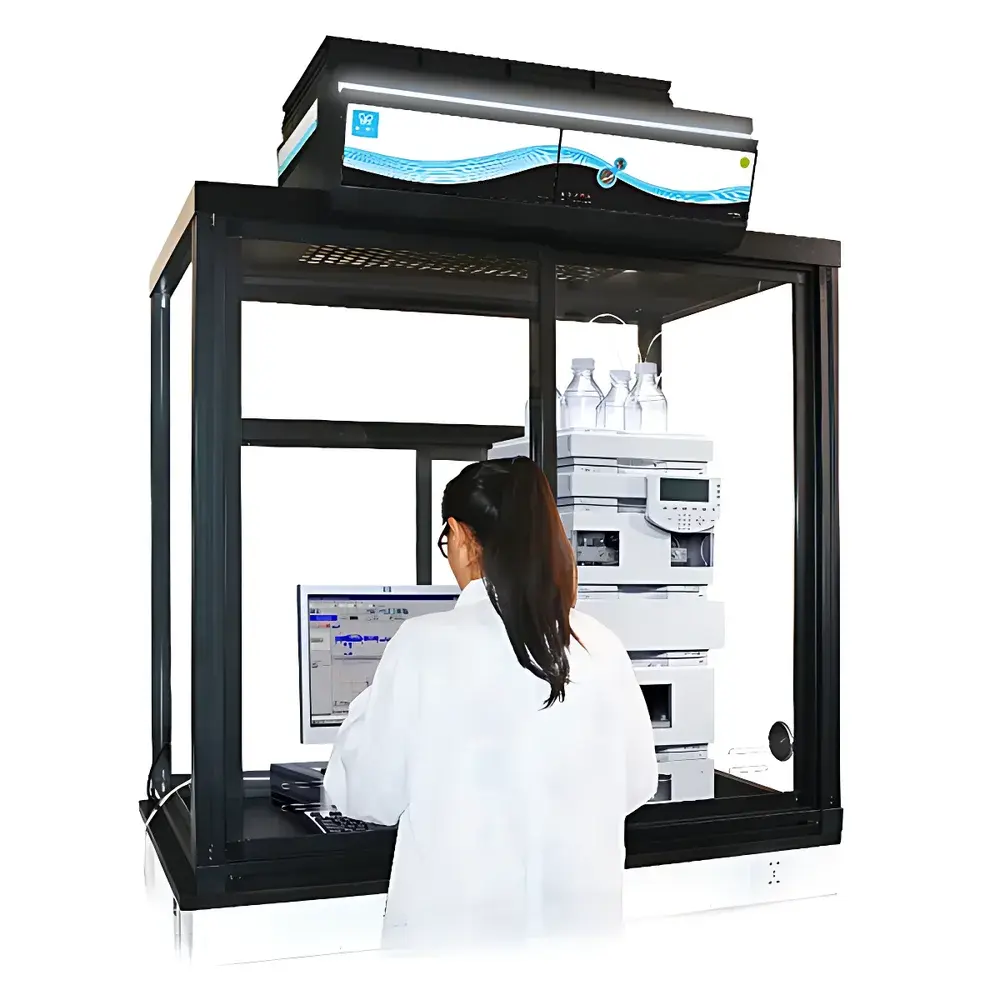
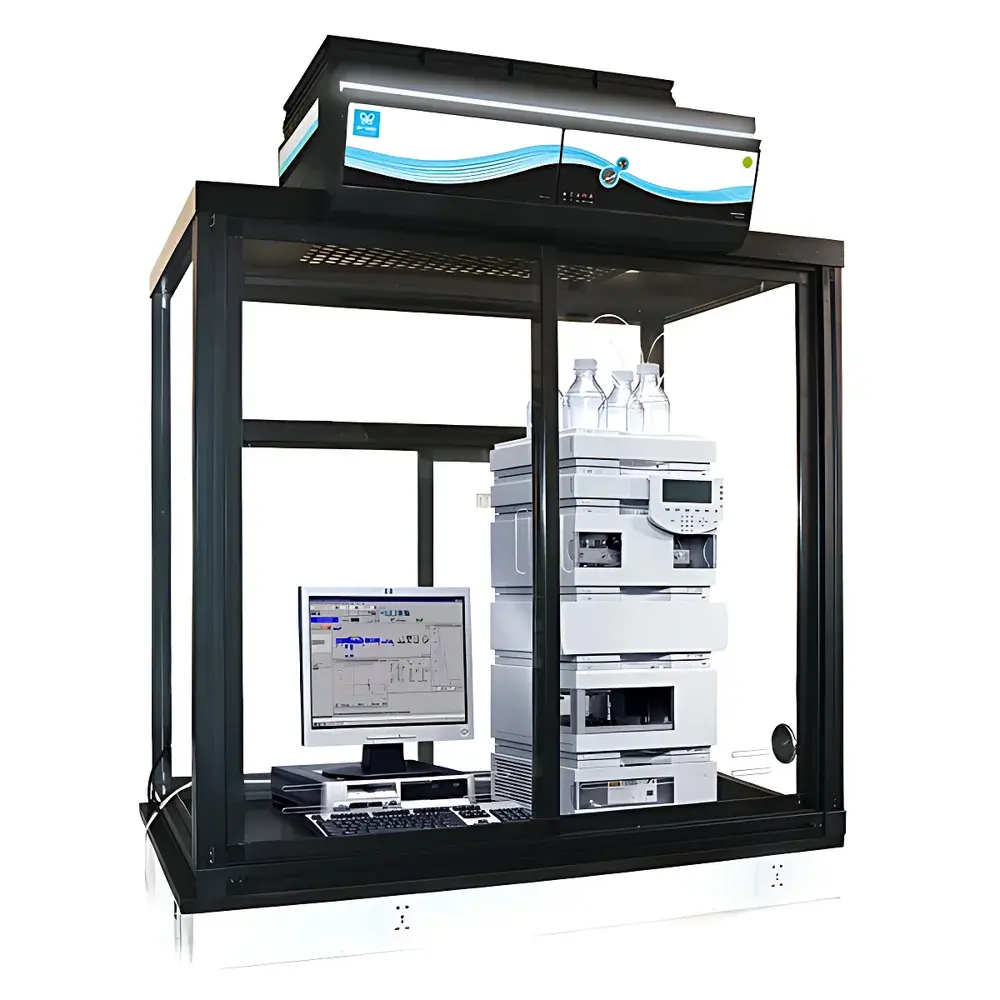
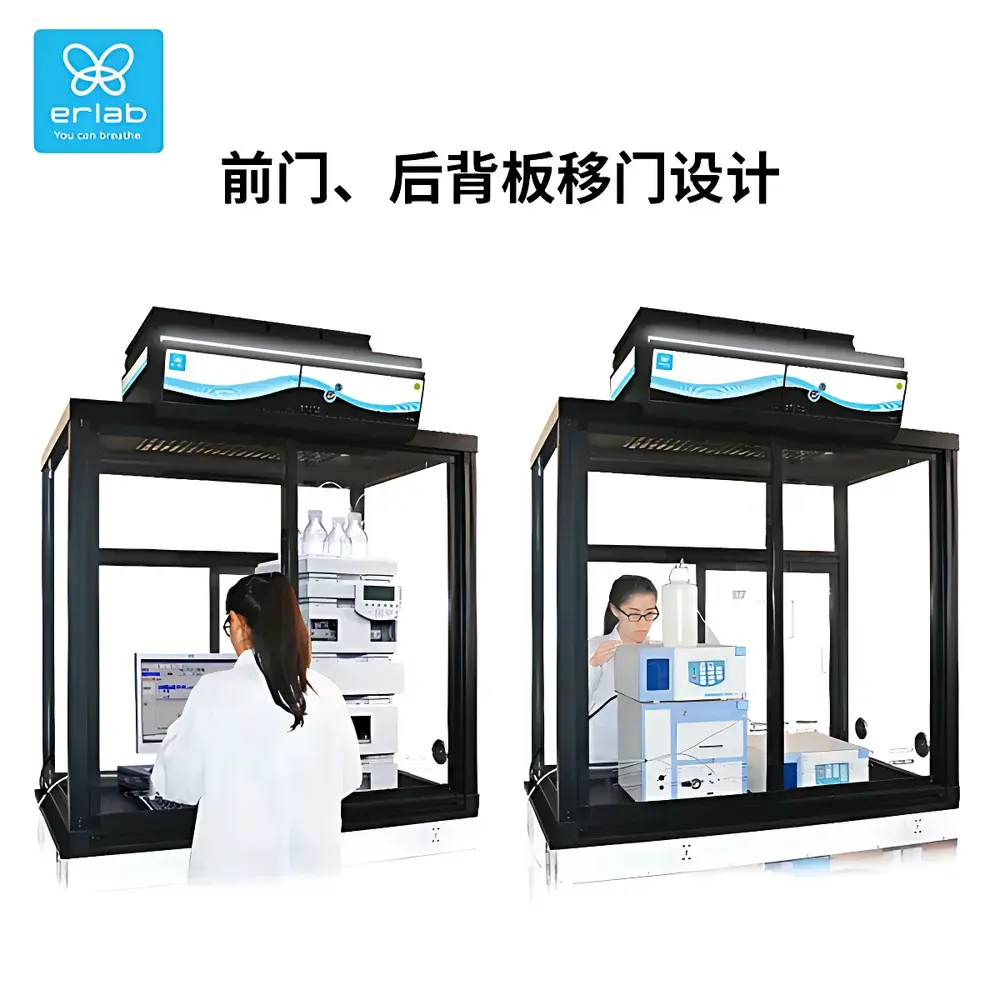
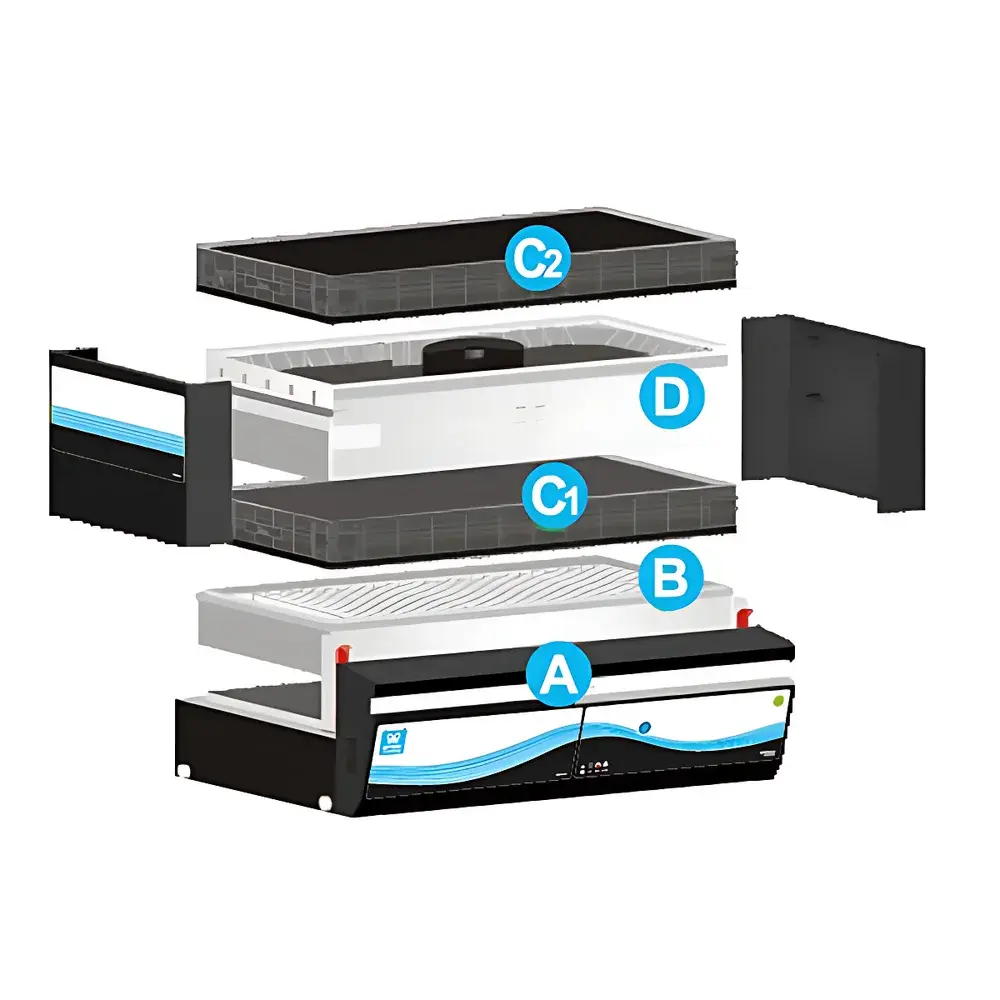
The Erlab Captair Smart Instrument Enclosure is a ductless, recirculating containment solution engineered specifically for the safe operation of analytical and process instruments that emit low-to-moderate levels of volatile organic compounds (VOCs), acids, bases, or particulates. Unlike conventional ducted fume hoods requiring complex building infrastructure, the Captair Smart employs a dual-stage filtration system—comprising a pre-filter and a high-capacity activated carbon + impregnated media filter—to capture and neutralize airborne contaminants before returning conditioned air to the laboratory environment. Its design follows the fundamental principles of aerodynamic containment and face velocity control, ensuring consistent inward airflow across the sash aperture (typically maintained at 0.4–0.5 m/s per EN 14175-3) to prevent lateral escape of vapors during instrument operation. The enclosure is not intended for high-hazard applications such as perchloric acid digestion or radioactive work, but rather optimized for routine, long-duration instrument housing—including HPLC systems, GC autosamplers, ICP-MS sample introduction modules, dissolution testers, and automated titrators—where continuous, unobtrusive protection is required without facility modification.
Key Features
- Fully welded steel construction with epoxy-powder-coated finish for corrosion resistance and structural integrity under daily laboratory use.
- Intelligent airflow monitoring system with real-time digital display of face velocity, filter saturation status, and operational hours—enabling predictive maintenance scheduling.
- Modular filter cartridge design allowing rapid, tool-free replacement; filter service life calibrated to cumulative VOC loading and usage intensity (typically 6–12 months under standard lab conditions).
- Adjustable sash height with counterbalanced mechanism and ergonomic stop positions for optimal operator access and containment performance.
- Integrated LED task lighting (500–600 lux at work surface) with glare-reducing diffuser, compliant with ISO 8596 and CIE S 008/E:2001 illumination standards.
- Optional connectivity via RS-485 or Ethernet for integration into centralized lab monitoring platforms (e.g., LabVantage, Thermo Fisher SampleManager), supporting event logging and remote alarm notification.
Sample Compatibility & Compliance
The Captair Smart is validated for containment of common laboratory solvents (e.g., methanol, acetonitrile, dichloromethane, hexane) and reagents used in chromatographic and spectroscopic workflows. It meets EN 14175-3:2019 requirements for type-tested ductless fume hoods, including tracer gas containment efficiency (>99.9% for SF₆ at 0.4 m/s face velocity) and operator exposure assessment under worst-case sash configurations. While not certified to NFPA 45 or ANSI Z9.5 for high-risk chemical synthesis, it supports GLP-compliant instrument environments when deployed with documented filter change logs, annual performance verification (per ISO 10632:2021), and user training records. Filter certification includes independent third-party testing per ASTM D5225 and ISO 10121-1 for adsorption capacity and breakthrough time.
Software & Data Management
The onboard microcontroller provides non-volatile storage of operational parameters, filter runtime, and airflow calibration history. All data exports in CSV format via USB port for traceability in quality management systems. Optional firmware upgrade enables audit trail functionality compliant with FDA 21 CFR Part 11—supporting electronic signatures, user-level access control (admin/operator modes), and immutable event logs for regulatory inspections. Data synchronization with LIMS or ELN platforms is achievable through OPC UA or Modbus TCP protocols, facilitating automated recordkeeping in ISO/IEC 17025-accredited laboratories.
Applications
- Housing of HPLC and UHPLC systems to mitigate solvent vapor exposure during gradient elution and fraction collection.
- Enclosure for GC-FID/TCD injectors and autosamplers operating with volatile hydrocarbon or halogenated solvents.
- Containment of ICP-OES/ICP-MS nebulizers and spray chambers generating acidic mists (e.g., HNO₃, HCl matrices).
- Integration with dissolution apparatus (USP Apparatus II) using organic co-solvents in pharmaceutical QC labs.
- Protection for automated elemental analyzers (e.g., CHNS/O instruments) emitting combustion byproducts during sample pyrolysis.
FAQ
Is the Captair Smart suitable for use with perchloric acid or hydrofluoric acid?
No. This enclosure is not designed for strongly oxidizing or highly corrosive acids. Perchloric acid requires wash-down ducted hoods; HF mandates specialized polypropylene construction and dedicated exhaust.
How often must the filters be replaced?
Filter replacement frequency depends on total VOC mass loading and operational hours. Under typical HPLC usage (8 hrs/day, 5 days/week), carbon filters require replacement every 9–12 months; pre-filters every 3–6 months. Real-time saturation indicators and pressure drop monitoring support data-driven scheduling.
Can the unit be installed in a non-ventilated room?
Yes—ductless operation eliminates need for external ductwork or roof penetrations. However, ambient room temperature must remain within 15–30°C, and relative humidity below 70% to preserve filter efficacy and prevent condensation-induced channeling.
Does it comply with OSHA or EU occupational exposure limit (OEL) requirements?
When operated within specified face velocity and filter service intervals, the Captair Smart maintains operator exposure below applicable OELs (e.g., ACGIH TLVs®) for target chemicals, as verified by third-party tracer gas testing per EN 14175-3 Annex B.



