
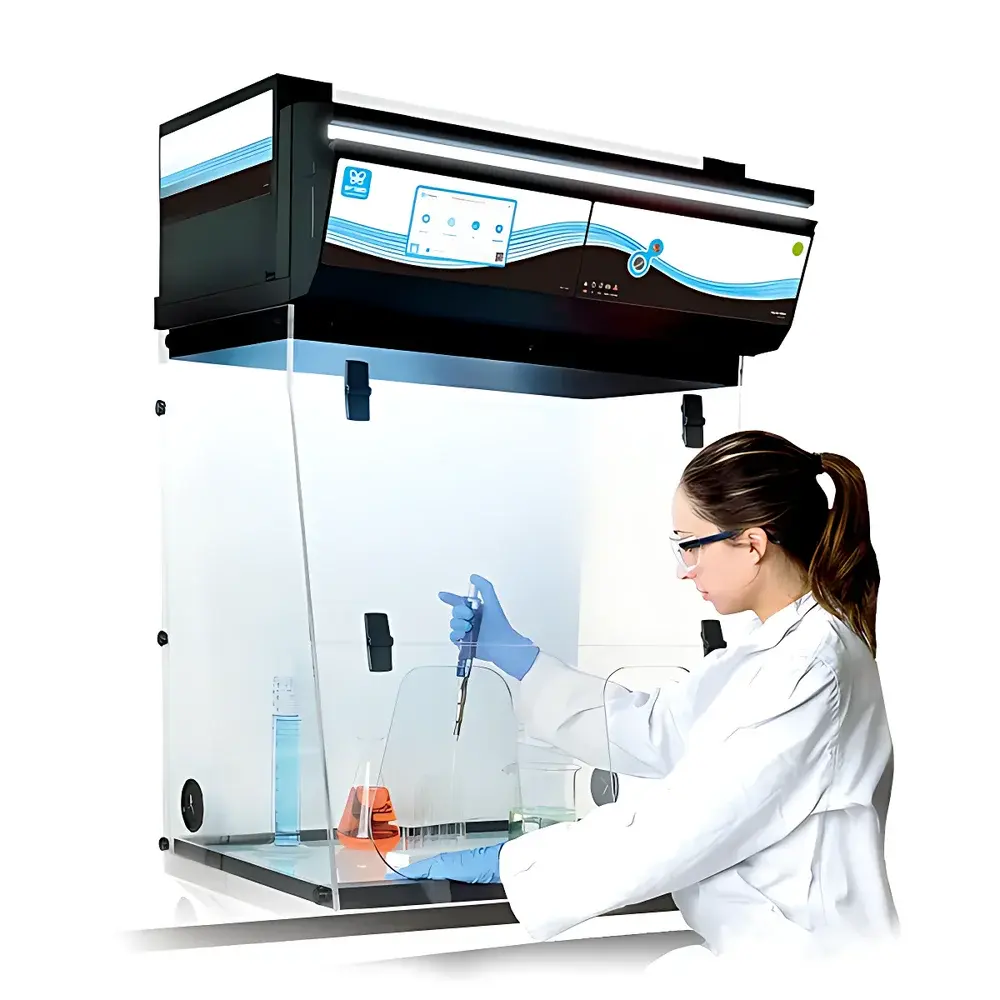
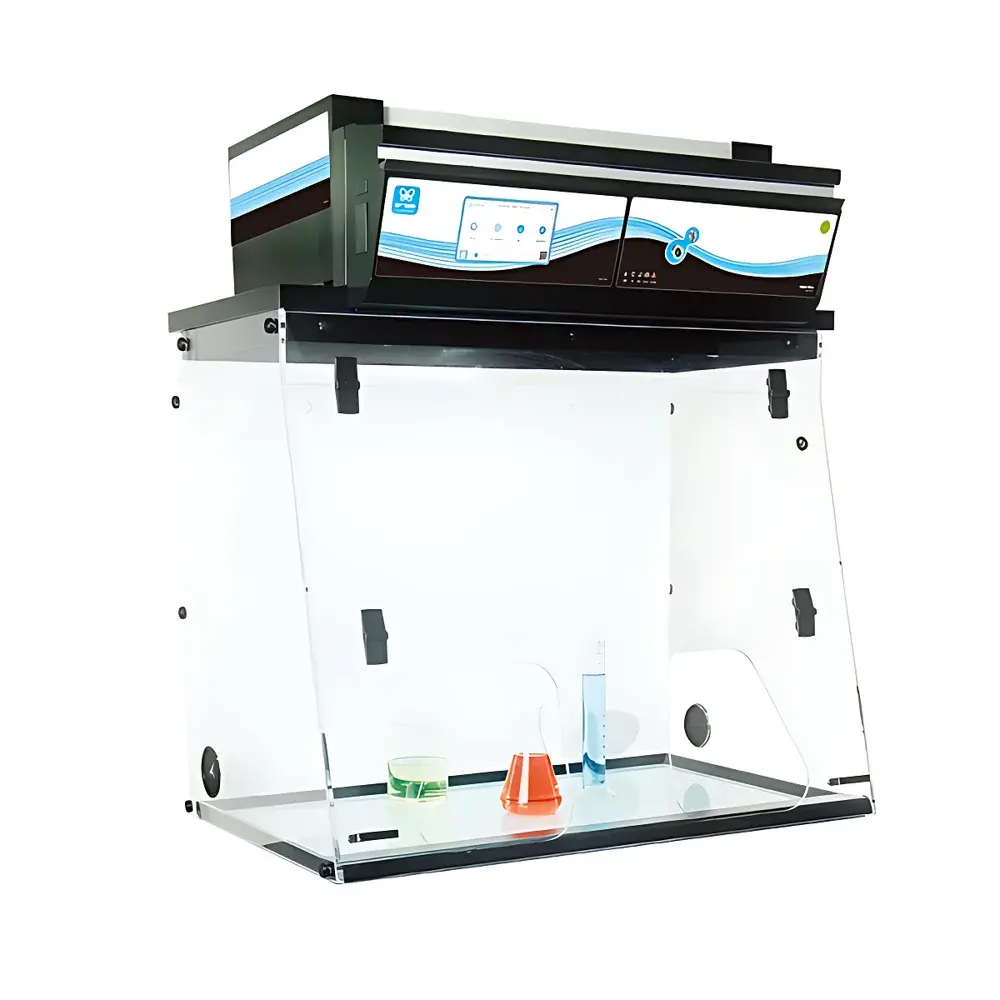
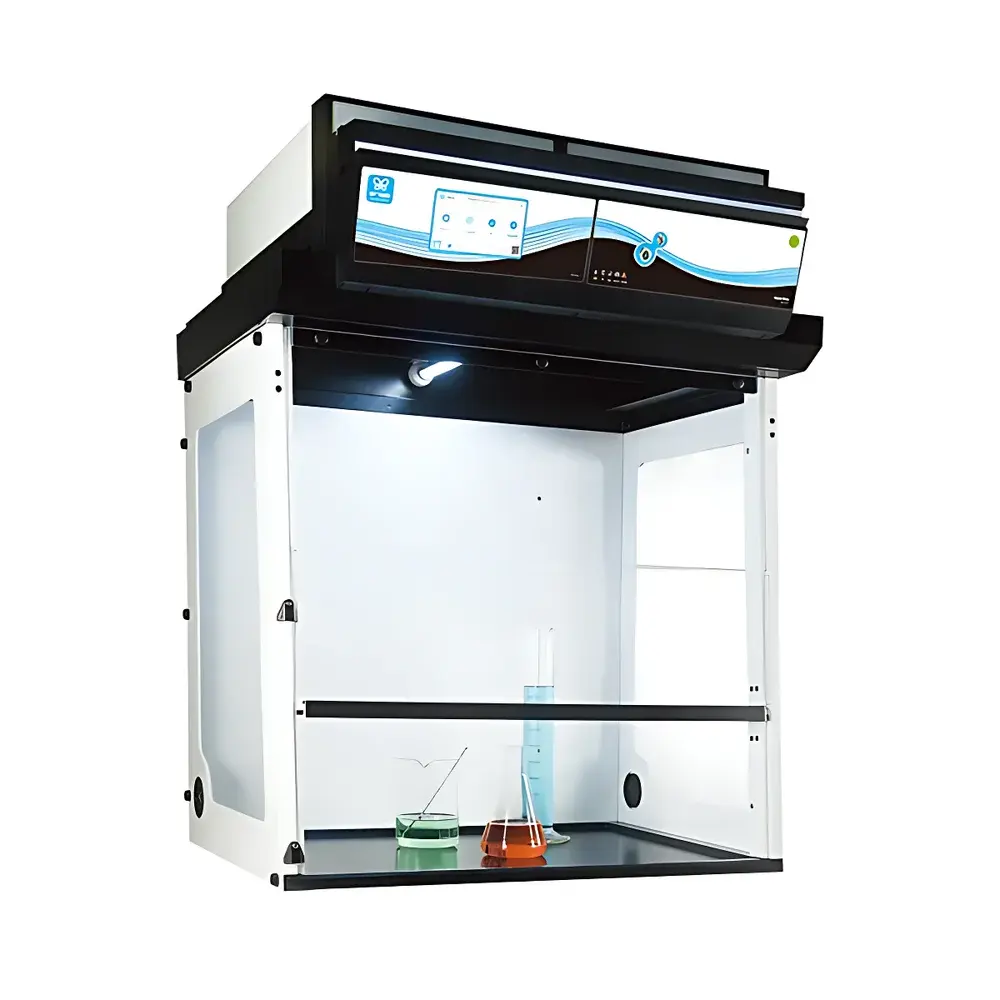
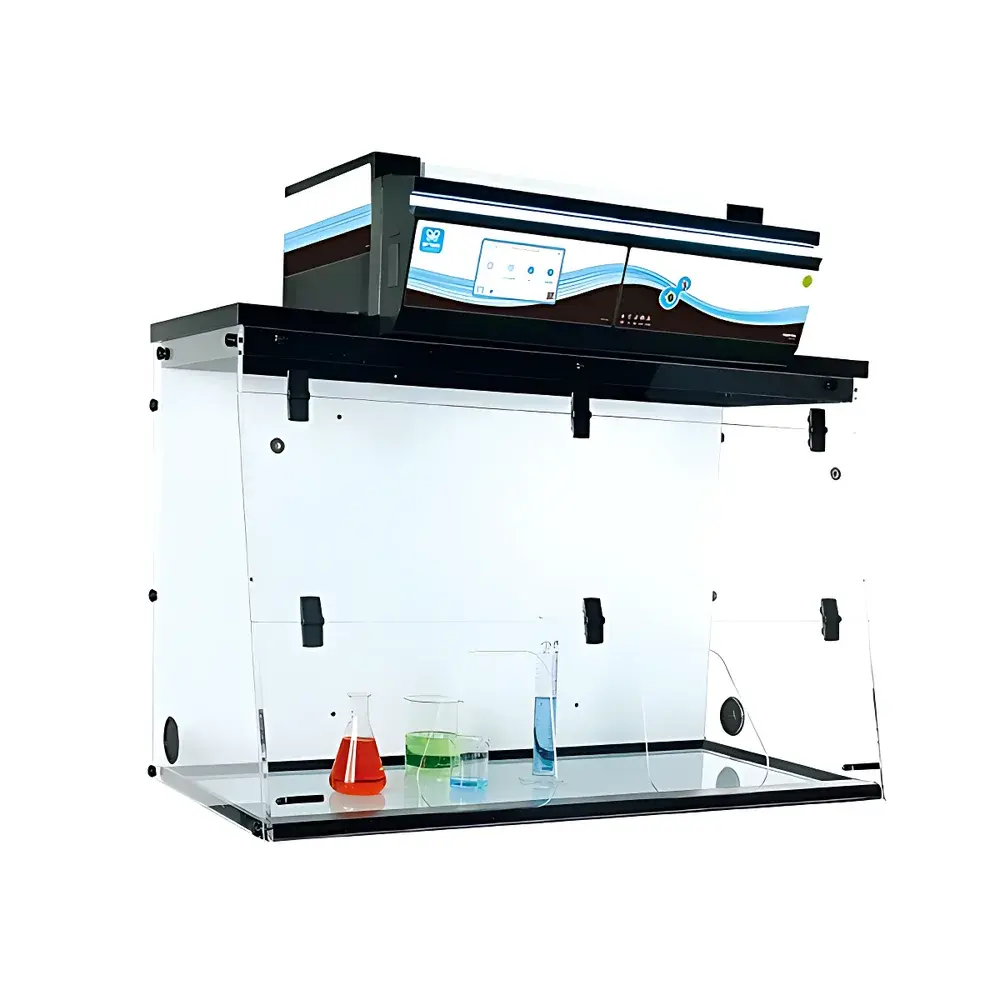
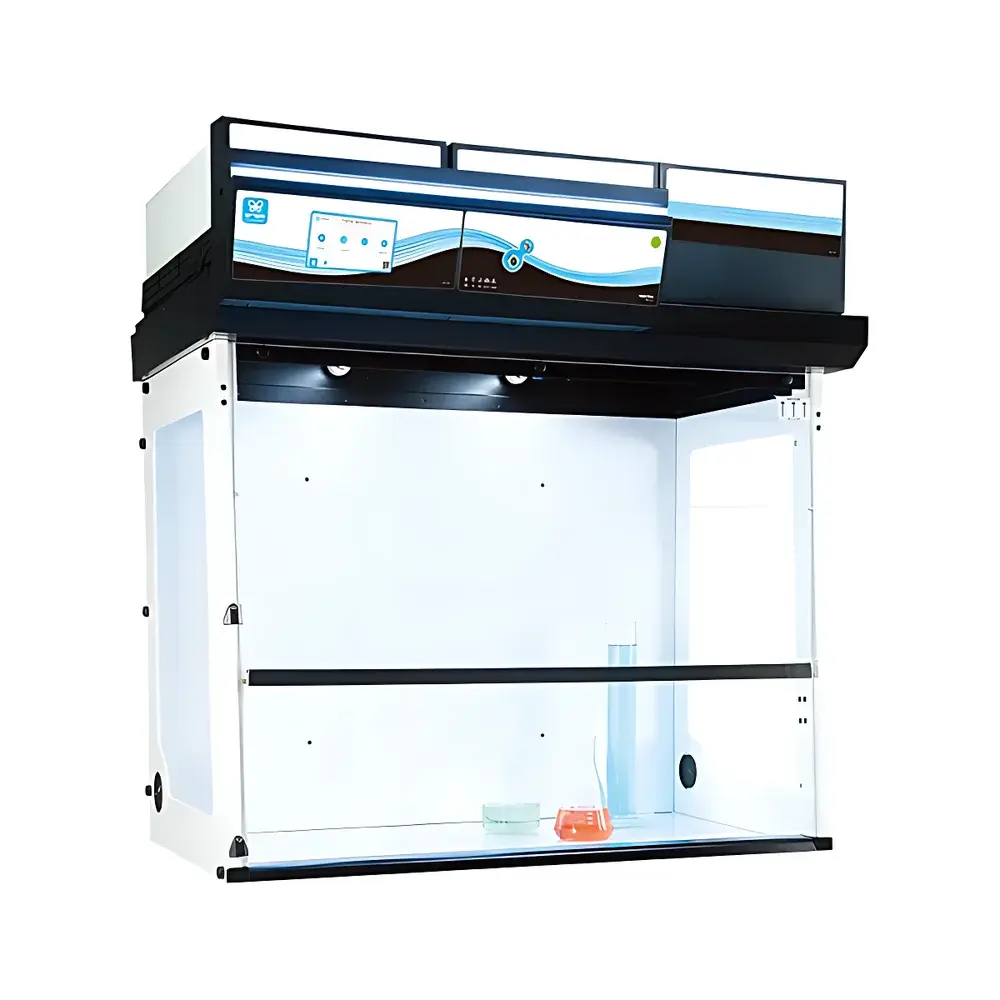
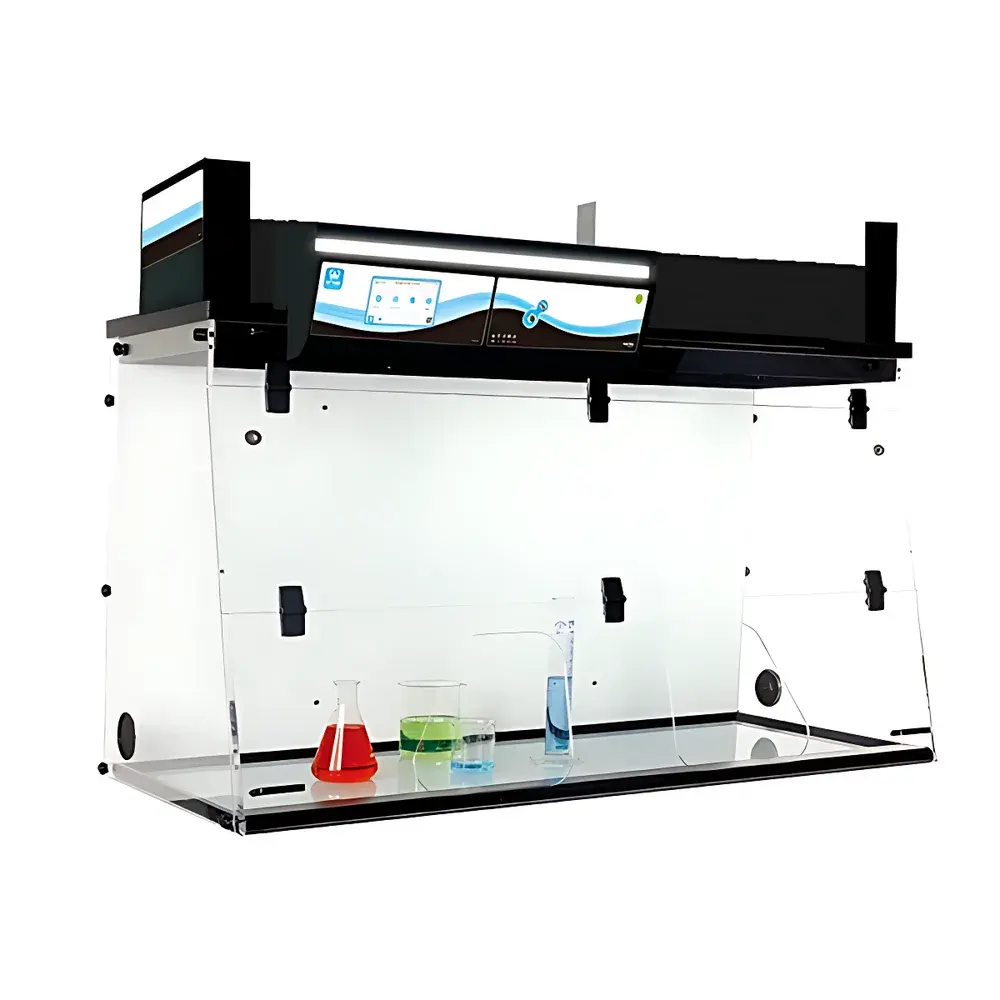
Erlab Captair Smart Plug-and-Play Ductless Fume Hood with 7″ Intelligent Touchscreen
| Brand | Erlab |
|---|---|
| Origin | Jiangsu, China |
| Manufacturer Type | Authorized Distributor |
| Product Category | Domestic |
| Model | Captair Smart |
| Price Range | USD 7,000 – 14,000 |
| Cabinet Material | Fully Steel Construction |
| Design Type | Ductless (Recirculating) Fume Hood |
| Average Face Velocity | 0.4–0.6 m/s |
| Lighting | Integrated LED Tubes |
| Display | 7-inch High-Resolution Capacitive Touchscreen |
| Power Consumption | 65 W (Standard 230 V / 50 Hz Outlet) |
| Ergonomic Sash Angle | 6° Tilt |
| Filtration System | Modular Dual-Stage Activated Carbon + Optional HEPA/Adsorbent Hybrid Cartridges |
| Safety Monitoring | Real-time Face Velocity Sensor, Filter Saturation Algorithm, Visual/Audible Alert System |
Overview
The Erlab Captair Smart is a CE-certified, plug-and-play ductless fume hood engineered for precision containment and laboratory air quality management in non-ducted environments. Unlike conventional ducted hoods requiring complex HVAC integration, the Captair Smart employs a closed-loop recirculation principle: ambient laboratory air is drawn through the work surface, passed sequentially through a multi-stage filtration system (typically granular activated carbon with optional particulate or acid-gas-specific media), and returned to the room as purified air. This design eliminates structural ductwork, reduces installation time by >90%, and complies with EN 14175-3:2022 and ANSI/ASHRAE 110-2016 performance benchmarks for face velocity uniformity, containment efficiency, and operator protection. Its fully steel construction ensures mechanical stability and chemical resistance under routine lab conditions, while the 6° sash tilt angle conforms to ISO 7250-1 anthropometric guidelines—optimizing arm reach, visual field depth, and fatigue reduction during extended procedures.
Key Features
- 7-inch capacitive touchscreen interface with intuitive icon-driven navigation for real-time monitoring of face velocity, filter service life (% remaining), airflow status, and system diagnostics.
- Intelligent alert protocol: dynamic LED status band (color-coded green/yellow/red) combined with programmable audible beeps (1–3 pulses) to indicate operational mode, filter saturation threshold, or low airflow events.
- Ultra-low energy profile: 65 W nominal power draw enables deployment on standard laboratory circuits without load balancing or dedicated electrical upgrades.
- Modular filtration architecture supporting interchangeable cartridge configurations—including standard organic vapor, acidic gas, amine-specific, and HEPA-enhanced variants—validated per EN 143 and EN 1822 standards.
- Embedded anemometric sensor continuously measures and displays actual face velocity (0.4–0.6 m/s range) with ±0.03 m/s repeatability; automatic recalibration triggered at startup and after sash movement.
- Full-steel monocoque chassis with epoxy-powder-coated finish, seamless welded seams, and anti-static grounding points compliant with IEC 61340-5-1 ESD requirements.
Sample Compatibility & Compliance
The Captair Smart is validated for use with low-to-moderate volatility solvents (e.g., acetone, ethanol, hexane, chloroform), dilute aqueous acids/bases (<10% v/v), and non-pyrophoric reagents. It is not intended for perchloric acid, hydrofluoric acid, radioactive isotopes, or nanoparticle synthesis. All filtration configurations undergo third-party testing per EN 14175-3 Annex C for tracer gas containment (SF6) and meet ≤0.05 ppm leakage limits at 0.5 m/s face velocity. The unit carries CE marking under the Machinery Directive 2006/42/EC and Low Voltage Directive 2014/35/EU. Filter replacement logs, velocity calibration records, and alarm history are timestamped and exportable—supporting GLP/GMP documentation requirements and internal audit trails.
Software & Data Management
No external PC or proprietary software is required. All operational data—including cumulative runtime, filter usage hours, velocity deviation logs, and alarm timestamps—is stored locally in non-volatile memory (10,000-event capacity). The touchscreen supports CSV export via USB-A port for integration into LIMS or electronic lab notebooks (ELN). Audit trail functionality meets FDA 21 CFR Part 11 expectations for electronic records: each parameter change is logged with user ID (if configured), timestamp, pre-change value, and post-change value. Firmware updates are delivered via encrypted USB stick with SHA-256 signature verification.
Applications
- Teaching laboratories: Safe handling of common organic solvents during undergraduate chemistry labs without infrastructure retrofitting.
- Quality control labs: Weighing, dilution, and standard preparation involving volatile reference standards (e.g., USP/EP certified compounds).
- Pharmaceutical R&D: Non-sterile formulation work, excipient blending, and analytical sample prep where ducted exhaust is unavailable.
- Environmental testing labs: Extraction and concentration steps using EPA Method 502.2 or 8081B solvents.
- Electronics manufacturing: Flux removal, solder paste handling, and conformal coating application in cleanroom-adjacent spaces.
FAQ
What filtration media options are available for the Captair Smart?
Standard configuration includes granular activated carbon for organic vapors. Optional cartridges include acid gas (impregnated carbon), amine-specific (copper-impregnated), and particulate/HEPA hybrid modules—each certified to EN 143:2009 and EN 1822-1:2019.
Can the Captair Smart be used for perchloric acid digestion?
No. Perchloric acid applications require a wash-down ducted hood with stainless steel interior and dedicated water spray system per NFPA 45 requirements.
How often must filters be replaced?
Filter service life depends on usage intensity and chemical profile. Typical replacement intervals range from 6–12 months; the system calculates remaining life based on real-time VOC adsorption modeling and cumulative airflow volume.
Is the 7-inch display compatible with networked lab monitoring systems?
The unit operates as a standalone device. While it lacks Ethernet/Wi-Fi, exported CSV logs can be ingested into centralized building management or lab operations platforms via scheduled script-based ingestion.
Does the Captair Smart require annual third-party certification?
Per EN 14175-3, annual performance verification—including face velocity mapping, containment testing, and alarm function validation—is recommended and supported by Erlab-certified service partners globally.



