
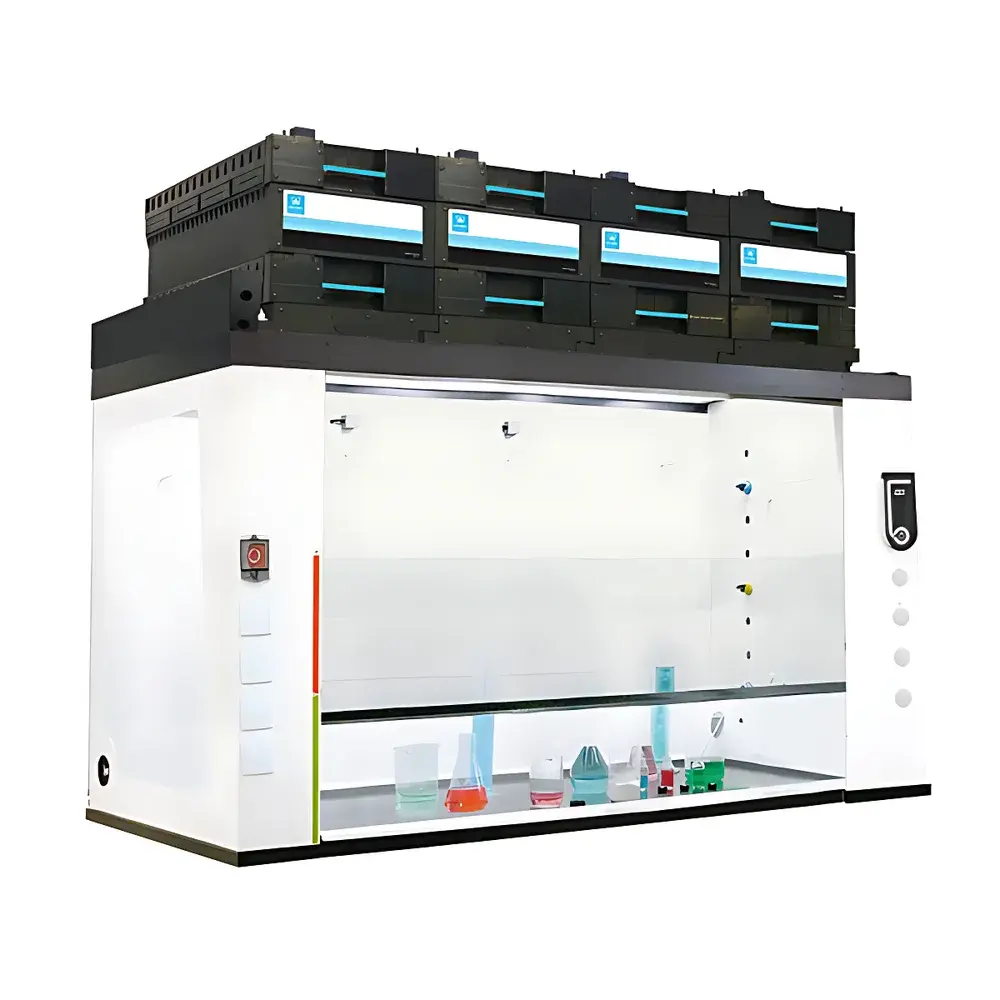
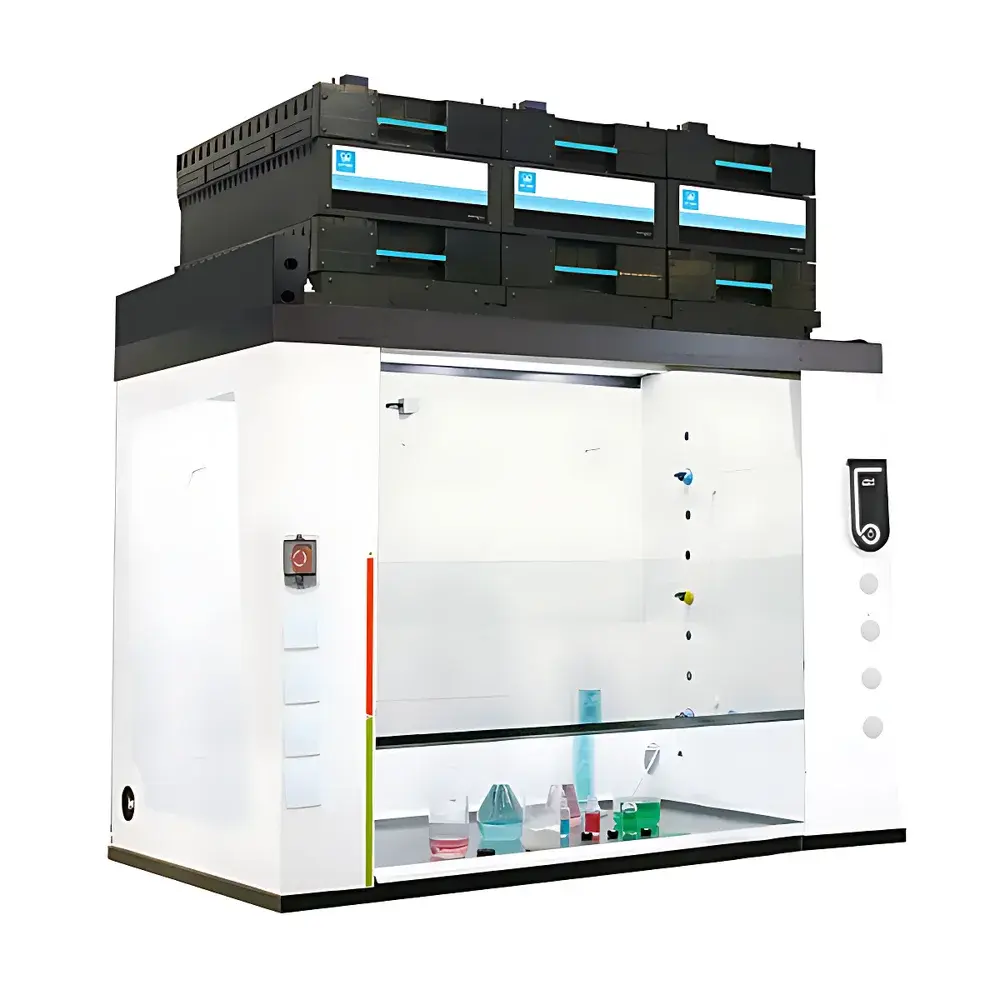
Erlab GreenFumeHood 3 GFH 6400 Ductless Fume Hood
| Brand | Erlab |
|---|---|
| Origin | Jiangsu, China |
| Manufacturer Type | Authorized Distributor |
| Origin Category | Domestic |
| Model | GFH 6400 |
| Price Range | USD 14,000–42,000 |
| Cabinet Material | All-Steel Construction |
| Design Type | Ductless (Recirculating) Fume Hood |
| Airflow Mode | Full Exhaust (Recirculation + Optional Bypass) |
| Primary Application | Chemical Handling |
| Exhaust Position | Top-Mounted |
| Ducting | None Required |
| Dimensions (W×D×H) | 1849 mm × 968 mm × 1571/1661 mm |
| Average Face Velocity | 0.4–0.6 m/s |
| Airflow Volume | 880 m³/h |
| Water Supply Requirement | Not Applicable |
| Lighting | Integrated LED Illumination |
| User Capacity | 1–2 Operators |
Overview
The Erlab GreenFumeHood 3 GFH 6400 is a high-performance, ductless fume hood engineered for precision chemical containment and indoor air quality preservation in modern laboratories. Unlike conventional ducted hoods that exhaust conditioned air outdoors—requiring costly HVAC infrastructure and energy-intensive makeup air—the GFH 6400 employs Erlab’s proprietary multi-stage filtration system to safely recirculate up to 70% of treated air back into the lab environment. Its core operational principle relies on laminar face velocity control (0.4–0.6 m/s), real-time airflow monitoring, and dual-stage molecular/particle filtration—comprising pre-filters, activated carbon-based Unisorb® media, and HEPA-grade particulate filters—to capture volatile organic compounds (VOCs), acids, bases, solvents, and fine particulates (including powders down to sub-micron size). Designed in accordance with EN 14175-3 (Laboratory fume cupboards – Part 3: Type test methods), ISO 15714 (Performance testing of local exhaust ventilation), and aligned with OSHA 1910.1450 and ANSI Z9.5 laboratory ventilation standards, the GFH 6400 delivers certified operator protection without reliance on external ductwork or building exhaust systems.
Key Features
- All-steel monocoque cabinet construction with epoxy-powder-coated finish for corrosion resistance and structural rigidity
- SmartControl™ integrated command module with color-coded LED status indicators and audible alerts for real-time safety feedback (e.g., filter saturation, airflow deviation, door position)
- Unisorb® multi-carbon filtration technology—engineered for broad-spectrum adsorption of aliphatic/aromatic hydrocarbons, ketones, esters, halogenated solvents, and low-concentration inorganic vapors
- Modular filter cartridge design enabling rapid, tool-free replacement and configuration flexibility for application-specific chemistries (e.g., acid-resistant, solvent-optimized, or dual-phase liquid/powder protocols)
- Top-mounted exhaust plenum with optimized aerodynamic profile to minimize turbulence and ensure consistent face velocity across the full sash opening (tested per EN 14175-3 Annex C)
- Integrated high-efficiency LED lighting (≥500 lux at work surface) with glare-reducing diffusers and fail-safe emergency illumination mode
- No water or compressed air connections required—fully self-contained operation compliant with LEED-certified lab design principles
Sample Compatibility & Compliance
The GFH 6400 is validated for safe handling of common laboratory reagents including acetone, ethanol, methanol, chloroform, toluene, hydrochloric acid (≤10%), nitric acid (≤5%), sodium hydroxide solutions, and dry powdered compounds such as catalysts, metal oxides, and pharmaceutical intermediates. It is not intended for perchloric acid, hydrogen fluoride, radioactive isotopes, or highly polymerizing monomers. All filtration performance data are generated per ISO 10121-1 (Gas-phase air filters for general ventilation) and ASTM D5212 (Standard Test Method for Determining the Adsorptive Capacity of Activated Carbon). The unit complies with CE marking requirements under the EU Machinery Directive 2006/42/EC and the EMC Directive 2014/30/EU. Filter change logs and operational parameters support GLP/GMP traceability when integrated with optional Ethernet-enabled data logging modules.
Software & Data Management
The SmartControl™ interface provides a non-proprietary RS-485/Modbus RTU communication protocol for integration into centralized laboratory building management systems (BMS). Optional firmware upgrades enable CSV export of real-time metrics—including cumulative airflow volume, filter service hours, sash position history, and alarm event timestamps—for audit-ready documentation. While the base unit operates independently, its digital architecture supports future compatibility with FDA 21 CFR Part 11-compliant electronic signature and audit trail modules via third-party middleware. No cloud dependency or subscription licensing is required for core functionality.
Applications
- Chemistry teaching labs requiring flexible, relocatable containment without renovation
- QC/QA laboratories performing routine titrations, sample prep, and reagent dispensing under ISO/IEC 17025 conditions
- Pharmaceutical R&D environments where solvent evaporation, lyophilization support, and powder weighing demand localized vapor control
- University core facilities seeking scalable, low-footprint ventilation solutions aligned with sustainability KPIs
- Field-deployable mobile labs and modular lab containers requiring zero-duct installation
FAQ
Does the GFH 6400 require external ducting or roof penetration?
No. It is a fully ductless system designed for plug-and-play installation with no civil works or HVAC modifications.
How often must the Unisorb® filters be replaced?
Filter service life depends on usage intensity and chemical load; typical replacement intervals range from 6–12 months under standard academic lab conditions, monitored autonomously by SmartControl™.
Can the hood accommodate both liquid and solid-phase operations simultaneously?
Yes—the modular filter configuration allows co-processing of vapors and aerosolized powders, provided particle generation remains within ISO Class 5 cleanroom-compatible limits.
Is third-party certification available for specific chemical challenges?
Erlab offers application-specific validation reports (e.g., for formaldehyde, acetonitrile, or HCl) upon request, performed in accredited test laboratories per EN 14175-5 protocols.
What safety redundancy mechanisms prevent breakthrough exposure?
Dual independent airflow sensors, continuous filter pressure differential monitoring, and automatic sash-lock activation upon critical parameter deviation provide layered engineering controls per IEC 61508 SIL 2 principles.



