
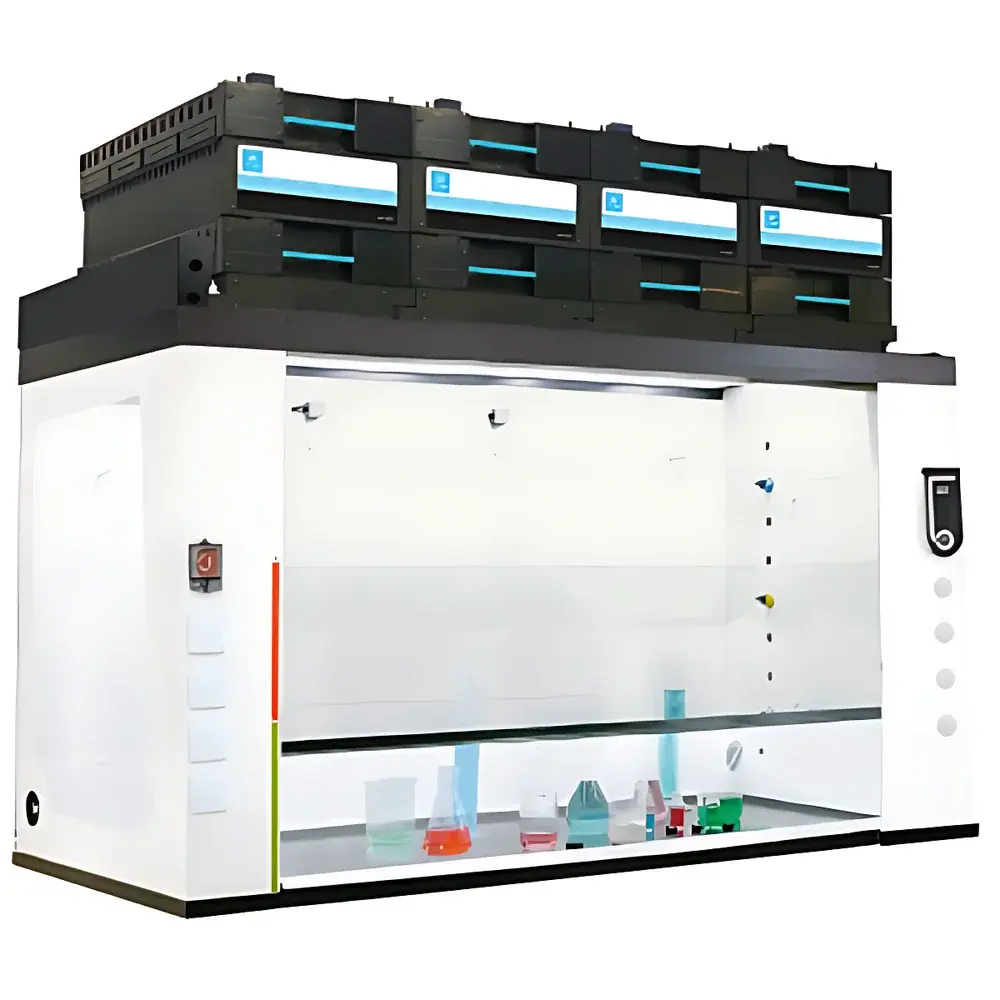
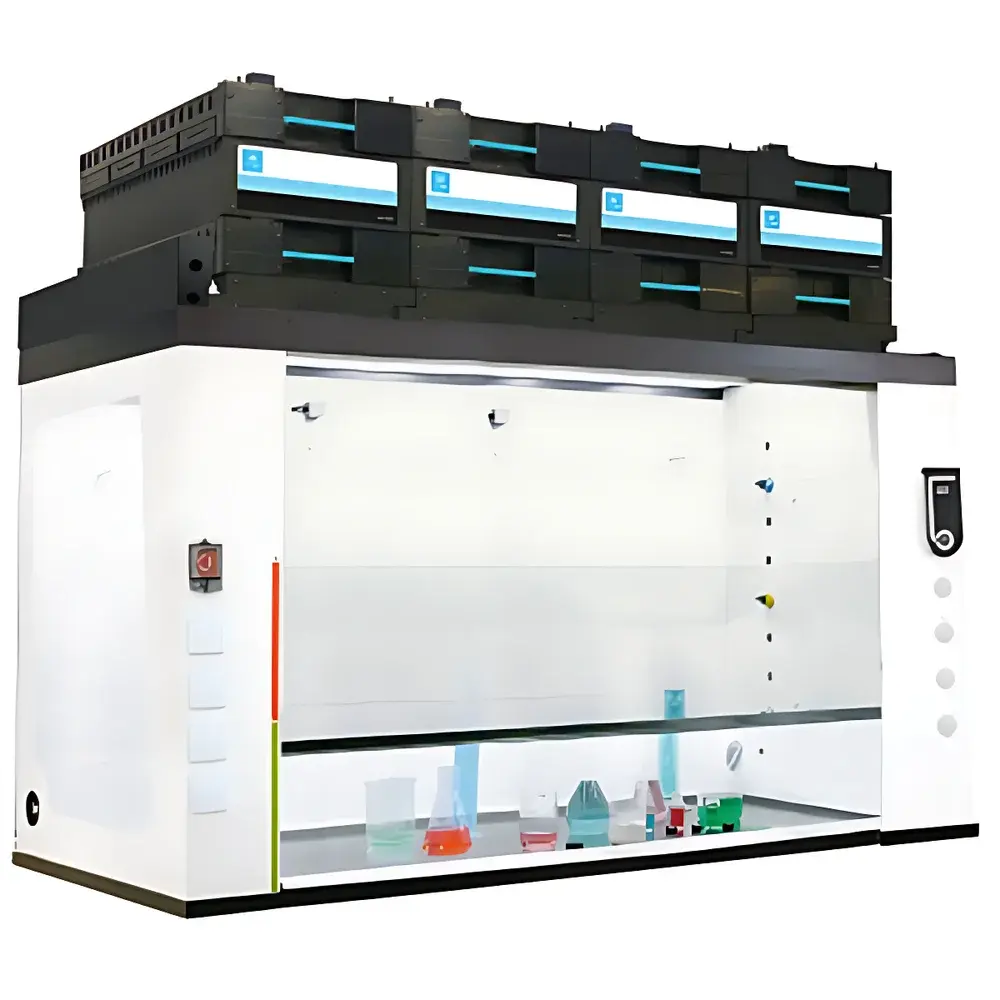
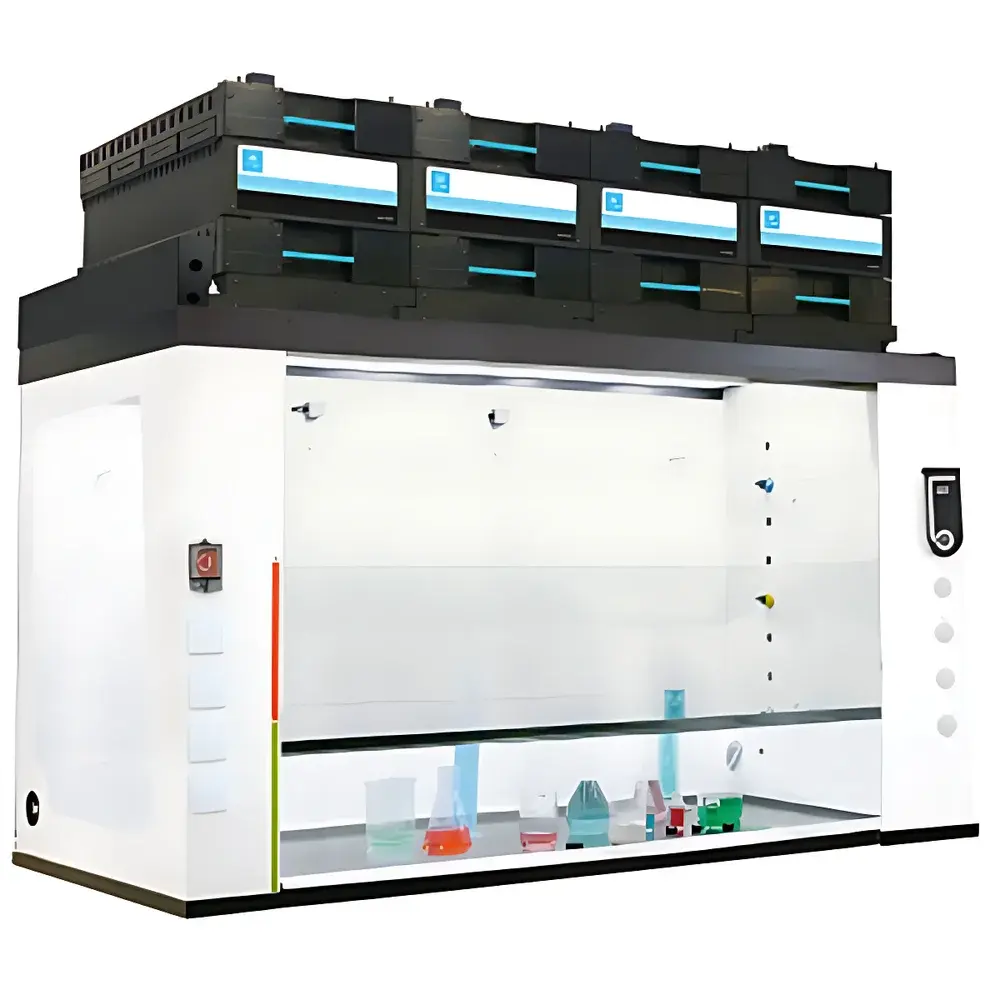
Erlab Ministore 822A Recirculating Chemical Storage Cabinet
| Brand | Erlab |
|---|---|
| Origin | Shanghai, China |
| Model | Ministore 822A |
| Filtration Type | Recirculating (Ductless) |
| Airflow | Continuous internal recirculation with dual-stage filtration |
| Storage Capacity | 48 L |
| Filter Configuration | Modular, application-specific carbon-based filter pack |
| Compliance | Designed per EN 14175-3 (fume cupboard performance), meets ISO 15714:2019 for ductless cabinet testing protocols |
| Installation | Freestanding, no external ducting required |
| Construction | Polypropylene-coated steel chassis with chemical-resistant interior lining |
| Safety Certification | CE-marked, compliant with EU Machinery Directive 2006/42/EC and EMC Directive 2014/30/EU |
Overview
The Erlab Ministore 822A is a compact, recirculating (ductless) chemical storage cabinet engineered for safe, localized containment and purification of volatile organic compounds (VOCs) and low-to-moderate toxicity vapors emitted by stored reagents. Unlike traditional vented cabinets requiring complex building infrastructure, the Ministore 822A employs a closed-loop airflow system: ambient air is drawn through the cabinet’s rear plenum, passed sequentially through a pre-filter and a replaceable, modular activated carbon filter pack, then returned as purified air into the laboratory environment. This design eliminates the need for external exhaust ductwork while maintaining continuous air turnover—typically 2–3 complete air changes per hour within the cabinet volume—ensuring consistent vapor suppression and minimizing operator inhalation exposure. Its 48 L internal capacity is optimized for high-frequency access to small- to medium-volume containers (e.g., 100 mL–2 L bottles, vials, and solvent dispensers), making it suitable for benchtop deployment adjacent to analytical workstations, synthesis hoods, or QC labs where space and flexibility are constrained.
Key Features
- Modular filtration architecture supporting customizable carbon blends (e.g., standard VOC, acidic gas, or amine-specific media) to match reagent storage profiles;
- Polypropylene-coated steel frame with seamless, non-porous interior surfaces resistant to corrosion from common solvents including acetone, ethanol, methanol, and dilute acids/bases;
- Integrated airflow monitoring system with visual status indicator (LED) and audible alert for filter saturation or fan failure;
- Low-noise centrifugal blower (<45 dB[A] at 1 m) enabling quiet operation in shared lab environments;
- Front-accessible filter housing allowing tool-free replacement without cabinet disassembly or downtime;
- CE-marked construction adhering to EN 14175-3 for performance validation of recirculating cabinets and EN 61000-6-3/6-4 for electromagnetic compatibility.
Sample Compatibility & Compliance
The Ministore 822A is validated for storage of Class I–III hazardous chemicals per GHS classification, including flammable liquids (flash point >60°C), corrosives, and health-hazard substances with vapor pressures up to 10 kPa at 20°C. It is not rated for perchloric acid, hydrogen sulfide, mercury compounds, or radioisotopes. All filter packs undergo independent third-party testing per ISO 15714:2019 using tracer gases (e.g., acetone, formaldehyde, HCl) to verify ≥95% removal efficiency at manufacturer-specified flow rates. The cabinet supports GLP/GMP-aligned documentation: filter change logs, airflow verification records, and maintenance history can be retained per institutional SOPs. While not intrinsically explosion-proof, its electrical components comply with ATEX Zone 2 requirements for non-hazardous area use.
Software & Data Management
The Ministore 822A operates as a standalone unit with no embedded microprocessor or digital interface. Airflow integrity and filter service intervals are managed manually via the integrated LED status panel and included logbook template. For institutions requiring audit-ready traceability, Erlab provides optional Excel-based Filter Lifecycle Tracker software (v2.1), compatible with Windows OS, which supports barcode-scanned filter lot registration, automatic expiry alerts based on cumulative runtime (tracked via optional external timer module), and exportable PDF reports compliant with ISO/IEC 17025 documentation standards. No cloud connectivity or remote monitoring is implemented—data remains local and under full user control.
Applications
- Storage of frequently accessed analytical standards and calibration solutions in HPLC, GC, and spectroscopy labs;
- Secure containment of catalysts, ligands, and air-sensitive reagents in synthetic chemistry workflows;
- Secondary containment for partially opened solvent bottles in teaching laboratories where central fume hood access is limited;
- Complementary vapor control adjacent to glove boxes or nitrogen-purged enclosures handling moisture- or oxygen-sensitive materials;
- Regulatory-compliant storage of SDS-referenced chemicals in facilities lacking dedicated ducted ventilation infrastructure.
FAQ
How often must the filter be replaced?
Filter service life depends on total VOC load, compound type, and daily usage duration. Under typical academic lab conditions (≤4 hrs/day, mixed solvents), replacement is recommended every 6–12 months. Erlab provides a Filter Lifetime Estimator tool based on chemical inventory input.
Can the cabinet be used for storing flammable liquids?
Yes—for Class IIIB liquids (flash point ≥93°C) such as ethylene glycol or glycerol. It is not approved for Class IA or IB flammables (e.g., diethyl ether, pentane) due to lack of explosion relief or spark-proof motor certification.
Does the unit require professional installation?
No. The Ministore 822A is plug-and-play: simply position on a level surface, connect to a grounded 230 V / 50 Hz outlet, and verify airflow via the status indicator before loading reagents.
Is performance validation testing required after filter replacement?
Per ISO 15714:2019, users should conduct a qualitative airflow check (e.g., smoke pencil test at front sash opening) and record date, filter lot number, and operator name in the maintenance log. Quantitative tracer gas testing is recommended annually or after major facility HVAC modifications.



