
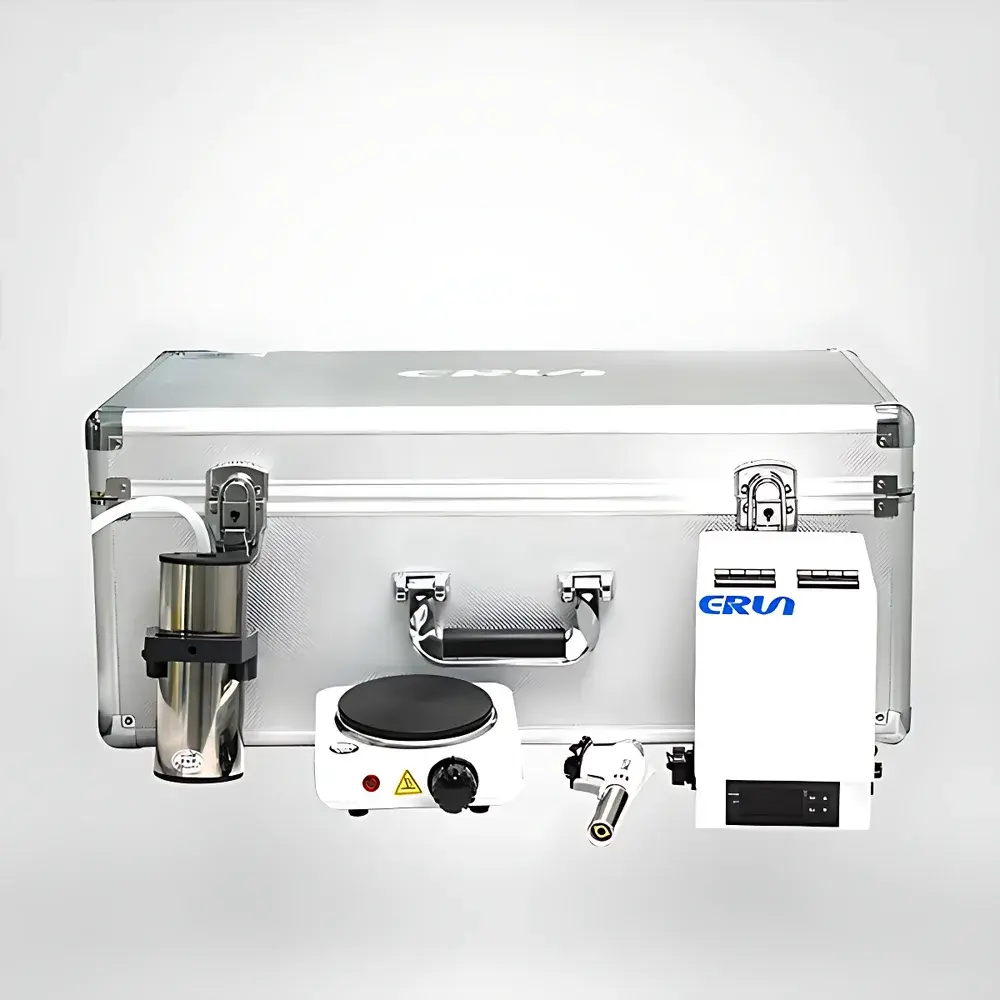
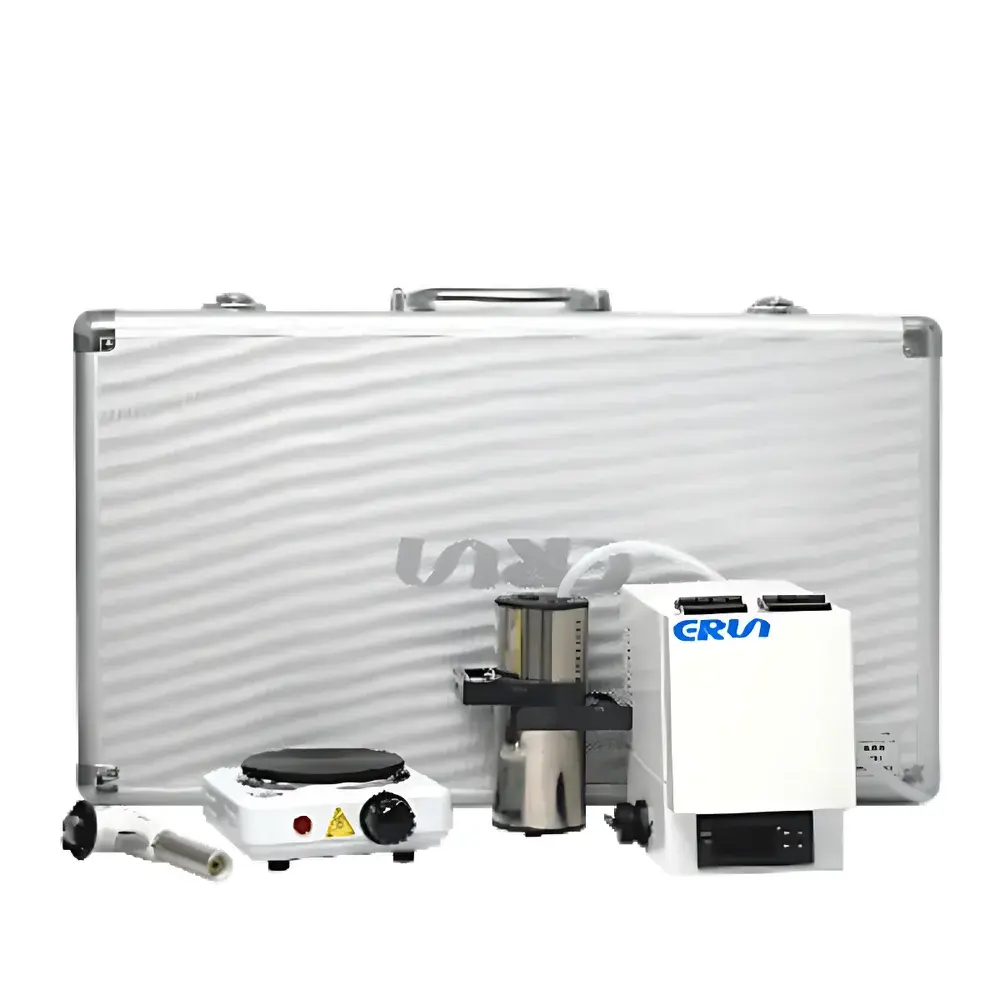
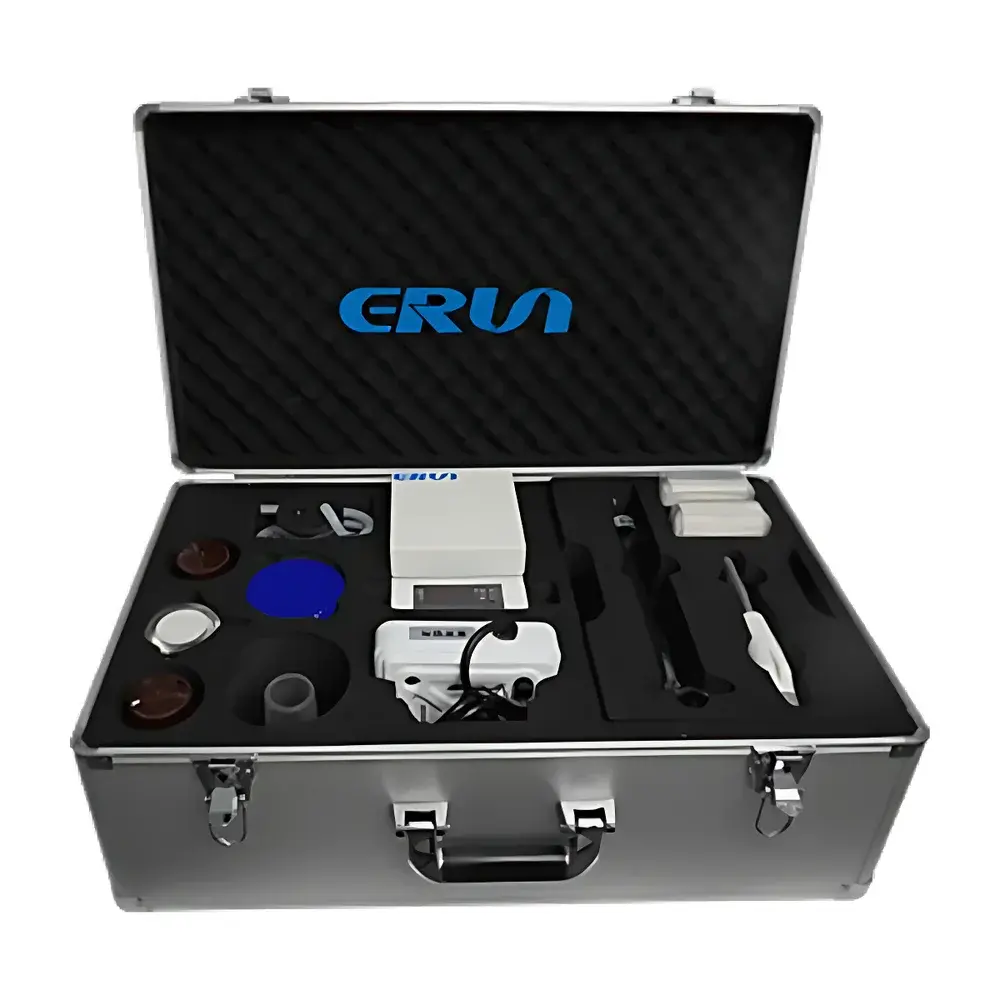
ERUN ERUN-SP3-L Portable Microbial Water Quality Analyzer for Escherichia coli and Total Coliforms
| Brand | ERUN |
|---|---|
| Model | ERUN-SP3-L |
| Origin | Shaanxi, China |
| Type | Portable microbial analyzer |
| Detection Targets | Escherichia coli, total coliforms, thermotolerant coliforms, heterotrophic plate count (HPC) |
| Filtration Pore Size | 0.45 µm |
| Weight | <3.5 kg |
| Temperature Control Range | 10–60 °C |
| Operating Temperature Range | 0–60 °C |
| Power Supply | Rechargeable battery, vehicle charger, AC adapter |
| Display | LCD with Chinese UI |
| Data Interface | Micro-USB |
| Sterilization Method | Flame sterilization (1200 °C) compatible for filtration components |
| Culture Vessel Compatibility | Up to 4 standard glass Petri dishes or 20 aluminum dishes |
| Compliance | GB/T 5750.12–2023, GB/T 5750.13–2006, HJ 1001–2018 |
Overview
The ERUN ERUN-SP3-L Portable Microbial Water Quality Analyzer is an integrated field-deployable system engineered for rapid, standardized enumeration of indicator microorganisms in water samples—specifically Escherichia coli, total coliforms, thermotolerant coliforms, and heterotrophic plate count (HPC) organisms. It operates on the principle of membrane filtration followed by incubation on selective or differential culture media, adhering to internationally recognized microbiological detection methodologies including membrane filtration (MF), enzyme substrate assays, and plate count techniques. Designed for compliance with Chinese national standards (e.g., GB/T 5750.12–2023 for E. coli detection and GB/T 5750.13–2006 for total coliforms), the ERUN-SP3-L supports both regulatory monitoring and operational surveillance across decentralized water systems. Its compact architecture integrates vacuum-assisted sample filtration, precision temperature-controlled incubation, and traceable condition logging—enabling consistent, auditable results under variable field conditions without reliance on fixed laboratory infrastructure.
Key Features
- Field-portable design weighing less than 3.5 kg, housed in a rugged, impact-resistant carrying case containing all essential instruments, consumables, and accessories.
- Programmable incubation chamber with adjustable temperature setpoints from 10 °C to 60 °C; equipped with laser-calibrated thermistor-based feedback control for ±0.5 °C thermal stability and optional active cooling capability.
- Integrated vacuum filtration module with built-in pump and sterile 0.45 µm pore-size membrane support—enabling quantitative recovery of viable bacteria directly at point-of-sample collection.
- Multi-format culture dish holder accommodating either four standard 90-mm glass Petri dishes or twenty reusable aluminum dishes; all dish types are autoclavable or flame-sterilizable (up to 1200 °C).
- On-device LCD interface with intuitive Chinese-language menu navigation and real-time display of incubation parameters, elapsed time, and system status.
- Embedded environmental condition logger storing up to 100 recent incubation profiles—including temperature setpoint, duration, start/end timestamps, and user ID—accessible via micro-USB for export to desktop or mobile applications.
- Dual-power operation: rechargeable lithium-ion battery (≥8 h continuous use), 12 V DC vehicle adapter, and universal AC input (100–240 V, 50/60 Hz).
Sample Compatibility & Compliance
The ERUN-SP3-L is validated for use with raw and treated surface water, groundwater, drinking water, recreational water (e.g., swimming pools), aquaculture effluent, and distributed water supplies. It supports both dehydrated powdered media and pre-poured, ready-to-use chromogenic or selective agar plates—including mTEC, EC-MUG, MI Agar, and R2A formulations. All detection protocols align with methodological requirements outlined in GB/T 5750 series (China’s Standard Methods for Examination of Drinking Water), HJ 1001–2018 (Environmental Monitoring Technical Specification for Microbiological Indicators), and harmonized principles of ISO 9308-1 (water quality — detection and enumeration of Escherichia coli and coliform bacteria). While not certified to FDA 21 CFR Part 11 out-of-the-box, audit trails generated via USB data export meet GLP documentation prerequisites for internal QA/QC review and regulatory reporting.
Software & Data Management
Data acquisition and reporting are managed through a companion Windows-compatible desktop application (provided on USB drive), which enables secure download, timestamped archiving, and CSV/Excel export of incubation logs and user-defined metadata. The software does not perform automated colony counting; instead, it preserves raw incubation parameters and operator annotations to maintain method transparency and traceability. All exported records include device serial number, firmware version, calibration history flags, and digital signatures where enabled—supporting chain-of-custody integrity during third-party audits or inter-laboratory comparisons.
Applications
- Rural drinking water safety programs requiring rapid verification of fecal contamination absence in unchlorinated sources.
- Municipal water utilities conducting routine distribution system integrity checks and post-disinfection validation.
- Public health departments performing sanitary surveys of recreational water bodies prior to seasonal opening.
- Aquaculture facilities monitoring discharge compliance with local environmental discharge limits for bacterial load.
- Emergency response teams deploying after natural disasters to assess microbiological risk in temporary water supplies.
- Academic and NGO-led water quality education initiatives emphasizing hands-on, standards-aligned field methodology training.
FAQ
What regulatory standards does the ERUN-SP3-L comply with?
It conforms to GB/T 5750.12–2023 (for E. coli), GB/T 5750.13–2006 (for total coliforms), and HJ 1001–2018 (environmental microbiological monitoring). Its operational workflow reflects core principles of ISO 9308-1 and APHA Standard Methods 9221.
Can the instrument be used with non-Chinese language interfaces?
The embedded LCD interface is Chinese-only; however, exported data files and desktop software support English-language metadata entry and report generation.
Is flame sterilization of filtration components validated per ISO guidelines?
Flame sterilization at 1200 °C is suitable for stainless steel and ceramic filter holders as a rapid field-decontamination method. For full ISO 17664-compliant reprocessing, users should follow manufacturer-recommended autoclaving cycles (121 °C, 15 min) when lab infrastructure is available.
Does the system include built-in colony counting functionality?
No. The ERUN-SP3-L is a controlled incubation and filtration platform only. Enumeration requires manual or external digital colony counter integration per analyst preference and laboratory SOP.
What is the recommended maintenance schedule for the vacuum pump?
The diaphragm pump requires biannual inspection of intake filters and lubrication-free operation; no oil changes are needed. Pump performance verification is advised before each deployment cycle using a calibrated flow meter and pressure gauge.
Related Products







