
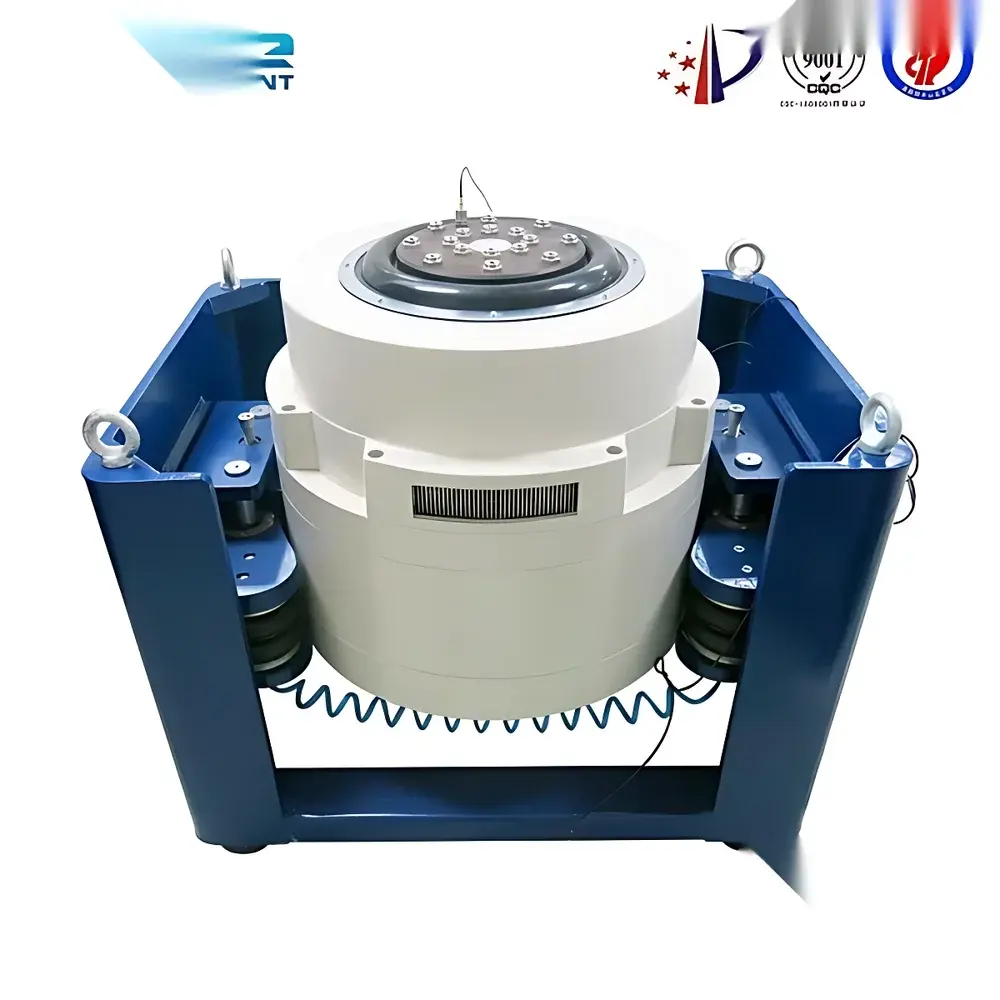
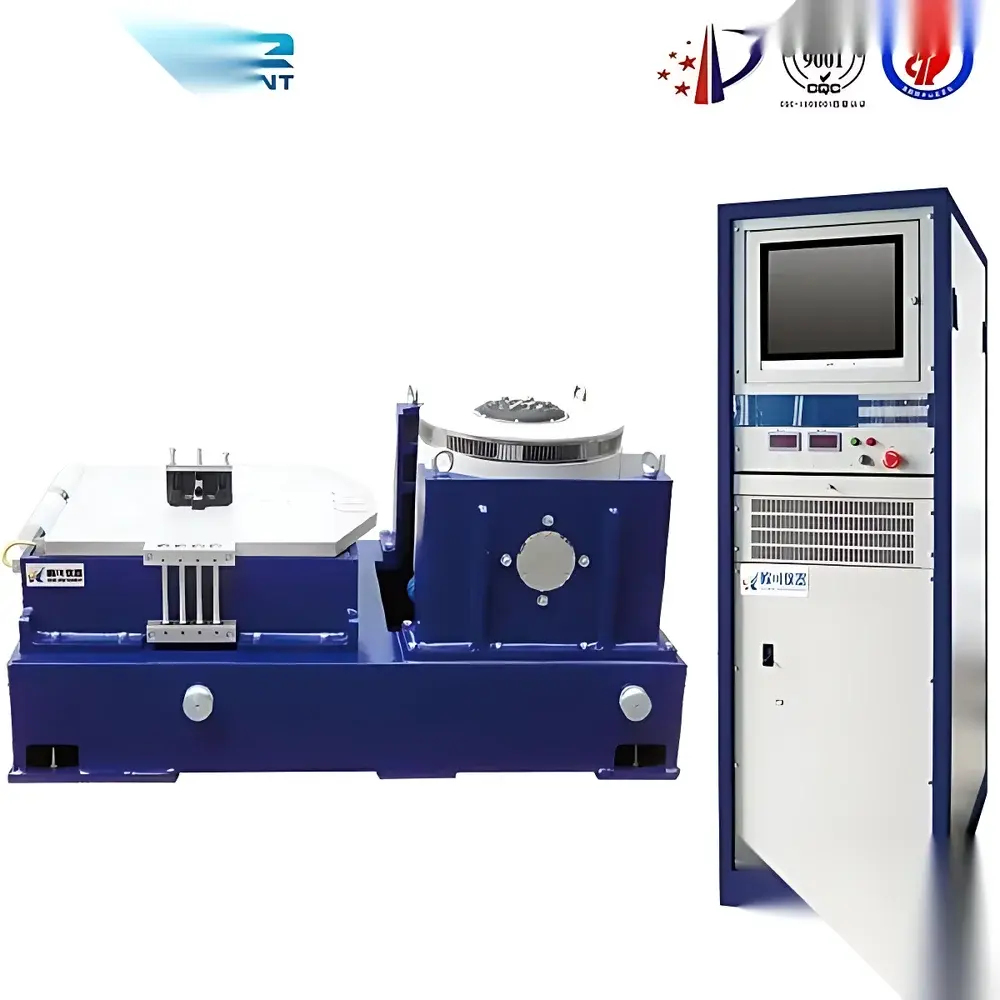
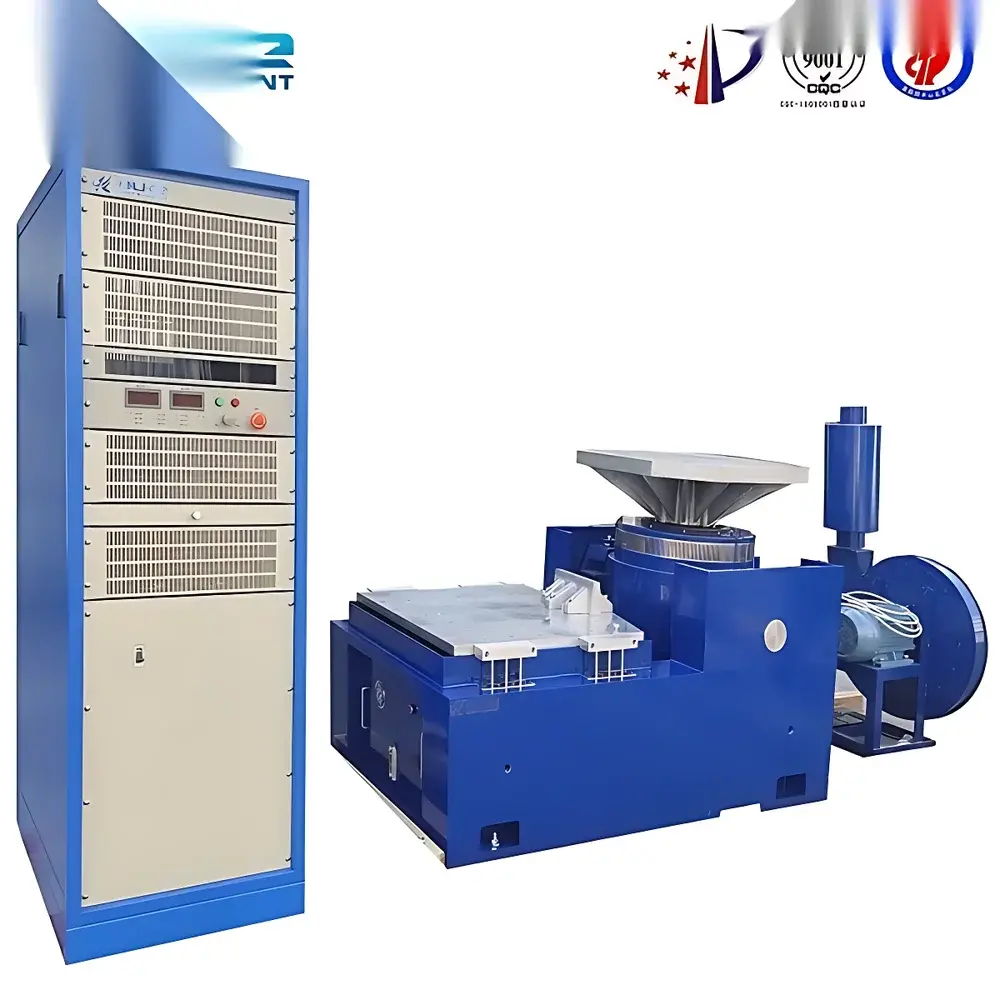
OK-ES-10 Battery Vibration Testing Shaker System
| Brand | Other brands |
|---|---|
| Origin | Imported |
| Manufacturer Type | Authorized Distributor |
| Vibration Frequency Range | 10–100 Hz (derived from 150–300 RPM, converted per standard RPM→Hz relation) |
| Max Acceleration | 20 g (peak) |
| Peak-to-Peak Amplitude | 5 mm (max, compliant with EN/ASTM/ISTA limits) |
| Displacement Amplitude | 25.4 mm (1 inch, at low-frequency sinusoidal mode) |
| Load Capacity | 50 kg (standard), up to 100 kg (optional configuration) |
| Effective Table Size | 1000 × 1000 mm |
| Time Setting Range | 0 s – 99 h 59 min |
| Speed Display Resolution | 0.1 RPM |
| Drive Motor | 1 HP DC motor (0.75 kW) |
| Power Supply | 380 V, 50 Hz |
| Machine Dimensions | 1100 × 1300 × 650 mm |
| Net Weight | ~300 kg |
| Compliance Standards | EN 60068-2-6, EN 60068-2-64, ANSI S2.18, ASTM D999, UL 1642, ISTA 3A/3E/3H, UN 38.3 Section 38.3.4.3 (Vibration) |
Overview
The OK-ES-10 Battery Vibration Testing Shaker System is a precision-engineered electrodynamic vibration shaker designed specifically for evaluating the mechanical robustness of lithium-ion and other rechargeable battery cells, modules, and packs under controlled dynamic loading conditions. It operates on the principle of electromagnetic force generation—utilizing dual magnetic circuits and a self-supporting voice-coil armature—to deliver repeatable, traceable sinusoidal, random, and classical shock excitations. Unlike generic mechanical shakers, this system integrates linear bearing guidance, air-suspension support, and ear-mounted isolation to minimize parasitic resonances and cross-axis coupling—critical for achieving high-fidelity acceleration profiles required by UN 38.3, IEC 62133, and GB/T 31467.3. Its architecture supports both low-frequency high-displacement (e.g., 10–30 Hz, ±12.7 mm) and high-frequency low-amplitude (e.g., 50–100 Hz, ≤1 mm p-p) regimes, enabling full-spectrum simulation of transport, handling, and operational vibration environments encountered in automotive, aerospace, and energy storage applications.
Key Features
- Dual magnetic circuit design ensures uniform flux density across the coil stroke, improving force linearity and thermal stability during extended test cycles.
- Self-generating skeleton-type moving coil eliminates traditional adhesive bonding, reducing mass inertia and enhancing high-frequency response fidelity.
- Air-suspension support system decouples the moving mass from mechanical friction, enabling sub-0.1 g residual noise floor and minimizing harmonic distortion.
- Linear bearing + roller guide mechanism guarantees strict uniaxial motion control with <±0.05° angular deviation—essential for ISO 10816-3 alignment-sensitive battery mounting.
- DC speed-regulated drive delivers precise rotational-to-linear conversion for repeatable sinusoidal sweeps; frequency resolution maintained at 0.1 RPM (equivalent to 0.0017 Hz).
- Configurable multi-environment integration: compatible with climate chambers (−40°C to +85°C, 10–95% RH) for combined thermo-mechanical stress testing per MIL-STD-810H Method 514.7.
- Real-time digital timer with non-volatile memory retains elapsed time and fault logs—even during power interruption—supporting GLP-compliant audit trails.
Sample Compatibility & Compliance
The OK-ES-10 accommodates cylindrical (18650, 21700), prismatic, and pouch-format battery units up to 100 kg via standardized ISO 10816-3 mounting fixtures (M8/M10 threaded inserts or custom clamping plates). All vibration profiles adhere strictly to regulatory mandates: UN 38.3 Section 38.3.4.3 specifies 10–55 Hz swept sine (1 oct/min, 12 cycles per axis); ISTA 3E requires broadband random vibration (10–100 Hz, PSD = 0.02 g²/Hz); and EN 60068-2-64 defines shock response spectrum (SRS) testing using half-sine, trapezoidal, or sawtooth pulses. The system’s calibrated acceleration output (traceable to NIST-equivalent national metrology institutes) satisfies FDA 21 CFR Part 11 data integrity requirements when paired with optional validated software.
Software & Data Management
Control and analysis are performed via PC-based vibration controller software supporting real-time FFT spectrum monitoring, closed-loop acceleration feedback, and automated test sequencing. The software exports time-history waveforms (.tdms, .csv), PSD plots, and SRS envelopes in IEEE 1451.4-compliant format. Audit trail functionality records operator ID, timestamp, parameter changes, and calibration events—fully compliant with ISO/IEC 17025 and GMP Annex 11. Optional 21 CFR Part 11 module provides electronic signatures, role-based access control, and immutable data archiving.
Applications
- UN 38.3 transportation qualification of Li-ion batteries prior to air/sea shipment.
- Design validation of battery module structural integrity under chassis-induced road vibrations (SAE J2380).
- Failure mode analysis of weld joints, busbar connections, and BMS housing mounts under fatigue loading.
- Qualification of thermal interface materials (TIMs) and potting compounds subjected to cyclic mechanical stress.
- Pre-compliance screening for automotive OEM specifications (e.g., GMW3172, Ford EM-M-14080).
FAQ
What is the maximum allowable acceleration for battery vibration testing per UN 38.3?
UN 38.3 Section 38.3.4.3 specifies a peak acceleration limit of 20 g (196 m/s²) for swept-sine testing—this is enforced dynamically by the OK-ES-10’s closed-loop controller.
Can the system perform random vibration testing per ISTA 3E?
Yes—the controller supports user-defined PSD profiles across 10–100 Hz with programmable dwell times, kurtosis control, and GRMS verification per ISTA 3E Appendix A.
Is the shaker compatible with environmental chambers?
Standard configuration includes chamber interface flanges and cable feedthroughs; optional thermal extension kits enable seamless integration with walk-in or reach-in climate chambers meeting IEC 60068-2-1/2/14.
How is traceability ensured for calibration and test data?
Each unit ships with a factory calibration certificate (ISO/IEC 17025-accredited lab), and all firmware/software versions are logged with SHA-256 checksums for full revision control.
What mounting interfaces are provided for battery samples?
Standard 1000 × 1000 mm aluminum table features M6 and M8 tapped arrays (ISO 20811 pattern); custom fixture plates with DIN 31600-compliant clamping systems are available upon request.



