
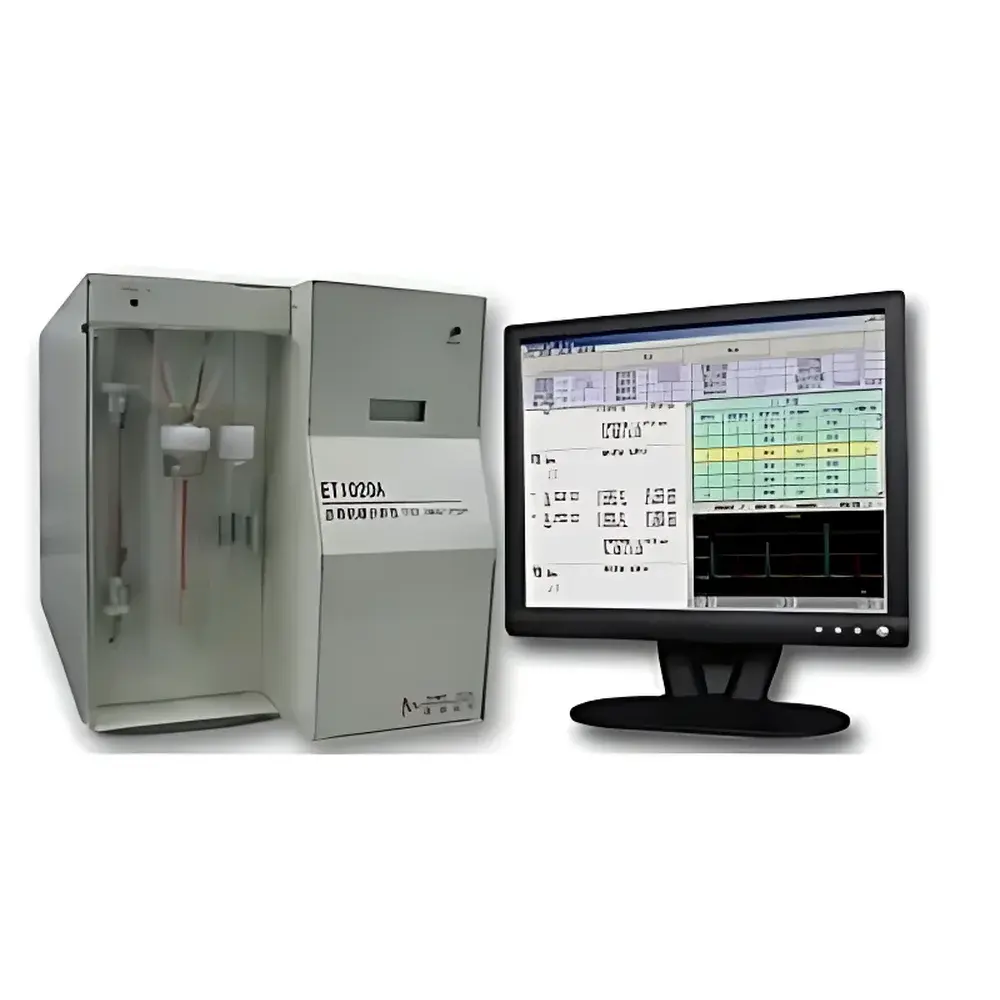
Euro Tech ET1020A Total Organic Carbon Analyzer
| Brand | Euro Tech |
|---|---|
| Origin | Shanghai, China |
| Model | ET1020A |
| Instrument Type | Laboratory TOC Analyzer |
| Detection Principle | Non-Dispersive Infrared (NDIR) Absorption |
| Oxidation Method | High-Temperature Catalytic Combustion |
| Measurement Range | 0.5 ppm – 10,000 ppm |
| Accuracy | ±3% for TC/TIC/TOC |
| Resolution | 1 ppb |
| Detection Efficiency | ≥95% at 10 ppm |
| Repeatability | 3% RSD |
Overview
The Euro Tech ET1020A Total Organic Carbon Analyzer is a laboratory-grade instrument engineered for precise, reliable quantification of total organic carbon (TOC) in aqueous matrices using high-temperature catalytic combustion coupled with non-dispersive infrared (NDIR) detection. It operates on the fundamental principle that organic carbon compounds—when combusted under controlled oxygen-rich conditions at elevated temperatures—are quantitatively converted to carbon dioxide (CO₂). The NDIR detector measures the resulting CO₂ concentration, enabling calculation of total carbon (TC). Following acidification and sparging to remove inorganic carbon species (carbonate and bicarbonate), the liberated CO₂ is measured as total inorganic carbon (TIC). TOC is derived by arithmetic subtraction: TOC = TC − TIC. Alternatively, the instrument supports the NPOC (non-purgeable organic carbon) method, wherein samples are pre-acidified and sparged to eliminate TIC and purgeable organic carbon (POC), after which residual TC reflects NPOC content. This dual-method capability ensures compliance with international regulatory frameworks governing water quality assessment across environmental, municipal, pharmaceutical, and industrial sectors.
Key Features
- Programmable high-temperature oxidation furnace with adjustable setpoints from 200 °C to 950 °C—supports both 680 °C catalytic oxidation and 900 °C direct thermal oxidation per EPA 415.1 and Standard Method 5310B.
- Precision sample loop injection system with selectable volumes (25–400 µL), ensuring high volumetric accuracy and low inter-run variability (≤3% RSD).
- Robust aspiration-based sampling mechanism tolerant of suspended solids up to 400 µm in diameter—minimizing clogging risk in turbid or particulate-laden samples such as wastewater or seawater.
- Integrated real-time graphical interface displaying dynamic CO₂ signal traces during TC, TIC, and TOC measurement cycles—enabling immediate visual verification of oxidation completeness and baseline stability.
- Automated system diagnostics verifying operational status of all critical fluidic components (peristaltic pumps, solenoid valves, pressure switches) prior to analysis initiation.
Sample Compatibility & Compliance
The ET1020A accommodates a broad spectrum of aqueous samples—including surface water, drinking water, wastewater, seawater, hydrogen peroxide solutions, and industrial process water—with minimal pretreatment. Its oxidation efficiency (≥95% recovery at 10 ppm TOC) and low detection limit (1 ppb) meet stringent performance criteria outlined in DIN 38409-H3, EN 1484, US EPA Methods 415.1 and 415.3, Standard Methods for the Examination of Water and Wastewater 5310B, GB 13193–91, and China’s Ministry of Health Drinking Water Hygiene Specifications (No. 138). The instrument architecture supports GLP-compliant operation through audit-trail-enabled software logging, user access controls, and electronic signature readiness—facilitating alignment with ISO/IEC 17025 and FDA 21 CFR Part 11 requirements when configured with appropriate IT infrastructure.
Software & Data Management
The ETTOC Windows-based control software provides full instrument orchestration—from method development and parameter configuration to sequence scheduling, calibration management, and report generation. Users define custom analytical methods specifying oxidation temperature, acid reagent volume, sparge duration, gas flow rate, integration window, and replicate count. Multi-point calibration curves are constructed with automatic outlier rejection to preserve linearity (<4% deviation). Each analysis session captures raw detector signals, calculated TC/TIC/TOC values, metadata (operator ID, timestamp, method version), and diagnostic logs. All data are stored in encrypted, timestamped binary files with optional export to CSV or PDF formats. Audit trails record every parameter change, calibration event, and user login—ensuring traceability for regulatory submissions and internal QA/QC reviews.
Applications
- Environmental monitoring laboratories conducting routine compliance testing for regulatory agencies under national and EU water directives.
- Municipal water utilities performing source water characterization, treatment efficacy evaluation, and distribution system integrity verification.
- Pharmaceutical manufacturers validating purified water (PW) and water-for-injection (WFI) systems per USP <643> and EP 2.2.44.
- Power generation facilities monitoring condensate and boiler feedwater for organic contamination indicative of resin degradation or heat exchanger leakage.
- Chemical and petrochemical plants assessing effluent discharge quality and process water recycle viability.
FAQ
What oxidation methods does the ET1020A support?
It supports both high-temperature catalytic combustion (680 °C with platinum catalyst) and high-temperature direct combustion (900 °C without catalyst), allowing method flexibility to meet specific regulatory or matrix-dependent requirements.
Can the instrument analyze saline or high-conductivity samples?
Yes—the system has demonstrated stable performance in 3% NaCl matrices with consistent TOC recovery (101.19 ppm ±1.05% RSD over 500 consecutive injections), confirming robustness against ionic interference.
Is the software compliant with data integrity standards?
The ETTOC software implements role-based user authentication, electronic signatures, immutable audit trails, and secure data archiving—providing foundational capabilities for 21 CFR Part 11 and ALCOA+ compliance when deployed within validated IT environments.
What sample introduction options are available?
The standard configuration uses fixed-volume loop injection via syringe pump aspiration; optional autosamplers may be integrated for unattended batch analysis.
How is calibration verified during routine operation?
Calibration verification standards can be inserted at user-defined intervals within analytical sequences; software automatically flags deviations exceeding configurable tolerance thresholds and halts further analysis until corrective action is confirmed.
Related Products







