
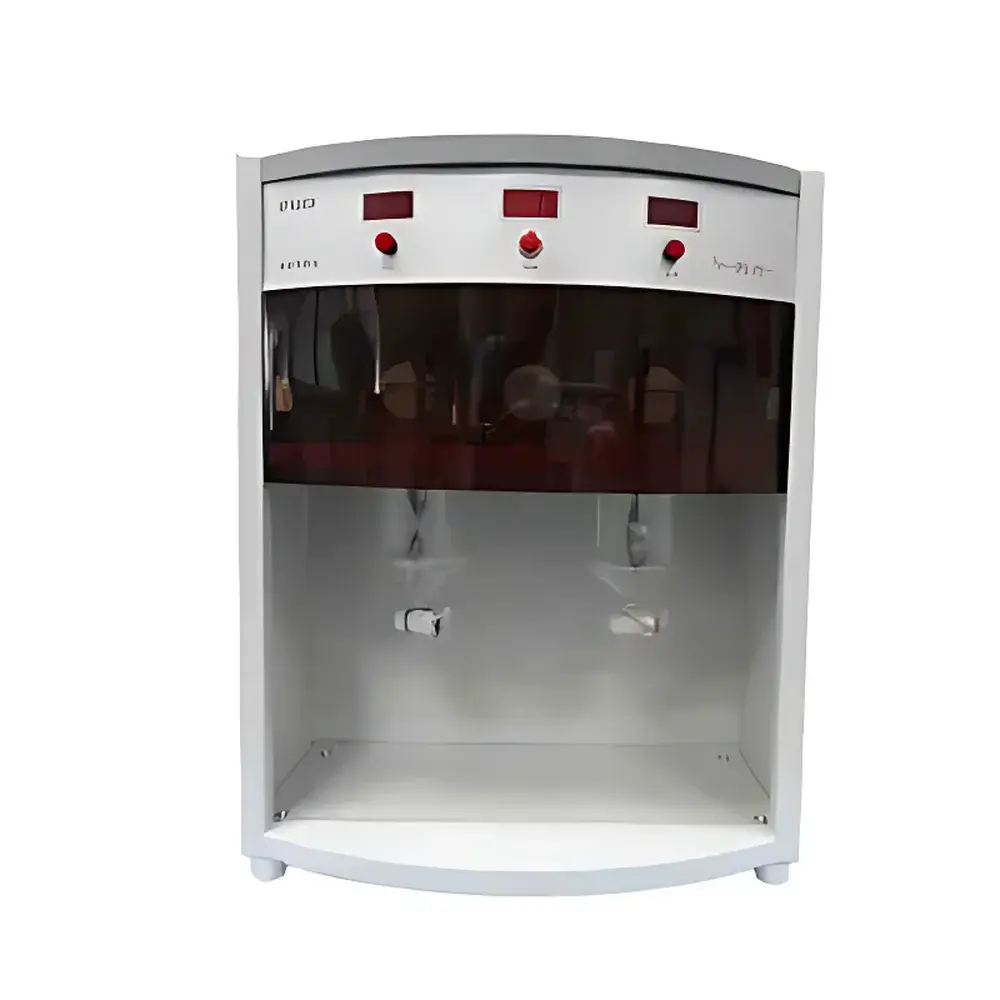
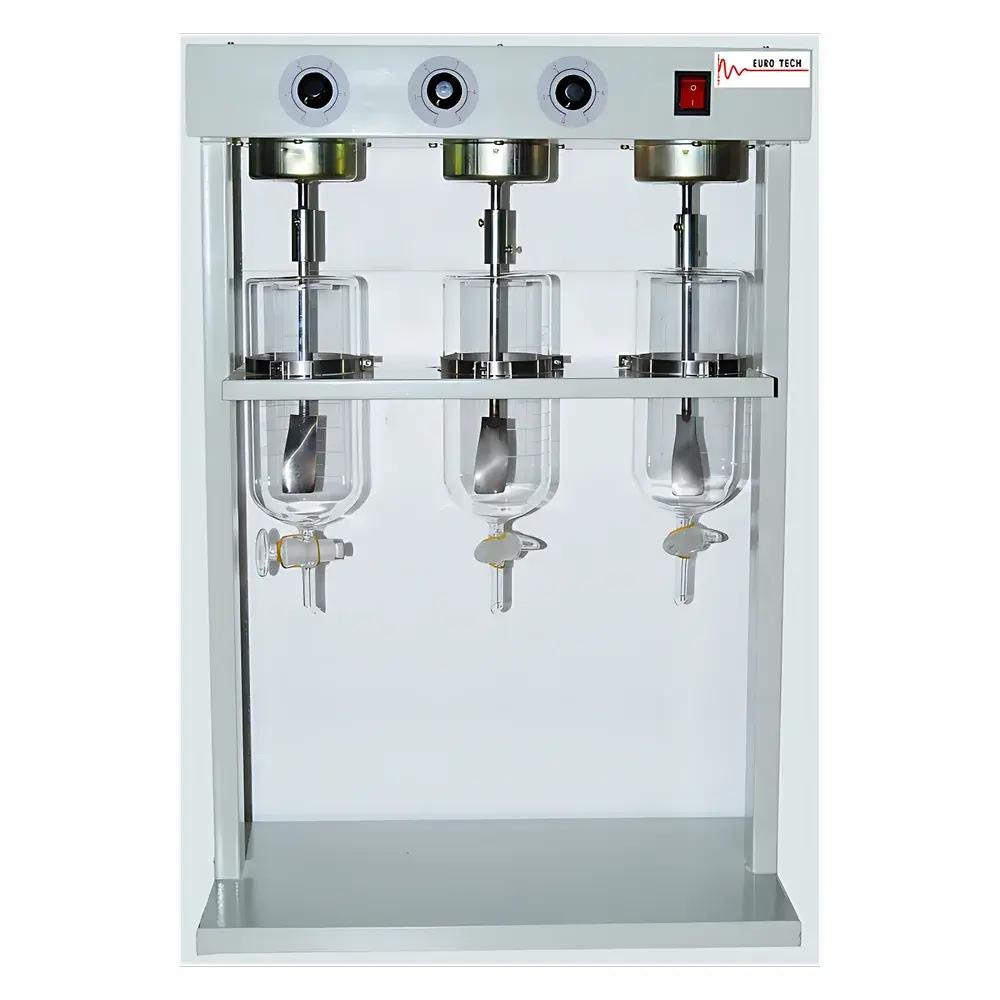
Euro Tech ET3200C Triple-Station Automated Liquid-Liquid Extraction System
| Brand | Euro Tech |
|---|---|
| Origin | Shanghai, China |
| Manufacturer Type | Authorized Distributor |
| Origin Category | Domestic (China) |
| Model | ET3200C |
| Instrument Type | Liquid-Liquid Extraction |
| Extraction Vessel Volume | 1000 mL × 3 |
| Extraction Time Range | 1–5 min per station |
| Dimensions (W×D×H) | 460 × 250 × 650 mm |
| Sample Throughput | 3 independent stations |
| Power Supply | 220 V / 50 Hz |
| Rated Power | 20 W |
| Net Weight | 15.7 kg |
Overview
The Euro Tech ET3200C Triple-Station Automated Liquid-Liquid Extraction System is an engineered solution for reproducible, operator-independent liquid-liquid extraction (LLE) in regulated and high-throughput laboratory environments. Unlike manual LLE protocols—prone to inter-operator variability, emulsion formation, and inconsistent phase separation—the ET3200C employs controlled mechanical agitation followed by gravity-driven phase settling and precise piston-valve–actuated collection of the target extract layer. Its design adheres to fundamental mass-transfer principles governing partition coefficient–driven analyte transfer between immiscible solvents (e.g., water/ethyl acetate, dichloromethane/hexane), ensuring thermodynamic equilibrium conditions are approached within defined agitation and settling intervals. The system serves as a validated bridge between classical wet chemistry and modern instrumental analysis workflows, particularly where sample preparation must comply with method requirements outlined in EPA Method 3510C, ISO 11348-3, or pharmacopoeial monographs requiring quantitative recovery of organic contaminants, pharmaceutical actives, or environmental metabolites.
Key Features
- Triple-station architecture enables parallel processing of three independent LLE samples—reducing total batch time by up to 67% compared to sequential manual extraction.
- Programmable agitation speed and duration (1–5 min per cycle) ensure consistent mixing intensity across all stations, minimizing shear-induced emulsification while maximizing interfacial contact area.
- Piston-driven valve mechanism delivers precise, drip-free withdrawal of the organic or aqueous phase post-settling—eliminating cross-contamination risks associated with pipetting or siphoning.
- Modular vessel holders accommodate standard 1000 mL separatory funnels or custom-designed extraction cells, supporting both standardized and method-specific configurations.
- Low-power consumption (20 W) and passive thermal design eliminate active heating/cooling components—ensuring compatibility with volatile solvent systems and reducing ambient heat load in analytical labs.
- Compact footprint (460 × 250 × 650 mm) integrates seamlessly into fume hood workspaces without compromising ergonomic access or safety clearance.
Sample Compatibility & Compliance
The ET3200C supports a broad range of aqueous and organic solvent pairs commonly used in environmental, clinical, and pharmaceutical laboratories—including but not limited to chloroform, ethyl acetate, diethyl ether, hexane, MTBE, and acetonitrile. Its inert wetted path (glass funnels + PTFE-sealed valves) ensures chemical resistance and low background contamination. While the instrument itself does not incorporate real-time pressure or temperature monitoring, its operational envelope aligns with Class I, Division 2 hazardous location guidelines when used inside certified fume hoods. Documentation packages include IQ/OQ templates compliant with GLP and ISO/IEC 17025 frameworks, facilitating audit readiness for laboratories subject to FDA 21 CFR Part 11–governed data integrity requirements.
Software & Data Management
The ET3200C operates via front-panel push-button controls with LED status indicators—intentionally omitting embedded microprocessors or network interfaces to enhance long-term reliability and reduce firmware validation burden. All method parameters (agitation time, station selection, valve actuation sequence) are manually configured and recorded in laboratory notebooks or LIMS-integrated electronic lab notebooks (ELNs). This minimalist control architecture eliminates software qualification overhead typically required for fully automated ASE or SPE platforms, making it suitable for QC labs operating under simplified validation regimes per USP Analytical Instrument Qualification.
Applications
- Environmental testing: Extraction of PAHs, PCBs, organochlorine pesticides, and phenolic compounds from wastewater, soil leachates, and sediment extracts per EPA SW-846 Methods 3510C and 3520C.
- Pharmaceutical quality control: Isolation of residual solvents, genotoxic impurities, or degradation products from drug substance batches prior to GC-FID or LC-MS analysis.
- Clinical toxicology: Recovery of benzodiazepines, opioids, and amphetamines from urine or plasma matrices using back-extraction protocols.
- Food safety: Determination of mycotoxins (e.g., aflatoxin B1) and veterinary drug residues (e.g., sulfonamides) in milk, honey, and tissue homogenates.
FAQ
Does the ET3200C support heated or pressurized extraction?
No. It is designed exclusively for ambient-pressure, room-temperature liquid-liquid extraction. It does not perform accelerated solvent extraction (ASE) or supercritical fluid extraction (SFE).
Can extraction vessels other than 1000 mL separatory funnels be used?
Yes—provided they fit within the mechanical constraints of the station clamps and interface correctly with the piston-valve alignment collar. Custom adapters are available upon request.
Is the system compatible with corrosive solvents such as concentrated HCl or HF?
No. Wetted materials (glass, PTFE, stainless steel 304) are incompatible with hydrofluoric acid and strongly oxidizing acids. Use only with solvents listed in the material compatibility chart supplied with the instrument manual.
What maintenance is required?
Monthly inspection of valve seals and funnel clamps; annual lubrication of piston drive mechanisms using FDA-approved silicone grease; no calibration is required as no transducers or analog sensors are present.
How is method traceability ensured without digital logging?
Through adherence to written standard operating procedures (SOPs), contemporaneous handwritten records, and integration with ELN systems that capture user ID, timestamp, and parameter settings at run initiation—fully satisfying ALCOA+ data integrity principles.



