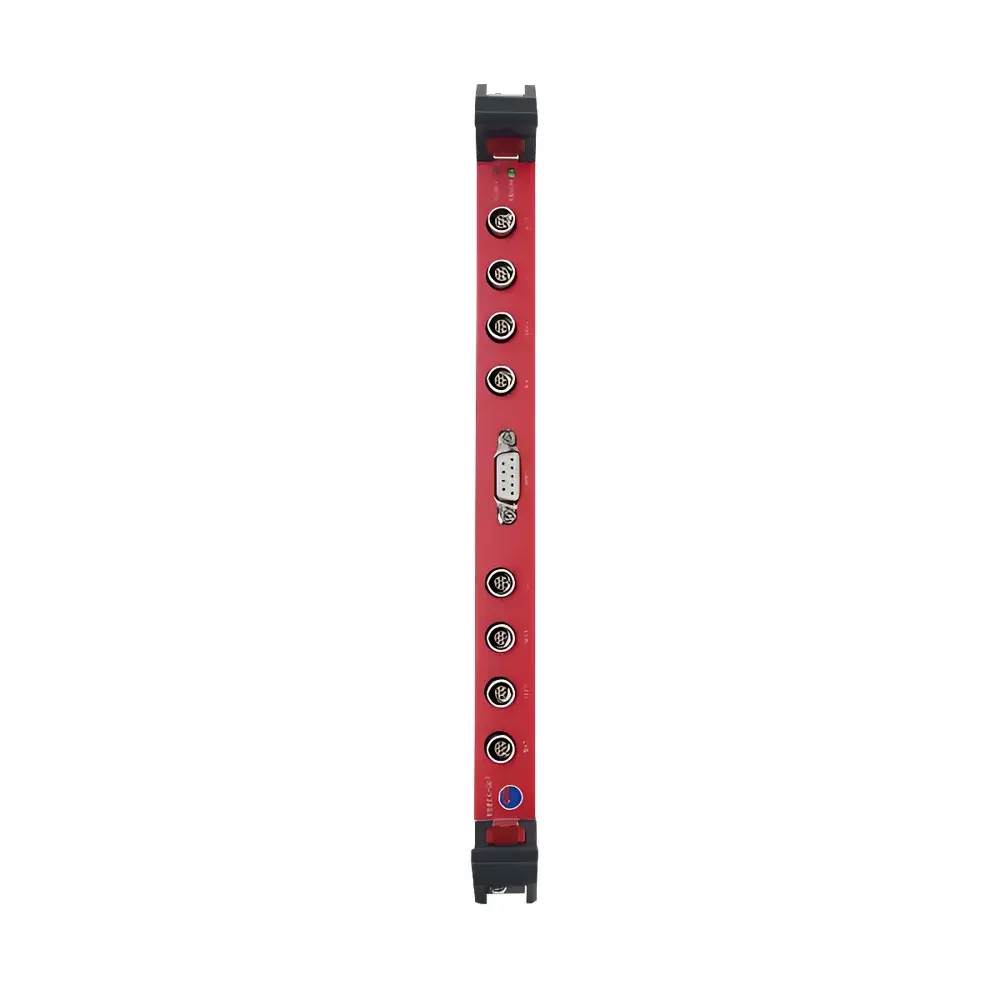
EverACQ μXI-X3658 Isolated High-Speed Counter Card
| Brand | EverACQ Technologies |
|---|---|
| Origin | Anhui, China |
| Manufacturer Type | OEM Manufacturer |
| Product Category | Domestic |
| Model | μXI-X3658 |
| Pricing | Upon Request |
Overview
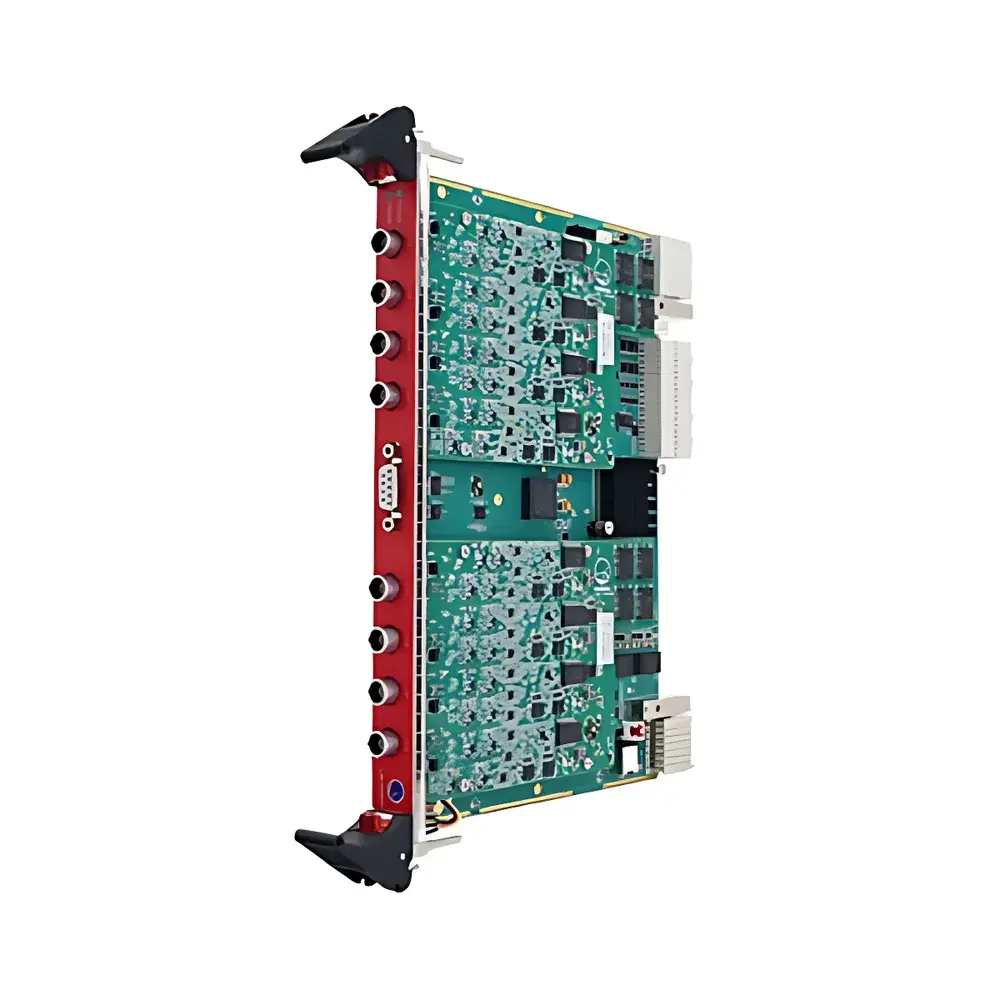
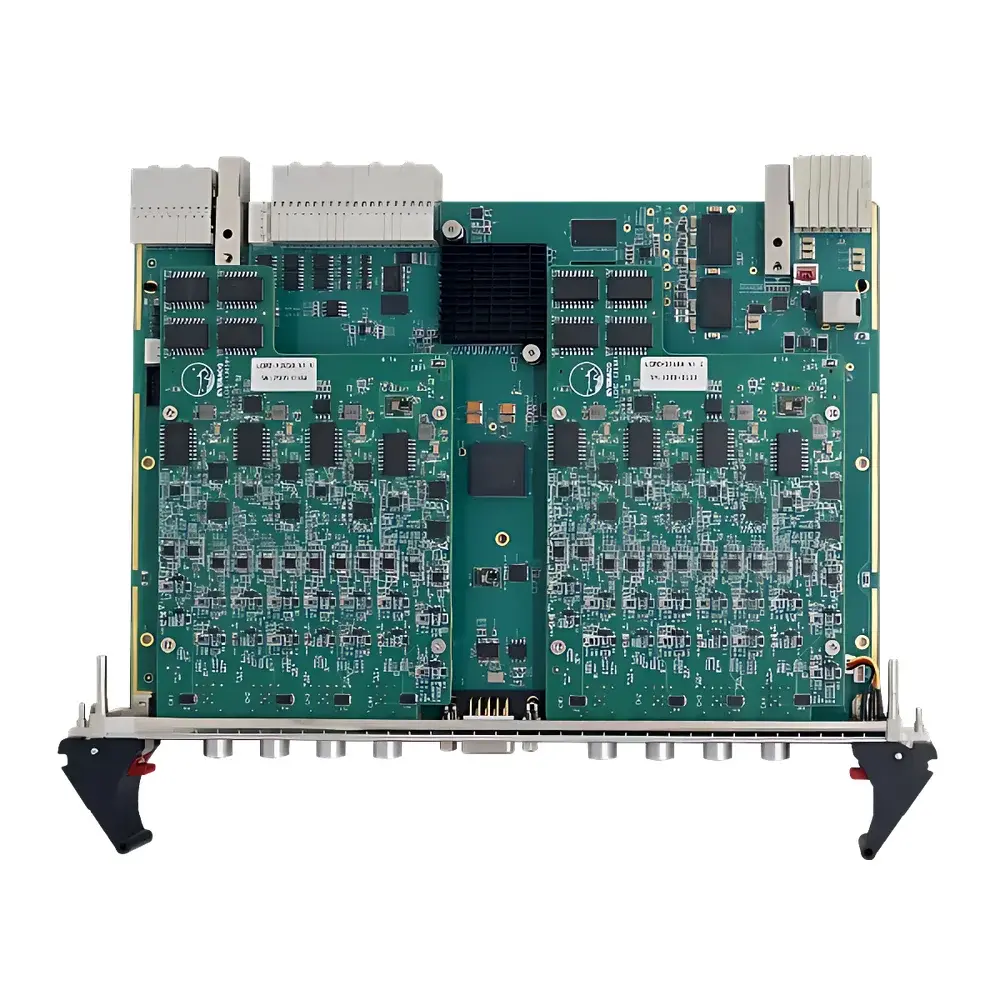
The EverACQ μXI-X3658 is a high-performance, isolated 8-channel counter/timer data acquisition card engineered for precision timing, event counting, and quadrature encoder interfacing in demanding industrial automation, motion control, and laboratory test environments. Built upon a robust digital architecture with hardware-level galvanic isolation, the μXI-X3658 employs 32-bit counter cores synchronized to a stable onboard timebase, enabling deterministic timestamping of transient digital events with microsecond-scale resolution. Its core measurement principle relies on edge-triggered synchronous sampling of TTL/CMOS-compatible input signals, supporting both rising- and falling-edge detection per channel. Designed for integration into PC-based measurement systems, the card operates via PCIe x1 interface (with native support for PXIe expansion through modular daughterboard architecture), delivering low-latency, jitter-free acquisition essential for closed-loop feedback control, pulse-width analysis, and high-speed frequency metrology.
Key Features
- Eight independent 32-bit counters, each operating at up to 10 MHz maximum input frequency — capable of resolving pulse widths down to 100 ns with sub-microsecond timing accuracy.
- Channel-to-ground and channel-to-channel isolation rated at 500 VRMS, achieved via integrated optocouplers and isolated power domains — mitigating ground loops and suppressing common-mode noise in electrically noisy factory or motor-drive environments.
- Multi-mode counter operation per channel: event counting (increment/decrement), period measurement, pulse width/duty cycle calculation, and quadrature decoding (X1/X2/X4 resolution) for rotary and linear encoders.
- Hardware-synchronized acquisition across all eight channels — no software-induced skew; all counters share a common reference clock and trigger domain for phase-coherent multi-sensor correlation.
- Modular mezzanine design: base μXI-X3658 carrier board supports plug-in daughter modules for PXI Express compatibility, analog I/O expansion, or specialized signal conditioning — enabling scalable system configuration without redesign.
- Onboard FIFO buffer (up to 8 k samples per channel) and DMA-driven data streaming ensure uninterrupted acquisition during sustained high-rate pulse trains, minimizing host CPU overhead.
Sample Compatibility & Compliance
The μXI-X3658 interfaces with standard industrial digital sensors including incremental encoders (A/B/Z phases), proximity switches, photoelectric sensors, Hall-effect triggers, and TTL/CMOS logic outputs. Input voltage range is compatible with 0–5 VDC logic levels (5 V tolerant), with configurable hysteresis and digital filtering to suppress contact bounce or EMI-induced false triggering. The device complies with CE marking requirements for electromagnetic compatibility (EMC Directive 2014/30/EU) and low-voltage safety (LVD Directive 2014/35/EU). While not certified for SIL or functional safety applications, its isolation performance aligns with IEC 61000-4-5 surge immunity (Level 3) and IEC 61000-4-4 fast transient burst (Level 3), supporting use in Class A industrial settings per EN 61326-1.
Software & Data Management
Driver support includes native Windows WDM and Linux kernel modules (via open-source HAL libraries), with API bindings for C/C++, Python (PyDAQmx-compatible wrapper), LabVIEW (NI-DAQmx emulation layer), and MATLAB Instrument Control Toolbox. Configuration and real-time monitoring are enabled through EverACQ’s cross-platform EverStudio application, which provides graphical counter setup, live waveform visualization, histogram-based pulse statistics, and export to CSV, HDF5, or TDMS formats. All acquired timestamps and counter values are logged with nanosecond-precision system timestamps (via TSC synchronization), supporting traceable data lineage for GLP-compliant validation protocols. Audit trail functionality — including user login, parameter change history, and session metadata — can be enabled to meet basic FDA 21 CFR Part 11 record-keeping expectations when deployed in regulated QA/QC workflows.
Applications
- Motion profiling and servo tuning using multi-axis encoder feedback in CNC machines and robotic arms.
- Rotational speed and direction monitoring of turbines, pumps, and conveyor systems under variable load conditions.
- Pulse-based flow meter signal processing (e.g., turbine or vortex meters) with simultaneous totalization and rate calculation.
- Time-of-flight measurements in ultrasonic or laser distance sensors requiring precise edge detection and interval timing.
- Production line part counting with anti-jamming logic, where isolation prevents miscounts due to nearby welding or VFD interference.
- Research-grade temporal correlation experiments involving multiple asynchronous digital event sources (e.g., particle detector coincidences or laser pulse train synchronization).
FAQ
Is the μXI-X3658 compatible with National Instruments PXI chassis?
Yes — when equipped with the optional PXIe mezzanine adapter module, the μXI-X3658 functions as a full-slot PXI Express peripheral with System Timing and Local Bus support.
Can counter channels be configured for differential inputs?
No — inputs are single-ended TTL/CMOS; however, the 500 V isolation and programmable digital filters provide effective noise rejection comparable to many differential-receiver implementations.
Does the card support hardware-timed start/stop triggers?
Yes — external TTL-compatible START, STOP, and GATE signals are available via dedicated SMA connectors, enabling precise external synchronization with other instruments or process events.
What is the maximum sustained data throughput over PCIe?
With DMA streaming enabled, the card achieves >40 MB/s sustained transfer rate — sufficient for continuous 8-channel 10 MHz pulse capture with timestamping at full resolution.
Is firmware upgrade capability available in the field?
Yes — firmware updates are delivered via EverStudio and applied without hardware modification; version history and rollback support are included for auditability.