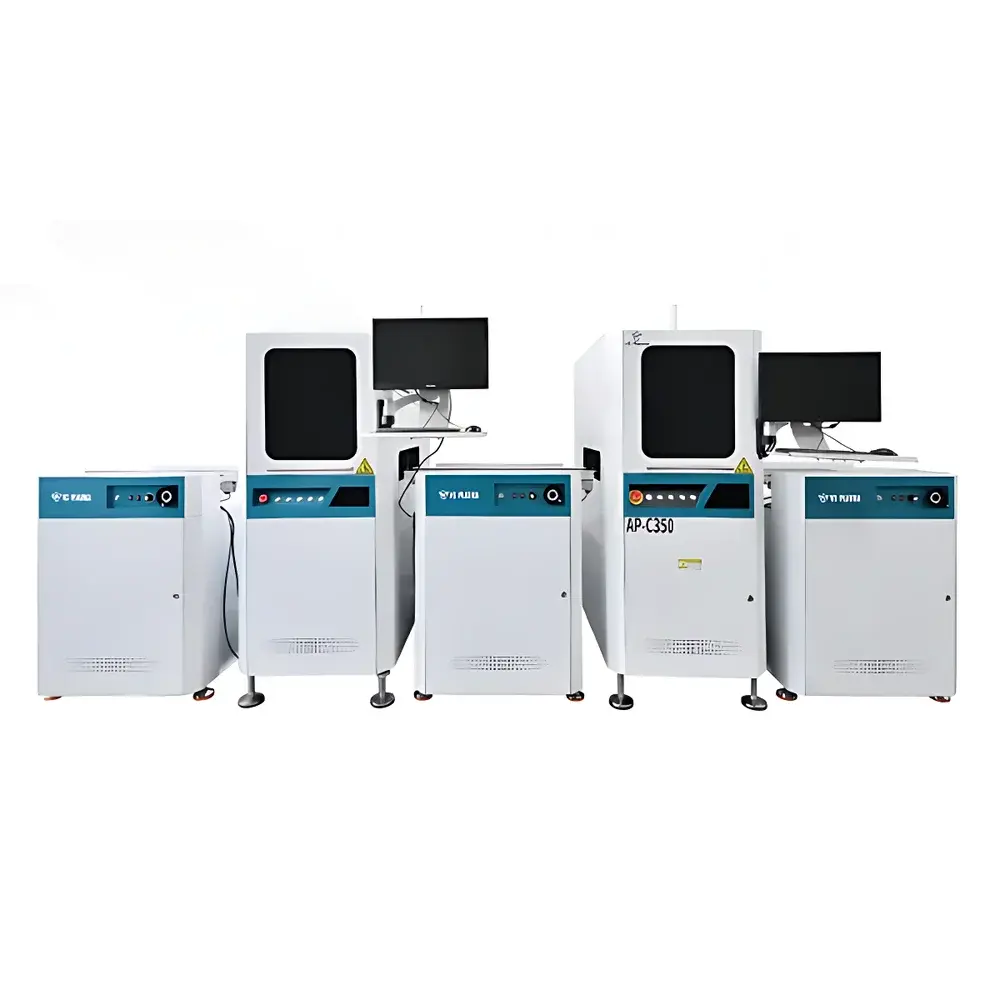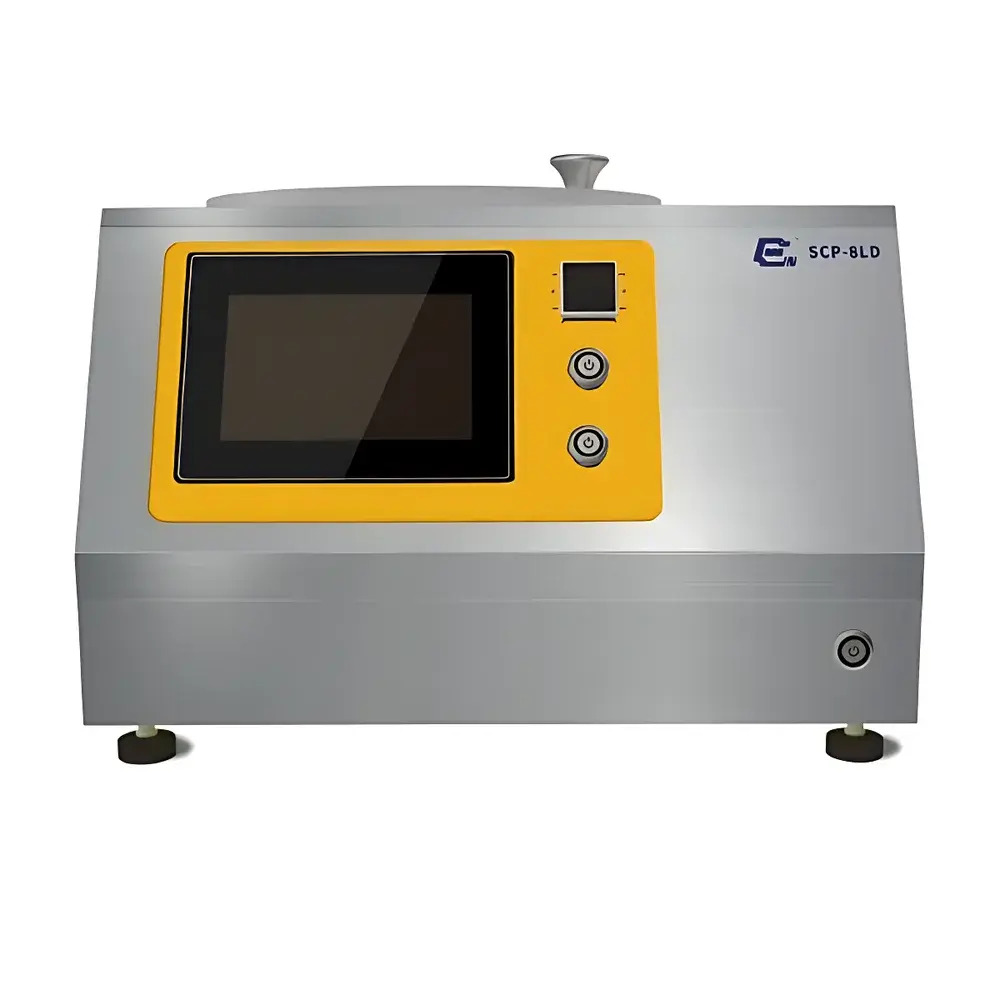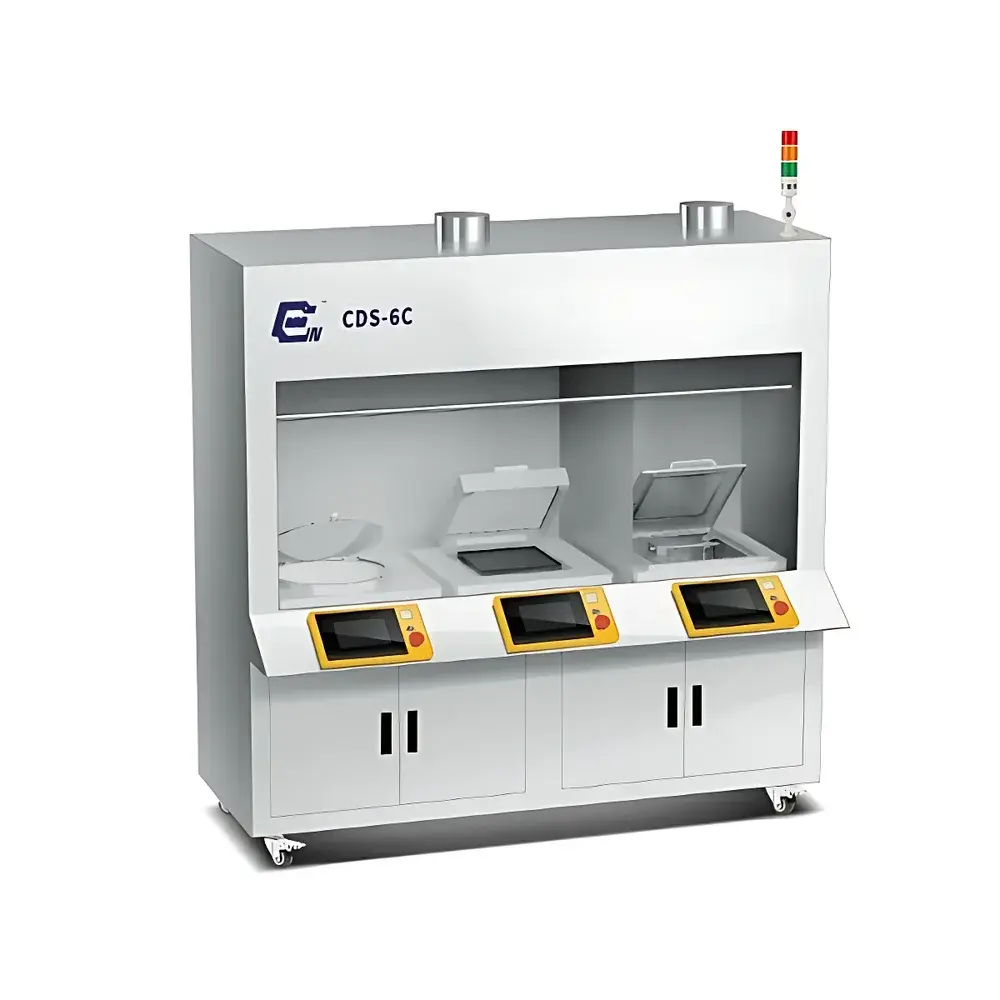
EWIN-TECH CDS-6C Integrated Cabinet-Type Photoresist Coating, Soft-Bake & Development System
| Brand | EWIN-TECH |
|---|---|
| Origin | Shanghai, China |
| Manufacturer Type | OEM Manufacturer |
| Country of Origin | China |
| Model | CDS-6C |
| Pricing | Upon Request |
Overview
The EWIN-TECH CDS-6C Integrated Cabinet-Type Photoresist Coating, Soft-Bake & Development System is a fully enclosed, benchtop-scale process platform engineered for precision photolithography workflows in academic research laboratories, R&D centers, and pilot-line semiconductor fabrication environments. Based on established spin-coating hydrodynamics and thermal conduction principles, the system integrates three core unit operations—photoresist dispensing and spin coating, post-apply soft-bake (plate heating), and aqueous or solvent-based development—within a single ISO Class 5–compatible cabinet enclosure. Its architecture adheres to cleanroom-compatible design standards: electropolished stainless steel or chemical-resistant polypropylene (PP) interior surfaces minimize particle generation and prevent re-deposition; integrated FFU (Fan Filter Unit) filtration ensures laminar airflow over the wafer stage; and gravity-fed waste drainage pathways avoid vacuum-induced turbulence or splashing during developer dispense and rinse cycles.
Key Features
- High-fidelity rotational control: Spin-coating module delivers programmable rotation from 20 to 5000 rpm with ±1 rpm speed stability—critical for repeatable film thickness control across 50 mm to 200 mm substrates.
- Precision thermal management: Hotplate module maintains uniform surface temperature from ambient to 250°C with ±0.2°C setpoint accuracy and <±0.5°C spatial uniformity over 150 mm diameter, validated per ASTM E2234.
- Modular operational independence: Coating, soft-bake, and development modules operate as discrete units under unified PLC supervision—enabling sequential, parallel, or standalone execution without cross-contamination risk.
- Programmable liquid handling: Motorized dispense arm with closed-loop feedback controls photoresist and developer volume, timing, and radial trajectory; integrated DI-water spray nozzles support automated post-develop rinse and spin-dry cycles.
- Human-machine interface (HMI): 7-inch industrial-grade capacitive touchscreen provides intuitive recipe navigation, real-time parameter monitoring, alarm logging, and audit-ready operation history export via USB.
Sample Compatibility & Compliance
The CDS-6C accommodates standard silicon, glass, quartz, GaAs, and flexible polymer substrates ranging from 50 mm (2″) to 200 mm (8″) in diameter. Vacuum chucks are interchangeable and configurable for flat or beveled-edge wafers. All wet-process modules comply with SEMI S2-0215 safety guidelines for chemical handling, and the cabinet structure meets IEC 61000-6-3 EMC emission limits. Optional configuration supports GLP/GMP-aligned operation: electronic signature-capable recipe locking, time-stamped event logs, and user-level access control (admin/operator/technician tiers) satisfy FDA 21 CFR Part 11 data integrity requirements when paired with optional networked data archiving.
Software & Data Management
The embedded PLC-based control firmware stores up to 50 process recipes, each supporting up to 20 sequential steps—including dispense volume, spin ramp profile, dwell time, hotplate ramp/soak/cool sequences, and developer agitation parameters. All recipes are password-protected and versioned. Operational data—including start/stop timestamps, actual vs. setpoint rpm/temperature values, dispense volume confirmation, and fault codes—is logged locally and exportable in CSV format. Optional Ethernet connectivity enables remote monitoring via Modbus TCP or integration into centralized MES platforms using standard OPC UA drivers.
Applications
This system serves as a primary lithographic tool in university cleanrooms, national lab microfabrication facilities, and corporate R&D labs developing MEMS, OLED backplanes, photonic integrated circuits, perovskite solar cells, and advanced packaging substrates. Typical use cases include: optimization of resist viscosity–spin speed–thickness correlation models; evaluation of post-apply bake (PAB) thermal profiles on standing wave effects; comparative development rate studies across TMAH, KOH, and organic developers; and DOE-driven process window analysis for sub-100 nm feature definition. Its reproducibility supports ISO/IEC 17025-compliant method validation protocols.
FAQ
What substrate sizes does the CDS-6C support?
Standard configurations accommodate 50 mm, 100 mm, 150 mm, and 200 mm wafers; custom chuck kits are available for non-standard geometries including rectangular glass slides (up to 150 × 150 mm).
Is the system compatible with hazardous developers such as concentrated TMAH?
Yes—the PP-lined cabinet variant includes chemically resistant seals, corrosion-inhibited internal ducting, and dedicated acid/base exhaust routing; optional secondary containment trays are available.
Can process data be exported for regulatory submission?
Yes—CSV-formatted logs include operator ID, timestamp, recipe name, step-by-step parameter traces, and system status flags; optional software add-ons provide PDF report generation with digital signatures.
Does the system meet cleanroom certification requirements?
The base configuration achieves ISO Class 5 (Class 100) performance when operated with certified FFU filters and maintained per ISO 14644-1 protocols; full certification documentation is provided upon request.
What maintenance intervals are recommended?
Daily DI-water flush of dispense lines; quarterly calibration of hotplate thermocouples and tachometer sensors; annual verification of vacuum chuck integrity and FFU filter efficiency per ISO 14644-3 Annex B.