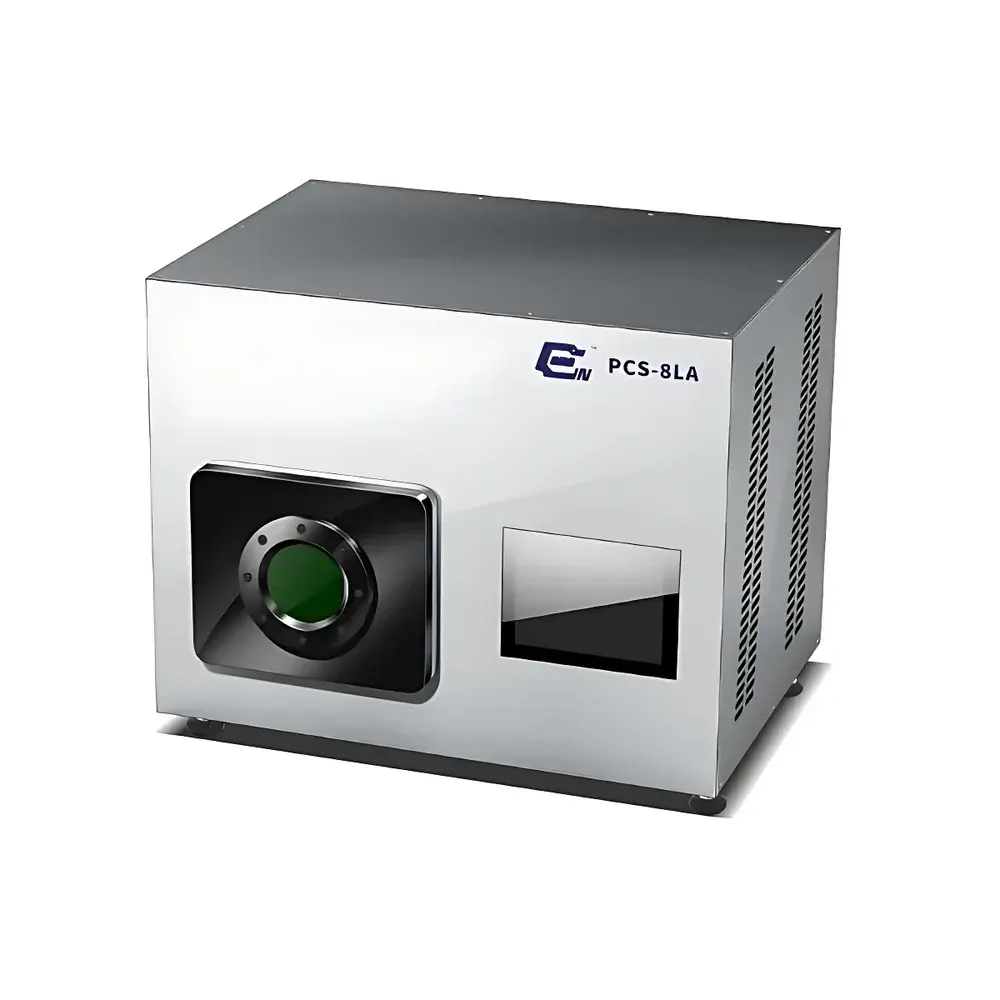
EWIN-TECH PCS-8LA Plasma Treatment System
| Brand | EWIN-TECH |
|---|---|
| Origin | Shanghai, China |
| Manufacturer Type | Direct Manufacturer |
| Regional Classification | Domestic (China) |
| Model | PCS-8LA |
| Pricing | Upon Request |
Overview
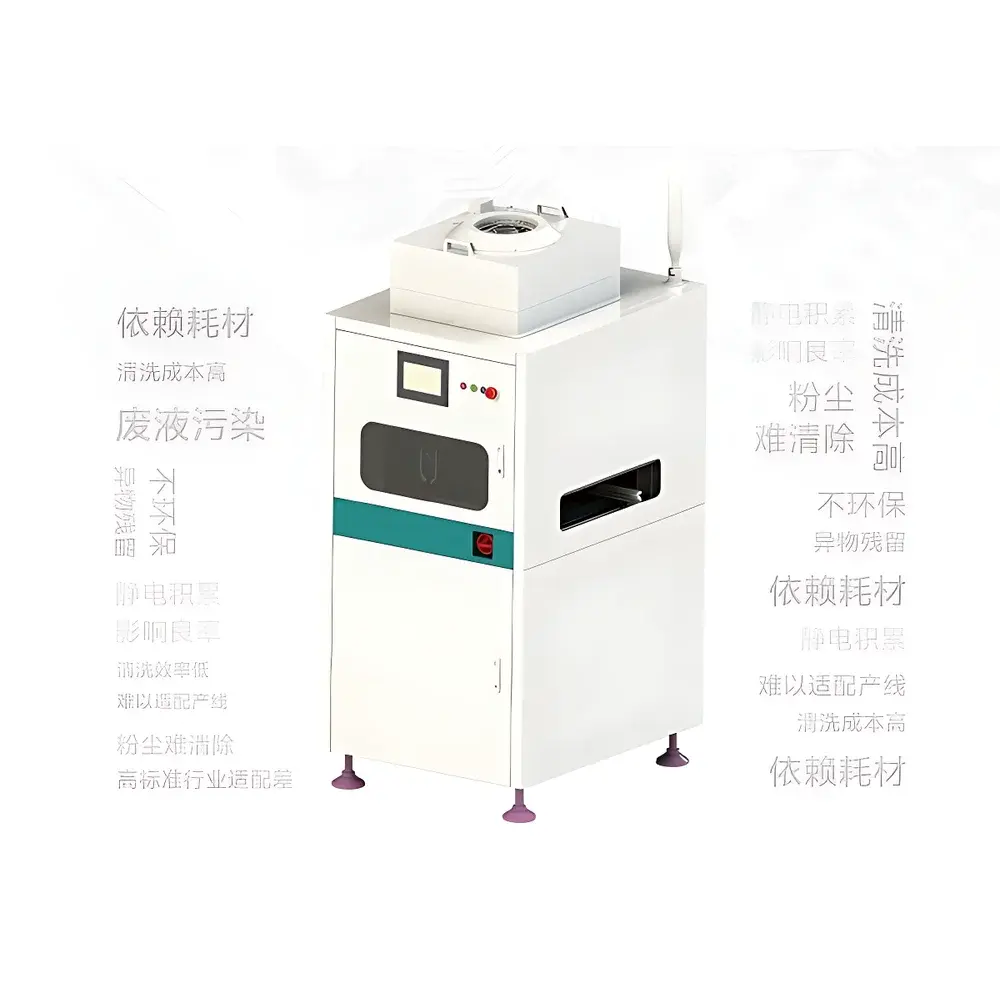
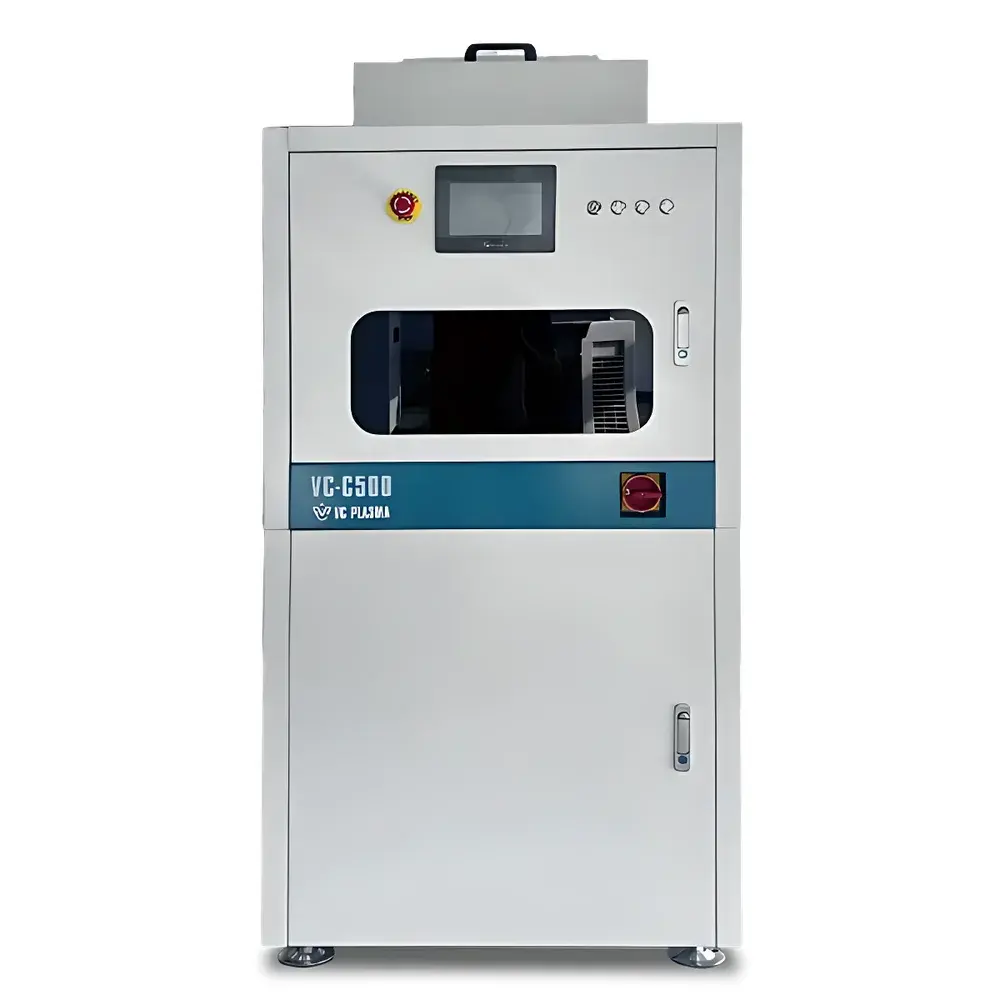
The EWIN-TECH PCS-8LA Plasma Treatment System is a benchtop RF-driven plasma processing instrument engineered for precision surface modification in research laboratories and pilot-scale micro/nanofabrication environments. It operates at a stable 13.56 MHz radio frequency (RF) to generate low-pressure, non-thermal plasma within a vacuum-sealed stainless-steel reaction chamber. Unlike high-energy DC or pulsed plasma sources, the 13.56 MHz RF excitation enables controlled electron temperature and reduced ion bombardment energy—critical for preserving delicate substrates such as photoresists, thin-film transistors, flexible polymer substrates, and biofunctionalized surfaces. The system employs a capacitively coupled plasma (CCP) configuration, where power delivery is optimized to sustain uniform plasma density across the electrode area while minimizing localized heating and surface charging effects. This architecture ensures repeatable, low-damage surface activation, desorption of organic contaminants, and functional group incorporation—without compromising structural integrity or interfacial adhesion properties.
Key Features
- 13.56 MHz RF plasma source with adjustable power output (0–300 W typical range), enabling fine-tuned control over plasma density and ion flux.
- Stainless-steel vacuum chamber (Ø150 mm × H120 mm) with integrated quartz viewport and calibrated pressure sensor (1–100 Pa range).
- Mass flow controller (MFC)-based gas delivery system supporting Ar, O₂, N₂, CF₄, and custom gas mixtures with ±1% full-scale accuracy.
- Programmable PLC-based control system with dual-mode operation: fully automated recipe execution or manual parameter override via 7-inch color touchscreen interface.
- Motorized sample stage with programmable vertical lift (0–50 mm travel, ±0.1 mm repeatability), eliminating manual handling and enabling contactless post-bake alignment.
- Dual-stage thermal management: closed-loop chamber temperature regulation (±2 °C stability) and insulated, dust-resistant top cover with reflective inner lining to minimize radiant heat loss and particulate ingress.
- Integrated safety architecture including independent overtemperature cutoff circuitry, RF interlock monitoring, and vacuum-level fail-safe shutdown.
Sample Compatibility & Compliance
The PCS-8LA accommodates wafers up to 8 inches (200 mm) in diameter, standard SEM stubs, glass slides, ceramic substrates, and irregularly shaped MEMS components. Its low-power, low-bias plasma regime meets requirements for pre-bonding cleaning in MEMS packaging, COG (Chip-on-Glass) alignment preparation, and surface functionalization prior to ALD or CVD nucleation. The system conforms to IEC 61000-6-3 (EMC emission limits) and IEC 61000-6-4 (industrial immunity). All electrical and vacuum interfaces comply with ISO 2859-1 sampling plans for incoming component inspection, and operational logs—including gas flow rates, RF power, chamber pressure, and treatment duration—are timestamped and exportable for GLP-compliant documentation. While not certified for GMP production lines, its audit-ready data structure supports FDA 21 CFR Part 11–aligned validation protocols when deployed in R&D or qualification labs.
Software & Data Management
The embedded HMI runs on a real-time Linux kernel with deterministic I/O response. Process recipes are stored locally with version control and support up to 99 user-defined programs, each containing multi-step sequences (e.g., purge → pump-down → gas introduction → plasma ignition → dwell → vent). All operational parameters are logged at 1 Hz resolution and can be exported in CSV or XML format via USB 2.0 or Ethernet. Optional PC-based software (EWIN-Control Suite v3.2) provides remote monitoring, statistical process control (SPC) charting, and comparative overlay of historical plasma impedance curves—enabling correlation between RF matching behavior and surface chemistry outcomes measured ex situ via XPS or water contact angle.
Applications
- Semiconductor front-end: native oxide removal from Si/SiO₂ before epitaxy; photoresist descumming without undercutting.
- Advanced packaging: surface activation of polyimide flex circuits prior to underfill dispensing; cleaning Au/Ni/Cu bond pads in fan-out wafer-level packaging (FOWLP).
- Micro-optics & photonics: anti-reflective coating pretreatment on fused silica lenses; hydrophilization of PDMS microfluidic channels.
- Life sciences: plasma sterilization of polystyrene cell culture plates; amine-functionalization of PET membranes for antibody immobilization.
- Materials R&D: graphene edge functionalization; carbon nanotube dispersion enhancement via carboxyl group grafting.
FAQ
What vacuum level is required for stable plasma ignition?
Typical operating pressure ranges from 5 to 50 Pa, depending on gas type and power setting. Base pressure ≤ 5 Pa is recommended prior to gas introduction.
Can the system operate with reactive gases like SF₆ or O₂/CF₄ blends?
Yes—the MFC supports corrosive and reactive gases; optional stainless-steel gas lines and Viton-free seals are available upon request.
Is remote diagnostics supported?
Standard Ethernet port enables ping-based connectivity checks; full remote access requires optional VPN-configured gateway module.
Does the PLC support custom logic integration with external tools?
Digital I/O ports (8 in / 8 out) with opto-isolation allow synchronization with spin coaters, mask aligners, or vacuum transfer modules.
What maintenance intervals are recommended for RF generator and vacuum pump?
RF matching network calibration every 6 months; oil-lubricated rotary vane pump oil change every 500 hours of cumulative operation.
Related Products