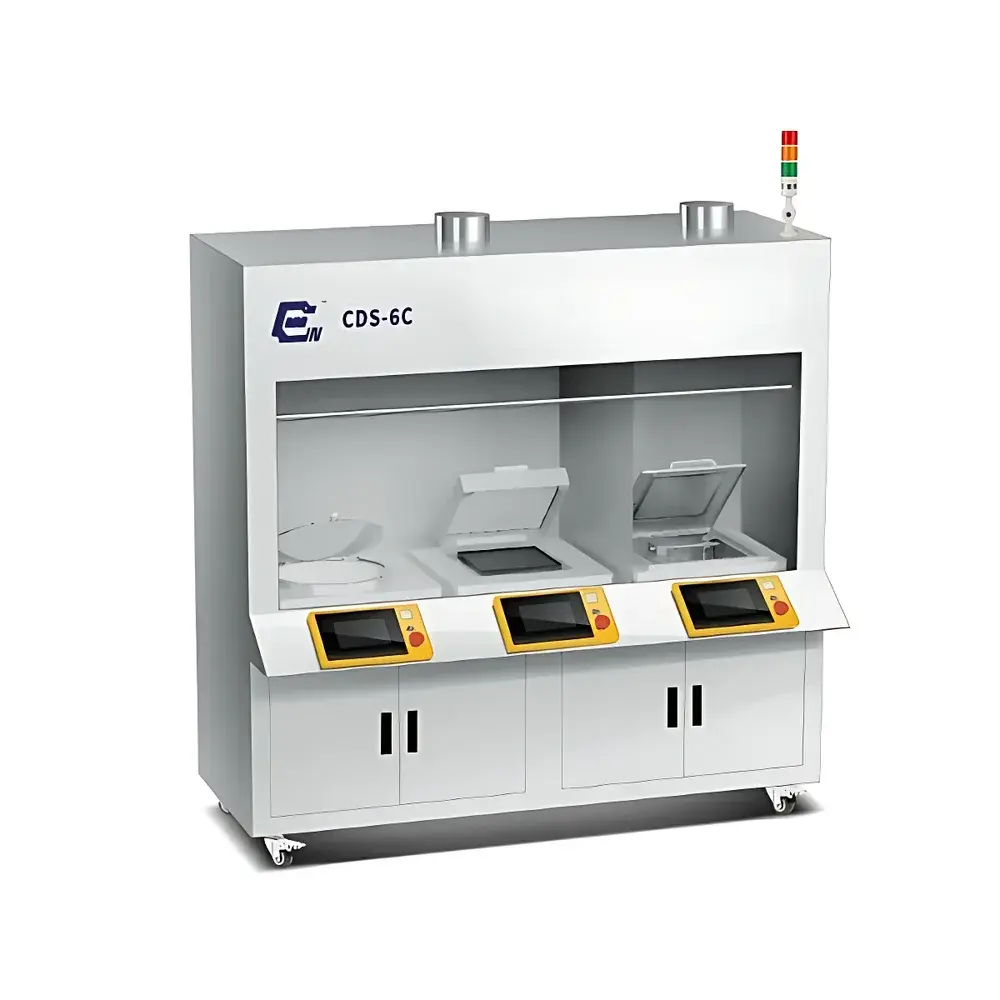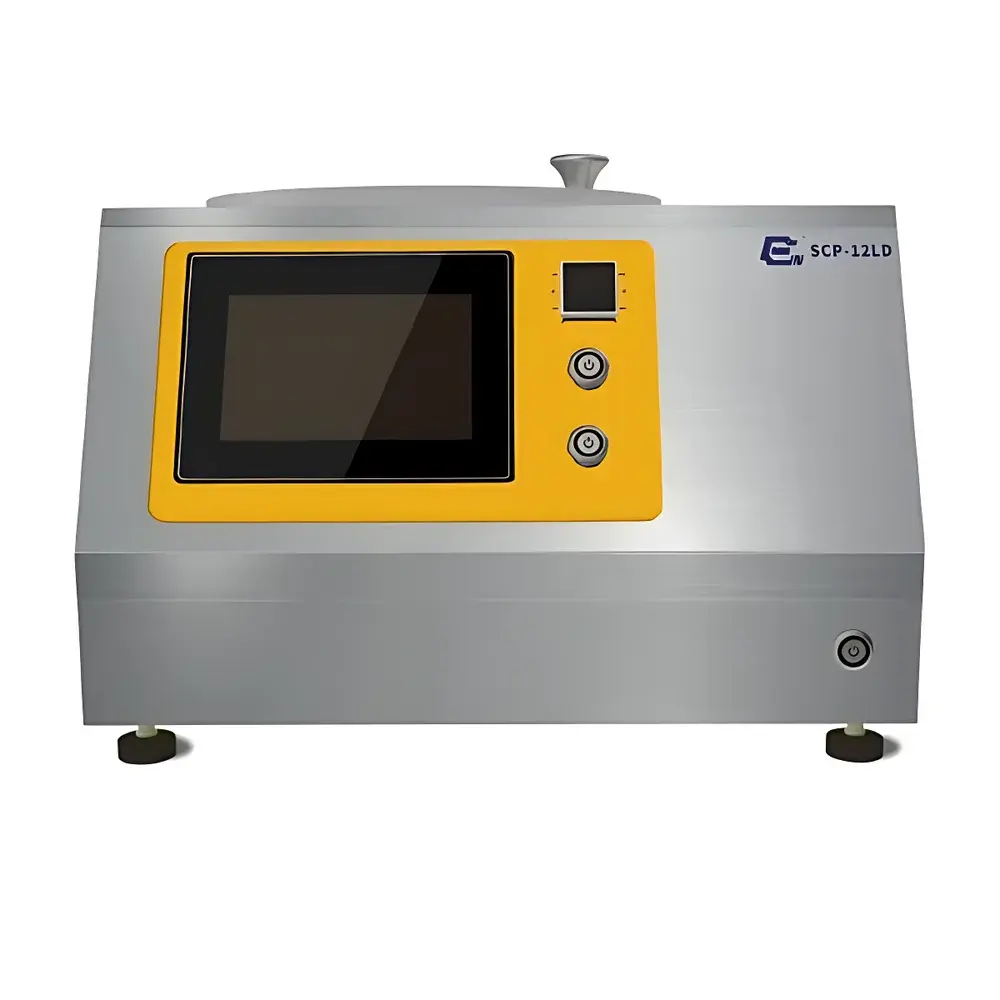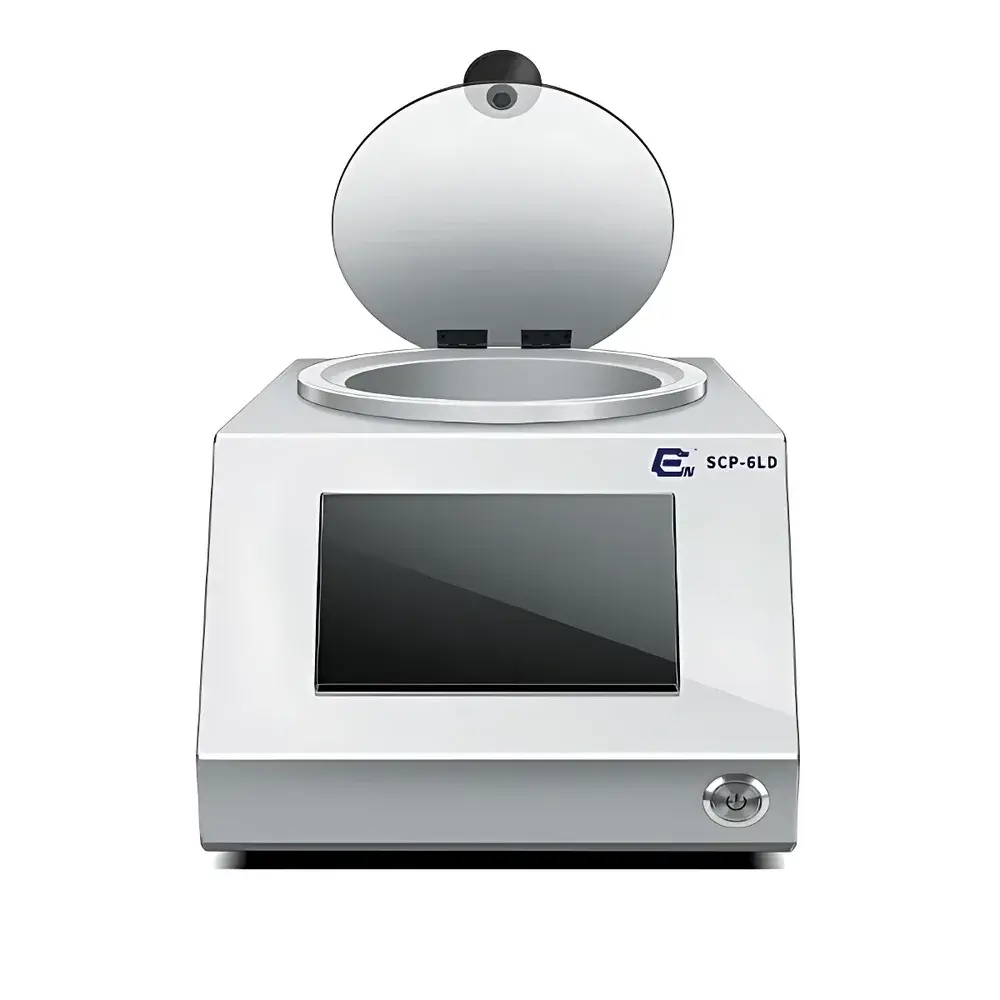
EWIN-TECH SCP-6LD Benchtop Spin Coater
| Brand | EWIN-TECH |
|---|---|
| Origin | Shanghai, China |
| Manufacturer Type | Original Equipment Manufacturer (OEM) |
| Regional Category | Domestic (China-made) |
| Model | SCP-6LD |
| Pricing | Available Upon Request |
Overview
The EWIN-TECH SCP-6LD Benchtop Spin Coater is a precision-engineered thin-film deposition instrument designed for controlled, repeatable spin coating of photoresists, polymer solutions, sol-gel precursors, and biological matrices onto flat substrates. Operating on the principle of centrifugal force-driven fluid thinning and solvent evaporation, the SCP-6LD delivers uniform film thicknesses with high spatial reproducibility—critical for photolithography, microfabrication, and functional thin-film R&D. Its modular architecture separates the motor-driven spindle assembly from the process chamber, minimizing vibration coupling and thermal drift, thereby enhancing coating consistency across wafer-scale substrates. Engineered for cleanroom-compatible operation, the system supports both research-grade exploratory workflows and low-volume pilot-line processing in semiconductor, optoelectronic, and life science laboratories.
Key Features
- Substrate versatility: Accommodates circular substrates from Ø10 mm to Ø150 mm—including silicon wafers, quartz, sapphire, glass, ceramic, and polymer films—via interchangeable vacuum chucks (10 mm, 25 mm, 50 mm, and 100 mm diameters).
- High-resolution rotational control: Motorized spindle delivers speed range of 100–10,000 rpm with 1-rpm incremental resolution, enabling fine-tuned shear rate modulation essential for controlling film thickness and morphology.
- Dual-mode coating protocols: Supports single-step rapid spin coating as well as multi-stage programmable sequences (up to 9 steps per recipe), each configurable with independent acceleration/deceleration rates, dwell times, and spin speeds—ideal for optimizing edge-bead removal, solvent drying kinetics, and gradient film formation.
- Modular process chamber: Removable inner chamber constructed from chemically resistant materials (PP, PMMA, or PTFE options available), facilitating rapid cleaning, cross-contamination mitigation, and compatibility with aggressive solvents (e.g., PGMEA, acetone, chlorobenzene, DMF).
- Integrated vacuum system: Oil-free diaphragm vacuum pump ensures stable substrate adhesion without hydrocarbon contamination; vacuum level and leak integrity are continuously monitored via pressure feedback loop.
- Human-machine interface: 7-inch industrial-grade capacitive touchscreen with intuitive GUI, real-time parameter visualization (actual vs. setpoint RPM, elapsed time, vacuum status), and password-protected user access levels for SOP enforcement.
Sample Compatibility & Compliance
The SCP-6LD is compatible with standard photolithographic resists (e.g., AZ®, SU-8, PMMA), conductive inks, perovskite precursors, hydrogels, and cell-laden bioinks. Its chamber geometry and material options meet ISO Class 5 (Class 100) cleanroom handling requirements when operated within appropriate enclosures. While not certified to specific regulatory standards out-of-the-box, the system’s deterministic process logging, parameter traceability, and hardware-level interlocks support alignment with GLP, GMP, and FDA 21 CFR Part 11 expectations when integrated into validated laboratory workflows. Optional audit trail modules enable timestamped event logging (recipe load, start/stop, error conditions) for quality documentation.
Software & Data Management
The embedded PLC-based controller stores up to 99 user-defined recipes with full versioning and metadata tagging (operator ID, date/time stamp, substrate ID). All runtime data—including actual RPM profiles, vacuum decay curves, and cycle completion status—are logged internally and exportable via USB 2.0 to CSV format. No proprietary software installation is required for basic operation; however, optional PC-based remote monitoring and fleet management tools (via Ethernet or RS-485) support centralized calibration tracking, preventive maintenance scheduling, and statistical process control (SPC) integration using industry-standard protocols (Modbus TCP).
Applications
- Semiconductor fabrication: Photoresist coating for mask aligner and stepper lithography processes on 2″–6″ wafers.
- Micro-optics & photonics: Uniform deposition of anti-reflective coatings, waveguide claddings, and luminescent thin films on fused silica and sapphire substrates.
- Flexible electronics: Solution-processed organic semiconductors (e.g., P3HT:PCBM), metal oxide TFT layers, and transparent conductive oxides on PET and PI foils.
- Bioscience & diagnostics: Controlled immobilization of antibodies, DNA probes, and extracellular matrix proteins on sensor chips and microfluidic device surfaces.
- Materials science: Sol-gel synthesis of TiO₂, SiO₂, and ZnO nanocomposite films for catalysis, energy storage, and gas sensing applications.
FAQ
What substrate sizes does the SCP-6LD support?
The system accepts round substrates ranging from Ø10 mm to Ø150 mm, with vacuum chucks provided for 10 mm, 25 mm, 50 mm, and 100 mm diameters. Custom chuck designs are available upon request.
Is the spin coater compatible with corrosive solvents like HF or piranha solution?
Standard chamber materials (PP, PMMA) resist most organic solvents and mild acids; however, direct exposure to concentrated HF or piranha requires PTFE-lined chambers and dedicated chemical handling protocols—not included by default.
Can I integrate the SCP-6LD into an automated cluster tool or track its usage via LIMS?
Yes—the device features Modbus TCP and RS-485 interfaces for OEM integration; optional OPC UA gateway and LIMS API adapters are available for enterprise-level connectivity.
Does the system include calibration certification or traceable metrology documentation?
Factory calibration reports (spindle speed accuracy, vacuum hold-down performance) are supplied with each unit; NIST-traceable third-party calibration services can be arranged separately.
What maintenance intervals are recommended for long-term reliability?
Routine inspection of vacuum seals and chuck surfaces is advised every 200 operating hours; motor and pump service intervals are specified at 5,000 and 3,000 hours respectively—both documented in the technical manual.