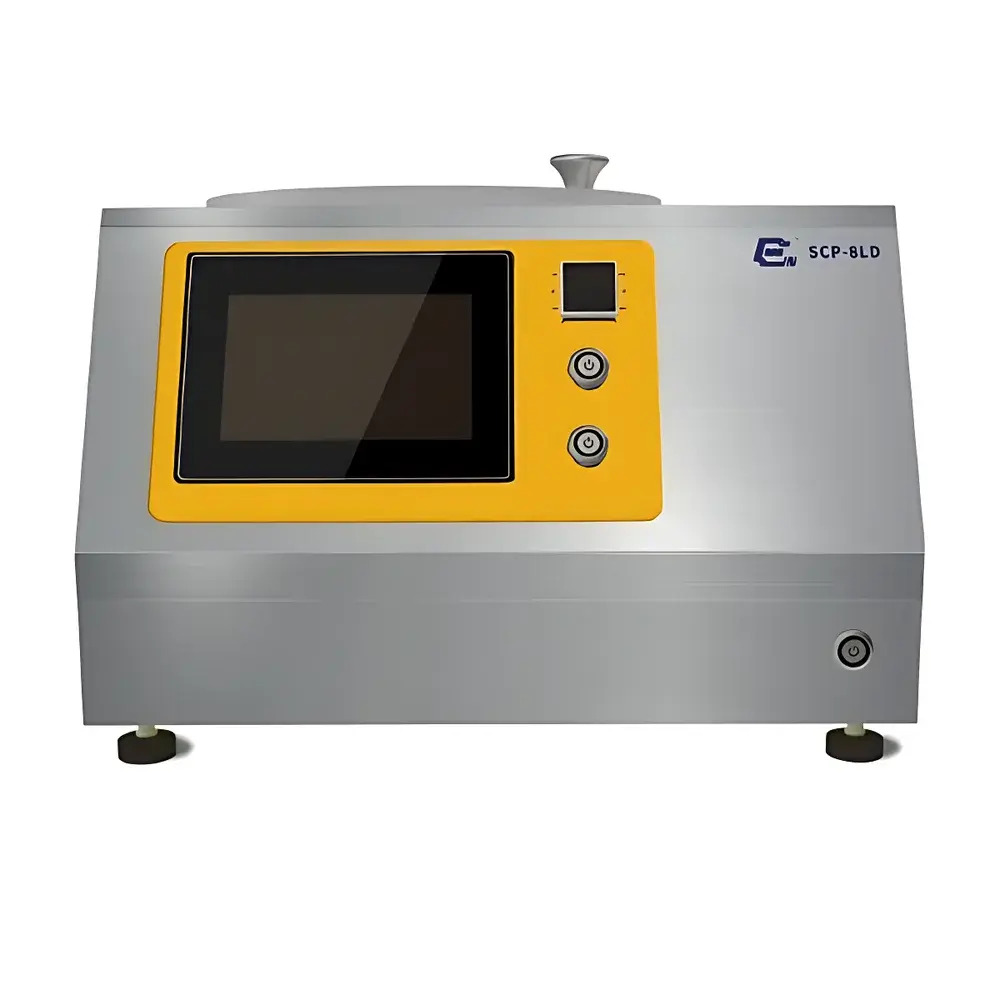
EWIN-TECH SCP-8LD Benchtop Spin Coater
| Brand | EWIN-TECH |
|---|---|
| Origin | Shanghai, China |
| Manufacturer Type | Original Equipment Manufacturer (OEM) |
| Regional Classification | Domestic (China) |
| Model | SCP-8LD |
| Pricing | Upon Request |
Overview
The EWIN-TECH SCP-8LD Benchtop Spin Coater is an engineered solution for precise photoresist, photosensitive polymer, and functional ink deposition onto planar substrates—primarily silicon wafers, glass slides, quartz masks, and flexible polymer films. It operates on the principle of centrifugal force-driven thin-film formation: a controlled volume of liquid coating material is dispensed onto a stationary substrate, which is then accelerated to a defined rotational speed and held for a programmable duration. During spin rotation, solvent evaporation and radial mass transport govern final film thickness, uniformity, and surface morphology. Designed for R&D laboratories and pilot-line semiconductor fabrication environments, the SCP-8LD delivers repeatable, process-controlled spin coating under ambient conditions, with integrated vacuum chucking and real-time pressure monitoring to ensure substrate adhesion integrity throughout acceleration and steady-state rotation.
Key Features
- High-precision vacuum chuck with lapped aluminum alloy platen (flatness ≤ ±1 µm over 150 mm diameter), minimizing edge-thinning and center-thickening artifacts.
- Adjustable rotational speed range from 1 rpm to 3000 rpm in 1-rpm increments, with programmable acceleration/deceleration profiles governed by industrial-grade PLC logic to suppress substrate ejection (“fly-off”) during ramp-up.
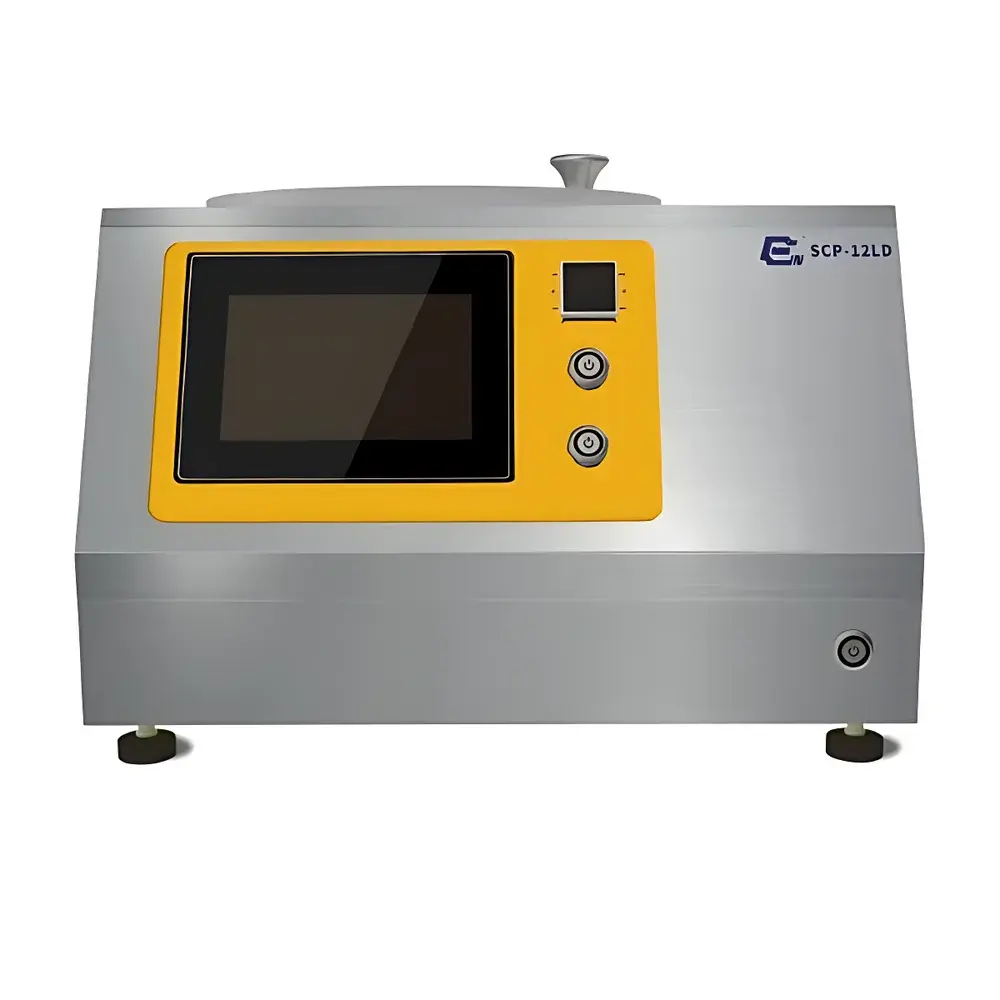
- 7-inch high-brightness resistive touch HMI interface with intuitive recipe navigation, supporting up to 50 user-defined process sequences—including dispense timing, spin speed, dwell time, and vacuum hold parameters.
- Dual-stage vacuum system with digital pressure display (0–100 kPa absolute) and configurable low-pressure alarm threshold (default: < –60 kPa), ensuring continuous substrate clamping even during solvent-rich dispense phases.
- Modular fluid handling architecture featuring integrated photoresist filtration (0.2 µm PTFE membrane), sealed waste collection reservoir (1.5 L capacity), and chemically resistant wetted materials (316 stainless steel, PEEK, fluorosilicone seals).
- Electromechanical isolation design: brushless DC motor mounted on vibration-damping elastomeric mounts; electrical control cabinet physically separated from the spin chamber to prevent solvent vapor ingress and cross-contamination.
Sample Compatibility & Compliance
The SCP-8LD accommodates standard semiconductor substrates up to 8 inches (200 mm) in diameter, including Si, SiO₂/SiNₓ wafers, fused silica, ITO-coated glass, and polyimide-based flexible substrates. Chuck geometry supports both flat and slightly warped wafers (up to 30 µm total indicator reading). All wetted components comply with SEMI F57 standards for photoresist compatibility. The system meets CE marking requirements for electromagnetic compatibility (EN 61326-1) and low-voltage safety (EN 61000-6-2/6-4). Optional documentation packages support GLP/GMP-aligned validation protocols, including IQ/OQ templates compliant with ISO 9001:2015 and ASTM E2500-13 guidelines for equipment qualification.
Software & Data Management
Process data—including actual RPM trace, vacuum pressure log, dispense confirmation signal, and operator ID—is timestamped and stored internally (SD card, 8 GB) for ≥12 months at default logging intervals (1 Hz). Export formats include CSV and XML, compatible with LIMS integration via USB or optional Ethernet module. Recipe management includes multi-level password protection (administrator, engineer, operator tiers) and audit trail functionality recording all parameter modifications with user ID and timestamp—aligned with FDA 21 CFR Part 11 requirements for electronic records when configured with digital signature modules. No cloud connectivity is enabled by default; all data remains on-device unless explicitly exported.
Applications
- Photolithography process development: uniform photoresist (e.g., AZ® series, SU-8, PMMA) spin coating for mask alignment, exposure, and development studies.
- Microfluidic device fabrication: deposition of PDMS precursor layers or hydrophobic/hydrophilic surface modifiers on glass or silicon substrates.
- Optoelectronic thin-film research: spin-casting of perovskite precursors, quantum dot inks, conductive polymers (PEDOT:PSS), and metal oxide sol-gels (TiO₂, ZnO).
- MEMS packaging R&D: conformal barrier layer application prior to wafer bonding or encapsulation.
- Quality assurance testing: repeatability assessment of coating thickness distribution (measured post-bake via ellipsometry or profilometry) across multiple lots and operators.
FAQ
What substrate sizes does the SCP-8LD support?
The system is optimized for substrates ranging from 50 mm (2”) to 200 mm (8”) in diameter, with chuck adaptability for non-standard geometries via custom fixture kits.
Is the vacuum chuck compatible with porous or low-surface-energy substrates?
Yes—adjustable vacuum setpoints and optional micro-hole pattern customization allow stable holding of low-adhesion materials such as PET films or anodized aluminum without deformation.
Can the SCP-8LD be integrated into automated wafer handling workflows?
The unit features dry-contact I/O ports (24 VDC) and Modbus RTU serial interface for synchronization with robotic end-effectors or track systems; full SECS/GEM integration requires optional communication module.
Does the system support hotplate integration for soft-bake steps?
While not built-in, the SCP-8LD’s footprint and height are designed to align with standard 150 mm × 150 mm hotplates; mechanical interlocks and signal-triggered bake start/stop can be implemented via external PLC coordination.
What maintenance intervals are recommended for long-term reliability?
Vacuum filter replacement every 200 cycles; chuck surface inspection and cleaning after each photoresist batch; motor bearing lubrication every 12 months or 5,000 operating hours—whichever occurs first.