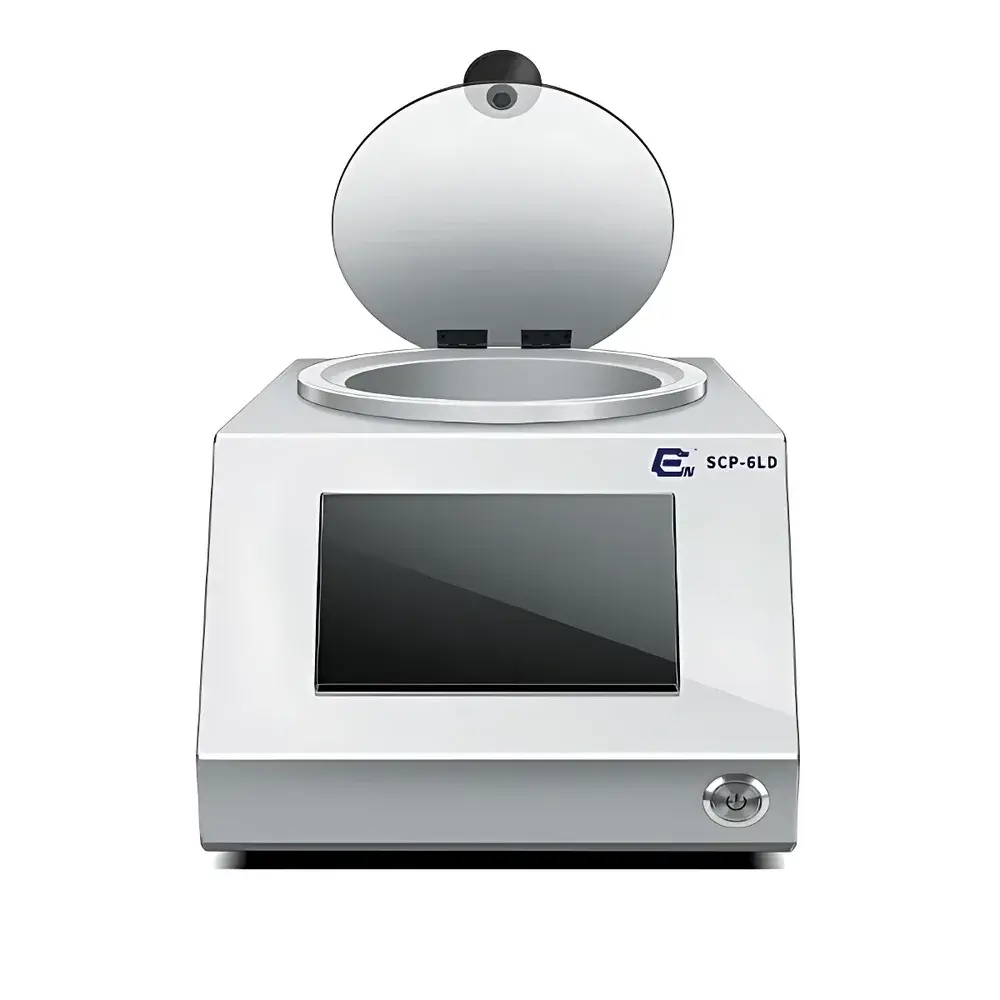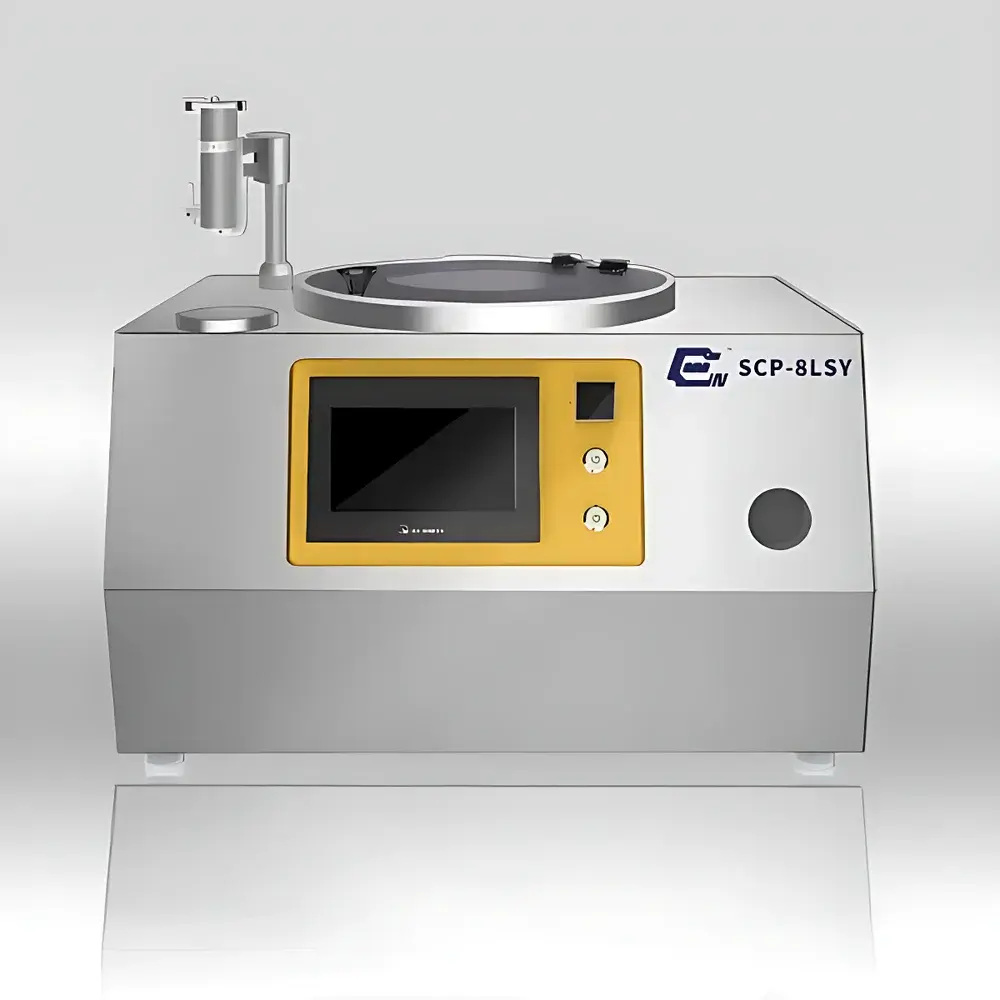
EWIN-TECH SCP-8LSY Benchtop Semi-Automatic Syringe-Based Spin Coater
| Brand | EWIN-TECH |
|---|---|
| Origin | Shanghai, China |
| Manufacturer Type | Direct Manufacturer |
| Regional Classification | Domestic (China) |
| Model | SCP-8LSY |
| Pricing | Upon Request |
Overview
The EWIN-TECH SCP-8LSY is a benchtop semi-automatic spin coater engineered specifically for wafer-level photoresist and functional polymer coating in R&D and pilot-line environments. Unlike conventional air-driven or vacuum chuck-based spin coaters, the SCP-8LSY integrates a precision syringe dispensing module with programmable rotational dynamics to enable controlled, localized, and volume-accurate deposition prior to high-speed spinning. Its operation follows standard spin-coating physics—governed by viscous drag, centrifugal thinning, and solvent evaporation kinetics—making it suitable for quantitative process development of uniform thin films ranging from sub-100 nm to several micrometers in thickness. Designed for 150 mm (6″) and 200 mm (8″) substrates, the system maintains mechanical stability under rotational speeds up to 10,000 rpm, with acceleration/deceleration profiles fully programmable via PLC logic. The unit operates as a standalone tool but is engineered for seamless integration into cleanroom-lab workflows, including compatibility with Class 100–1000 environments when used with optional laminar flow hoods.
Key Features
- Integrated syringe-based dispense module with calibrated volumetric delivery (0.1–5 mL range), enabling repeatable material dosing independent of viscosity fluctuations
- PLC-controlled closed-loop rotational system with real-time speed monitoring and ±10 rpm repeatability across 500–10,000 rpm range
- Motorized Z-axis lift mechanism with programmable height adjustment (0–30 mm travel), supporting contactless post-spin bake alignment via top-heater proximity
- Independent thermal protection circuitry with dual-stage overtemperature cutoff (120 °C primary, 150 °C hardware fuse), compliant with IEC 61000-6-2 immunity standards
- Polished stainless-steel chassis (AISI 304) with electrostatic-dissipative surface finish (10⁶–10⁹ Ω/sq), minimizing particle generation and easing ISO Class 5-compatible cleaning protocols
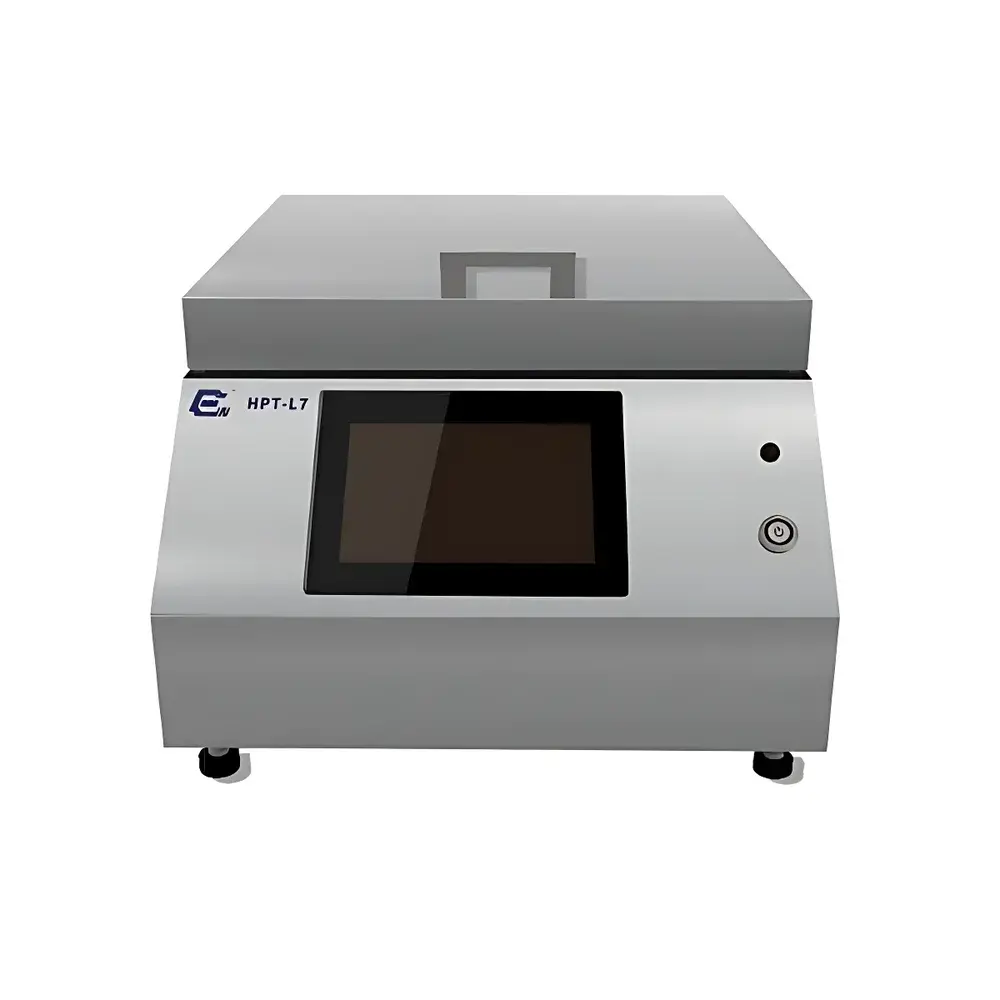
- 7-inch full-color capacitive touchscreen HMI with intuitive recipe editor, multi-step parameter sequencing (dispense → spin → dry → lift), and USB export of execution logs
Sample Compatibility & Compliance
The SCP-8LSY accommodates standard silicon, glass, quartz, sapphire, and flexible polymer substrates up to 200 mm in diameter and 10 mm in thickness. Chuck design supports both vacuum and mechanical clamping modes, with customizable adapter plates for non-standard geometries (e.g., diced dies, microfluidic chips). All wetted components—including syringe barrels, needle guides, and chuck seals—are chemically resistant to common photoresists (e.g., AZ®, Shipley®), developers (TMAH), and organic solvents (PGMEA, IPA, acetone). The system meets CE marking requirements per Machinery Directive 2006/42/EC and Electromagnetic Compatibility Directive 2014/30/EU. It supports GLP-compliant documentation through timestamped audit trails, user-access levels (Operator/Engineer/Admin), and recipe version control—facilitating alignment with internal SOPs and preparatory work toward ISO 9001:2015 and SEMI S2/S8 safety certification.
Software & Data Management
The embedded control firmware provides deterministic real-time execution of multi-segment coating protocols, with each step storing metadata including actual vs. setpoint RPM, dispense volume, ambient temperature/humidity (via optional sensor input), and motor current draw. Process data are logged in CSV format with millisecond-resolution timestamps and exported via USB 2.0 or Ethernet (Modbus TCP option). No proprietary software installation is required on host PCs; raw logs are directly importable into MATLAB, Python (pandas), or JMP for statistical process analysis (SPC). Optional firmware upgrade enables FDA 21 CFR Part 11–compliant electronic signatures, audit trail encryption, and role-based access control—suitable for regulated QC/QA environments in semiconductor packaging or photonics device manufacturing.
Applications
- Photoresist coating optimization for UV and DUV lithography (i-line, g-line, KrF, ArF) on Si, SOI, and compound semiconductor wafers
- MEMS structural layer deposition (e.g., SU-8, polyimide, BCB) requiring precise thickness control and edge uniformity
- Functional thin-film fabrication for perovskite solar cells, OLED encapsulation layers, and piezoelectric polymer actuators
- Development of anti-reflective, hydrophobic, or conductive coatings on flexible substrates (PET, PI, PEN)
- Academic research in colloidal nanomaterial deposition (quantum dots, metal oxides) where syringe-mediated nucleation control improves film morphology
FAQ
What substrate sizes does the SCP-8LSY support?
Standard configuration supports 150 mm (6″) and 200 mm (8″) wafers; custom chucks are available for 100 mm or irregular shapes upon request.
Is the syringe dispensing system compatible with high-viscosity resists (>500 cP)?
Yes—the integrated positive-displacement pump and heated syringe holder (up to 80 °C) maintain flow stability for viscosities up to 2,000 cP when paired with low-shear needles (≥23G).
Can the system be integrated into an automated cluster tool environment?
Yes—digital I/O ports (24 V DC, opto-isolated) and Modbus TCP interface enable synchronization with robotic handlers, inline metrology tools, and MES systems.
Does the equipment comply with cleanroom particle emission standards?
Measured particle generation is <10 particles ≥0.5 µm per cubic foot per minute (per ISO 14644-1 Class 5 test protocol), verified with TSI 3320 APS under nominal operating conditions.
What maintenance intervals are recommended for long-term reliability?
Vacuum chuck seals and syringe O-rings should be inspected every 200 cycles; bearing lubrication and encoder calibration are scheduled annually or after 5,000 operational hours.