
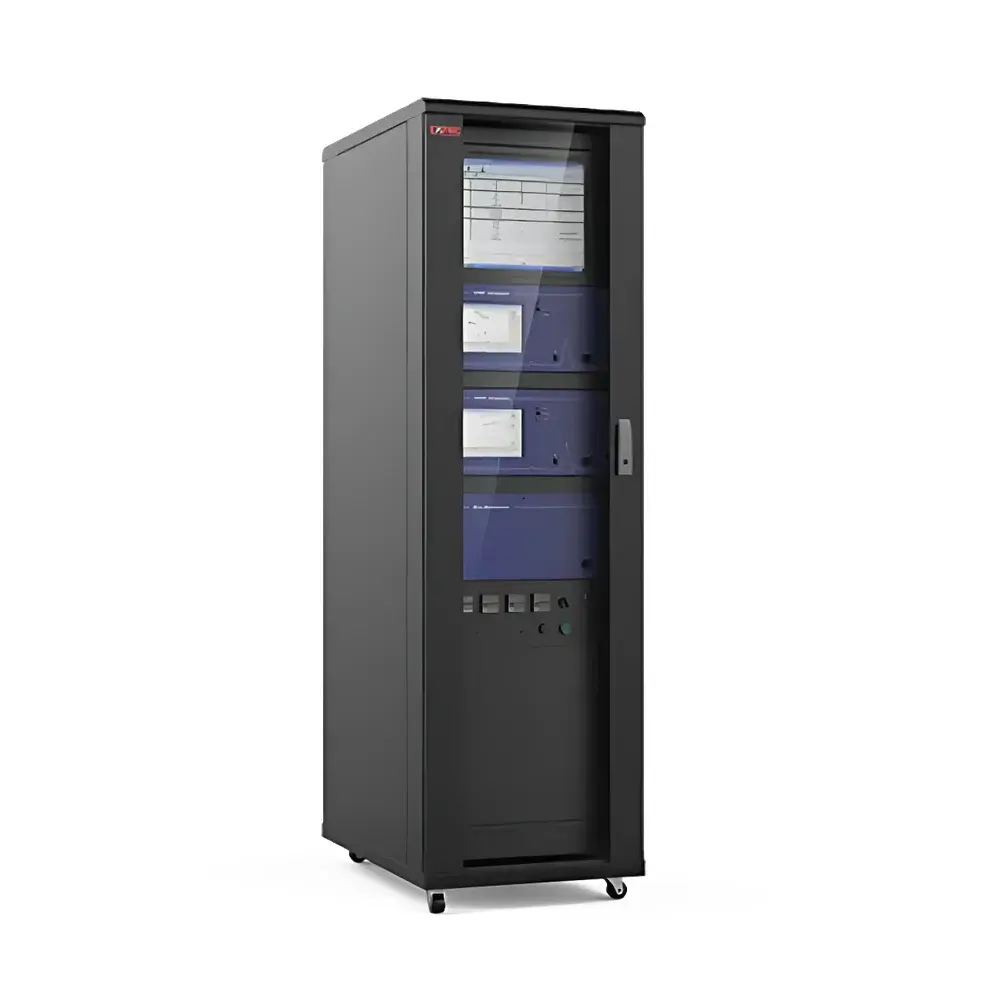
EXPEC 2000 Continuous Emission Monitoring System (CEMS) for Volatile Organic Compounds in Flue Gas – Online GC-FID Analyzer
| Brand | EXPEC (Supelco Technology) |
|---|---|
| Origin | Zhejiang, China |
| Instrument Type | Online Gas Chromatograph with Flame Ionization Detection (GC-FID) |
| Configuration | Full-Heat Trace Sampling System with Integrated Pre-treatment Unit, H₂ Generator, and Zero Air Generator |
| Compliance | Aligned with EPA Method TO-15 / Method 18 and HJ 1012–2018 (China) |
| Design | Intrinsically Safe and Explosion-Proof Options Available |
| Sample Interface | High-Temperature Heated Probe (up to 200 °C), PTFE or Passivated Metal Sampling Line |
| Data Output | Real-time Modbus TCP / OPC UA / 4–20 mA to DCS/SCADA and Environmental Supervision Platforms |
Overview
The EXPEC 2000 Continuous Emission Monitoring System (CEMS) is an industrial-grade online gas chromatograph engineered for unattended, real-time quantification of C2–C12 volatile organic compounds (VOCs) in flue gas streams. It employs a robust GC-FID (Gas Chromatography–Flame Ionization Detection) architecture, where sample introduction, separation, and detection occur under fully heated conditions—eliminating condensation, adsorption losses, and catalytic degradation of high-boiling-point analytes such as xylenes, ethylbenzene, naphthalene, and heavier aromatic hydrocarbons. Unlike extractive systems relying on cryogenic trapping or permeation membranes, the EXPEC 2000 implements a full-heat trace pathway from probe tip (operating up to 200 °C) through sampling line and pre-treatment unit to the GC oven, ensuring molecular integrity across the entire analytical chain. The system is designed for permanent installation at stack or duct interfaces and meets continuous monitoring requirements under national emission standards and environmental compliance frameworks.
Key Features
- Full-heat trace sampling architecture: maintains ≥180 °C from probe to detector inlet, preventing VOC loss due to wall adsorption or phase change
- Integrated pre-treatment unit with automatic self-cleaning function: removes particulates via heated cyclonic filtration, eliminates moisture via dual-stage thermoelectric coolers and Nafion dryers, and suppresses acid gases using alkali-coated sorbent cartridges
- Modular GC-FID analyzer: temperature-programmable column oven (35–220 °C), precision mass flow controllers for carrier (N₂), fuel (H₂), and air, and low-noise FID with linear dynamic range >10⁷
- Onboard gas generation: integrated hydrogen generator (purity ≥99.999%) and zero air generator (hydrocarbon-free, <0.1 ppb THC) eliminate dependency on external gas cylinders
- Explosion-proof configuration options: certified to IECEx/ATEX Zone 1 (II 2G Ex db IIB T4 Gb) and GB 3836.1–2021 for hazardous area deployment
- Automated calibration capability: supports multi-point standard gas injection (0.1–100 ppmv) with programmable frequency and audit trail logging
Sample Compatibility & Compliance
The EXPEC 2000 is validated for continuous analysis of complex flue gas matrices containing up to 50 % water vapor, ≤100 mg/m³ particulate load, and SO₂/NOₓ concentrations typical of thermal oxidizers, catalytic cracking units, and solvent recovery systems. Its pre-treatment methodology conforms to U.S. EPA Methods TO-15 (for ambient air) and Method 18 (for source testing), as well as China’s HJ 1012–2018 “Technical Specification for Online Monitoring of VOCs in Fixed Pollution Sources.” All hardware and firmware comply with electromagnetic compatibility (EMC) requirements per IEC 61326-1 and functional safety principles aligned with IEC 61508 SIL 2 for critical control loops. Data integrity adheres to GLP/GMP-aligned audit trail protocols, including user action logging, method versioning, and electronic signature support compatible with FDA 21 CFR Part 11 readiness.
Software & Data Management
The embedded control software—EXPEC CEMS Suite v3.2—provides intuitive stack-mounted HMI operation and remote web-based supervision via HTTPS-secured interface. It supports automated chromatogram integration using ASTM D6348-compliant peak detection algorithms, retention time locking for long-term method stability, and configurable reporting intervals (1-, 5-, or 15-minute averages). Raw chromatographic data, calibration logs, maintenance records, and alarm histories are stored locally on industrial SSD (≥3 years retention) and synchronized in real time to enterprise DCS, SCADA, or provincial environmental monitoring platforms via standardized protocols: Modbus TCP, OPC UA, and HTTP POST with TLS 1.2 encryption. Audit trails include timestamped operator actions, method changes, and instrument status transitions—all exportable in CSV or PDF for regulatory submission.
Applications
The EXPEC 2000 serves as a reference-grade CEMS solution across regulated industrial sectors requiring VOC mass balance verification, fugitive emission tracking, and compliance reporting. Primary application domains include: catalytic reforming and fluid catalytic cracking (FCCU) units in petroleum refineries; semiconductor fab exhaust abatement systems; pharmaceutical active pharmaceutical ingredient (API) synthesis off-gas streams; rubber vulcanization and synthetic polymer production lines; coating and ink formulation facilities; automotive paint booth exhaust; and flexographic and gravure printing operations. It is also deployed in municipal waste incineration plants and biomass combustion facilities where chlorinated and oxygenated VOCs (e.g., chlorobenzenes, aldehydes) require speciated monitoring.
FAQ
What VOC compounds can the EXPEC 2000 quantify?
It delivers quantitative results for over 40 target VOCs—including alkanes (C2–C6), alkenes, alkynes, BTEX (benzene, toluene, ethylbenzene, xylenes), styrene, chlorinated solvents (e.g., trichloroethylene), and selected oxygenates—using calibrated multi-component standard gases traceable to NIST SRMs.
Does the system support remote diagnostics and preventive maintenance alerts?
Yes. Built-in health monitoring continuously tracks detector response, column backpressure, gas purity levels, and heater duty cycles. Anomaly detection triggers SNMP traps and email notifications, enabling predictive maintenance scheduling.
Can the EXPEC 2000 be integrated into existing plant DCS without custom protocol development?
Yes. Pre-certified drivers for Emerson DeltaV, Honeywell Experion PKS, Siemens Desigo CC, and Yokogawa CENTUM VP are included. Native Modbus TCP and OPC UA server functionality ensures plug-and-play interoperability.
Is method validation documentation provided for regulatory submission?
Each delivered system includes a Factory Acceptance Test (FAT) report, Method Validation Summary per HJ 1012–2018, and a complete set of calibration certificates with uncertainty budgets—ready for submission to provincial ecological environment bureaus or third-party auditors.




