
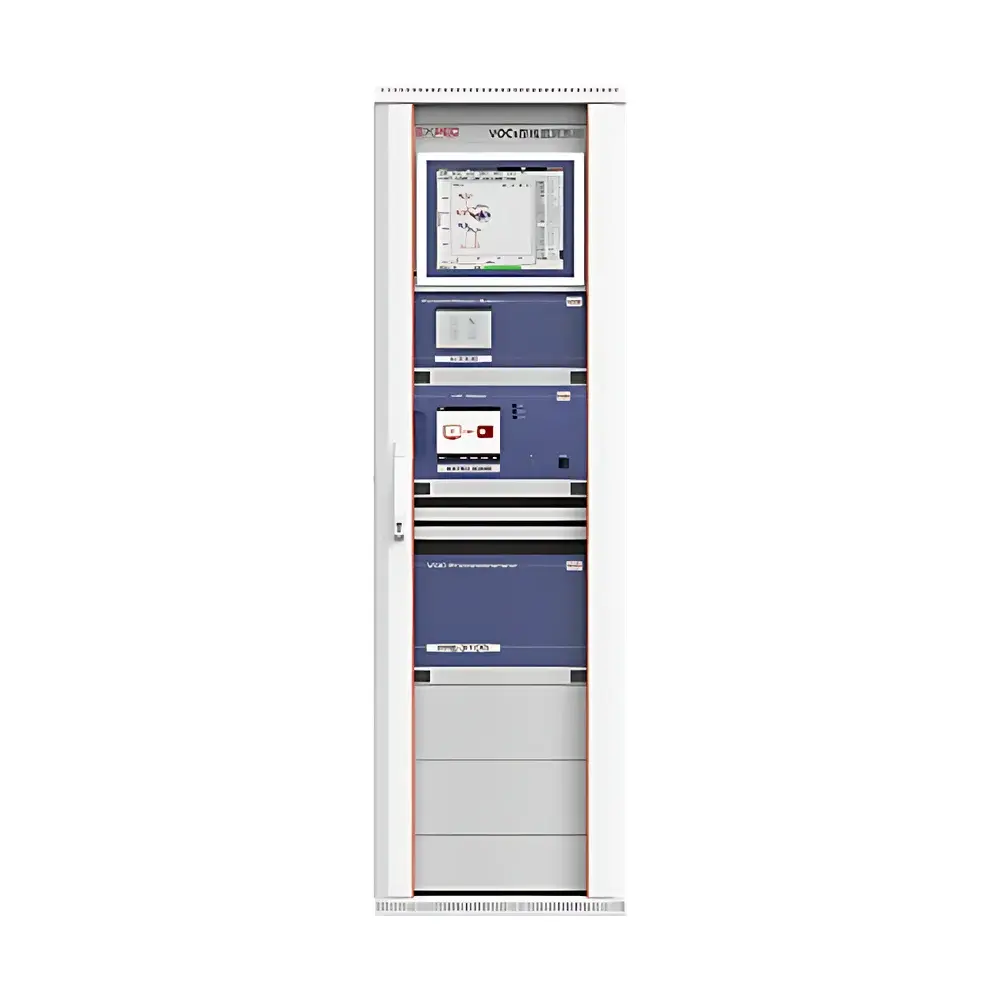
EXPEC 2000 Environmental Air High- and Low-Carbon VOC Online Monitoring System
| Brand | EXPEC (Hangzhou Supeltech Co., Ltd.) |
|---|---|
| Origin | Zhejiang, China |
| Instrument Type | Online Gas Chromatograph with FID |
| Detection Principle | Gas Chromatography–Flame Ionization Detection (GC-FID) |
| Preconcentration Method | Cryogenic Trapping & Direct Thermal Desorption |
| Sample Handling | Automated Whole-Air Sampling with Integrated Dehumidification and Enrichment |
| Compliance Context | Designed for continuous unattended operation in ambient air monitoring networks compliant with EPA TO-14/TO-15, ISO 16017-1, and China HJ 644–2013 standards |
| Software | Embedded real-time control with audit-trail-capable data acquisition supporting 21 CFR Part 11–compatible user authentication and electronic signatures |
Overview
The EXPEC 2000 Environmental Air High- and Low-Carbon VOC Online Monitoring System is an automated, laboratory-grade gas chromatograph engineered for continuous, unattended measurement of volatile organic compounds (VOCs) in ambient air. It implements a dual-stage preconcentration architecture combining cryogenic trapping and direct resistive heating desorption, coupled with high-resolution capillary GC separation and flame ionization detection (FID). Unlike conventional online GC systems relying on ambient-temperature adsorbent tubes or single-stage thermal desorption, the EXPEC 2000 employs a deep-cryogenic condensation module operating at –40 °C to –60 °C to selectively remove water vapor while simultaneously concentrating both low-boiling hydrocarbons (e.g., C2–C5 alkanes, ethene, propene) and higher-molecular-weight aromatic and oxygenated VOCs (e.g., benzene, toluene, xylenes, acetone, MEK). This enables quantitative analysis across a dynamic boiling point range (−89 °C to 200 °C) without column contamination or retention time drift caused by moisture breakthrough.
Key Features
- Cryogenic water removal and VOC enrichment: Solid-state thermoelectric coolers achieve stable sub-zero trapping temperatures, eliminating water-induced column degradation and baseline instability in FID detection.
- Direct-resistive thermal desorption: Rapid, uniform heating (>40 °C/s ramp rate) ensures complete and reproducible release of trapped analytes without thermal fractionation or peak broadening.
- Split-flow injection architecture: Minimizes band broadening during transfer from trap to column, preserving chromatographic resolution for co-eluting low-carbon species (e.g., propane vs. propene).
- Multi-bed sorbent trap: Composite packing (Tenax TA, Carbopack B, and graphitized carbon black) delivers balanced retention across C2–C12 compounds, enabling single-run quantification of >60 PAMS (Photochemical Assessment Monitoring Stations) target VOCs.
- Integrated whole-air sampling manifold: Programmable flow control (50–500 mL/min), pressure-regulated inlet, and automated valve sequencing support 24/7 operation with scheduled calibration gas injections.
- Robust industrial enclosure: IP54-rated cabinet with temperature stabilization (15–30 °C internal setpoint), surge protection, and redundant power supply for outdoor deployment in monitoring stations.
Sample Compatibility & Compliance
The EXPEC 2000 is validated for direct analysis of ambient air, stack emissions, and fence-line samples without solvent extraction or derivatization. It meets method requirements for U.S. EPA Compendium Method TO-15 (Determination of Volatile Organic Compounds in Ambient Air Using Active Sampling Onto Sorbent Tubes), ISO 16017-1:2000 (Indoor, ambient and workplace air — Sampling and analysis of volatile organic compounds using sorbent tubes and thermal desorption/gas chromatography), and China’s HJ 644–2013 (Environmental air quality—Determination of volatile organic compounds—Thermal desorption/gas chromatography–mass spectrometry method). Its firmware supports GLP/GMP-aligned audit trails, including operator logins, method versioning, calibration history, and raw chromatogram archiving with SHA-256 hash verification.
Software & Data Management
The system runs on embedded Linux-based acquisition software with a web-accessible interface (HTTPS/TLS 1.2). Real-time chromatogram visualization, automatic peak integration using retention time locking (RTL), and multi-point external standard calibration are fully automated. Data output conforms to netCDF-4 and CSV formats with embedded metadata (sampling timestamp, trap temperature, column head pressure, FID response factor). All user actions—including method edits, calibration updates, and report generation—are logged with timestamps, usernames, and action codes. Optional integration with third-party environmental data management platforms (e.g., EQuIS, AQS, or custom SCADA) is supported via OPC UA and MQTT protocols.
Applications
- Continuous PAMS monitoring in urban and regional air quality networks
- Fenceline VOC monitoring at petrochemical, pharmaceutical, and coating manufacturing facilities
- Source apportionment studies using speciated hydrocarbon ratios (e.g., ethyne/benzene, isoprene/toluene)
- Validation of atmospheric chemistry transport models (e.g., CMAQ, CAMx) with high-temporal-resolution speciated VOC datasets
- Long-term trend analysis of reactive carbon species impacting ozone formation potential (OFP) and secondary organic aerosol (SOA) yield
FAQ
What VOC compound classes does the EXPEC 2000 quantify?
It quantifies C2–C12 saturated and unsaturated aliphatics, monocyclic aromatics, halogenated hydrocarbons, and selected oxygenates (e.g., aldehydes, ketones, alcohols) meeting EPA TO-15 and HJ 644–2013 compound lists.
Is the system compatible with regulatory reporting requirements?
Yes — it supports 21 CFR Part 11-compliant electronic records, including secure user authentication, audit trails, and calibrated instrument performance verification logs required for submission to national air quality databases.
How often does the cryogenic trap require maintenance?
The solid-state cooling module has no moving parts or refrigerants; routine maintenance includes quarterly sorbent trap replacement and biannual FID jet cleaning per manufacturer specifications.
Can the system operate unattended for extended periods?
Yes — designed for >30-day unattended operation with automated zero/span checks, internal pressure diagnostics, and remote alarm notification via email/SMS upon fault detection.
Does it support co-analysis with other detectors?
The GC oven and inlet configuration allow optional integration of a second detector (e.g., electron capture detector for halocarbons) via auxiliary detector port, though FID remains the primary quantification engine for total hydrocarbon and speciated VOC analysis.




