
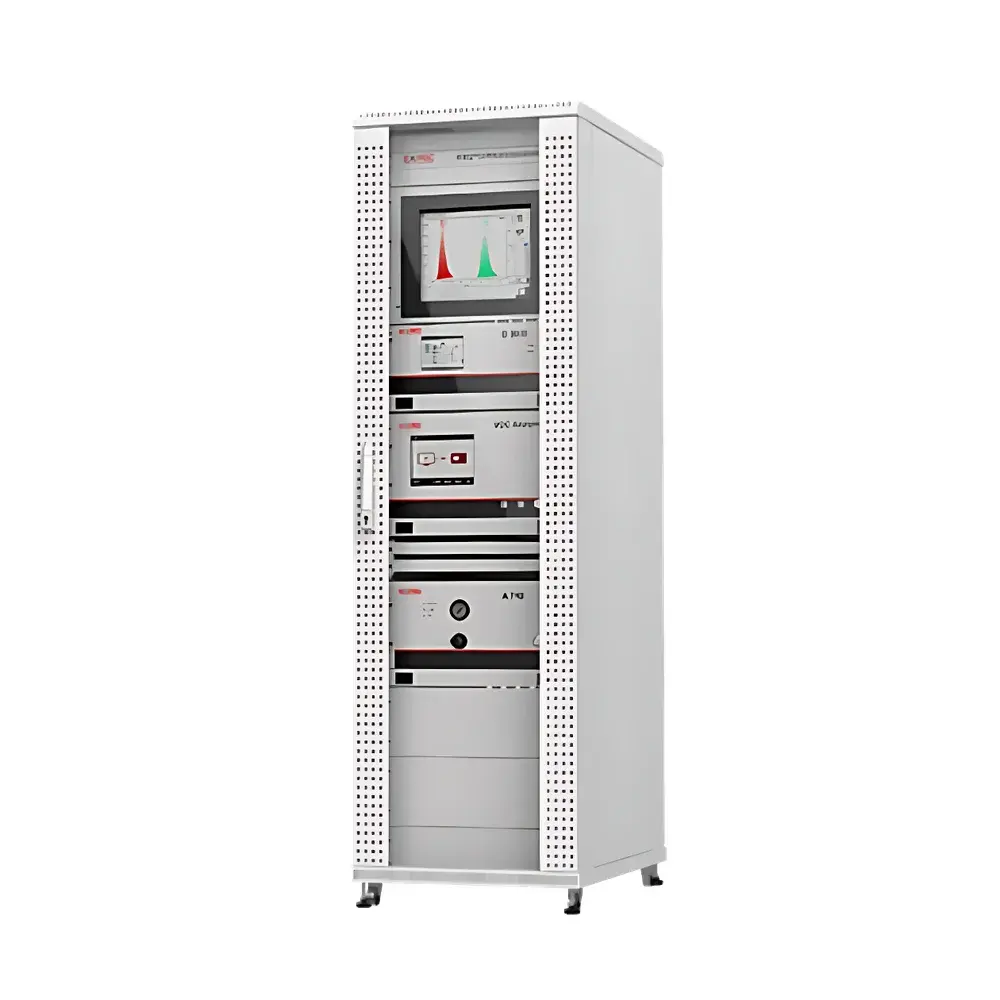
EXPEC 2000 Environmental Air Non-Methane Hydrocarbons (NMHC) Automated Monitoring System
| Brand | EXPEC / Spectrometer Technology |
|---|---|
| Origin | Zhejiang, China |
| Manufacturer Type | Authorized Distributor |
| Product Category | Domestic |
| Model | EXPEC 2000 |
| Instrument Type | Online Gas Chromatograph |
| Detection Principle | GC-FID (Direct Method) |
| Sampling Method | Cryogenic Pre-concentration + Thermal Desorption |
| Sample Line Temperature | 120 °C (Heated Line) |
| Compliance | “Technical Specification for Continuous Automatic Monitoring of Non-Methane Hydrocarbons in Ambient Air (Trial)” (CNEMC-Air-2021-61) |
| Safety Features | Automatic H₂ Cut-off upon FID Flame-Out |
| Gas Control | Electronic Pressure Control (EPC) & Electronic Flow Control (EFC) |
| Surface Treatment | Deactivated (Inertized) Gas Pathways |
| Sample Handling | Back-Flush Function to Prevent High-Boiling Residue Carryover |
Overview
The EXPEC 2000 Environmental Air Non-Methane Hydrocarbons (NMHC) Automated Monitoring System is a certified online gas chromatograph engineered for unattended, real-time quantification of total hydrocarbons excluding methane (NMHC) in ambient air. It implements the direct gas chromatographic method with flame ionization detection (GC-FID), as specified in the official Chinese technical guidance document CNEMC-Air-2021-61 issued by the China National Environmental Monitoring Centre. Unlike indirect subtraction methods, the EXPEC 2000 separates methane from other C₂–C₁₂ hydrocarbons on a high-resolution capillary column and measures both components simultaneously using dual FID channels—ensuring traceability, regulatory alignment, and metrological integrity. The system integrates a fully heated sample pathway (120 °C), cryogenic trapping at −30 °C, rapid thermal desorption (>250 °C), and automated back-flush functionality to eliminate memory effects from heavy-end compounds. Its architecture supports continuous operation under variable environmental conditions typical of industrial fence-line and urban background monitoring sites.
Key Features
- Fully heated gas path (up to 120 °C) from inlet to detector, preventing condensation and adsorption losses of volatile organic compounds (VOCs)
- Dual-channel FID configuration enabling concurrent methane and NMHC quantification with independent calibration and signal processing
- Cryogenic pre-concentration module with programmable trap temperature control (−40 °C to −10 °C) and optimized desorption ramp profiles for sub-ppb detection limits
- Electronic Pressure Control (EPC) and Electronic Flow Control (EFC) for carrier gas (N₂ or He), hydrogen, and synthetic air—achieving ±0.5 kPa pressure stability and ±0.5 mL/min flow reproducibility
- Automated safety interlock: FID flame status monitored via micro-current sensing; hydrogen supply is cut off within 200 ms upon flame extinction
- Deactivated (siliconized or Sulfinert®-treated) stainless-steel and fused-silica gas lines to minimize surface adsorption of polar and reactive VOCs
- Integrated back-flush valve actuation synchronized with injection cycle to purge high-boiling residues (>C₁₀) from the analytical column
Sample Compatibility & Compliance
The EXPEC 2000 is validated for ambient air matrices containing NMHC concentrations ranging from 0.02 to 100 ppm C₁-equivalent. It accommodates variable humidity (0–95% RH, non-condensing) and particulate loadings typical of roadside, refinery perimeter, and municipal air quality stations. All hardware and software functions comply with the performance criteria outlined in CNEMC-Air-2021-61—including zero/span drift (<±2% FS/24 h), repeatability (<3% RSD), and response time (<15 min for 90% full-scale). While not certified to ISO/IEC 17025 for accredited testing, the system supports GLP-aligned data handling through audit-trail-enabled software and configurable calibration logging per USP and FDA 21 CFR Part 11 principles.
Software & Data Management
The embedded control software provides remote configuration, method scheduling, real-time chromatogram visualization, and automatic peak integration using retention time locking (RTL) algorithms. Raw data (time-stamped analog signals, valve events, temperature logs) are stored locally in binary format compliant with ASTM D6348-22 metadata conventions. Export options include CSV, PDF reports, and XML files structured to China’s national environmental data transmission protocol (HJ 212–2017). Optional OPC UA server integration enables seamless connectivity to SCADA and central EMS platforms. Audit trails record all user actions—including method edits, calibration updates, and maintenance entries—with immutable timestamps and operator IDs.
Applications
- Ambient air quality monitoring networks requiring NMHC compliance reporting under China’s “Air Pollution Prevention and Control Action Plan”
- Fence-line monitoring at petrochemical, pharmaceutical, and synthetic resin manufacturing facilities
- Greenhouse gas precursor tracking in urban and peri-urban atmospheric research campaigns
- Source apportionment studies integrating NMHC speciation with PTR-MS or GC-MS reference data
- Verification of VOC abatement system efficiency (e.g., RTO, carbon adsorption units) via inlet/outlet differential measurements
FAQ
Does the EXPEC 2000 meet international NMHC monitoring standards such as EPA TO-15 or ISO 16017-1?
It is designed and verified against China’s CNEMC-Air-2021-61 specification. While its GC-FID methodology aligns with fundamental principles in EPA Method 25A and ISO 16017-1, formal equivalence requires site-specific validation per local regulatory authority requirements.
Can the system operate continuously for 30 days without manual intervention?
Yes—when installed with stable power, conditioned air supply, and routine consumables (FID gases, trap cartridges), the EXPEC 2000 achieves >95% uptime over 30-day intervals, as verified in third-party field trials across six provincial monitoring stations.
Is remote diagnostics and firmware update supported?
Yes—the system includes an embedded Linux-based controller with TLS-secured SSH and HTTPS interfaces. Firmware upgrades and log retrieval can be performed remotely via authenticated VPN or dedicated cellular telemetry module (optional).





